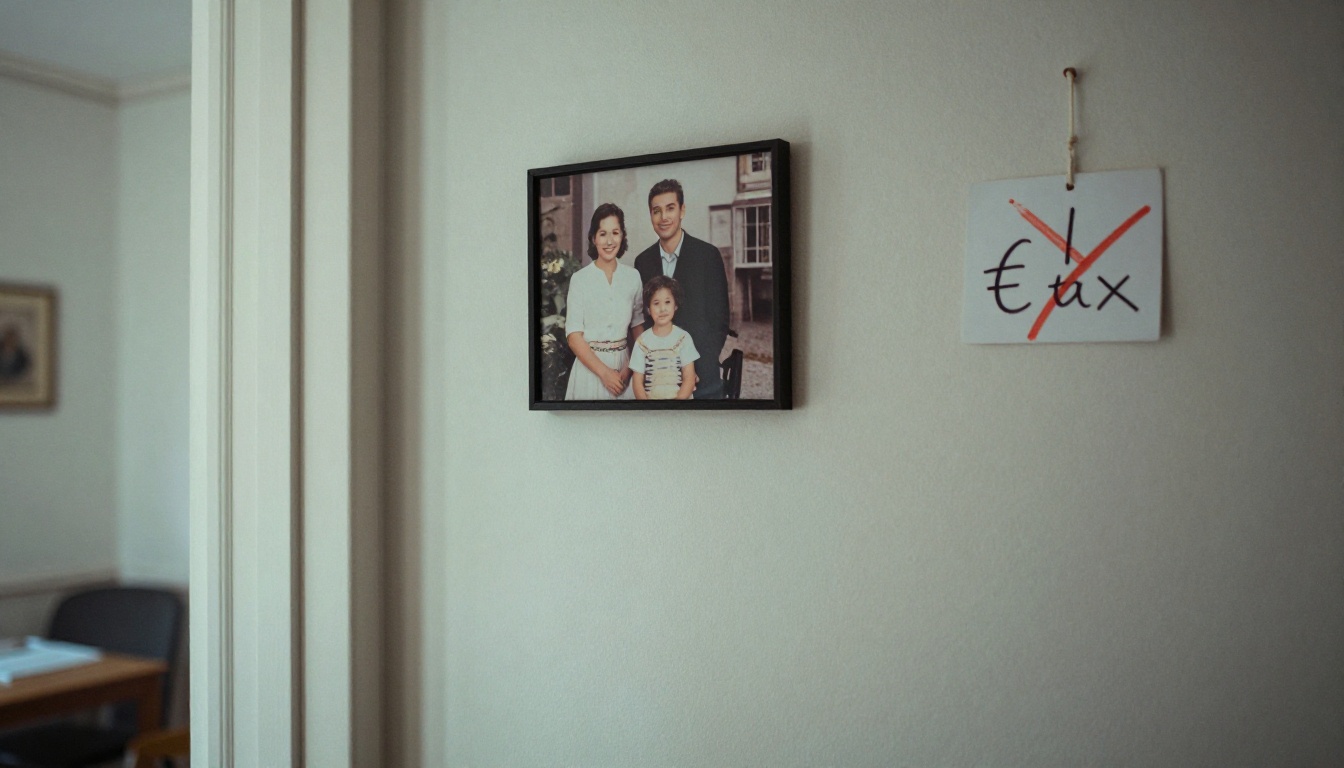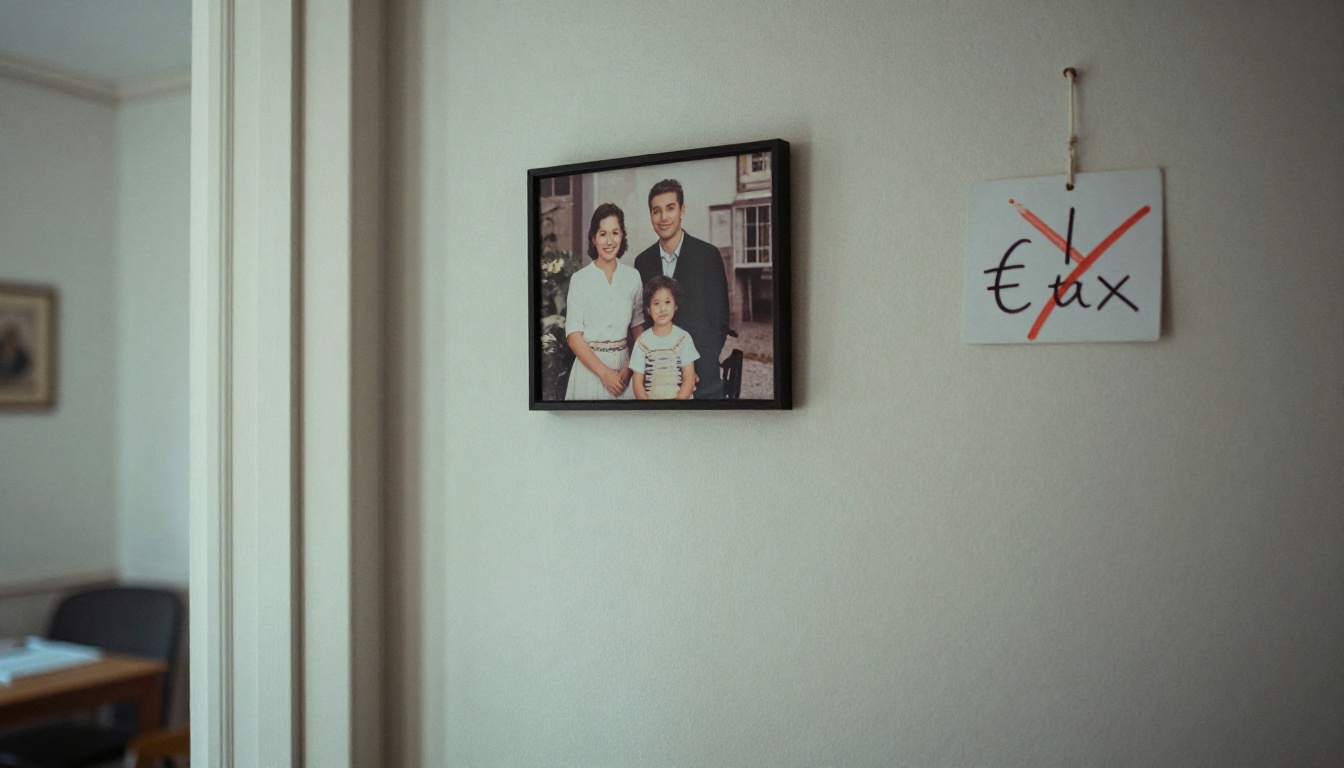
If you scrolled through Austrian social media lately, you’d think every second family in Graz owns a villa plus a spare million in the bank. The comments under political posts about the proposed Erbschaftsteuer (inheritance tax) reveal something fascinating: a nation convinced it’s wealthier than it actually is. The Greens’ proposal for a tax kicking in at €1 million (or €1.5 million for a self-occupied home) has triggered a middle-class panic that says more about Austrian psychology than fiscal policy.
The €1 Million Question: Who Actually Gets Hit?
Let’s cut through the noise. The Grüne (Greens) aren’t proposing to tax your parents’ 80-square-meter Altbau (old building apartment) in Meidling. Their model is clear: zero tax on inheritances up to €1 million. For the house you actually live in, that jumps to €1.5 million. Only after that do the progressive rates kick in, 25% on the portion between €1-5 million, 30% on €5-10 million, and 35% above €10 million.
Leonore Gewessler, the Greens’ party chair, has been hammering this message: “Keine Leistung, in die richtige Familie hineingeboren zu werden” (“No achievement in being born into the right family”). Her framing positions this as a tax on “superreiche” (super-rich) individuals, not your cousin who inherited a Bauernhof (farm) in Upper Austria. The party estimates this could generate €1.5-2 billion annually, real money, but barely a rounding error in Austria’s federal budget.
Yet the comments sections tell a different story. Many international residents report confusion, with some convinced their modest family home would trigger massive tax bills. This disconnect between policy design and public perception is where things get interesting.
The Middle-Class Mirage: Why You’re Probably Not Affected
Here’s the uncomfortable truth: If you’re actually middle class in Austria, this tax doesn’t target you. Statistics Austria data shows the median net wealth per household hovers around €150,000-200,000. Even in Vienna’s inflated property market, the average Altbau apartment sells for roughly €500,000-600,000. You’d need nearly three of those, mortgage-free, to hit the threshold.
The panic stems from two places. First, Austrian property values have skyrocketed, some estimates show 5-10% annual increases in hot markets. A €500,000 apartment today could theoretically approach €1.2-1.5 million in a decade. Second, there’s a deep-seated distrust that today’s “super-rich” threshold becomes tomorrow’s middle-class trap.
One commenter on a finance forum noted: “Mag sein, dass 1,5 Millionen mit Eigenheim für manche aktuell viel klingen. Aber wenn man Inflation berücksichtigen würde, dann sieht das in 20 Jahren schon wieder ganz anders aus.” This sentiment, that thresholds won’t be adjusted for inflation, drives much of the opposition. It’s not about today’s reality, it’s about tomorrow’s “kalte Progression” (bracket creep) fears.
The Ghost of 2008: Austria’s Forgotten Inheritance Tax
What most commenters miss: Austria already had an Erbschaftsteuer until 2008. It wasn’t some radical experiment, it existed for decades. The ÖVP-FPÖ coalition abolished it, arguing it was inefficient and generated minimal revenue compared to administrative costs. The Wirtschaftskammer Österreich (Austrian Economic Chamber) published analyses claiming the tax was more trouble than it was worth.
But here’s the critical detail: the old system had significantly lower exemptions. When people claim “we tried this and it failed”, they’re comparing apples to oranges. The 2008 version didn’t feature a €1 million Freibetrag (exemption threshold). It hit middle-class inheritances much harder, which explains why the Greens have learned from history and set the bar deliberately high.
The political memory gap is striking. Many Austrians under 35 have no living memory of this tax existing. They hear “new tax” and imagine unprecedented government overreach, not the return of a previously standard fiscal tool.
The “Mission Creep” Argument: Valid Fear or Lazy Excuse?
Skeptics raise a legitimate concern: once the infrastructure exists, future governments could lower thresholds. Germany’s Spitzensteuersatz (top tax rate) creep is the cautionary tale, where a tax once aimed at the wealthy now hits Facharbeiter (skilled workers) at Mercedes.
One finance forum participant argued: “Freibeträge werden von der Politik aus gutem Grund nicht indexiert.” This isn’t paranoia. Austrian tax brackets have historically lagged behind inflation, quietly pushing more taxpayers into higher rates. The Greens’ proposal doesn’t yet include automatic indexation, which opponents see as a deliberate omission.
Proponents counter that this is a design flaw, not a fatal concept. They argue for writing inflation adjustments into the law from day one. But critics remain unconvinced, pointing to Austria’s track record of “temporarily” raising taxes that never come back down. The Tabaksteuer (tobacco tax) was supposed to fund specific healthcare costs. That earmarking lasted approximately one budget cycle.
Implementation Nightmares: Valuation, Liquidity, and Family Betriebe
Beyond the political debate lies a bureaucratic maze. How do you value a Familienbetrieb (family business) or a Bauernhof that’s been in the family for generations? The Greens suggest following Germany’s model, which exempts active business assets under certain conditions. But “active” vs. “passive” wealth is a legal distinction that creates loopholes big enough to drive a Porsche through.
Liquidity presents another headache. Imagine inheriting a €3 million property portfolio but no cash. A 25% tax on the €2 million above the threshold means a €500,000 bill. If the properties aren’t generating rental income, where does that money come from? Forced sales of family assets become politically toxic, which is why most versions include payment deferral options.
The legal and tax implications of inheriting investments in Austria become even more complex when minors are involved. A portfolio of ETFs inherited by a teenager triggers not just inheritance questions but also custody and taxation during minority. These practical details rarely make it into political soundbites.
The Real Distribution: Who Holds Austria’s Wealth?
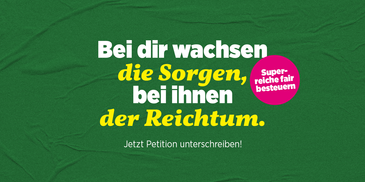
The Greens’ petition page features Austria’s top 10 wealthiest families, Mateschitz, Porsche & Piëch, Stumpf, controlling hundreds of billions. The top 1% of households holds roughly 40% of net wealth. This is the target, at least rhetorically.
Yet the same political party funding Austria’s generous Parteienförderung (party funding) system, €270 million annually, ten times higher per capita than Germany, makes voters skeptical. One commenter argued they’d support the tax only if tied to specific reforms: cutting party funding, merging small municipalities, and abolishing kalte Progression. Without these guarantees, the argument goes, new revenue just feeds existing inefficiencies.
This distrust reflects a deeper Austrian fiscal paradox: high overall tax burden with persistent complaints about underfunded public services. The tax burden on high-income earners in Austria already pushes top marginal rates above 55% when including social contributions. Adding inheritance tax on top feels like piling on, especially when capital gains face relatively light KEST (capital gains tax) treatment.
International Context: Austria as Outlier
Here’s what makes Austrian resistance curious: most developed countries have inheritance taxes. The US federal exemption is $12.92 million per person (2023), but states often have much lower thresholds. Switzerland varies by canton but commonly taxes inheritances above a few hundred thousand francs. Even Germany, Austria’s favorite comparison, has a €400,000 exemption for children, far lower than the Greens’ proposal.
The counterargument: those countries have lower income tax burdens. The US has no VAT and lower social contributions. Switzerland’s overall tax load is lighter. Germany’s system includes significant relief for business assets but hits middle-class inheritances harder.
One forum commenter noted: “Erzähl ihr aber bitte auch welche Steuern sie nicht haben, dasselbe Thema auch in der Schweiz, zumindest manche Kantonen, erbschaftssteuer? Ok von mir aus aber dafür dann die Kest komplett abschaffen.” This reveals the real trade-off: Austrians might accept inheritance tax if it funded a reduction in Arbeitnehmerbeiträge (employee contributions) or income taxes. But the Greens’ proposal lacks this explicit linkage.
The Bottom Line: Policy vs. Perception
The Erbschaftsteuer debate showcases Austrian political theater at its finest. The Greens propose a tax that would affect perhaps 1-2% of inheritances, framing it as social justice. The opposition conjures images of families forced to sell their homes to pay tax bills, ignoring the €1.5 million property exemption. Both sides talk past each other.
For the vast majority, the takeaway is simple: your parents’ €400,000 apartment in Linz or €600,000 house in Salzburg won’t trigger this tax. Even if property values double, you’re still below the threshold. The real question isn’t whether this hurts the middle class, it’s whether Austria can design a system that actually targets extreme wealth without creating new bureaucratic nightmares.
The political risk for the Greens? If implemented without ironclad inflation adjustments and clear exemptions for family businesses, today’s “super-rich” tax could become tomorrow’s middle-class grievance. And in Austrian politics, few forces are more powerful than a mobilized, tax-averse Mittelschicht (middle class) that feels betrayed.
Until the legislation includes automatic indexation and spending controls, the smart money stays skeptical. Not because the concept is flawed, but because Austrian implementation history suggests the devil will devour the details, and possibly your inheritance.
The Middle-Class Mirage: Why You’re Probably Not Affected
Here’s the uncomfortable truth: If you’re actually middle class in Austria, this tax doesn’t target you. Statistics Austria data shows the median net wealth per household hovers around €150,000-200,000. Even in Vienna’s inflated property market, the average Altbau apartment sells for roughly €500,000-600,000. You’d need nearly three of those, mortgage-free, to hit the threshold.
The panic stems from two places. First, Austrian property values have skyrocketed, some estimates show 5-10% annual increases in hot markets. A €500,000 apartment today could theoretically approach €1.2-1.5 million in a decade. Second, there’s a deep-seated distrust that today’s “super-rich” threshold becomes tomorrow’s middle-class trap.
One commenter on a finance forum noted: “Mag sein, dass 1,5 Millionen mit Eigenheim für manche aktuell viel klingen. Aber wenn man Inflation berücksichtigen würde, dann sieht das in 20 Jahren schon wieder ganz anders aus.” This sentiment, that thresholds won’t be adjusted for inflation, drives much of the opposition. It’s not about today’s reality, it’s about tomorrow’s “kalte Progression” (bracket creep) fears.
The Ghost of 2008: Austria’s Forgotten Inheritance Tax
What most commenters miss: Austria already had an Erbschaftsteuer until 2008. It wasn’t some radical experiment, it existed for decades. The ÖVP-FPÖ coalition abolished it, arguing it was inefficient and generated minimal revenue compared to administrative costs. The Wirtschaftskammer Österreich (Austrian Economic Chamber) published analyses claiming the tax was more trouble than it was worth.
But here’s the critical detail: the old system had significantly lower exemptions. When people claim “we tried this and it failed”, they’re comparing apples to oranges. The 2008 version didn’t feature a €1 million Freibetrag (exemption threshold). It hit middle-class inheritances much harder, which explains why the Greens have learned from history and set the bar deliberately high.
The political memory gap is striking. Many Austrians under 35 have no living memory of this tax existing. They hear “new tax” and imagine unprecedented government overreach, not the return of a previously standard fiscal tool.
The “Mission Creep” Argument: Valid Fear or Lazy Excuse?
Skeptics raise a legitimate concern: once the infrastructure exists, future governments could lower thresholds. Germany’s Spitzensteuersatz (top tax rate) creep is the cautionary tale, where a tax once aimed at the wealthy now hits Facharbeiter (skilled workers) at Mercedes.
One finance forum participant argued: “Freibeträge werden von der Politik aus gutem Grund nicht indexiert.” This isn’t paranoia. Austrian tax brackets have historically lagged behind inflation, quietly pushing more taxpayers into higher rates. The Greens’ proposal doesn’t yet include automatic indexation, which opponents see as a deliberate omission.
Proponents counter that this is a design flaw, not a fatal concept. They argue for writing inflation adjustments into the law from day one. But critics remain unconvinced, pointing to Austria’s track record of “temporarily” raising taxes that never come back down. The Tabaksteuer (tobacco tax) was supposed to fund specific healthcare costs. That earmarking lasted approximately one budget cycle.
Implementation Nightmares: Valuation, Liquidity, and Family Betriebe
Beyond the political debate lies a bureaucratic maze. How do you value a Familienbetrieb (family business) or a Bauernhof that’s been in the family for generations? The Greens suggest following Germany’s model, which exempts active business assets under certain conditions. But “active” vs. “passive” wealth is a legal distinction that creates loopholes big enough to drive a Porsche through.
Liquidity presents another headache. Imagine inheriting a €3 million property portfolio but no cash. A 25% tax on the €2 million above the threshold means a €500,000 bill. If the properties aren’t generating rental income, where does that money come from? Forced sales of family assets become politically toxic, which is why most versions include payment deferral options.
The legal and tax implications of inheriting investments in Austria become even more complex when minors are involved. A portfolio of ETFs inherited by a teenager triggers not just inheritance questions but also custody and taxation during minority. These practical details rarely make it into political soundbites.
The Real Distribution: Who Holds Austria’s Wealth?
The Greens’ petition page features Austria’s top 10 wealthiest families, Mateschitz, Porsche & Piëch, Stumpf, controlling hundreds of billions. The top 1% of households holds roughly 40% of net wealth. This is the target, at least rhetorically.
Yet the same political party funding Austria’s generous Parteienförderung (party funding) system, €270 million annually, ten times higher per capita than Germany, makes voters skeptical. One commenter argued they’d support the tax only if tied to specific reforms: cutting party funding, merging small municipalities, and abolishing kalte Progression. Without these guarantees, the argument goes, new revenue just feeds existing inefficiencies.
This distrust reflects a deeper Austrian fiscal paradox: high overall tax burden with persistent complaints about underfunded public services. The tax burden on high-income earners in Austria already pushes top marginal rates above 55% when including social contributions. Adding inheritance tax on top feels like piling on, especially when capital gains face relatively light KEST (capital gains tax) treatment.
International Context: Austria as Outlier
Here’s what makes Austrian resistance curious: most developed countries have inheritance taxes. The US federal exemption is $12.92 million per person (2023), but states often have much lower thresholds. Switzerland varies by canton but commonly taxes inheritances above a few hundred thousand francs. Even Germany, Austria’s favorite comparison, has a €400,000 exemption for children, far lower than the Greens’ proposal.
The counterargument: those countries have lower income tax burdens. The US has no VAT and lower social contributions. Switzerland’s overall tax load is lighter. Germany’s system includes significant relief for business assets but hits middle-class inheritances harder.
One forum commenter noted: “Erzähl ihr aber bitte auch welche Steuern sie nicht haben, dasselbe Thema auch in der Schweiz, zumindest manche Kantonen, erbschaftssteuer? Ok von mir aus aber dafür dann die Kest komplett abschaffen.” This reveals the real trade-off: Austrians might accept inheritance tax if it funded a reduction in Arbeitnehmerbeiträge (employee contributions) or income taxes. But the Greens’ proposal lacks this explicit linkage.
The Bottom Line: Policy vs. Perception
The Erbschaftsteuer debate showcases Austrian political theater at its finest. The Greens propose a tax that would affect perhaps 1-2% of inheritances, framing it as social justice. The opposition conjures images of families forced to sell their homes to pay tax bills, ignoring the €1.5 million property exemption. Both sides talk past each other.
For the vast majority, the takeaway is simple: your parents’ €400,000 apartment in Linz or €600,000 house in Salzburg won’t trigger this tax. Even if property values double, you’re still below the threshold. The real question isn’t whether this hurts the middle class, it’s whether Austria can design a system that actually targets extreme wealth without creating new bureaucratic nightmares.
The political risk for the Greens? If implemented without ironclad inflation adjustments and clear exemptions for family businesses, today’s “super-rich” tax could become tomorrow’s middle-class grievance. And in Austrian politics, few forces are more powerful than a mobilized, tax-averse Mittelschicht (middle class) that feels betrayed.
Until the legislation includes automatic indexation and spending controls, the smart money stays skeptical. Not because the concept is flawed, but because Austrian implementation history suggests the devil will devour the details, and possibly your inheritance.