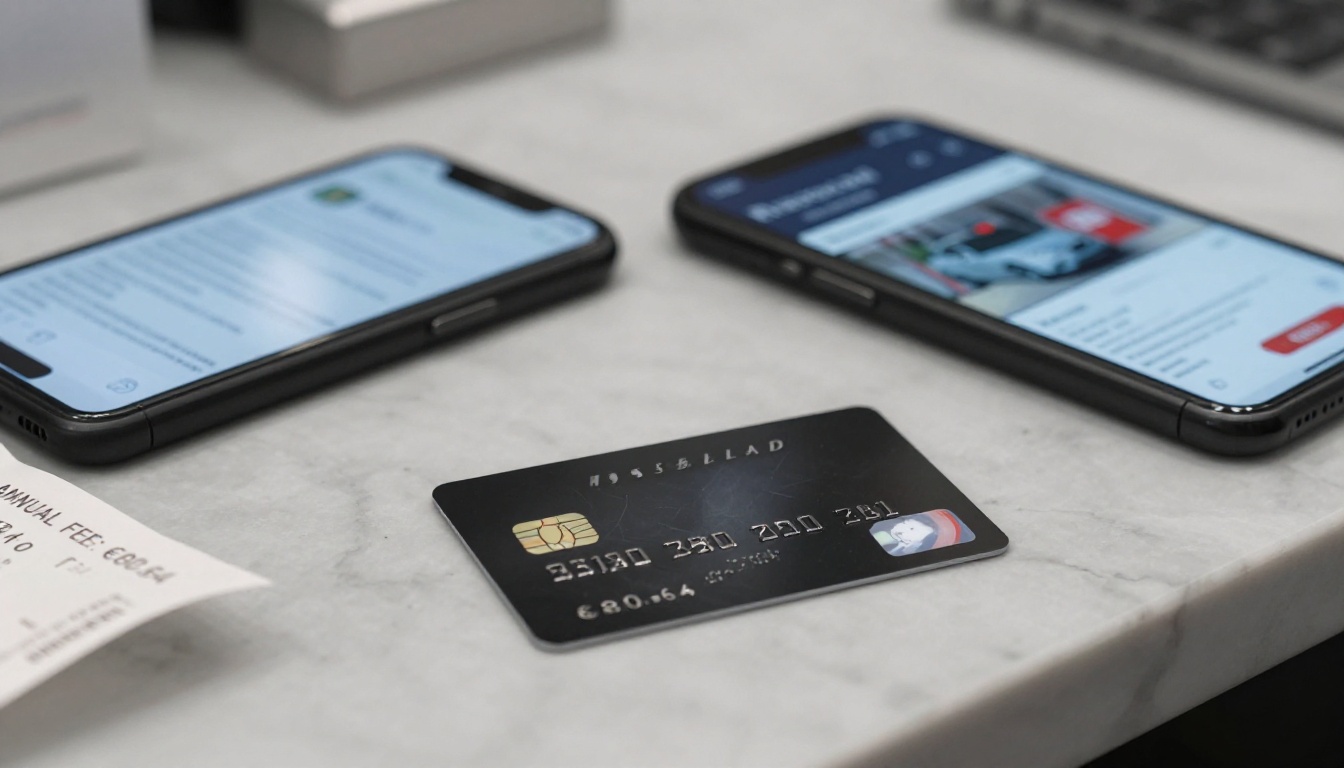
An Austrian resident recently posted in a finance forum: they pay €6.72 monthly for an Erste Bank Mastercard they never use, except for that one annual car rental on vacation. The rental company rejected their debit card, insisting on a physical credit card. Now they’re stuck with an €80.64 annual fee for a piece of plastic that lives in a drawer. This isn’t an anomaly, it’s the blueprint of how European banking turned physical credit cards into a quiet extortion racket.
The Digital Banking Mirage: Why Your Revolut Card Won’t Save You
Digital banks promised freedom from fees. Revolut, N26, and Wise deliver slick apps and virtual cards that work flawlessly for online shopping and contactless payments across Vienna’s U-Bahn. But here’s the catch: most digital banks either don’t offer physical credit cards or charge premium fees for them.
Revolut’s free tier gives you a virtual card. Want a physical one? That’s €7.99 plus delivery. N26 charges €10 for the plastic. Wise offers a card for €7, but it’s debit-only. The business model is clear: physical cards cost money to produce, ship, and support. Digital banks, operating on razor-thin margins, can’t justify giving them away.
The real problem emerges at the car rental counter in Malaga or the hotel check-in in Rome. Many merchants, especially in travel, still require a physical credit card (not debit) for security deposits. Virtual cards and debit cards get rejected because they can’t pre-authorize holds the same way traditional credit cards can. Your sleek fintech app suddenly becomes useless plastic, or rather, useless pixels.
The Overdraft Interest Goldmine: How “Free” Cards Make Banks Rich
So how do traditional banks offer “free” credit cards? They don’t. The cost is simply relocated to where you won’t notice it, until you do.
Take the Advanzia Gebührenfrei Mastercard Gold. Zero annual fee, worldwide free payments, sounds perfect. But read the fine print: 24.69% annual interest on cash withdrawals from day one. The TF Bank Mastercard Gold? 24.79% p.a. That “free” card becomes a debt trap if you withdraw €100 at a Lisbon ATM and forget to repay it within 24 hours.
The business model relies on Überziehungszinsen (overdraft interest). Banks bet that you’ll either:
– Withdraw cash abroad and forget the instant interest clock
– Use the installment feature (Teilzahlungsfunktion) and pay 17-24% APR
– Miss a payment and trigger penalty rates
One user reported their Advanzia card’s credit limit increased automatically after timely repayments. Sounds helpful, but it’s a classic technique to encourage more spending, and more interest revenue. The bank isn’t your friend, it’s a casino extending your credit line.
The Car Rental Trap: Why Austria’s Travelers Get Shafted
Here’s where it gets specifically Austrian. A Meldezettel (registration certificate) and local bank account are prerequisites for most premium credit cards. Non-residents or recent arrivals face automatic rejection. Even with residency, Austrian banks like Erste Bank and Raiffeisen bundle credit cards with current accounts costing €5-15 monthly.
The car rental scenario reveals the extortion: you need a physical credit card to rent a car, but you only rent cars a few times yearly. The annual cost-per-use becomes absurd. That €80.64 fee for the Erste Bank card translates to €40.32 per rental if you rent twice yearly. You could buy a cheap smartphone for that.
Worse, Austrian banks rarely offer standalone free credit cards. Unlike Germany’s Hanseatic Bank GenialCard or TF Bank options, Austrian institutions protect their fee ecosystem. They’d rather lose a customer than unbundle services. This is why many Austrians secretly hold German bank accounts just for travel cards, a workaround that works but feels vaguely treasonous.
The “Free” Card Hall of Fame: What Actually Works
After analyzing 39 card options across German and Austrian markets, only a handful deliver truly free physical cards without hidden interest traps:
- 1. Hanseatic Bank GenialCard
– Zero annual fee, worldwide free payments
– Physical card included, no delivery charge
– 3.95€ fee for German ATM withdrawals (irrelevant for travel)
– Recommended by Stiftung Warentest
– The catch: Can’t permanently keep the card in credit, designed for revolving use - 2. DKB Visa Debit (for Aktivkunden)
– Free for customers with €700 monthly income or under 28
– Worldwide free withdrawals and payments
– Debit, not credit, but accepted increasingly for deposits
– Requires German residency or creative account opening - 3. Trade Republic Visa Debit
– €5 one-time fee for physical card
– Free worldwide payments, free withdrawals above €100
– Austrian tax reporting built-in since 2025
– Limited banking features but excellent as backup - 4. Bank Norwegian Visa
– Truly free, no annual fee, physical card included
– 24.4% APR but only if you use installment feature
– Free travel insurance when you pay 50%+ of trip costs
– No German/Austrian residency requirement, works for expats
The pattern? All are German or Scandinavian banks. Austrian banks simply don’t compete on this front, protected by domestic customer loyalty and regulatory comfort.
The Hidden Fee Architecture: Where Your Money Really Goes
Let’s dissect where fees hide, using the Fremdwährungsgebühr (foreign transaction fee) as case study:
Most Austrian bank cards charge 1.5-3% on non-Euro transactions. On a €2,000 vacation spend, that’s €30-60 in fees alone. The DKB Visa and Hanseatic GenialCard charge 0%. Over ten years, that’s €300-600 saved, enough for another flight.
But the real villain is the Wechselkursaufschlag (exchange rate markup). Banks use their own rates, often 3-5% worse than the European Central Bank rate. Combine this with the 1.5% Fremdwährungsgebühr and you’re paying 6.5% extra on every transaction. The research shows this is rarely disclosed clearly, it’s how ‘free’ offers in Austria can lead to serious financial consequences.
Cash withdrawal fees add another layer. The Norisbank Mastercard charges 2.5% (minimum €6) abroad. Withdraw €50, pay €6. That’s 12% in fees. Do this twice daily for a week-long trip and you’ve spent €84 just accessing your money.
The Austrian Expat’s Dilemma: When Bureaucracy Meets Banking
For non-residents, the problem intensifies. Austrian banks require:
– Meldezettel (registration certificate)
– Einkommensnachweis (proof of income) from Austrian employer
– SCHUFA-equivalent credit check (KSV1870 in Austria)
– Minimum 6-month residency
Digital banks like Revolut bypass this but lack physical credit cards. The workaround? German banks with lax residency requirements. TF Bank and Advanzia accept Austrian addresses. DKB requires creative maneuvering, some report success using Austrian residency with German mailing addresses.
This creates a two-tier system: Austrians pay €80/year for convenience, expats spend hours navigating German banking websites to save money. The irony? The Finanzamt (tax office) then questions why you’re wiring money from a German account. Bureaucratic whack-a-mole.
The Smart Traveler’s Stack: A Defensive Strategy
Based on real-world testing and Austrian expat experiences, here’s the optimal card combination:
- Primary Travel Card: Hanseatic Bank GenialCard or Bank Norwegian Visa
– Free physical card, worldwide acceptance
– Use exclusively for hotel/car deposits and foreign payments
– Never withdraw cash (instant interest trap)
– Set to full repayment (Vollzahlung) to avoid 24% APR - Daily Spending Card: DKB Visa Debit (if you qualify) or Trade Republic
– Free withdrawals abroad
– Link to Apple/Google Pay for contactless
– Use for restaurants, shops, ATM withdrawals - Backup Card: Revolut virtual card
– Instant issuance, no delivery fee
– Use for online bookings, sketchy websites
– Freeze/unfreeze instantly if compromised
Critical rule: Disable the Teilzahlungsfunktion (installment feature) on all credit cards. Austrian banks activate this by default, turning your card into a high-interest loan device. One missed payment and you’re in the same debt spiral that makes bank-imposed fees and cancellation traps in Austria so profitable.
The Verdict: Why Austria Refuses to Adapt
Germany’s competitive banking market forced innovation. Austria’s oligopoly, Erste, Raiffeisen, BAWAG, has no such pressure. They maintain the €80 annual fee because they can. The Kreditwesengesetz (banking law) doesn’t mandate free basic credit cards, and the Finanzmarktaufsicht (FMA) sees no consumer harm.
Meanwhile, Austrian consumers rationalize the cost: “It’s only €6.72 monthly.” Multiply by 3 million cardholders. That’s €240 million annually in fees for plastic rectangles. Enough to fund Vienna’s public transport for months.
The research reveals Austrian banks earn more from overpriced bank-linked financial products than from actual banking. Credit cards, insurance, investment funds, each bundled with hidden costs in Austrian financial transactions and purchases.
Actionable Escape Plan
-
Cancel your Austrian bank’s credit card today. Use registered mail (Einschreiben) to avoid bank-imposed fees and cancellation traps in Austria.
-
Apply for Hanseatic Bank GenialCard or Bank Norwegian Visa. Use your Austrian address. Approval takes 5-7 days.
-
Open Trade Republic for the free debit card and Austrian tax reporting. The €5 physical card fee pays for itself on first use.
-
Keep your Austrian Girokonto for salary and local payments, but decouple it from credit products.
-
For car rentals: Always carry two physical cards. If one fails, you’re not stranded.
The €80 you save annually? That’s a weekend in Bratislava, a month’s worth of Käsekrainer, or 16 Melange at your favorite Kaffeehaus. The Austrian banking system operates with the same efficiency as a Viennese coffee house, until you try to cancel a credit card on a Friday afternoon. Then you discover the true cost of convenience.
Final calculation: Over 10 years, switching from Erste Bank’s €80.64/year card to a truly free alternative saves you €806.40. Invest that in an ETF via your Trade Republic account at 7% average return, and you’ve got €1,200. That’s not just savings, it’s a small rebellion against Austria’s quiet credit card extortion racket.