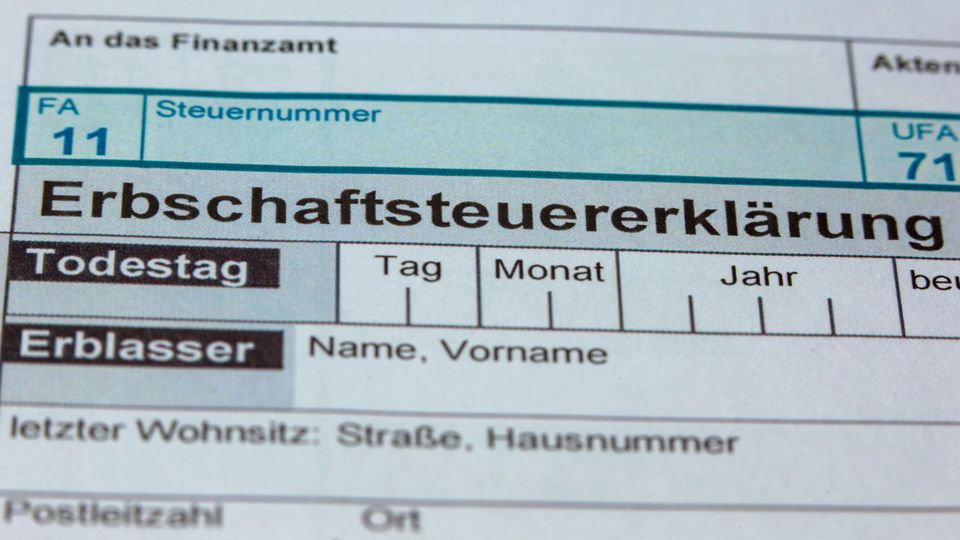
Germany is gearing up for its most significant wealth tax confrontation in decades, and the battlefield is the Erbschaftsteuer, the inheritance tax. While Finance Minister Christian Lindner focuses on his controversial debt brake reforms, the SPD has opened a second front that directly targets how dynastic fortunes pass through generations. Their message: if you’re inheriting grandma’s apartment in Berlin, relax. If you’re inheriting a €400 million industrial empire, prepare to pay.
The Absurd Loophole: 91.6% Tax-Free for the Ultra-Wealthy
Here’s the statistic that triggered the current political explosion: according to calculations by the Friedrich-Ebert-Stiftung for the SPD, 91.6% of assets exceeding €250 million are transferred completely tax-free. Not low-tax. Not deferred. Tax-free.
The mechanics behind this are buried in Germany’s “Schonungsregelungen”, special exemptions designed to prevent family businesses from being broken up to pay tax bills. In theory, these rules protect the Mittelstand, the backbone of German industry. In practice, they’ve created a parallel tax universe where the largest estates contribute virtually nothing to the public coffers.
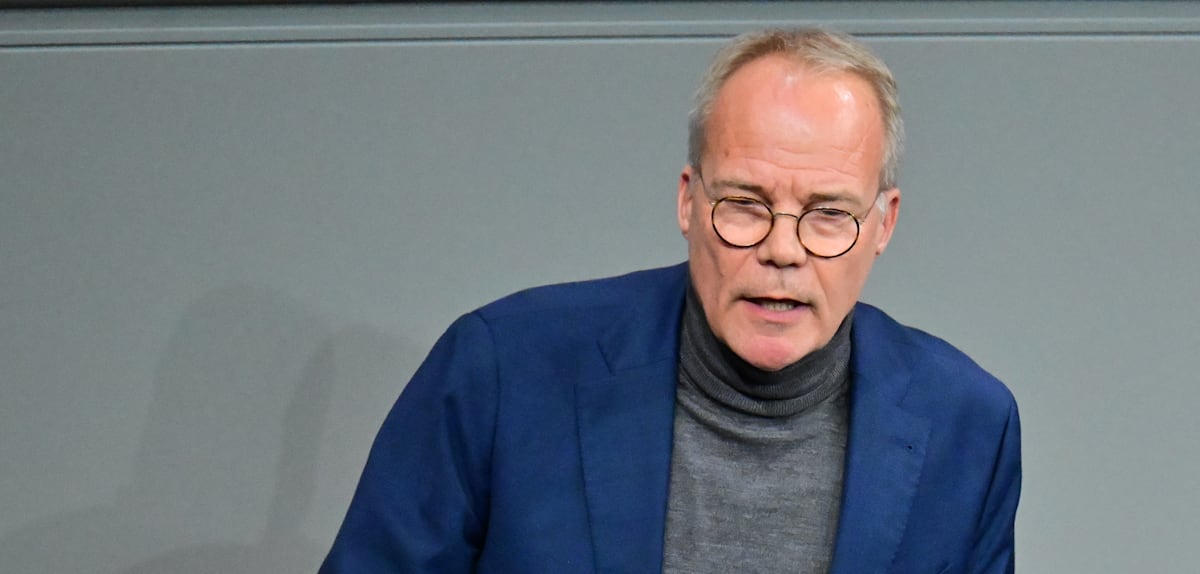
Matthias Miersch, the SPD’s parliamentary group leader, didn’t mince words in his recent interview with the Rheinischen Post: “Reiche Erben müssen sich mehr am Gemeinwohl beteiligen, das ist eine Frage der Gerechtigkeit. Bislang gibt es viel zu viele Schlupflöcher, sodass normale Erben besteuert werden, Super-Erben sich aber drücken können.”
What the SPD Actually Proposes
The SPD’s plan isn’t a blanket tax hike. It’s surgical. The core principle: höhere Steuern für extrem hohe Erbschaften, higher taxes for extremely high inheritances, while actually protecting ordinary family transfers.
Key elements include:
- Raising the exemption threshold for typical family inheritances (the current €400,000 per child would likely increase)
- Eliminating the “Bedürftigkeitsprüfung” (need assessment) that currently allows ultra-wealthy families to claim hardship and defer taxes indefinitely
- Introducing a progressive rate that only kicks in at genuinely high levels, think double-digit millions, not your parents’ semi-detached house
- Replacing indefinite deferrals with reasonable payment plans (Ratenzahlung) that don’t bankrupt heirs but don’t let wealth accumulate tax-free either
As SPD finance expert Wiebke Esdar explained to the press: “Unser Reformvorschlag soll die Erbschaftsteuer gerechter, einfacher und zukunftsfest machen. Dafür gilt es zum einen, übliche private Erbschaften innerhalb der Familie mit einem Lebensfreibetrag komplett steuerfrei vererbbar zu machen und zum anderen, millionenschwere Unternehmens-Erbschaften höher zu besteuern.”
The emphasis is clear: family home = protected. Corporate empire = pay up.
The Constitutional Court Sword of Damocles
The SPD’s timing isn’t random. The Bundesverfassungsgericht (Federal Constitutional Court) is expected to deliver a landmark ruling on the existing exemptions in Q1 2026. Legal experts widely believe the court will strike down current “Schonungsregelungen” as unconstitutional violations of the equality principle.
One constitutional law professor privately described the current system as “legalized tax avoidance for the 0.01%.” The court has already declared the inheritance tax unconstitutional three times previously, each time forcing legislative reforms. This fourth strike is anticipated to be the most consequential yet.
Miersch confirmed the SPD will present its reform draft immediately after the ruling: “Das Verfassungsgericht werde voraussichtlich im ersten Quartal ein Urteil fällen. Es geht dabei um die Frage, ob Begünstigungen bei der Übergabe von Betrieben gegen den Gleichheitsgrundsatz verstoßen.”
The Opposition’s “Leistungsfeindlich” Counterattack
The CDU/CSU and business lobby have launched a coordinated counter-offensive, framing the reform as an attack on Germany’s economic engine. CSU Landesgruppenchef Alexander Hoffmann called it “eine leistungsfeindliche Steuerreform”, a performance-hostile tax reform.
The automotive industry association president Hildegard Müller warned: “Solche Ideen, gerade den Mittelstand stärker zu besteuern, sind natürlich toxisch für Arbeitsplätze, Wachstum und Wohlstand in vielen Regionen Deutschlands.”
This “Mittelstand” framing is politically potent but economically dubious. The SPD’s proposal explicitly excludes the actual Mittelstand, family businesses worth a few million euros. The controversy centers on estates exceeding €250 million, where the inheritors are typically not shop owners but members of Germany’s billionaire class.
The rhetorical sleight-of-hand conflates the local bakery owner with the heirs to industrial conglomerates, a deliberate blurring that serves the interests of those who benefit most from the status quo.
The Public Opinion Reality Check
Here’s where the political calculus gets interesting: 57% of German voters support higher inheritance taxes on large estates, including a majority of CDU/CSU voters according to a Forsa survey cited by n-tv.
This creates a wedge between the Union’s leadership and its base. While party elites protect their traditional business donors, their own voters see the inequity of a system where nurses pay full freight on modest inheritances while dynastic wealth compounds tax-free.
The SPD is betting that “tax the super-rich” resonates more strongly than “save the Mittelstand” when voters understand the actual numbers. Their challenge is cutting through the deliberate confusion to show that €400,000 family homes aren’t the target, €400 million corporate stakes are.
What This Means for Different Wealth Levels
Let’s cut through the political noise and look at practical impacts:
Under €1 million estate: Likely better off. Higher exemptions mean many would pay nothing under the SPD plan who currently face small tax bills.
€1-10 million range: Minimal change. Business exemptions would still apply, though with stricter conditions. The goal is preventing fire-sales, not tax elimination.
€10-100 million: Moderate increase. Some loopholes close, but payment plans and business protection remain.
€100 million+: Substantial increase. This is where the 91.6% tax-free statistic comes from. The SPD aims to capture significant revenue from this tier while leaving business operations intact.
The crucial detail: taxes don’t have to be paid from operating capital. Miersch emphasized reasonable payment terms: “Andere Länder machen es vor, wie man Betriebe schont und dennoch extreme Erbschaften und Vermögen gerechter besteuert.”
Think decades-long payment plans secured by shares, not cash grabs that liquidate companies. The model exists, South Korea forced Samsung heirs to pay billions in inheritance tax without dismantling the conglomerate.
The Bigger Picture: Wealth Concentration vs. Social Cohesion
Beyond revenue, the SPD frames this as a Gerechtigkeitsfrage, a question of justice. Germany’s wealth gap has widened dramatically, with the top 1% now controlling more assets than the bottom 70% combined. When intergenerational transfers of billions escape taxation entirely, meritocracy becomes a hollow promise.
The debate also exposes a philosophical divide. The CDU/CSU’s “leistungsfreundlich” rhetoric assumes wealth concentration drives growth. The SPD counters that extreme inequality undermines social cohesion and that fair taxation actually strengthens the market economy by legitimizing it.
As one SPD strategist noted off the record: “We’re not trying to kill the golden goose. We’re asking why the goose’s offspring get to keep all the eggs while everyone else pays for the barn.”
What to Watch For
The next three months are critical:
- The BVerfG ruling: If the court strikes down exemptions as expected, the legislative clock starts ticking. The coalition must craft a replacement or face legal chaos.
- Union internal pressure: Will CDU/CSU leadership hold the line against their own voters’ preferences? Watch for cracks as state elections approach.
- Business lobby realignment: Major corporations are quietly hedging, recognizing that some reform is inevitable. The hardline position may soften.
- Specific thresholds: The exact numbers, exemption levels, progressive rates, payment terms, will determine who really pays. The SPD hasn’t released specifics yet.
Practical Takeaways
If you’re reading this, you’re almost certainly not a “Super-Erbe.” The proposed reforms would likely reduce or eliminate your inheritance tax burden on family property. The hysteria about “taxing the Mittelstand” is lobbying theater.
For those with significant business assets (€5-50 million), start planning now:
– Review corporate structures while current exemptions still apply
– Consider intergenerational transfers before reforms take effect
– Consult a Steuerberater familiar with Erbschaftsteuer planning
For everyone else: support for closing these loopholes is a rational self-interest. A system where billionaires pay nothing while teachers pay 30% on modest inheritances isn’t sustainable, politically or morally.
The SPD’s gambit may fail, the Union’s business ties run deep. But the constitutional court, public opinion, and basic arithmetic are on their side. Germany’s “Super-Erben” have enjoyed a tax-free ride for decades. That ride is about to get very bumpy.