Two years. That’s how long one frustrated buyer has been hunting for a family house within an hour of Vienna by public transport. Their budget? A substantial €740,000. Their findings? “Total überteuerte Buden aus den 70/80ern” (overpriced dumps from the 70s/80s) and properties where “Makler schonungslos ins Gesicht lügen” (agents shamelessly lie to your face).
This isn’t an isolated case, it’s the new normal in Austria’s most deceptive property market.
The Commuter Belt Illusion
The Vienna commuter belt, or Wiener Speckgürtel (Vienna commuter belt), has become a masterclass in market inefficiency. While the s REAL market overview confirms that “die an Wien angrenzenden sowie gut angebundenen Regionen preislich weiter nach oben entwickeln” (the regions bordering Vienna and well-connected areas continue to develop price-wise upward), what’s left unsaid is the quality crisis unfolding beneath those climbing numbers.
The Math Doesn’t Lie: In Korneuburg, you’re paying nearly €5,000 per square meter for an apartment. In Tulln, prices are “zu den höheren im regionalen Vergleich” (among the higher in the regional comparison). But here’s what the glossy brochures omit: many of these properties require immediate €100,000+ investments to address decades of deferred maintenance, illegal renovations, and structural compromises that would make a Viennese building inspector weep.
The Schwarzbau Time Bomb
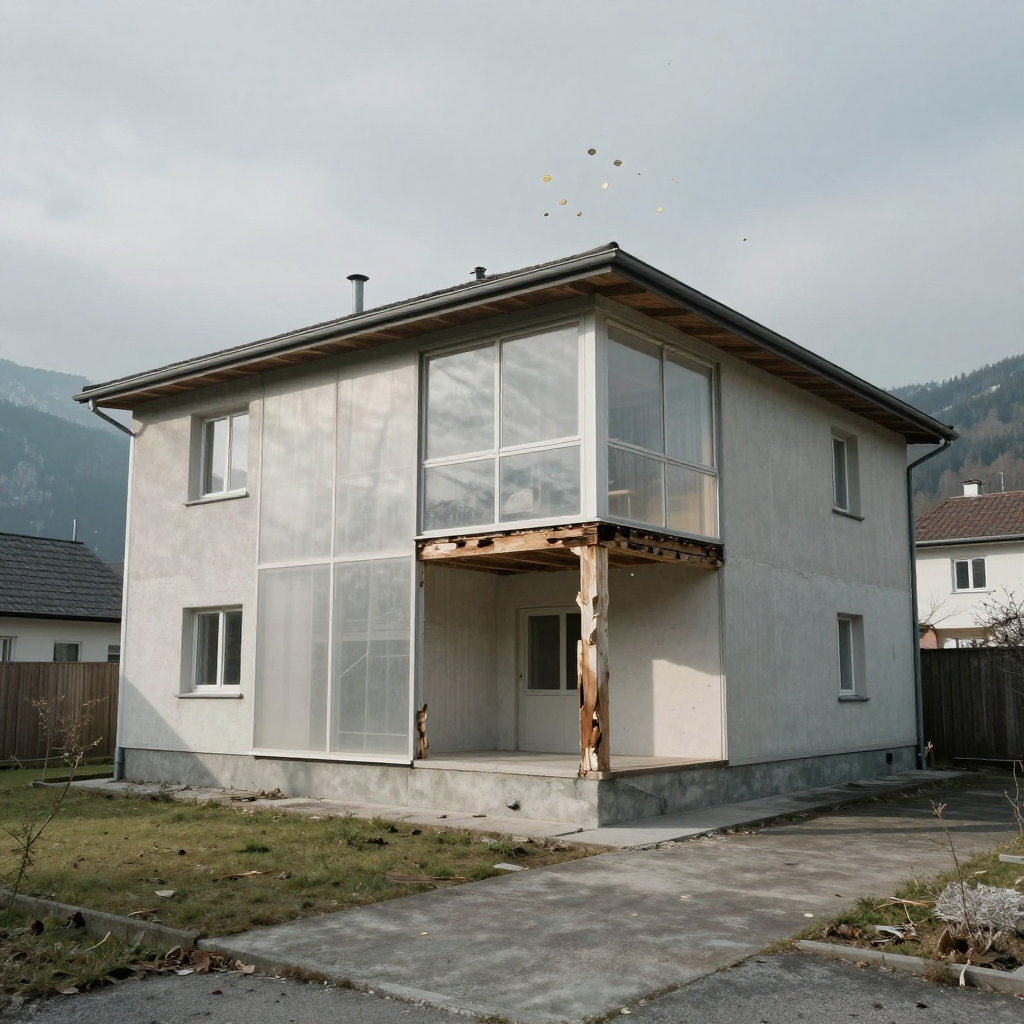
Schwarzbauten (illegal constructions) represent one of the most dangerous traps in the current market. The Reddit thread reveals buyers discovering “kompletter Pfusch wenn man genauer hinschaut” (complete botch jobs upon closer inspection).
This isn’t just cosmetic—unauthorized structural changes can invalidate insurance, trigger massive fines, and require expensive demolition. Consider the Weinviertel region, where “die Nachfrage nach Wohnraum groß” (demand for living space is great) but oversight remains inconsistent.
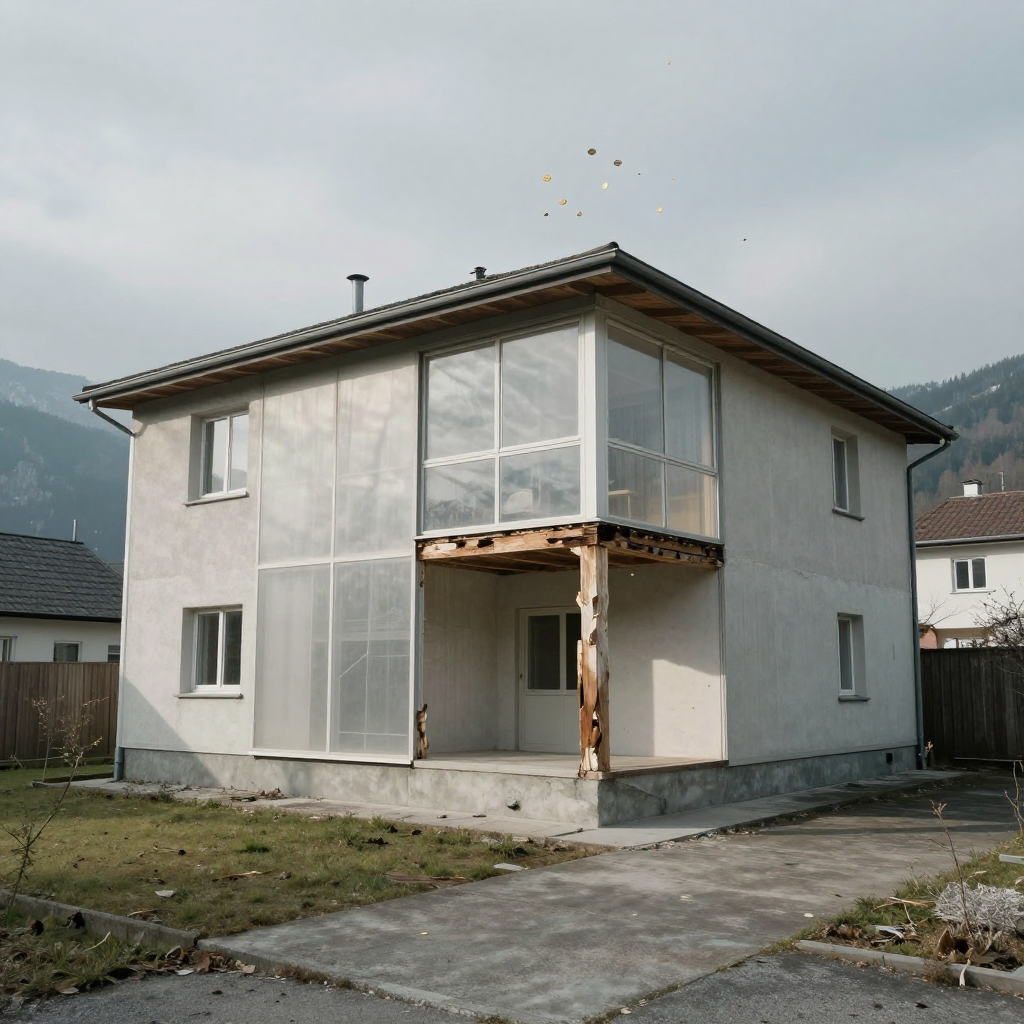
Many properties from the 1970s and 1980s have undergone multiple undocumented renovations. That charming attic conversion? Possibly built without permits. The open-plan ground floor? Maybe a load-bearing wall was removed by someone who “watched a YouTube tutorial.” Before committing to any property older than 15 years, commission a Schadensprüfung (damage inspection) by a certified Austrian structural engineer. This costs €800-1,500 but can save you from buying what one commenter accurately described as “Müll” (trash) at luxury prices.
Price Perversion: When Location Becomes an Excuse
Location Premium
In Bruck an der Leitha, Wiener Neustadt, and St. Pölten Land, prices are climbing despite many properties lacking modern insulation, proper heating systems, or adequate electrical infrastructure.
The Wine Quarter Paradox
Weinviertel: In Korneuburg, you pay premium prices. Travel 30km to Hollabrunn, and “Häuser und Wohnungen liegen unter dem Weinviertel-Durchschnitt”. Difference? Just 15 minutes on the S-Bahn.
Land Prices Tell the Same Story: While Mödling commands €474.36 per m² for building land, Waidhofen an der Thaya costs just €36.05 per m². Yet both are technically in Lower Austria. The premium you pay for the “Vienna adjacent” label often has no relationship to actual building costs or quality of life.
The Digital Mirage: Why Online Listings Are a Waste of Time
Here’s a controversial truth that agents hate admitting: “Online kannst es nahezu vergessen” (you can nearly forget about it online). The best properties in the Vienna commuter belt never hit the major portals. They move through Gemeinde (municipality) networks, word-of-mouth, and local connections.
“Tell everyone you know there that you’re looking. Eventually, you’ll receive information.”
One successful buyer explained their strategy: “Erzähl dort jedem den du kennst, dass ihr was sucht. Irgendwann bekommst dann Infos zugetragen.” Two months after their purchase, people in the local Gasthaus were still offering leads.
This creates a two-tier market:
- Tier One: Overpriced, problematic properties on Willhaben and ImmoScout, designed to catch desperate commuters.
- Tier Two: Reasonably priced, well-maintained properties that circulate in local WhatsApp groups and Gemeinde bulletin boards.
The 740k Budget Reality Check
With €740,000, you should be able to build a brand-new, high-quality Massivhaus (solid construction house) in most Lower Austrian districts. The fact that buyers are instead considering “total Schmarrn” (complete nonsense) from the 1970s shows how distorted the market has become.
Financial Breakdown
- Grundstück (building plot) in Mistelbach: €380-500/m² × 600m² = €228,000-300,000
- Massivhaus (construction): €2,500-3,000/m² × 150m² = €375,000-450,000
- Kaufnebenkosten (purchase ancillary costs) and connections: €50,000-70,000
Total: €653,000-820,000 for a brand-new, custom-built home.
Compare this to spending €740,000 on a 1978 property requiring €150,000 in immediate renovations. The financial logic is clear, but market psychology traps buyers in the “existing property” mindset.
Strategic Escapes from the Trap
1. Expand Your Geographic Definition
The Reddit poster focused on Baden, Neusiedl, Eisenstadt, and Bruck/Leitha. But as one commenter noted, they’re “übersehst hier teile vom Bezirk Neunkirchen und auch teile vom Bezirk Mattersburg” (overlooking parts of Neunkirchen district and Mattersburg district). Mattersburg, in particular, offers “echte Schmuckstücke für relativ gutes Geld” (real gems for relatively good money).
2. Consider Fertighaus Options
While many Austrians prefer Massivbau (solid construction), modern Fertighäuser (prefabricated houses) offer comparable quality at similar prices. The key advantage? No hidden defects, full warranties, and transparent pricing. As one commenter suggested: “Erkundige dich nur auch nach Massivbau. Kosten sind oft garnicht so unterschiedlich.”
3. Time Your Search Counter-Cyclically
The market shows “sinkende Preise nur in ländlicheren Gegenden” (falling prices only in more rural areas). But even in hot districts like Mödling, prices are “stabil bis sinkend”, suggesting peak prices may have been reached. The winter months (November-February) typically see 15-20% less competition.
4. Budget for the Real Costs
Remember that additional acquisition costs can add 10-12% to any purchase. For a €740,000 property, that’s €74,000-89,000 in taxes, fees, and legal costs. For new builds, factor in Erschließungskosten (development costs) which can range from €15,000-40,000 depending on location.
The Quality Checklist: Non-Negotiables
Before making any offer on a commuter belt property, verify:
- Bebauungsplan (zoning plan) compliance for all structures
- Energieausweis (energy certificate) – if it’s G or H, run
- Grundbuch (land registry) entries for liens or restrictions
- Bauschadensgutachten (building damage assessment) for pre-2000 properties
- Verkehrswertgutachten (market value assessment) to challenge inflated pricing
- Connection costs for utilities – many rural properties lack gas or fiber
The 2026 Market Outlook
According to s REAL’s market analysis, “schnellentschlossenen steht in den nächsten Monaten noch eine große Auswahl an Immobilien zur Verfügung” (quick decision-makers still have a large selection of properties available in the coming months). This suggests a window of opportunity before the market potentially heats up again.
The Weinviertel forecast confirms “eine moderate, aber stabile Entwicklung” (a moderate but stable development), meaning prices won’t crash but also won’t explode. This stability gives buyers time to conduct proper due diligence rather than rushing into bad decisions.
Final Reality Check
The Vienna commuter belt isn’t inherently overpriced, it’s selectively manipulated. The traps are laid by agents who know that desperate buyers will compromise on quality, by sellers who’ve watched too many renovation shows, and by a market structure that rewards speed over diligence.
Your €740,000 budget is more than sufficient, if you reject the premise that you must buy something immediately. Take the time to build local connections in your target Gemeinde. Consider the Grund und Haus (land and house) route. And most importantly, remember that in Austria’s current market, patience isn’t just a virtue, it’s a financial strategy that could save you €150,000 or more.
The property you want exists. It’s probably not online. And it definitely wasn’t built in 1973.