When Your Austrian Brokerage App Goes Dark: A Survival Guide to Fintech Outages

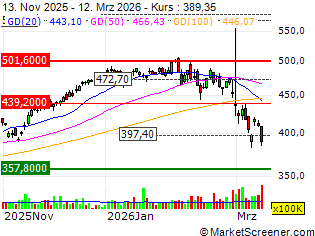
Picture this: It’s 6 PM on a Tuesday, markets are closing, and you’re trying to sell a position to cover your rent in Vienna’s 9th district. Your finger hovers over the “sell” button in your Flatex app, and… nothing. Error message. Then another. Three hours later, the platform is still down. This isn’t a hypothetical scenario, many Austrian investors recently faced this exact situation when Flatex experienced extended login failures during peak trading hours.
Welcome to the uncomfortable reality of modern investing in Austria. While we’ve gained commission-free trading and slick mobile apps, we’ve traded away something precious: the reliability of walking into your local Bank Austria branch and knowing it simply works.
The Austrian Brokerage Landscape: A House of Cards?
The Austrian market has witnessed a fintech gold rush. Traditional players like Erste Bank and DADAT now compete with neobrokers (neo-brokers) like Trade Republic and Scalable Capital. Each promises seamless investing, but beneath the glossy interfaces lies a critical question: what happens when the lights go out?
Recent incidents suggest cause for concern. When Flatex’s systems failed, investors couldn’t access accounts for hours. The frustration was palpable, some users reported preparing compensation claims, while others simply vowed to switch providers. This pattern repeats across the industry: platforms optimize for growth and low fees, but infrastructure stability becomes an afterthought.
For Austrian residents, this creates a unique vulnerability. Unlike German investors who can choose from dozens of established banks, Austria’s smaller market means fewer alternatives. When your primary broker fails, you can’t simply stroll down to the next branch on Mariahilfer Straße.
Understanding “Safety” in Austrian Brokerage Terms
Before panicking, let’s clarify what “safe” actually means in the Austrian context. The good news: your assets are probably more protected than you think.
The Einlagensicherung Safety Net
Austrian brokers must comply with strict EU regulations. Your securities aren’t sitting in the broker’s corporate bank account, they’re held by a separate Depotbank (custodian bank). If your broker goes bankrupt, your assets remain separate from the company’s insolvency estate. A trustee takes over administration, and you retain access to your holdings.
This structure is mandated by Austrian financial law, which mirrors EU directives. The system worked during the 2008 crisis and remains robust. However, and this is crucial, it only protects your assets, not your access to them. A technical outage doesn’t trigger Einlagensicherung (Deposit Guarantee Scheme) protection. You’re simply locked out until the platform restores service.
The KESt Complication
Here’s where Austrian bureaucracy adds spice to the problem. Many investors choose steuereinfache (tax-simple) brokers who automatically handle KESt (Capital Gains Tax) payments to the Finanzamt (Tax Office). If your steuereinfach broker fails, you might need to switch to a non-automated provider like Interactive Brokers, where you’ll handle tax declarations yourself via FinanzOnline. This creates a paperwork nightmare that can last months.
Red Flags: When Your Broker Is Heading for Trouble
How do you spot a fintech platform that’s one server crash away from disaster? Look for these warning signs:
When the ATX index drops 3% and everyone rushes to sell simultaneously, does the platform buckle? This indicates inadequate server capacity, a classic sign of a company prioritizing marketing over engineering.
During the Flatex incident, users complained about poor status updates. Reliable brokers post real-time system status pages and send proactive emails. Silence suggests they’re either incompetent or hiding something.
Revolut spent three years obtaining its UK banking license. While this delay frustrated users, it demonstrates regulatory scrutiny. Contrast this with platforms that expand rapidly across jurisdictions without clearing local regulatory hurdles. For Austrian investors, check if your broker is registered with the Financial Market Authority (FMA – Financial Market Authority).
Publicly traded brokers like Erste Bank publish quarterly reports. Private fintechs often disclose nothing. If you can’t find basic financial statements, assume the worst.
The Revolut Lesson: Why Licensing Matters
The news that Revolut finally secured its full UK banking license after a three-year wait offers Austrian investors a crucial lesson. CEO Nik Storonsky made it his “top strategic priority” because a banking license transforms the platform from a payment app into a regulated financial institution.

For Austrian users, this matters because:
– Deposit Protection: UK bank accounts receive £85,000 FSCS protection, separate from securities custody
– Lending Capabilities: Licensed banks can offer mortgages and loans, diversifying revenue beyond volatile transaction fees
– Regulatory Oversight: The Prudential Regulation Authority conducts stress tests and capital adequacy checks
Yet even Revolut’s victory reveals fintech fragility. The “mobilization phase” took longer than the standard 12 months, with regulators questioning whether risk controls could match growth. If Europe’s most valuable fintech struggles with stability, what about smaller platforms?
Practical Steps for Austrian Investors
1. Diversify Your Brokerage Relationships
Don’t keep all assets with one provider. Split between:
– A traditional Austrian bank (Erste Bank, Raiffeisen) for core holdings
– A low-cost neobroker for trading
– Consider a German provider as backup (N26, DKB)
This approach mirrors how Viennese locals maintain relationships with multiple banks, one for daily banking, another for mortgages, a third for investments.
2. Test Withdrawal Processes Before You Need Them
Many investors discover withdrawal limits only during emergencies. Test transferring €1,000 out of your account quarterly. If you encounter brokerage account lockout scenarios, you’ll know the process before it’s critical.
3. Maintain a “Financial Emergency Kit”
Document:
– Your depot number and IBAN
– Customer service phone numbers (not just email)
– Screenshots of your holdings (updated monthly)
– Alternative broker application (pre-filled, ready to submit)
4. Understand the Tax Implications of Switching
If you move from a steuereinfach Austrian broker to a German or international provider, you’ll need to:
– Register for FinanzOnline manual tax reporting
– Calculate KESt yourself for future sales
– File a tax return even if you previously didn’t need to
This transition typically takes one full tax year to sort out completely.
5. Monitor Platform Health
Set up Google Alerts for your broker’s name plus “Störung” (outage) or “Ausfall” (failure). Join Austrian finance communities (without mentioning specific forums) where users share real-time platform status updates.
The Bottom Line: Trust, But Verify
The Austrian financial system offers strong asset protection, but access protection remains your responsibility. Recent fintech outages prove that “free” trading comes with hidden costs, namely, reliability.
The Revolut licensing success shows that regulators are catching up, but slowly. For now, Austrian investors must act like their own risk managers: diversify providers, test systems regularly, and never assume the app will work when you need it most.
Remember, in Austria’s methodical financial culture, the old rules still apply. If something seems too good to be true (commission-free, instant-everything, always-available), it probably is. Keep a backup plan, maintain your Meldezettel (Registration Certificate) documentation for financial applications, and always know which Finanzamt office handles your district.
Your future self, trying to sell ETFs during the next market panic, will thank you for the preparation.