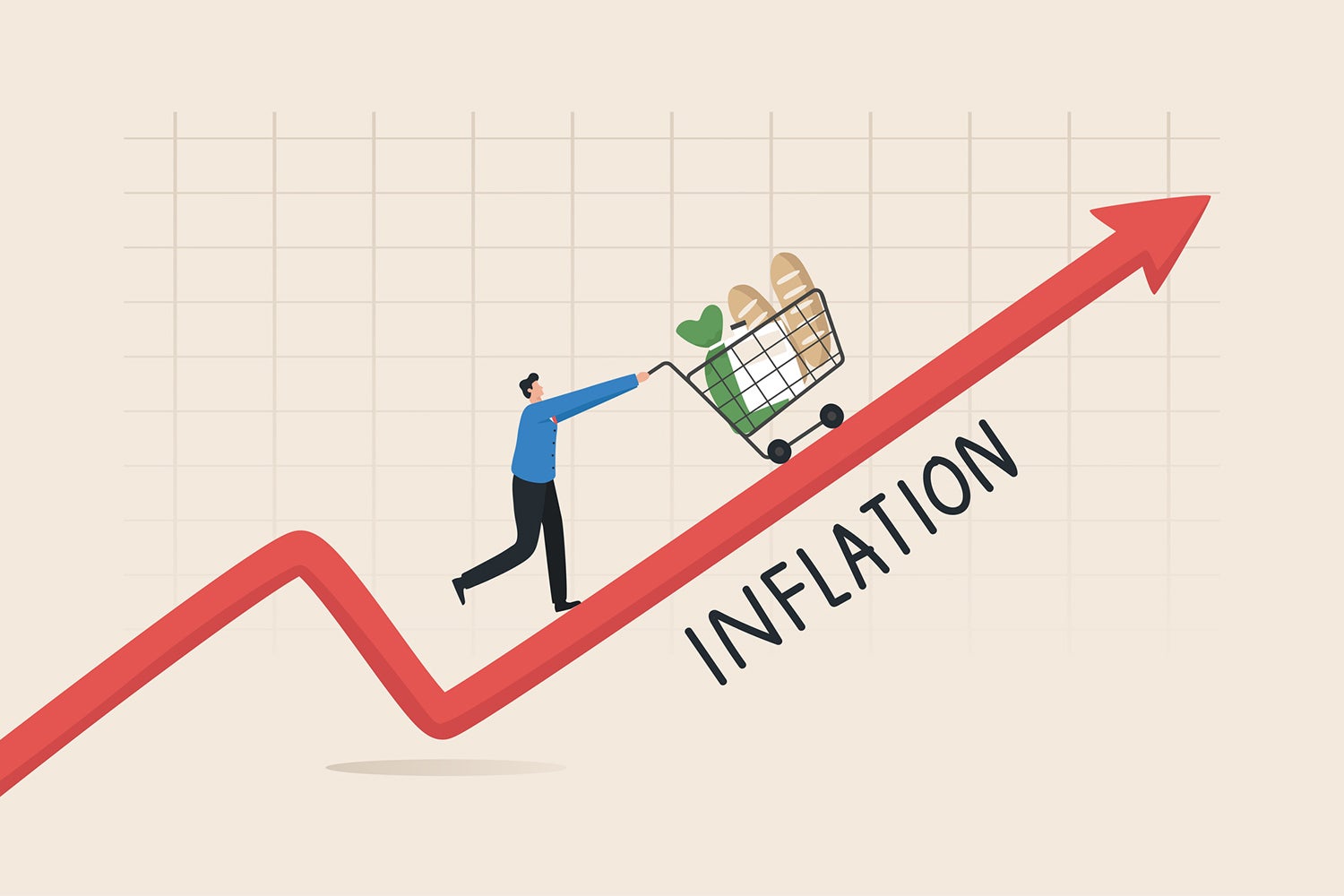
When the Austrian Statistical Office reports 3.2% inflation, but your grocery bill at Billa jumped 25% and your Nebenkosten for your Altbau flat spiked by 40%, something doesn’t add up. This isn’t your imagination playing tricks, it’s the fundamental disconnect between aggregate economic statistics and individual financial reality.
Official inflation metrics like Austria’s Verbraucherpreisindex (VPI) are designed to measure average price changes across a standardized basket of goods. But your life isn’t standardized. You might spend 40% of your income on housing in Vienna’s overheated rental market while the official basket weights housing at 20%. You might be vegan in a country where meat prices heavily influence food inflation calculations. Or you might be a Pendler whose mobility costs are crushing your budget while public transport subsidies suppress the official transport inflation figure.
The Government’s Inflation Mirage
Here’s where it gets politically spicy: government interventions actively distort the numbers you’re told to trust. Research shows that state-controlled goods and services, public transport, healthcare, education, utilities, make up roughly 12.5% of the official inflation basket. When the government freezes ticket prices for Wiener Linien or caps electricity rates through regulatory action, they’re not just helping your budget. They’re artificially suppressing the inflation statistics that determine your Lohnsteuer brackets, your pension increases, and your employer’s salary negotiation framework.
The result? A two-percentage-point gap between what inflation would be without state intervention and what gets reported. That “moderate” 2.5% official figure might actually be 4.5% in market reality. Your Finanzamt uses the lower number to index tax brackets. Your employer uses it to justify “inflation-adjusted” raises of 3%. Meanwhile, your actual cost of living explodes.
The DIY Solution: Personal Inflation Tracking
Frustrated by this data gaslighting, some Austrians are taking matters into their own hands. A recent app launch from Lower Austria demonstrates how accessible technology has become for personal financial intelligence. The tool, built without traditional programming skills using AI-assisted development, scans your Kassenbons via OCR and tracks fixed costs like Miete, Strom, and insurance manually. Over time, it calculates your individualized inflation rate based on your actual spending patterns, not some bureaucrat’s theoretical basket.
The technical architecture is surprisingly robust: SQLite database running locally on your device (no cloud, no data harvesting), OCR integration for receipt scanning, and statistical processing that weights your expenses by their actual impact on your budget. Privacy-first design means your complete financial history never leaves your phone, a stark contrast to budgeting apps that monetize your data.
The Controversy: Useful Tool or Data Theater?
Not everyone is convinced. Financial forums have erupted with skepticism about whether tracking personal inflation actually improves financial decisions. Critics argue that knowing your personal inflation rate is 8% doesn’t magically increase your ETF returns or force your employer to pay more. They point out that your Girokonto already shows spending trends, making manual receipt scanning feel like unnecessary busywork.
The counterargument is equally compelling: traditional budgeting tools show what you spent, but not whether your wealth is actually growing in real terms. If your portfolio returned 6% but your personal inflation is 9%, you’re losing purchasing power despite nominal gains. This becomes critical for long-term planning, especially for Austrian residents navigating the complex interplay between mandatory Betriebliche Vorsorge, private pensions, and state pension systems that use official inflation figures for adjustments.
The salary negotiation feature particularly resonates in Austria’s collective bargaining culture. While you can’t march into your boss’s office demanding a 10% raise because your personal inflation says so, you can use the data to understand your real financial position. When the Betriebsrat negotiates a 4% Tariflohn increase against 2.5% official inflation, but your rent, childcare, and commuting costs rose 12%, you know it’s time to either renegotiate, find a new position, or radically adjust your lifestyle expectations.
Austrian-Specific Implications
For Austrian residents, this gap has concrete consequences beyond grocery bills. The Finanzamt uses official inflation to index various tax thresholds. If your salary keeps pace with real inflation rather than official numbers, you might cross into higher Lohnsteuer brackets faster than the system anticipates, creating a stealth tax increase. Your Bausparvertrag returns might look adequate against 2% inflation but prove disastrous against your actual 7% cost increase.
The Pendlerpauschale adjustments lag behind real transport cost inflation. Your Genossenschaftswohnung’s maintenance fees might spike due to energy costs while your rent stays stable, creating a hidden inflation that official metrics miss entirely. Even the Familienbonus and Kinderbetreuungsgeld lose purchasing power when their nominal values remain fixed while your personal inflation runs hot.
The Technical Reality Check
The app’s development story reveals another modern truth: AI-assisted development has democratized software creation. A logistics professional with zero programming background built a functional financial analytics tool using no-code frameworks and AI code generation. This isn’t just about inflation tracking, it’s about Austrian residents being able to build custom financial tools that address local regulatory quirks, language requirements, and specific tax implications that global apps ignore.
The OCR component is particularly relevant for Austria’s receipt culture. Every Billa, Hofer, and Spar receipt contains detailed product information that, when aggregated over time, reveals precise inflation patterns for your actual consumption basket. The difference between official food inflation (heavily influenced by commodity prices) and your personal food inflation (reflecting actual shopping choices, organic preferences, dietary restrictions) becomes starkly visible.
When Personal Tracking Makes Sense
The value proposition isn’t universal. If you rent a stabilized Genossenschaftswohnung, use public transport exclusively, and shop primarily at discount supermarkets, your personal inflation might closely track official figures. But if you’re house-hunting in Vienna’s brutal rental market, paying private Kindergarten fees, commuting by car, or dealing with specific medical expenses, the gap becomes financially meaningful.
The key insight: personal inflation tracking isn’t about precision, it’s about directionality. You don’t need to scan every coffee receipt. Tracking major expense categories quarterly gives you enough data to spot dangerous trends. When your housing costs jump 15% year-over-year while official housing inflation shows 3%, you have actionable intelligence about your financial trajectory.
Bottom Line for Austrian Residents
The official Konsumentenpreisindex serves its purpose for macroeconomic policy and broad indexation, but it’s dangerously inadequate for personal financial planning. Austria’s unique mix of strong social safety nets, heavy state involvement in pricing, and complex tax system creates a perfect storm where official numbers systematically understate personal cost pressures.
You have three options: trust the official numbers and potentially erode your wealth, build your own tracking system, or find a middle ground by periodically auditing major expense categories against official sub-indices. The technology barrier has collapsed, if you can use a smartphone, you can measure your personal inflation. The real question isn’t whether you can track it, but whether you’re comfortable making financial decisions based on data you know is wrong.
Your Gehaltsverhandlung, your investment strategy, your retirement planning, all these critical decisions deserve numbers that reflect your reality, not a statistical average that includes households with radically different consumption patterns than yours. In an economy where the Finanzamt and your employer rely on official inflation, understanding your personal gap becomes a form of financial self-defense.