
German bureaucracy has a reputation that precedes it, usually in the form of nightmares about endless forms, stone-faced officials, and processes that move slower than Berlin airport construction. The Finanzamt (Tax Office) sits at the center of this reputation, often portrayed as the final boss in a video game where the prize is simply keeping your sanity. Yet buried beneath the horror stories lies something radical: actual positive experiences with tax authorities who seem to understand their job involves helping people navigate complexity rather than punishing them for it.
The Inheritance Tax Maze Where Help Actually Exists
Picture this: you’re dealing with an Erbengemeinschaft (inheritance community), juggling an Einkommensteuererklärung (income tax return) that now involves Immobilie (real estate) and the notorious Fußstapfen-Regelung (footstep regulation, a German tax provision for inherited property). This is where most people expect the system to crush them under its weight. Instead, many report calling their local Finanzamt and encountering something shocking: humans who answer phones, take notes that actually get acted upon, and proactively call back when something looks unclear.
One recent account described three employees across two different tax offices who didn’t just process paperwork but actively supported a taxpayer through this labyrinth. They noted hints in the system, followed up on their own initiative, and, perhaps most surprisingly, didn’t escalate minor sums into major headaches. For anyone who’s spent hours on hold only to be told they’ve called the wrong department, this sounds like fantasy.
The key insight? These positive interactions happened during genuinely complex personal financial matters. We’re not talking about simple tax returns here, but inheritance scenarios where the difference between tax classes can mean hundreds of thousands of euros. When the stakes are high and the rules are Byzantine, having a competent, helpful Finanzamt employee becomes less of a luxury and more of a financial survival tool.
Why Speed Matters: The Hoyerswerda Example
The Finanzamt Hoyerswerda doesn’t just have helpful staff, it has fast ones. According to recent data, this Saxony office ranks among Germany’s quickest at issuing income tax assessments. While other Oberlausitz (Upper Lusatia) offices take significantly longer, Hoyerswerda’s leadership duo of Amtsleiter (office manager) Alexander Schulze and his deputy Dana Petermann have built a system that actually delivers on the promise of German efficiency.
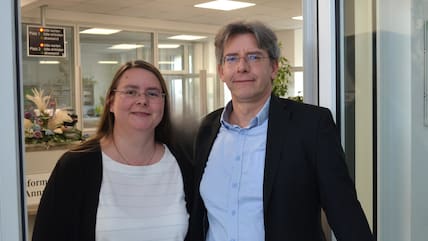
This matters because tax processing speed isn’t just about convenience, it’s about financial planning. When you’re waiting for a Steuerbescheid (tax assessment) to know whether you owe €5,000 or receive a €3,000 refund, every week of delay ripples through your budget. Fast processing means you can make informed decisions about investments, property purchases, or even how German tax calculations impact net income and financial decisions.
The Inheritance Tax Numbers That Make Good Service Critical
Here’s where helpful Finanzamt employees become worth their weight in gold: German Erbschaftsteuer (inheritance tax) is a minefield of thresholds that can vaporize family wealth if mishandled. The system divides heirs into three Steuerklassen (tax classes):
- Steuerklasse I: Spouses (€500,000 tax-free), children (€400,000 per parent), grandchildren (€200,000)
- Steuerklasse II: Siblings, nieces, nephews (€20,000 tax-free)
- Steuerklasse III: Everyone else (€20,000 tax-free)
The difference is brutal. A child inheriting €750,000 pays €52,500 in tax. A niece inheriting the same amount pays €219,000, over four times more. This isn’t theoretical, it’s the reality families face daily across Germany.
When you’re navigating these rules, perhaps trying to structure a Vermächtnis (legacy) or understand how the Zehn-Jahres-Frist (ten-year rule) affects your ability to gift assets tax-free, a knowledgeable Finanzamt employee can mean the difference between preserving family wealth and watching it dissolve. The ten-year rule allows you to reset gift tax exemptions each decade, meaning a married couple with two children could theoretically transfer €1.6 million tax-free through strategic planning. But only if you understand the system’s nuances.
Digitalization: The Unsung Hero of Tax Office Efficiency
Many tax offices have achieved what other German authorities haven’t: functional digitalization. The ability to submit Erbschaftsanzeige (inheritance notifications) via ELSTER, Germany’s electronic tax filing system, represents genuine progress. While the Bundesagentur für Arbeit (Federal Employment Agency) still faxes things (probably), the Finanzamt has moved into the 21st century.
This digital backbone explains why some offices can process returns quickly and why employees have time for actual service rather than drowning in paper. It’s also why the Finanzamt often has better information sharing than other agencies, Standesämter (registry offices), Nachlassgerichte (probate courts), and Notare (notaries) all feed data into the system, creating a web that catches unreported inheritances.
The consequence? Trying to avoid reporting an inheritance is increasingly foolish. The system knows. Within three months of learning about an inheritance, you must inform your Finanzamt or risk Bußgeld (fines) or worse. But here’s the twist: many who report promptly and honestly find the process surprisingly straightforward, especially when they encounter those rare helpful employees.
The Human Factor: Why Being Nice Actually Works
Multiple accounts confirm a simple truth: Finanzamt employees respond to how they’re treated. Those who approach the office with respect and without creating unnecessary stress often receive the same in return. This shouldn’t be revolutionary, but in a country where interacting with authorities can feel like declaring war, it’s practically insider knowledge.
One taxpayer noted that staff “didn’t escalate the matter higher than necessary” for small sums, a refreshing contrast to the stereotype of German officials who’d audit you over a €5 discrepancy. This suggests a pragmatic culture exists in some offices: focus resources on significant cases, help the small fish comply, and everyone wins.
This human element becomes crucial when you’re making decisions that affect your long-term financial security. Whether you’re considering the financial trade-offs of employment choices under Germany’s tax system or trying to understand how crossing certain income thresholds affects your interaction with tax authorities, having a cooperative relationship with your local Finanzamt transforms the experience from adversarial to collaborative.
Property Taxation: Where Good Advice Saves Fortunes
German property taxation adds another layer of complexity that makes competent Finanzamt guidance invaluable. The Familienheim (family home) exemption allows spouses to inherit property tax-free if they live there for ten years. Children get a similar benefit but capped at 200 square meters. In Stuttgart or Munich, where modest apartments exceed €400,000, these rules determine whether families keep their homes or must sell to pay taxes.
A helpful Finanzamt employee who explains these rules clearly, perhaps pointing out how Vorbehaltsnießbrauch (reserved usufruct) can reduce taxable value while maintaining income, provides a service beyond mere compliance. They enable wealth preservation. This becomes even more critical when you consider property taxation and housing costs as part of broader financial obligations involving the Finanzamt.
The Bottom Line: Bureaucracy Isn’t Broken Everywhere
The narrative that German administration is universally terrible serves no one, except perhaps those who profit from tax advisory services. While horror stories exist (and yes, some Finanzamt employees are as pleasant as a root canal), the system contains pockets of genuine competence and even helpfulness.
The Hoyerswerda example proves speed is possible. The inheritance tax accounts prove clarity and support exist. The digital infrastructure proves modernization isn’t a myth. For every tale of woe, there’s a counterstory of an employee who took the time to explain the Fußstapfen-Regelung properly or who called back to clarify a missing document rather than simply rejecting the filing.
This matters because tax compliance in Germany isn’t optional, and the penalties for getting it wrong are severe. When the Finanzamt functions well, it doesn’t just reduce stress, it actively helps citizens make better financial decisions. In a system where understanding the high social contributions deducted from gross income is already complex enough, having tax authorities that help rather than hinder is a quiet revolution worth celebrating.
So next time you’re dreading that call to the Finanzamt, remember: you might just get one of the good ones. And if you do, maybe tell them thanks. In German bureaucracy, positive reinforcement might be the rarest currency of all.