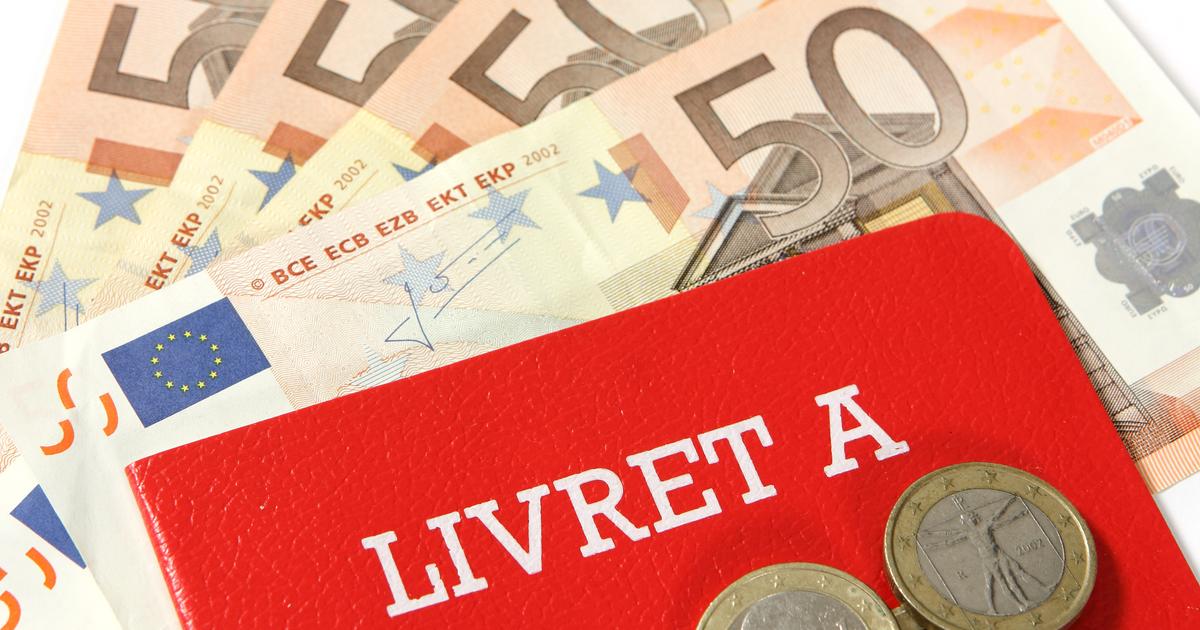
The French government confirmed what millions of savers dreaded: the Livret A (regulated savings account) rate drops from 1.7% to 1.5% on February 1, 2026. Minister of Economy Roland Lescure called it a “slight decrease” that “preserves purchasing power” since inflation hovers at 0.8%. Yet across online forums and bank branches, a different story emerges, one of frustration, confusion, and a quiet exodus toward riskier alternatives.
The Math Behind the Decision
The rate isn’t pulled from thin air. It’s calculated using a rigid formula: half based on the ESTER (Euro Short-Term Rate), half on second-half 2025 inflation (excluding tobacco). This calculation produced 1.4%, but the Banque de France (France’s central bank) governor exercised his discretionary power to round it up to 1.5%.
This “coup de pouce” (boost) sounds generous until you realize the same governor kept rates artificially low for 18 months between August 2023 and January 2025, costing savers hundreds of millions in lost interest. The system giveth, but it mostly taketh away.

Why 1.5% Feels Like a Pay Cut
French social media users aren’t buying the official narrative. Many point out that while INSEE (National Institute of Statistics and Economic Studies) reports 0.8% inflation, their personal bills tell a different story. One commenter noted their electricity bill jumped 10% despite cutting consumption by 30%. Another called the inflation figure “bidonné” (rigged).
This disconnect fuels a deeper resentment: the Livret A isn’t just a savings account, it’s a state-mandated financial product that finances HLM (social housing) and public infrastructure. Savers get below-market returns while the state accesses cheap capital. As one forum user explained: “You use a savings product with a tax agreement with the state. In exchange, you don’t decide the rate or what it finances behind the scenes.”
The LEP: A Better Deal Most People Can’t Access
The LEP (Livret d’épargne populaire or Popular Savings Account) offers 2.5%, a full point higher, but only if your revenu fiscal de référence (taxable income reference) falls below €22,823 for a single person or €35,013 for a couple. In 2024, 31 million French people were eligible, yet only 11.9 million LEP accounts existed.
Why the gap? Three reasons emerge from the data:
- Capacity to save: Those with modest incomes often can’t afford to lock away even €1,000
- Information failure: Many eligible households simply don’t know the LEP exists
- Bank inertia: Until 2021, banks had to manually verify eligibility annually, creating friction
The government has tried to boost uptake, with the Banque de France calling the LEP crossing 10 million accounts in 2023 a “historic breakthrough.” Yet even with automatic verification now in place, uptake remains stubbornly low.
Real Numbers, Real Pain
Let’s cut through the percentages. The average Livret A balance is €7,482, barely one-third of the €22,950 ceiling. At 1.7%, that earned €127.19 in annual interest. At 1.5%, it drops to €112.23. That’s €14.96 less per year, or about the price of two baguettes per month.
For someone maxing out their Livret A at €22,950, the difference is more substantial: €344.25 versus €390.15 annually, a €45.90 haircut.
The ETF Exodus
Forum discussions reveal a clear trend: “Tout va partir dans les ETF” (Everything’s moving to ETFs). Younger savers, frustrated by state-controlled rates, are shifting their long-term savings to stock market index funds. One user warned: “Attention à ne pas taper dans l’épargne de précaution” (Be careful not to touch your emergency fund), a crucial distinction.
The Livret A remains unbeatable for épargne de précaution (emergency savings) due to three non-negotiable features:
– Immediate liquidity
– Capital guarantee backed by the state
– Zero tax or social charges
But for anything beyond 3-6 months of expenses, the 1.5% rate looks increasingly indefensible when assurance-vie (life insurance) funds offer 3-4% and ETFs have historically returned 7-10% over long periods.
What Should You Actually Do?
Keep your Livret A for its intended purpose: emergency fund only. Calculate your true needs, 3-6 months of essential expenses. If you spend €2,500/month, that’s €7,500-€15,000. Anything beyond that belongs elsewhere.
If you’re LEP-eligible, open one immediately. The 2.5% rate is a rare gift from the French bureaucracy. The income thresholds are based on your avis d’imposition (tax notice) from two years prior, so a temporary income spike might not disqualify you.
For medium-term goals (5+ years), consider:
– Assurance-vie en fonds euros (euro-denominated life insurance funds) for 3-4% returns with moderate risk
– PEA (Plan d’épargne en actions or stock savings plan) for tax-advantaged stock market access
– ETFs within an assurance-vie for diversified, low-cost market exposure
The key is separating your sécurité (security) money from your performance money. The Livret A remains excellent for the former and terrible for the latter.
The Bigger Picture
This rate cut reflects France’s broader economic strategy: keep borrowing costs low for public projects while inflation cools. But it reveals a tension in the country’s love affair with state-guaranteed savings. The product that helped post-war generations build wealth now feels like a financial straightjacket to younger savers facing housing costs that rise far faster than official inflation.
The government’s own data shows 83% of French households hold a Livret A, collecting an average of €112 per year in interest. That’s not a savings strategy, it’s a symbolic gesture. And as more savers realize this, the challenge won’t be setting the rate, but keeping people from leaving the system entirely.
For now, the Livret A remains useful for one thing: parking your cash while you figure out a real investment strategy. Just don’t let the state’s guarantee lull you into accepting returns that barely beat inflation.