Paris Office Market Meltdown: Why Your SCPI Investment Could Be Worth Half What You Paid
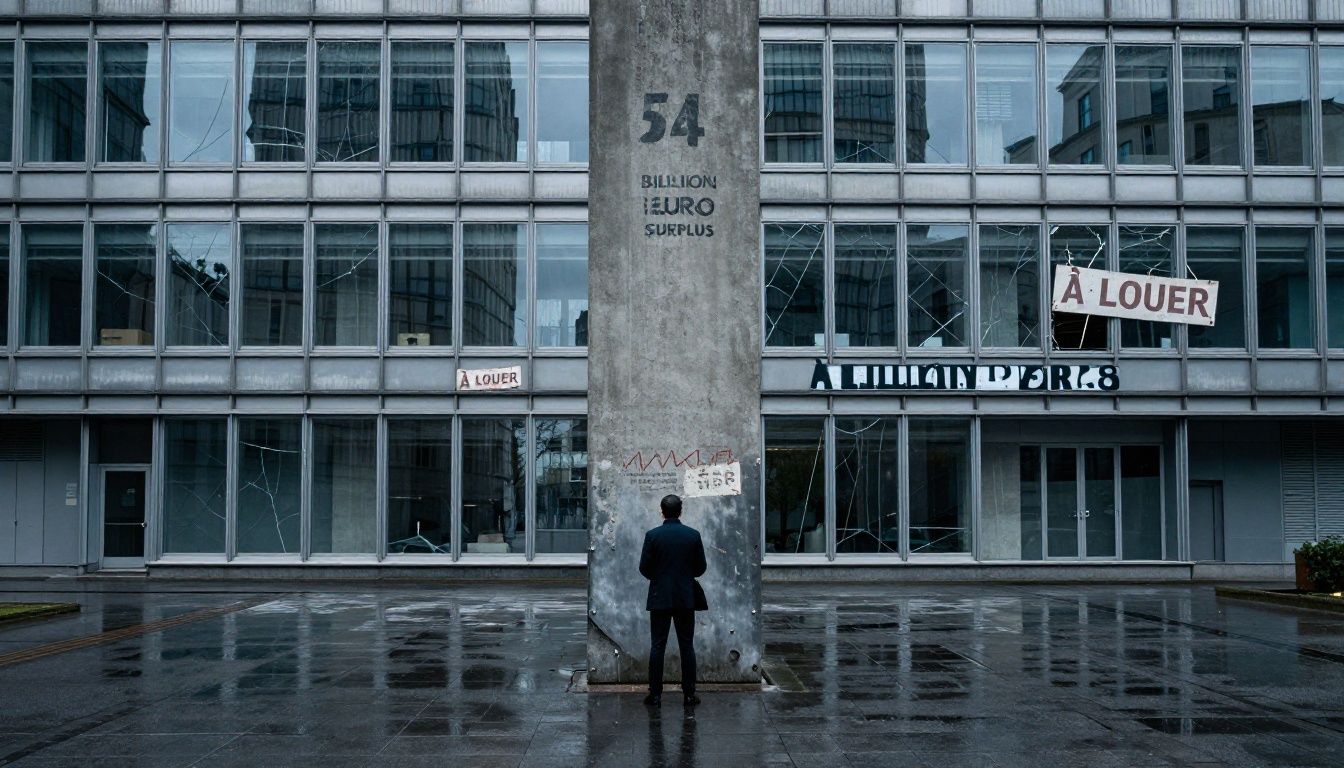
If you bought into a French SCPI (Société Civile de Placement Immobilier – real estate investment trust) thinking you owned a slice of stable Parisian office buildings that would pay steady dividends, the next few years might deliver a nasty surprise. The Île-de-France office market is facing a 54 billion euro tsunami of supply that could crush property values and leave investors holding severely discounted shares they can’t sell.
The 54 Billion Euro Problem No One Saw Coming
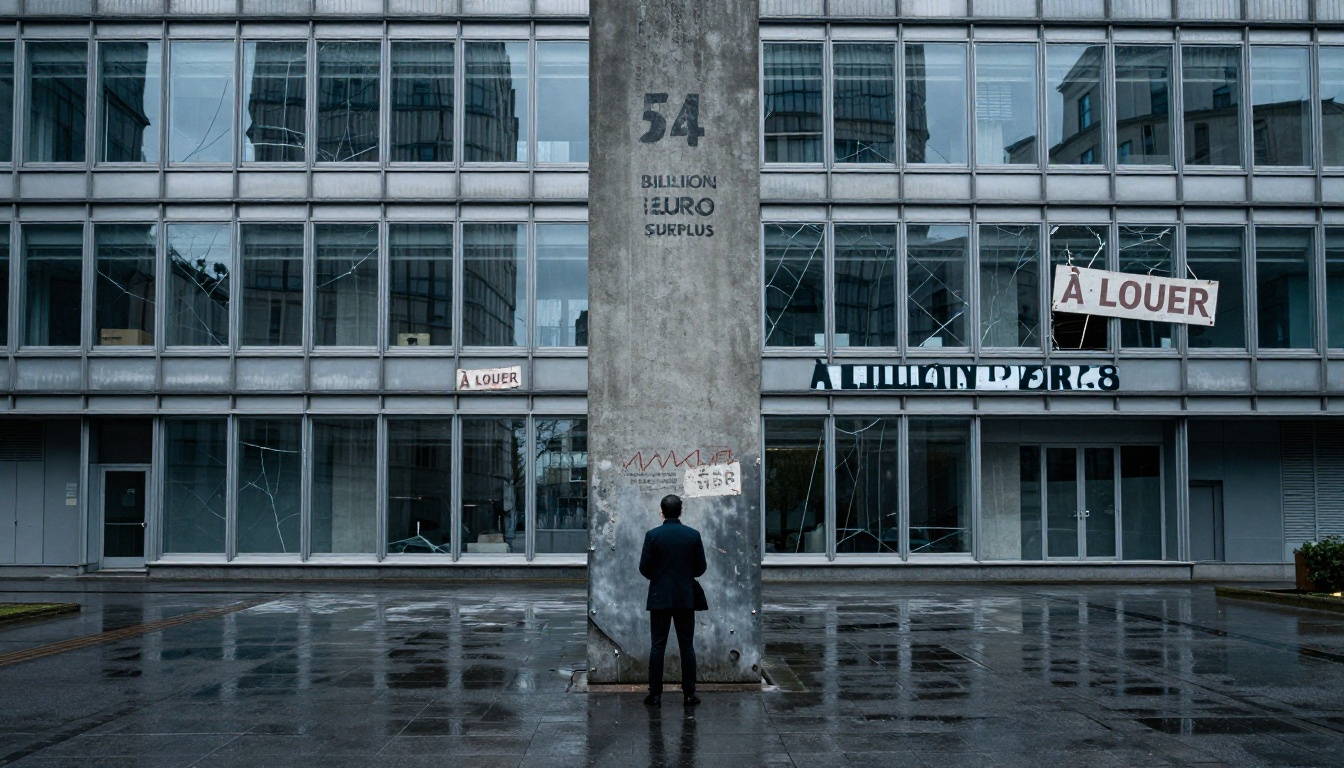
Here’s the stark reality from Knight Frank’s latest study: by 2029, approximately 54 billion euros of office assets in the Paris region could hit the market. The catch? The market can only absorb about 15 billion euros. That’s a gap wider than the Seine, and it’s already creating a buyer’s market where opportunistic investors are slashing prices to fire-sale levels.
The situation gets worse for SCPIs, which hold roughly 28 billion euros of assets maturing by 2029. Only 9.2 billion of that would be sellable under current conditions. The rest? It’s what real estate professionals politely call “challenging” and what investors are starting to call “toxic.”
The geography of the crisis matters enormously. Small to medium-sized buildings in central Paris (4,000-8,000m²) with good transport links and multiple tenants still find buyers. But the large volumes in the western crescent, Boulogne-Billancourt, Issy-les-Moulineaux, Neuilly-sur-Seine, Levallois, are sitting vacant, some for years. The Hopen tower at La Défense, the Bahia building in Nanterre, and parts of the Citylight complex in Boulogne are empty shells advertising rents around 300 euros per square meter, down 6% from 2019.
This bifurcation is crushing SCPIs that diversified into these “premium” suburban locations, expecting stable long-term tenants. Instead, they’re getting structural vacancy.
Why SCPIs Are Trapped in a Liquidity Squeeze
Unlike institutional investors or insurance companies, SCPIs operate with razor-thin margins and limited maneuverability. They can’t afford to sit on empty buildings for years, waiting for the market to recover. An unoccupied 10,000m² office building costs its owner up to 2 million euros annually in taxes, maintenance, security, and insurance. When your business model depends on rental income, that’s a hemorrhage you can’t sustain.
Real Investors Are Already Feeling the Pain
The theoretical crisis is already hitting real portfolios. Investors report devastating losses on what were marketed as safe, income-generating investments. One investor who put 19,000 euros into a nue-propriété SCPI (a structure where you buy the property but not the usufruct) through Primopierre saw their investment drop to 9,000 euros in value with five years still before payout. That’s a 53% paper loss with no easy exit.
Another investor reports a 35% loss on their SCPI investment, with shares that have become essentially unsellable. They describe it as the “thorn in their foot that will stick with them for life”, representing the only part of their portfolio they haven’t been able to salvage. The fortunate part? It was only 8% of their investable capital. They shudder to think of retirees who parked their entire savings in these products.
These aren’t isolated cases. The secondary market for SCPI shares is frozen, with sellers forced to accept steep discounts just to find a buyer. Some managers have even suspended redemptions entirely, trapping investors in failing funds.
The Conversion Mirage Won’t Save Most SCPIs
The obvious solution, convert empty offices into housing, sounds great in theory but collapses under French bureaucratic reality. Yes, the potential exists: vacant office stock in Île-de-France could theoretically create 8.8 million m² of housing plus 1.5 million m² of services. The Banque de France notes that between 2013 and 2022, over 5.8 million m² of tertiary buildings were converted into roughly 109,000 housing units.
- Cost: Conversion requires massive upfront investment that most SCPIs can’t afford
- Time: The process takes years, not months, involving municipal approvals, urban planning modifications, and navigating complex administrative procedures
- Technical barriers: Many office buildings simply aren’t suitable for residential conversion due to structure, location, or infrastructure
- Political risk: Local authorities can block or delay projects, and recent legislation, while facilitating conversions, hasn’t removed all obstacles
Why This Crisis Is Structural, Not Cyclical
The office market isn’t just experiencing a downturn, it’s undergoing a permanent shift. The combination of remote work, changing corporate space needs, and the end of zero interest rates has created a perfect storm:
- Demand destruction: Companies need 20-30% less office space post-pandemic
- Refinancing shock: Buildings financed at near-zero rates now face refinancing at 4-5%
- Risk repricing: Investors now demand higher yields, pushing valuations down
- Liquidity freeze: The least desirable assets, large, suburban office buildings, are the first to become unsellable
This isn’t a cycle that will bounce back in 18 months. It’s a structural reset that will permanently impair assets that made sense in 2015 but are obsolete in 2026.
What Happens Next: The Forced Liquidation Scenario
Asset managers face an impossible choice: sell now at a loss or hold and bleed cash. Many are choosing to slash rents by 50% just to attract tenants, destroying their own income streams in the process. Others are putting properties on the market at prices that would have been unthinkable three years ago.
The Knight Frank study reveals that around forty SCPI-owned buildings are currently for sale, with real difficulties finding buyers. The fear of “stigmatizing” assets by putting them on the market too early is palpable among managers, but many have no choice.
For the 28 billion euros of SCPI assets maturing by 2029, the math is brutal. If only 9.2 billion is sellable, what happens to the other 18.8 billion? It either gets sold at massive discounts, converted at great expense, or held until the SCPI itself becomes insolvent.
What Investors Should Do Now
If you hold SCPI shares, you’re facing a liquidity trap. The traditional advice of “hold for the long term” assumes the underlying asset has value. But if your SCPI holds large office buildings in the western suburbs, that assumption is shaky.
- Assess your exposure: Check what percentage of your SCPI’s portfolio is in Île-de-France offices, particularly large suburban buildings
- Check redemption terms: Some SCPIs have suspended redemptions. If yours hasn’t, consider your exit options carefully
- Understand the discount: Selling on the secondary market means accepting a 20-40% discount, but that might be better than watching it evaporate further
- Diversify away: If you can exit, redirect capital into more liquid, less exposed investments. The broader SCPI liquidity crisis shows this isn’t isolated to offices
The Perial SCPI freeze last year was a warning shot. When major managers suspend capital variability, the ability to cash out, they’re signaling that the asset class itself is under stress. The Paris office crisis is the catalyst that could turn that stress into a systemic failure for office-heavy SCPIs.
The Bottom Line
The Paris office market crisis isn’t just a real estate story, it’s a retail investor crisis. SCPIs marketed “safe” real estate exposure to conservative savers, but those same savers now own shares in funds holding assets that may never recover their value. The 54 billion euro oversupply means prices must fall, and SCPIs lack the financial firepower to wait it out.
For investors, the choice is stark: accept a painful loss now or risk a bigger one later. The office market isn’t coming back to 2019 levels, and the SCPIs that bet heavily on it are facing an existential threat that no amount of bureaucratic conversion schemes can fix.
The “safe” investment has become a liquidity trap. The only question is how much you’ll pay to get out.