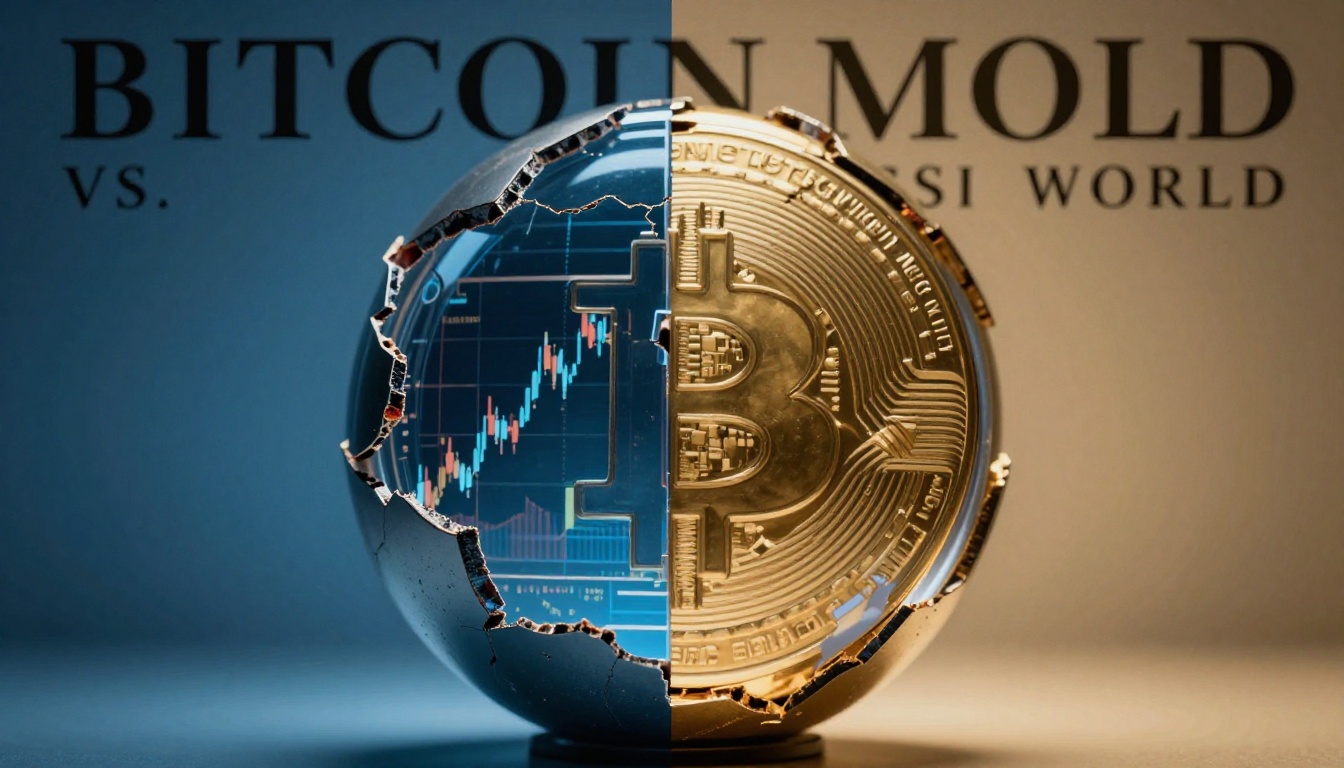
Bitcoin vs. MSCI World: Is Crypto Still a Viable Long-Term Investment?
That Reddit post hit like a cold shower: Bitcoin bought five years ago underperformed the boring, dependable MSCI World. For German investors who’ve been dutifully feeding their ETF-Sparplan (ETF savings plan) month after month, this feels like vindication. For crypto believers, it’s a gut punch that raises an uncomfortable question: if Bitcoin can’t beat the most mainstream index during its supposed golden age, what exactly is it for?
The numbers don’t lie, but they also don’t tell the whole story. A five-year window ending in early 2026 captured Bitcoin’s meteoric 2021 rise and its brutal subsequent fall, while the MSCI World steadily chugged along, powered by a US tech sector that now makes up nearly 72% of the index. This isn’t the simple story of “traditional investing good, crypto bad” that many deutsche Anleger (German investors) want it to be. It’s a tale of concentration risk, narrative collapse, and a fundamental debate about what “long-term value” actually means.
The Five-Year Reality Check
Let’s start with the uncomfortable truth. The Reddit comparison that sparked this debate showed that Bitcoin purchased in early 2021 and held through early 2026 delivered lower returns than the same amount invested in an MSCI World ETF. This wasn’t some cherry-picked anomaly, it reflected a genuine shift in risk-adjusted performance that has many investors rethinking their Krypto-Investitionen (crypto investments).
The MSCI World’s strength during this period came from two sources: rising US equity prices and a strengthening dollar against the euro. For German investors using a Sparplan (savings plan), this currency tailwind boosted returns significantly. Every dollar of Apple or Microsoft gains translated into more euros, creating a compounding effect that crypto’s volatility simply couldn’t match.
But here’s where the comparison gets messy. The MSCI World isn’t the diversified global portfolio many Germans believe it is. With 71.9% US exposure, it’s essentially a US tech fund with some international window dressing. When you buy the MSCI World, you’re making a massive bet on American megacap stocks continuing their dominance. This concentration risk in the MSCI World ETF has become impossible to ignore, especially as geopolitical tensions rise and questions about US market sustainability grow louder.
Crypto’s Narrative Crisis
Bitcoin’s underperformance isn’t just about numbers, it’s about narrative collapse. The original promise was that crypto would deliver returns uncorrelated to traditional markets while hedging against inflation and currency debasement. For five years, that promise largely held. Then 2022 happened, and the correlation between Bitcoin and tech stocks spiked to uncomfortable levels.
The Reddit discussion captured this sentiment perfectly. One commenter noted that Bitcoin “lives on the promise of higher growth than conventional investments (no real underlying value).” When that promise falters, even temporarily, the entire investment thesis comes under scrutiny. If Bitcoin can’t outperform when markets are volatile and inflation is high, the exact conditions it’s supposed to thrive in, then what exactly is its role?
German investors are particularly sensitive to this question. The BaFin (Federal Financial Supervisory Authority) has been warning about crypto risks for years, and the recent market turmoil has validated many of those concerns. A 2026 survey showed that 65% of German women and 48% of German men still don’t consider Bitcoin a legitimate investment. The long-term performance myths of MSCI World seem more reliable than crypto’s volatile promises.
The Institutional Divide
While German retail investors remain skeptical, institutional professionals are taking a radically different view. According to recent data, 70% of institutional investors believe Bitcoin is currently undervalued. Their six-month price target averages $105,072, representing a significant premium to current levels.
This disconnect isn’t just about risk tolerance. Institutions are looking at different metrics: Bitcoin’s hash rate stability, the growth of the Lightning Network, corporate treasury adoption, and the maturation of custody solutions. They’re less concerned with five-year returns and more focused on network effects and long-term positioning.
The data supports their optimism in some ways. Despite the price drop, Bitcoin’s fundamentals remain intact. The network continues processing transactions, institutional custody solutions have matured, and regulatory clarity, while still evolving, has improved significantly. The Fear & Greed Index currently sits at 14, indicating extreme fear among retail investors. Historically, such readings have marked attractive entry points for contrarian investors.
The German Tax Factor
For deutsche Anleger, the tax implications of this debate are substantial. Crypto holdings in Germany benefit from a unique rule: after one year of holding, gains become completely tax-free. This Spezialregelung (special regulation) creates a powerful incentive for long-term crypto holding that doesn’t exist for stocks or ETFs.
Compare this to ETF investments, where the Abgeltungssteuer (withholding tax) of 25% applies regardless of holding period (though the Sparerpauschbetrag (savings allowance) of €1,000 provides some relief). A German investor who held Bitcoin for five years could sell today and pay zero taxes on gains, while their MSCI World counterpart would lose a quarter of their profits to the Finanzamt (Tax Office).
This tax advantage means that even if Bitcoin and MSCI World delivered identical returns, the crypto investor would keep more money. Yet most German investors remain unaware of this benefit, viewing crypto through a lens of volatility rather than tax efficiency.
Regulatory Headwinds and Tailwinds
The German crypto landscape is evolving rapidly. The BaFin continues to issue warnings about unlicensed platforms, but legitimate providers are gaining ground. The Deutsche Börse recently launched trading in tokenized stocks, signaling institutional acceptance. Meanwhile, the EU’s MiCA (Markets in Crypto-Assets Regulation) framework promises standardized rules across Europe by 2026.
These developments matter for long-term viability. A regulated, transparent crypto market is more likely to attract institutional capital and reduce volatility. But regulation also means compliance costs and potential restrictions that could limit upside. German investors must weigh these factors carefully.
Portfolio Construction Questions
The core question isn’t whether Bitcoin beats MSCI World over arbitrary five-year periods. It’s whether crypto deserves a place in a diversified portfolio alongside traditional assets. Here, the data gets interesting.
Bitcoin’s correlation with stocks has varied dramatically. During certain periods, it offered genuine diversification benefits. During others, it moved in lockstep with risk assets. This inconsistency frustrates German investors who value Sicherheit (security) and predictability.
Yet the opportunity cost of safe investments vs. market exposure remains real. Germans hold enormous amounts in Tagesgeld (overnight deposits) and Bausparverträge (building society contracts) that lose purchasing power to inflation. Against this backdrop, even volatile crypto exposure might serve a purpose.
The 15-Year Time Horizon
Critics of the five-year comparison point to Bitcoin’s longer-term track record. Someone who bought Bitcoin 15 years ago and held through multiple boom-bust cycles is indeed wealthy today. But this argument ignores a critical point: very few investors actually held through those periods.
The long-term wealth building with MSCI World ETF investing works precisely because it’s boring. Monthly Sparplan contributions, automatic reinvestment, and minimal emotional decision-making create reliable compounding. Crypto’s volatility invites market timing, and market timing destroys returns.
German investors understand this intuitively. The success of ETF-Sparpläne (ETF savings plans) in Germany stems from their automation and emotional distance. Crypto’s promise of quick riches conflicts with this disciplined approach.
Practical Implications for German Investors
So what’s the verdict? Is crypto still viable for long-term German portfolios?
The answer depends on your circumstances:
- For conservative investors: Stick with your MSCI World Sparplan. The concentration risk is real, but the track record and tax simplicity make it the default choice. Consider diversifying beyond MSCI World into other global indices to reduce US dependency.
- For moderate investors: A small crypto allocation (1-5%) could make sense as a diversification play. Use German-regulated platforms, hold for at least a year to secure tax-free status, and never touch your core ETF holdings.
- For aggressive investors: Treat crypto as a separate asset class, not a replacement for equities. The institutional adoption story remains intact, but the road will be volatile. Dollar-cost averaging into Bitcoin, similar to your ETF approach, removes timing risk.
The key is avoiding the false choice between “all crypto” and “no crypto.” The German Vermögensaufbau (wealth building) tradition emphasizes steady, diversified accumulation. Crypto can play a role, but it shouldn’t dominate.
The Verdict on Long-Term Viability
Bitcoin’s five-year underperformance against MSCI World is a data point, not a death sentence. It reflects a specific market period where US tech dominance and dollar strength created ideal conditions for the index. Looking forward, those tailwinds may reverse.
The more important question is whether crypto’s fundamental value proposition remains intact. On that front, the evidence is mixed but not damning. Network security, institutional adoption, and regulatory clarity have all improved. Volatility remains high, but that’s the price of admission for an emerging asset class.
German investors should view this debate as a reminder to question assumptions. The MSCI World isn’t as diversified as its name suggests. Crypto isn’t as revolutionary as its proponents claim. Truth lies in the messy middle, where disciplined investors build wealth through boring consistency while leaving room for calculated speculation.
The five-year comparison teaches one clear lesson: timing matters, narrative matters more, and Steueroptimierung (tax optimization) matters most of all. Your ETF-Sparplan will likely remain your portfolio’s backbone. Whether crypto deserves a supporting role depends on your risk tolerance, tax situation, and ability to ignore the noise.
For now, the smart money in Germany is doing what it always does: staying diversified, keeping costs low, and letting time do the heavy lifting. Crypto might earn a seat at that table, but it hasn’t earned the head seat, not yet.