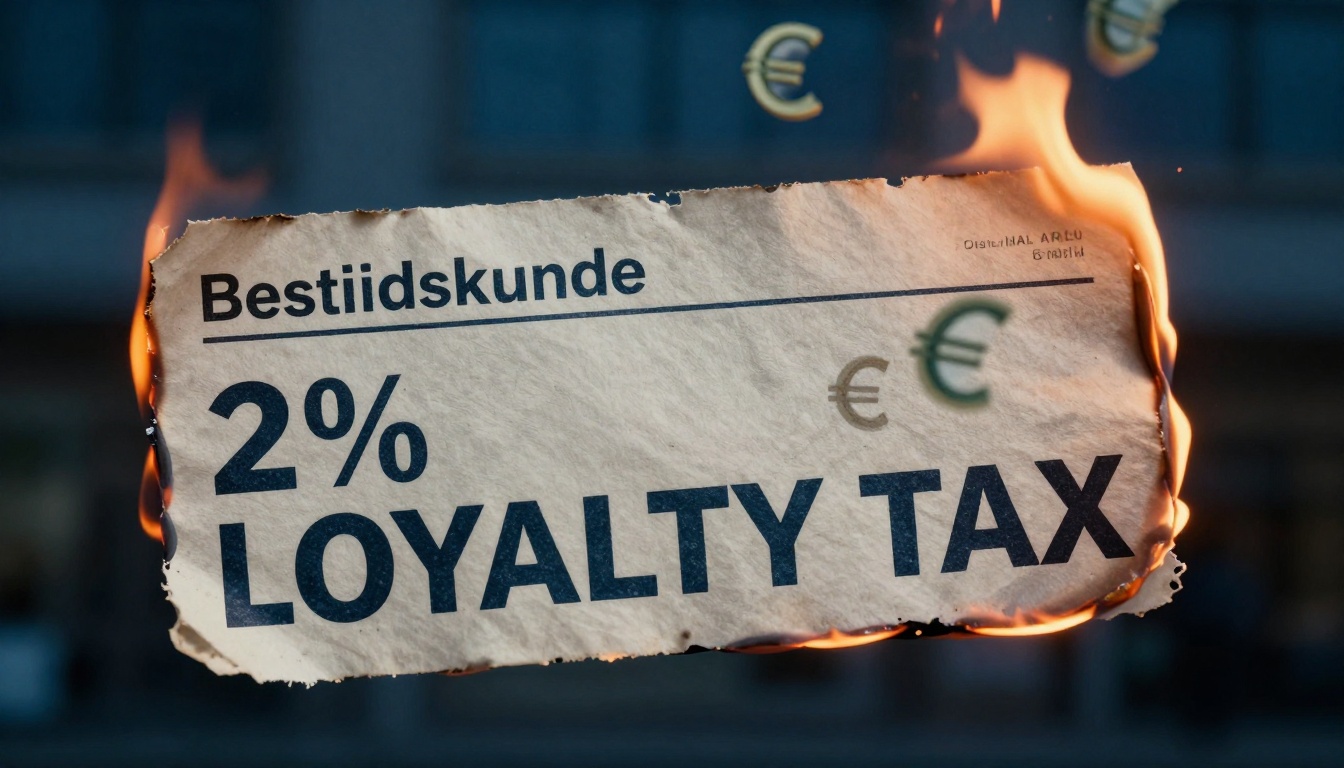
The email arrives with a tempting subject line: “2.75% interest on your new Tagesgeld (daily savings account)!” You click, ready to move your emergency fund, only to discover the fine print, you’re already an ING customer. Your reward for years of loyalty? A measly 0.75% annual interest rate. This isn’t a glitch, it’s a deliberate strategy that’s turning German savers into financial nomads.
The 2% Loyalty Tax in Numbers
Let’s cut through the marketing speak. ING currently advertises 2.75% for new Tagesgeld customers while paying existing customers just 0.75%. On a €20,000 emergency fund, that’s the difference between €550 and €150 per year, €400 evaporated because you didn’t switch banks. For higher balances, the penalty becomes substantial. Many international residents report similar frustrations, finding that their German bank treats loyalty as an opportunity for profit rather than a relationship to reward.
This practice extends beyond ING. The Morgenpost comparison shows Norisbank offering 3.33% for new money, Consorsbank at 3.10%, and Santander at 2.75%, all with base rates that collapse to under 1% after promotional periods. The message is clear: park your money anywhere for too long, and the bank will gradually siphon off your returns.
Why “Bestandskunde” (Existing Customer) Became a Dirty Word
The German term “Bestandskunde” (existing customer) has become synonymous with what one commenter bluntly called a “bequemer Trottel, den man ausnehmen kann” (convenient fool to be taken advantage of). This sentiment runs deep across German financial services. Phone contracts, electricity providers, car insurance, industries across Germany operate on the same model: lure newcomers with sweetheart deals while quietly raising prices for those who stay.
ING’s approach feels particularly galling because Tagesgeld serves as the foundation of German financial planning. Financial advisors recommend keeping three to six months’ expenses in these accounts as a Notgroschen (emergency fund). When your emergency fund becomes someone else’s profit center, the system stops working for you.
Tagesgeldhopping: The Workaround That Became a Lifestyle
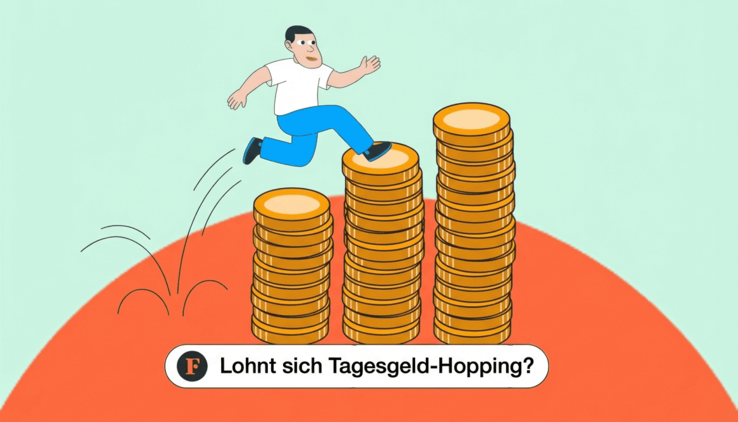
Faced with this loyalty penalty, German savers invented Tagesgeldhopping, the practice of systematically moving savings between banks to capture promotional rates. The Finanztip analysis shows this isn’t just a fringe behavior. A couple saving €400 monthly could earn €78 annually by hopping versus €45.50 by staying put, €32.50 more for minimal effort. With larger balances, the difference becomes €133 annually on €10,000.
The mechanics are simple: open a new Tagesgeld account, capture the promotional rate for three to six months, then move to the next offer. Raisin, TF Bank, and Volkswagen Bank currently lead the hopper’s menu with rates between 2.8% and 3.2%. Some sophisticated savers even cycle back to previous banks after the required “cooling-off” period, though institutions like ING have implemented 12-month restrictions to prevent this.
The Fintech Promise vs. Traditional Banking Reality
Trade Republic disrupted this model by offering 2% to all customers unconditionally, a rate that, while not market-leading, doesn’t punish loyalty. Yet even here, trade-offs exist. Users complain about subpar customer support and delayed transfers, the digital equivalent of Sparkasse’s (savings bank) famously indifferent service.
ING’s strategy reflects a deeper truth about German banking: the deposit franchise model relies on low-cost, stable funding from loyal customers who don’t shop around. The European Central Bank defines this as the long-term value of attracting and retaining deposits minus operating expenses. In plain terms, your inertia is worth money to them.
This creates a perverse incentive structure. Banks spend millions acquiring new customers while investing minimal effort in retaining existing ones. The Sparkasse model takes this to extremes, many customers report receiving only letters about fee increases, never about improved rates. One commenter noted they get “bedacht” (considered) annually, but only with Kontoführungsgebühren (account maintenance fee) hikes.
What This Means for Your Savings Strategy
The controversy around ING’s rate gap highlights a fundamental shift in how Germans must approach saving. The old advice, “find a good bank and stick with it”, now costs you real money. Instead, treat Tagesgeld like any other financial product: review annually, compare aggressively, and switch when better options exist.
For those who find hopping exhausting (and many do), alternatives exist. Ayvens Bank offers 2.3% consistently, and Gefa Bank pays 1.9% without games. These rates won’t top the leaderboard but spare you the administrative burden of constant switching. The key is recognizing that Tagesgeld as part of a high-yield, actively managed savings strategy requires active management, not passive loyalty.
The Bigger Picture: Why Germans Resist Investing
This Tagesgeld controversy connects to a deeper German financial behavior. With German savers’ reliance on low-return products like Tagesgeld, many keep excessive cash reserves that inflation erodes. The ECB’s low-rate years trained a generation to accept minimal returns, and now that rates have risen, banks capture the spread instead of passing it to loyal customers.
The psychological barrier is significant. When your Sparkasse advisor pushes products that haven’t paid meaningful interest since the Merkel era, and bank advisors pushing outdated savings products instead of optimized returns create confusion, it’s no wonder many Germans stick with what’s familiar, even when it costs them.
The True Cost of Convenience
Let’s be blunt: staying with ING at 0.75% when you could earn 2.75% elsewhere isn’t loyalty, it’s a €400+ annual donation to their profit margins. This isn’t about being a rate chaser, it’s about basic financial self-defense. The opportunity cost of safe savings like Tagesgeld over time compounds dramatically, especially when inflation hovers around 2%.
For emergency funds, the math is stark. Keeping €15,000 at ING’s loyal-customer rate nets you €112.50 annually. Moving it to a promotional 3% rate yields €450. That €337.50 difference represents a 300% improvement, money that could fund a weekend trip, cover insurance premiums, or boost your ETF-Sparplan (ETF savings plan).
When Tagesgeldhopping Makes Sense
The Finanztip analysis provides clear guidance: the more you save, the more hopping pays off. If you’ve built a substantial Notgroschen, the effort of opening new accounts every six months yields meaningful returns. The process has become streamlined, most banks offer digital account opening via VideoIdent (video identification) within minutes.
However, hopping requires discipline. Miss the switch date, and your money languishes at the base rate, often below 1%. Some savers set calendar reminders, others use spreadsheets tracking promotional periods. For those who prefer simplicity, the premium paid for stable rates is essentially a convenience fee.
The Regulatory Vacuum
German regulators have remained silent on this two-tier system. While the Einlagensicherung (deposit insurance) protects your principal up to €100,000, nothing prevents banks from offering wildly different rates to different customers. The practice doesn’t violate the BGB (German Civil Code) or banking regulations, though consumer advocates increasingly question its fairness.
Some banks have adapted. Consorsbank now offers promotional rates on “new money” from existing customers, a partial compromise that acknowledges loyalty while still incentivizing fresh deposits. ING has experimented with similar promotions but reverted to stricter new-customer-only offers.
Actionable Strategy: Treat Your Tagesgeld Like a Utility
Here’s how to stop subsidizing your bank’s marketing budget:
-
Audit your current rate: Log into your online banking and check your actual Tagesgeld rate. Don’t assume it’s competitive.
-
Set a calendar reminder: Review rates every six months. January and July work well, aligning with many promotional cycles.
-
Use comparison tools: Finanztip and Morgenpost maintain updated lists. Cross-reference three sources before switching.
-
Calculate the real return: Factor in any Kontoführungsgebühren (account maintenance fees) and the time value of money during transfer periods (usually 1-2 business days).
-
Consider splitting your funds: Keep one month’s expenses in your primary bank for immediate access, move the rest to promotional accounts.
-
Document everything: Save PDFs of rate agreements. Banks sometimes “adjust” rates with minimal notice.
For those managing family finances, this becomes more complex. The practice of misleading bank product recommendations and customer loyalty issues means you may need to intervene when elderly relatives receive “optimization” offers that are actually rate cuts.
The Future of Fairness in German Banking
The ING controversy won’t resolve soon. Banks depend too heavily on the profit margins generated by loyal, rate-insensitive customers. As one analyst noted, the “deposit franchise” model requires a stable base of low-cost funding. If everyone became a rate-shopping hopper, banking profitability would collapse.
Yet fintech pressure is building. Neobanks and direct banks with transparent, universal rates force traditional players to compete more aggressively for new money. The question is whether they’ll eventually extend fair rates to existing customers or continue relying on inertia.
For now, German savers face a choice: accept the loyalty penalty or join the hopper ranks. The middle ground, finding a bank that pays competitive rates without requiring constant switching, is shrinking. Even Tagesgeld use in emergency funds and the cost of keeping cash idle becomes more expensive when your “safe” savings account quietly bleeds returns.
The outrage over ING’s 2% gap isn’t about greed, it’s about fairness. When a bank pays new customers three times more than loyal ones, they’re not rewarding acquisition, they’re punishing trust. In Germany’s conservative banking culture, that betrayal feels particularly sharp.
Final Word: Your Money, Your Move
ING’s rate strategy reflects a harsh truth about modern banking: loyalty is a liability. The fintech era promised transparency and customer-centric service, but traditional players have responded by doubling down on promotional pricing that rewards disloyalty.
You have three viable paths:
- The Hopper: Systematically chase promotional rates, earning maximum returns for moderate effort
- The Pragmatist: Accept slightly lower stable rates from banks like Ayvens or Gefa to avoid administrative burden
- The Hybrid: Split funds between a stable base and promotional accounts, optimizing without overcomplicating
Whatever you choose, do it deliberately. Staying with ING at 0.75% isn’t loyalty, it’s leaving money on the table. In an era of rising costs and economic uncertainty, that 2% difference isn’t trivial. It’s the difference between your money working for you or working for your bank’s marketing department.