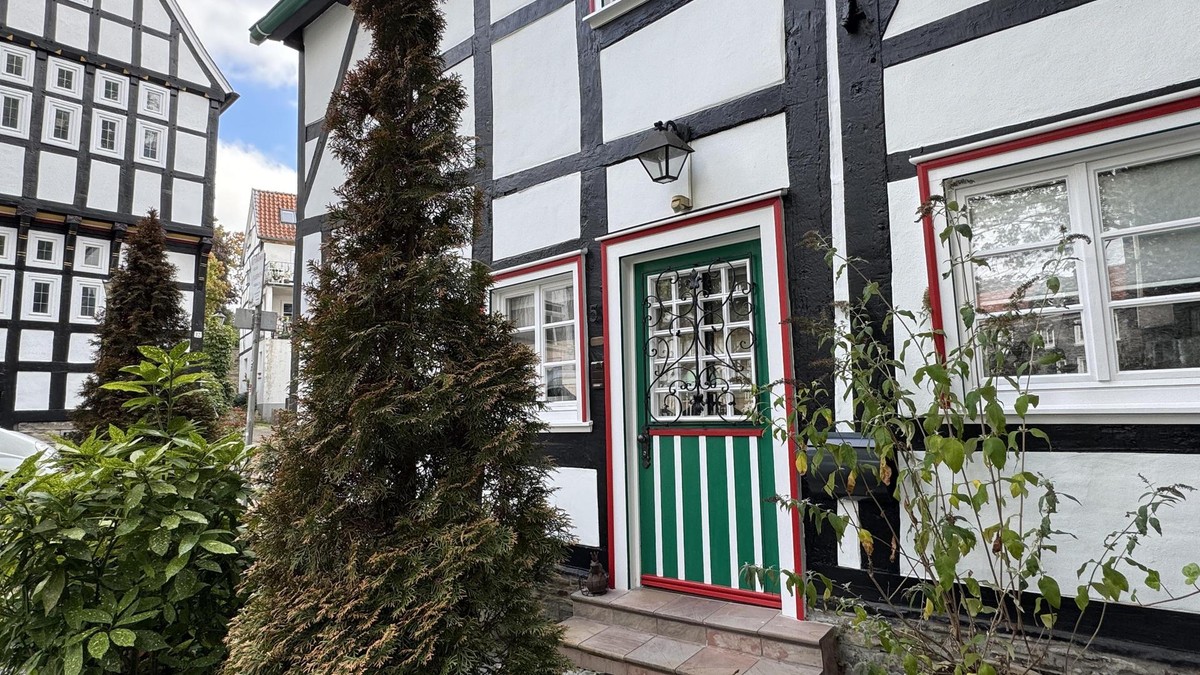
You inherit a 1753 Fachwerkhaus in Rheinland-Pfalz. It’s massive, 450 square meters, potentially 600. It’s a cultural monument. On paper, this sounds like winning the generational lottery. The reality? You’ve inherited a financial black hole that makes a Berlin Altbau renovation look like child’s play.
This isn’t hypothetical. Families across Germany face this exact scenario, watching what should be a windfall become a source of endless expense, family disputes, and bureaucratic torture. The problem isn’t just the renovation costs, it’s the Denkmalschutz system itself, which transforms beautiful history into a modern-day financial trap.
Why Denkmalschutz Is a Four-Letter Word
Let’s be blunt: Denkmalschutz is not a value-add, it’s a liability multiplier. The moment your property gets listed, you lose fundamental rights. You can’t demolish it. You can’t modernize it freely. Every nail, every window, every heating system requires approval from local heritage authorities who care more about historical authenticity than your heating bill.
The case of a recently inherited 1753 Gasthaus turned Kneipe perfectly illustrates this: a property with no heating system, only wood stoves, where the owners can’t even tear it down and start fresh. They’re trapped in a 270-year-old structure that legally cannot be replaced, only painstakingly, and expensively, restored.
The Valuation Nightmare: Land Value Minus Headaches
Here’s where it gets spicy: your historic house is probably worth only the land it sits on, minus the headaches.
In the Rheinland-Pfalz case, the land is valued at €200 per square meter for 1,100 square meters, totaling €220,000. That’s it. That’s the realistic starting point. One Bauingenieur specializing in existing buildings bluntly states: “im Zweifel freunde dich mit Grundstückswert – Abrisskosten als Erlös an, wobei (oh wait) darfst du gar nicht abreißen.. und zack biste an dem Punkt der Immobilienruinen die es in vielen Städten gibt.”
Translation: You can’t even factor in demolition costs because demolition is illegal. You’re stuck with a ruin that has negative value.
Professional appraisals confirm this bleak picture. A proper Gutachten from a certified expert costs €800-2,500 for smaller properties, but for a 450+ sqm Fachwerkhaus with Denkmalschutz, expect €1,500-2,500+ just for a Kurzgutachten. A full Verkehrswertgutachten? That can hit €20,000, though heritage authorities might subsidize up to €15,000 of it, if you navigate the application process correctly.
The Renovation Cost Reality Check
Let’s talk numbers that make grown adults weep. Denkmalschutz-compliant renovation of Fachwerk is “richtig, richtig teuer” according to multiple experts. You’re not just paying for materials, you’re paying for specialized craftsmen, historical research, and endless bureaucracy.
The Hamburg Fernsehturm provides a cautionary tale: closed since 2001 due to asbestos, it’s under Denkmalschutz and requires €40 million in renovations. Even with €37 million in federal and state funding, the project has been delayed for decades. If a major telecom infrastructure project with government backing can’t navigate Denkmalschutz efficiently, what chance does a private homeowner have?
For a typical Fachwerkhaus, renovation costs easily hit €1,500-2,000 per square meter before Denkmalschutz premiums. Add another 30-50% for heritage compliance. For 450 square meters, you’re looking at €900,000-1,350,000 in renovation costs alone. The finished property might be worth €800,000-1,200,000 in a best-case scenario, meaning you’d need to buy it for negative money to break even.
The AfA Illusion: Tax Benefits for the Already Wealthy
Some mention Denkmalschutz AfA (Absetzung für Abnutzung), a special tax depreciation that lets high-income owners write off renovation costs against their taxes. In theory, this makes historic properties attractive to doctors, lawyers, and executives earning €400,000+ annually who want to zero out their tax bill.
In reality, this creates a perverse market where:
– Only the ultra-wealthy can afford to buy, because they’re the only ones who can utilize the tax benefits
– Properties often sit empty after renovation, as owners have no intention of living there or renting them out at market rates
– Values remain artificially depressed because the buyer pool is tiny and motivated by tax avoidance, not property fundamentals
Specialized firms buy these properties, renovate them with maximum AfA benefits, then sell them to high-income buyers, sometimes keeping them empty until the tax benefits expire. The original inheritors? They get land value, if they’re lucky.
The Market Reality: Finding a “Liebhaber” Is Not a Strategy
German real estate listings love using the word Liebhaber (enthusiast) for problem properties. “Perfect for an enthusiast” is code for “this will bankrupt a normal person.”
The Rheinland-Pfalz property’s potential uses, vacation apartments, restaurant, private family home, all require “viel Geld als Investition” (lots of money as investment). The consensus among experts is brutal: this house needs someone with “viel Geld und Bock” (lots of money and motivation), but those buyers are rarer than honest Berlin landlords.
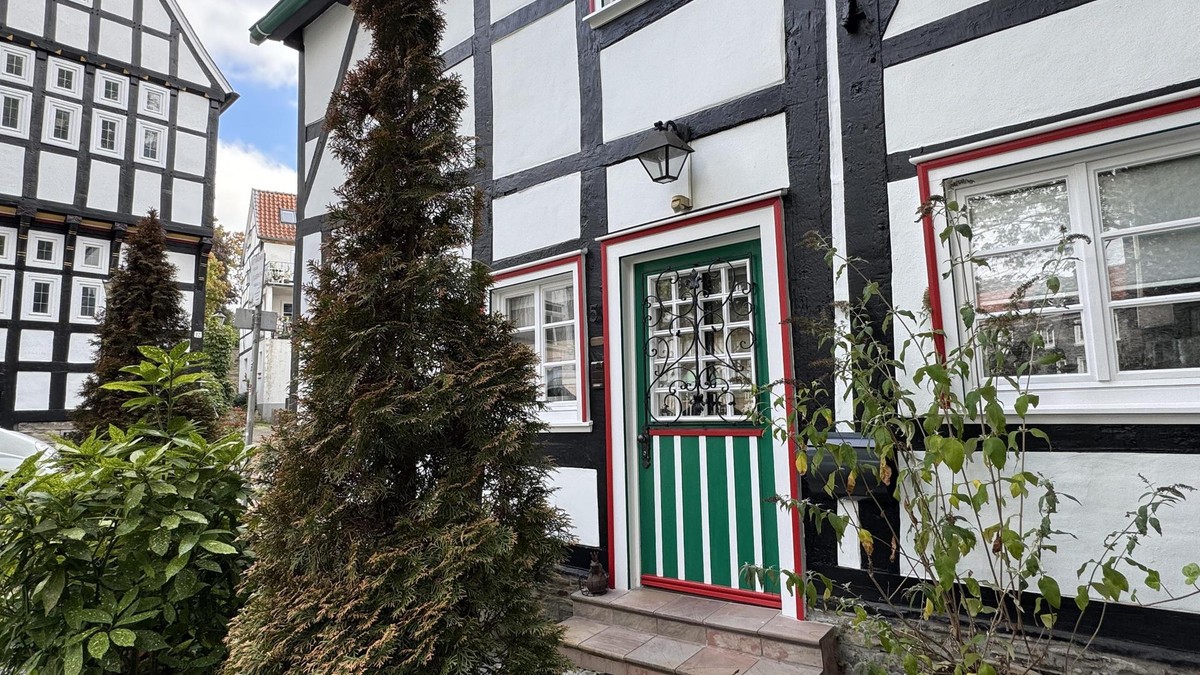
In Hattingen, a similar Fachwerkhaus from 1700 is for sale. The article doesn’t even list a price, always a bad sign. The property features typical Altstadt architecture with historical paintwork, but in today’s market, that heritage premium is overshadowed by maintenance nightmares.
The Professional Verdict: Get a Gutachten or Get Burned
Multiple engineers and appraisers deliver the same message: you cannot value this property from your keyboard. The variation between Makler (real estate agents) estimates proves they’re guessing. One agent might see €500,000, another sees €150,000. Neither knows until a Bausachverständiger (building surveyor) starts poking at the beams.
Key requirements for a proper appraisal:
– DIN ISO 17024 certified or publicly appointed expert
– Regional experience with Denkmalschutz properties
– On-site inspection (no desktop valuations)
– Damage mapping and heritage authority consultation
Cost: €1,500-2,500 for a Kurzgutachten, €15,000-20,000 for a full report. The full report might be subsidized by heritage authorities, but only if you apply correctly, a bureaucratic process that can take months.
The Exit Strategy: Creative Destruction (Legally)
So what’s a realistic exit strategy?
- Price at land value: €220,000 and hope for a “Liebhaber” with more money than sense
- Target AfA buyers: Market to high-income professionals who need tax losses
- Partner with a specialist firm: Sell at land value but negotiate a profit share if they develop it
- Wait for a miracle: Hope the Denkmalschutz status is downgraded (extremely rare)
- Creative sale: Sell to the municipality or a heritage foundation (they’ll pay peanuts but you’ll be rid of it)
The most cynical engineering professionals suggest hoping for an “ordentlichen Sturm” (proper storm) that does what the law prohibits. While dark, it reflects the desperation these properties create.
The Bottom Line: Heritage Is a Luxury You Can’t Afford
Here’s the uncomfortable truth: Germany’s Denkmalschutz system externalizes preservation costs onto private citizens. The state invests billions in public monuments, Sachsen-Anhalt alone spends €10.3 million annually, while leaving private owners to fend for themselves.
If you inherit a listed property, you have three choices:
– Wealth: Be rich enough to treat it as a hobby
– Poverty: Be poor enough to let it rot until the state intervenes
– Speed: Sell it fast to someone in the first category
The best move? Get that Gutachten, price it at land value, and market it aggressively to tax-optimized buyer networks. Anything else is financial suicide.
Your 1753 Fachwerkhaus isn’t an asset. It’s a very expensive, very beautiful liability. The sooner you accept that, the sooner you can extract what little value remains before it extracts your entire inheritance.
Actionable Takeaways:
- Never accept a Makler’s estimate for Denkmalschutz properties without independent expert validation
- Budget €2,000-2,500 for a professional appraisal before making any decisions
- Price at land value minus estimated holding costs, not at “potential” value
- Target high-income AfA buyers through specialized networks, not general listings
- Consider selling to heritage developers who specialize in these nightmare properties
- Get everything in writing from the local Denkmalschutz authority before you buy or sell, verbal approvals mean nothing
The German heritage system preserves beautiful buildings. It just doesn’t care if it bankrupts the families who own them in the process.