
Grinding in Frankfurt: Why Some Young Germans Are Ditching Work-Life Balance for Early Retirement
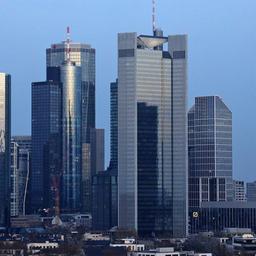
Forget the stereotype of the comfort-seeking, four-day-workweek demanding Gen Zer. In the shadow of Frankfurt’s skyscrapers and beneath the fluorescent lights of a Thuringian bakery, a different, more financially ruthless narrative is playing out. A growing contingent of young professionals in Germany are making a calculated, controversial choice: they are willingly trading their 20s and 30s, their supposed prime years for travel and ‘finding themselves’, for aggressive wealth accumulation. Their goal isn’t just a comfortable life, it’s financial independence and early escape from a system they no longer trust.
This isn’t about mindless hustle culture. It’s a cold-eyed financial strategy, born from a deep-seated skepticism about the future of the German social contract and the viability of the state pension, the Riester-Rente. For them, work-life balance is a luxury for those building someone else’s dream or betting on a retirement system they believe will fail them.
The Frankfurt Blueprint: Prestige, Pay, and Burnout
The epicentre of this mindset is Frankfurt am Main, Germany’s financial heartland. A recent Tagesschau report paints a vivid picture of the “finance girl” and “banking bro” archetypes thriving there. Take Vaana, 24, a corporate banker who documents her luxury-infused, high-performance lifestyle for tens of thousands on Instagram. Or Linh, 20, a dual student at the Frankfurt University of Finance and Management, who takes only six days of vacation a year, the rest dedicated to exams and work. Her biggest fear? “Being average.”
For these young financiers, the trade-off is brutally clear. Einstiegsgehälter (starting salaries) in investment banking range from €70,000 to €85,000, nearly double the average graduate salary in Germany, with the potential to double again within a few years. But the price is measured in 16-hour days, a culture of constant availability, and relationships that crumble under the pressure. As one former investment banker turned physiotherapist in the report admits, “You’re in an environment where it’s normal to deliver, and where the weakest loses.”
The “Unbeliebte Meinung”: Sacrificing Now to Avoid State Dependency Later
This philosophy isn’t confined to glass towers. The sentiment echoes in online forums where long-term financial planning is debated with Germanic precision. A widely supported opinion among financially focused young people is blunt: if you don’t hustle hard in your early, child-free years, you’re missing a prime window to secure your future. The underlying fear is clear, a belief that “the state will screw you over anyway” when it comes to retirement.
Consider the case of a 31-year-old baker from Thuringia. He earns €13.25 an hour, lives modestly in a three-room apartment, drives an old Seat Ibiza, but takes three holidays a year. His explicit goal? “To throw as much money as possible into the stock market so I don’t have to work until I’m 60.” His wage will soon rise with the Mindestlohn increase to €14.25, and every extra euro is earmarked for his escape fund. This is FIRE (Financial Independence, Retire Early) adapted for the German Mittelstand, a quiet rebellion playing out in small towns, not just financial hubs.
The German Context: A Cynical View of “Vorsorge”
What fuels this extreme pragmatism? It’s a specific cocktail of German anxieties.
1. The Pension Pitfall: The sustainability of the gesetzliche Rentenversicherung is a national topic of concern. Younger workers see an aging population and a shrinking contributor base and calculate that relying solely on the state is a gamble they’re not willing to take.
2. The Bureaucratic Beast: Navigating Germany’s own investment landscape, Riester-Rente, Bausparverträge, high taxes on investments (Abgeltungssteuer), requires effort. For some, the clearest path is simply earning more raw capital now to outpace the system’s complexity later.
3. Risk Aversion Turned Aggressive: While Germans are often stereotyped as risk-averse, this generation has translated that caution into aggressive personal saving. They’d rather trust a globally diversified ETF than a politically volatile pension scheme.

The Inevitable Backlash: Burnout and the “What For?”
The path isn’t sustainable for everyone. The Tagesschau article features Mario, a former investment banker who achieved the “top job” only to realize he couldn’t handle the immense psychological strain. He quit to become a physiotherapist, now earning less than half his previous salary, but reports no regrets. The constant pressure to perform, the “elbow mentality”, and the blurring of all life into work took a tangible toll.
This highlights the critical German distinction often missed in global hustle discourse: Efficiency over mere exertion. Working 70 hours a week in a high-paid finance job can be seen as a calculated, efficient wealth-accumulation sprint. Working 70 hours a week on a passion project with uncertain returns is often viewed as foolish. The former has a clear Rendite (return on investment), the latter is a gamble.
The Other Side of the Coin: What Are They Giving Up?
The critics are vocal. They argue that trading your youth, health, and relationships for a future that isn’t guaranteed is a tragic miscalculation. Time, they point out, is not a commodity where every hour is equal. The hour spent at your child’s second birthday is not fungible with an hour spent finishing a deck for a client at midnight. This camp prioritizes Lebensqualität now, trusting in the German social system or accepting a more modest retirement.
The tension between these two philosophies, aggressive early accumulation vs. balanced living, is defining a generational schism. It’s evident in the heated online debates where one side accuses the other of being “brutally risk-averse” lazy, while the other fires back about “exploitation” and wasted youth.
Is This a New German Dream?
So, is this the new German Wirtschaftswunder mentality? Not exactly. The post-war generation worked hard to rebuild a nation and secure collective prosperity. Today’s young grinders are often working hard to secure individual prosperity against what they perceive as a failing collective system. It’s a privatized version of security.
For immigrants and expats in Germany, this trend is particularly instructive. It reveals a subsurface current of financial anxiety that runs contrary to the surface image of robust social guarantees. It suggests that building a life here might require a more Anglo-Saxon approach to personal finance than the classic German reliance on Betriebliche Altersvorsorge (corporate pension plans) and state provisions.
The ultimate takeaway isn’t that everyone should work themselves to the bone. It’s that in today’s Germany, a significant number of young people are making a conscious, numbers-driven choice to front-load their suffering. They are betting that a decade of grind can buy decades of freedom, choosing the certainty of present sacrifice over the uncertainty of future dependence. Whether that’s a grim necessity or a tragic misallocation of one’s one precious life is the debate that defines a generation’s relationship with work, money, and the German state.