The classic January ritual is upon us: signing up for a gym membership fueled by holiday-guilt and new-year optimism. By February, that direct debit feels less like an investment and more like a monthly fee for the guilt of not going. But a closer look reveals this might be a uniquely German type of financial miscalculation, one that goes far beyond simple laziness.
The gym debate recently reached German personal finance circles with a specific, almost engineering-level calculation. The viral argument wasn’t about discipline or motivation, but cold, hard Euros. One international resident crunched the numbers on their Fitnessstudio membership, factoring in not just the monthly fee, but the utilities they were extracting: long, hot showers, sauna sessions, even the water used for toilet visits. Their conclusion? They needed to visit at least 12 times a month just to “break even” on what they were effectively paying for.
So, is your gym membership secretly funding a luxurious bathhouse habit? Let’s break down the true costs, the German-specific ways to mitigate them, and whether you should just cancel and do push-ups at home.
The Viral “Break-Even” Math: Paying to Use Your Gym’s Toilet
The financial logic is disarmingly simple. If your gym costs €50 per month, and a long, hot shower at home uses (let’s say) €1 worth of water and heating, then you’d need to shower at the gym 50 times to recoup the cost. If you go four times a week and shower each time, you’re still only at 16-18 showers a month. You’d need to also factor in the value of the sauna, the electricity for charging your phone, and, as this particular calculation daringly included, “2-3x pro Besuch auf Toilette.”
This line of thinking flips the gym from a “wellness investment” into a simple utility subscription service. Are you paying for fitness, or are you just outsourcing your hot water bill? In German cities where Nebenkosten (utilities) are a constant budgetary concern, this analysis hits close to home.
The German Twist: Offsetting Costs with Your Krankenkasse
Here’s where things get interestingly German. While the government won’t pay for your bicep curls, many gesetzliche Krankenkassen (public health insurance providers) offer pathways to significantly subsidize your fitness costs.
First, there are Bonusprogramme. Many health insurers, like TK, AOK, and Barmer, offer cash-back or credit programs for completing healthy activities. Proving you have an active gym membership can earn you points, which translate into €50-€100 payouts annually. You can link your Bonusprogramme to various apps or simply submit your gym contract.
Second, many insurers have Kooperationsverträge with large fitness chains. They don’t pay your membership directly, but they can provide discount codes or vouchers that slash 10-25% off the monthly rate. You need to check your specific Krankenkasse’s website for offers.
Finally, they may reimburse you for specific, certified Präventionskurse (prevention courses) held at gyms, like “Back Health” or “Stress Reduction through Yoga.” While not the full membership, it chips away at the cost.
A crucial point: your standard Versichertenkarte is not a gym pass. You cannot simply walk in and have your membership fee reimbursed. The support is structured, conditional, and requires active sign-up.
The Insurance Math: Does It Actually Work?
Let’s run a realistic German scenario. Assume a mid-priced gym at €45/month (€540/year).
- Without Insurance Benefit: You pay €540.
- With a Good Bonusprogramm: You earn €75 back for proving regular attendance.
- With a Partner Discount: Your Krankenkasse negotiates a 15% discount, saving €81/year.
- Combined Effect: Your net cost drops from €540 to €384.
That’s a meaningful difference. It changes the “break-even” visit count and makes the membership feel less like a luxury and more like a subsidized health expense.
The Realistic Alternatives: From Parks to Smart Home Gyms
If even a subsidized gym feels like a poor fit, Germany offers structured alternatives that don’t involve moving to Munich for its Englischer Garten.
1. The “Free Gym” of German Infrastructure.
Germany’s cities are often laced with Trimm-dich-Pfade (fitness trails) and Calisthenics parks. In Berlin, the Mauerpark and Volkspark Friedrichshain have excellent outdoor equipment. Frankfurt’s Mainufer, Hamburg’s Alster, and Cologne’s Rheinpark offer running routes that shame any treadmill. This cost is €0, with the only subscription being your willingness to face the German weather.
2. The Digital Coach (Mostly Free).
The world of fitness apps has matured. You don’t need a €50/month CrossFit box for community, you can get it from your phone.
* Freeletics & Adidas Running: German-born Freeletics specializes in brutal, equipment-free HIIT. Perfect for a Berlin balcony or a Hamburg Hinterhof. Adidas Running (formerly Runtastic) is ideal for tracking runs along the Isar or Spree.
* Nike Training Club & Gymondo: Offer vast libraries of guided workouts, from yoga to strength training, often completely free or with a freemium model. No commute, no waiting for the squat rack. Check out a list of top fitness apps to find your match.
These apps turn any park or living room into a viable, flexible, and free training ground.
3. The Home Gym Investment (The Long Game).
For the committed, a home gym stops being a cost and starts being an asset. This is a serious calculation in Germany, where rental square footage is precious and neighbors below might not appreciate your 6 AM deadlifts.
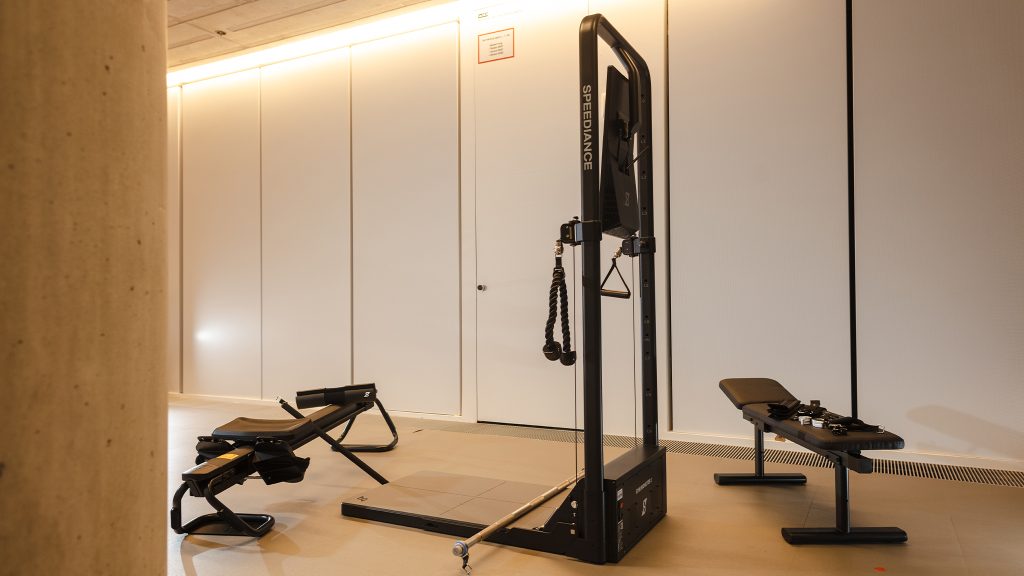
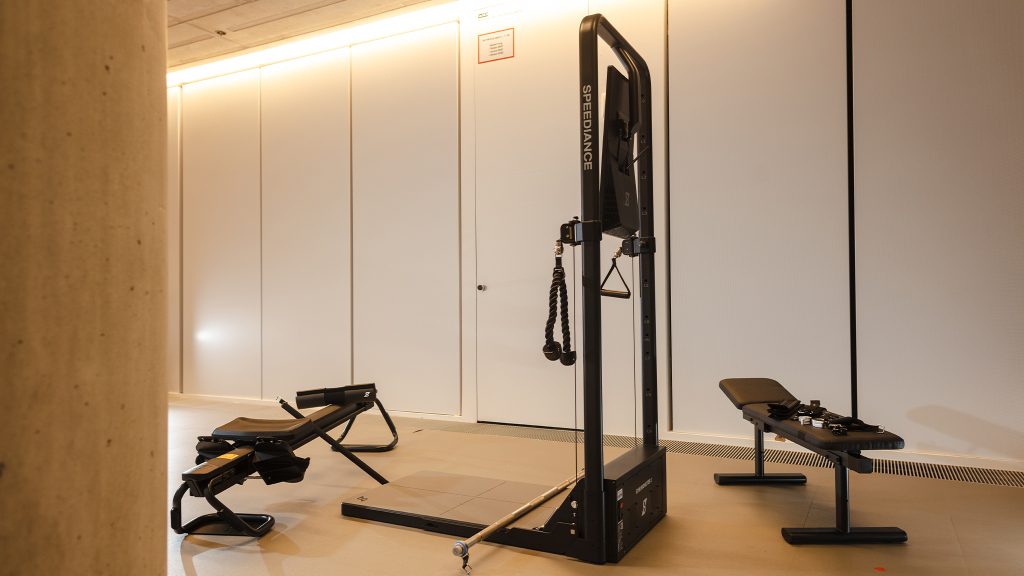
The one-time investment can be steep. A high-end all-in-one system like the Speediance Gym Monster 2, which we tested recently, can cost upwards of €3,000, €5,000. However, as covered in the test, it replicates a full studio experience with digital weights and coaching, and requires no monthly Abo to function. At a €50/month gym fee, this machine pays for itself in 5-8 years. That’s a Bausparvertrag for your biceps. The question becomes: do you have the space, the initial capital, and the discipline to make it work?
The True Cost Equation: More Than Just Money
The financial “break-even” is only half the story. The real cost of a gym membership includes:
- Time & Convenience: A 30-minute workout can become a 90-minute ordeal with travel, changing, and waiting for equipment. That’s a high cost for a busy professional.
- The “Guilt Tax”: The psychological weight of an unused subscription is real. In Germany, with its emphasis on efficiency and value (Wert), this can feel like a personal failure of logistics.
- The Flexibility Penalty: Many German gyms still require 12-month contracts with rigid 3-month Kündigungsfristen. Life changes, you move to a new Stadtteil, and suddenly you’re paying for a gym across town for months.
The Verdict: How to Decide
Stop asking if you “should” get a gym membership. Start with a forensic audit of your last year’s fitness:
1. Track Your Actual Usage: How many times did you really go per month?
2. Run the German Subsidy Check: What can your Krankenkasse offer you? Investigate their Bonusprogramm and partner discounts.
3. Calculate the True Cost Per Visit: (Monthly Fee – Subsidies) / Actual Monthly Visits. Is a single workout costing you €15?
4. Evaluate Alternatives Honestly: Could a €100 set of resistance bands and a Freeletics subscription deliver 80% of the results for 10% of the hassle and cost?
5. Consider the Non-Monetary Value: Do you need the structure, the social aspect, or the specialized equipment (pool, climbing wall, heavy racks)? For some, this is priceless.
For the moderate, disciplined user who will leverage every sauna session and Krankenkasse discount, a gym can be financially sensible. For the sporadic enthusiast, it’s often a luxury subscription for hot water and a vague sense of potential. In the efficient, pragmatic spirit of German personal finance, the most financially sound workout is often the one that happens right outside your door, for free. The only subscription you need is to your own consistency.