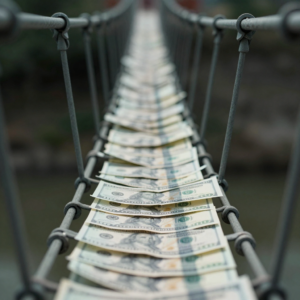
Sacrificing Retirement to Fund Private School: The €68 Billion German Parent Trap
You’re staring at two spreadsheets. One shows your retirement projection dropping by €47,000 if you reduce your monthly savings rate (Sparrate) for four years. The other shows your six-year-old’s potential school: small classes, warm lunches, no rain leaking into the gymnasium. In Germany, this isn’t a hypothetical—it’s a financial emergency parents face daily.
The brutal question isn’t whether you can afford private school. It’s whether you can afford not to.

The Bildungsfinanzchaos: Why Public Schools Are Failing Parents
German municipalities are functionally bankrupt when it comes to education. In 2024, they posted a record deficit of €24.3 billion, with an investment backlog of €216 billion. Schools account for 31% of that shortfall, roughly €68 billion that should have gone into fixing the very problems parents are fleeing.
This isn’t about wanting fancy amenities. This is about basic functionality. Teachers report heating systems failing mid-winter, forcing students to wear jackets in class. Sports halls have active leaks. One parent described the public school lunch as “0815 catering”, industrial food that would make a cafeteria worker weep.
The Dezernat Zukunft think tank calls this the “Bildungsfinanzchaos” (education financing chaos): the Bund (federal government) and Länder (states) make the rules but shove 75% of the financial burden onto municipalities that legally cannot handle it. The result? Long-term investment logic crashes headfirst into short-term budget reality.
When your local Sprengelschule (district school) has crumbling walls and uncertain afternoon care (Nachmittagsbetreuung), the €400-800 monthly private school fee starts looking less like a luxury and more like a necessity.
The Real Cost: Not Just Tuition, But Opportunity
The Reddit discussion that sparked this debate reveals something telling: parents aren’t debating whether to buy a Porsche or fund school. They’re calculating which corners to cut within education spending. One commenter framed it perfectly, reducing the savings rate for four years to access “significantly better” education.
But here’s what the back-of-napkin math misses:
- The Compounding Massacre: Reducing your ETF savings from €500 to €200 monthly for four years doesn’t just cost you €14,400 in contributions. At 7% annual returns, you’re sacrificing roughly €47,000 in retirement wealth. That’s a year of living expenses gone.
- The Part-Time Penalty: Many German parents, especially mothers, already work reduced hours to manage family logistics. If you’re at 50% employment to handle pickup times and school holidays, your pension contributions (Rentenversicherung) are already depressed. Cutting private savings on top creates a double hit.
- The Hidden Curriculum: Private schools promise small classes and modern pedagogy. But research shows parental involvement and socioeconomic status predict outcomes more than school type. Are you paying for education, or buying insurance against Germany’s broken municipal system?
When “Good Enough” Isn’t: The Infrastructure Crisis
Let’s be blunt about what “public school” means in many German cities. Teachers do heroic work, but they’re fighting systemic collapse:
68 billion euros in delayed maintenance doesn’t fix itself. Leaking roofs and broken heating aren’t edge cases, they’re standard.
The Bertelsmann Foundation found only 17% of Kitas (daycares) have adequate staffing. This crisis cascades into primary schools.
Afternoon care spots are allocated by lottery in some districts. Planning your career around “maybe” is impossible.
One father in the discussion noted his daughter’s school has rain coming through the gym ceiling. Another pointed out that “modern building” doesn’t mean luxury, it means “the heating works and windows close properly.”.

This is the emotional core of the decision. You’re not choosing between two equivalent options. You’re deciding whether to rescue your child from a system that’s visibly failing or rescue your future self from poverty.
The Psychological Trap: Why This Feels So Urgent
Germany’s financial culture pushes two contradictory messages:
- Save obsessively: The emotional burnout of high savings rates is real. You’re supposed to max out your Altersvorsorgedepot (retirement provision account) and build wealth through disciplined Sparpläne (savings plans).
- Invest in Bildung: Education is sacred. The idea of skimping on your child’s future feels morally bankrupt.
This creates a false binary: either you’re a good parent or a responsible adult. The reality is more complex.
Parents who choose private school aren’t necessarily chasing prestige. Many are simply risk-managing against a system where the default option has become unacceptable. It’s less “I want the best” and more “I want functional.”
The Retirement Math Doesn’t Lie (But It Doesn’t Tell the Whole Story)
If you divert €300 monthly from retirement to school fees for four years, you’re not just losing €14,400. You’re losing:
- €47,000 at retirement (assuming 7% returns)
- Tax advantages from reduced special expense deductions
- Flexibility, that money is locked into tuition, not accessible for emergencies
But what does that €47,000 actually represent? At a 4% withdrawal rate, it’s €1,880 annually, or €157 monthly. That’s significant, but it’s not destitution. It’s one nice vacation per year, or upgrading from Aldi to Rewe for groceries.
The real risk isn’t the absolute number. It’s the psychological shift. Once you normalize reducing retirement savings for education, where does it stop? Gymnasium (secondary school) fees? University support? The “just for four years” mentality can become a decade-long drain.
Breaking the Binary: Smart Compromise Strategies
You don’t have to choose between a broken public school and raiding your Altersvorsorge (retirement provision). German parents have middle paths:
1. Targeted Supplementation
Keep your Sparrate intact, but spend €100-200 monthly on tutoring, language courses, or extracurriculars that address specific gaps. This is cheaper than full private school and maintains retirement momentum.
2. Geographic Arbitrage
That €800 monthly private fee equals a €150,000 mortgage increase. Moving to a better school district (Schulsprengel) might cost less overall, especially with Germany’s relatively low property taxes.
3. Time-Shift Investment
Work full-time for two extra years before retirement instead of cutting savings now. The compounding impact is similar, but you maintain optionality.
4. The 80% Solution
Consider balancing work hours against savings potential. Going 80% instead of 50% could fund both school fees and retirement, especially with tax-advantaged childcare costs.
The Ugly Truth: You’re Subsidizing Systemic Failure
Here’s what nobody says out loud: Every euro you pay to a private school is a euro the municipality doesn’t have to spend. You’re individually solving a collective problem.
The €68 billion school investment gap exists because Germany’s federal system is broken. The Bund makes rules about Kitaplätze (daycare spots) but won’t fund them long-term. Länder pay teacher salaries but starve municipalities on infrastructure. You paying private tuition lets politicians continue this game.
This is the real trap. Your personal financial sacrifice papers over systemic collapse, making reform less urgent. But what choice do you have? Waiting for political solutions while your kid sits in a freezing classroom with 28 other children isn’t viable.
Making the Decision: A Brutally Honest Framework
Forget the moralizing. Here’s how to actually decide:
Use a compound interest calculator. That €47,000 retirement gap? Divide by 20 years of retirement. That’s €195 monthly. Can you cut €195 elsewhere, car lease, vacation, hobbies?
Visit both schools. Is the private option genuinely better, or just newer? Small classes matter, but so does teacher quality. A motivated teacher in a public school beats a mediocre one in a palace.
What happens if you lose your job? Germany’s Arbeitslosengeld I (unemployment benefit) replaces 60% of salary. Can you still afford both school and some retirement savings? Build a 6-month emergency fund first.
Private school for four years creates expectations. Will you continue through Gymnasium? That’s 8+ more years of fees. Make sure you’re not starting a journey you can’t finish.
The Bottom Line
The German education financing system has quietly transferred risk from the state to individual families. Municipalities can’t fund schools, so parents must choose between their child’s present and their own future.
If you reduce your Sparrate for school, do it with eyes open: you’re making a rational choice within an irrational system. But treat it as the emergency measure it is, not a permanent lifestyle upgrade. Keep the reduction time-limited, maintain at least a minimal retirement contribution, and plan your return to full savings like you’d plan a career sabbatical.
Most importantly, vote for politicians who promise concrete education funding, not vague “Bildungsoffensiven” (education offensives). Because while you can solve this for your child, you shouldn’t have to, and your neighbor’s kid deserves functional heating too.
The real scandal isn’t parents choosing school over retirement. It’s that in one of the world’s richest countries, they have to.