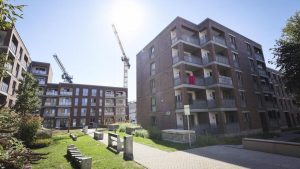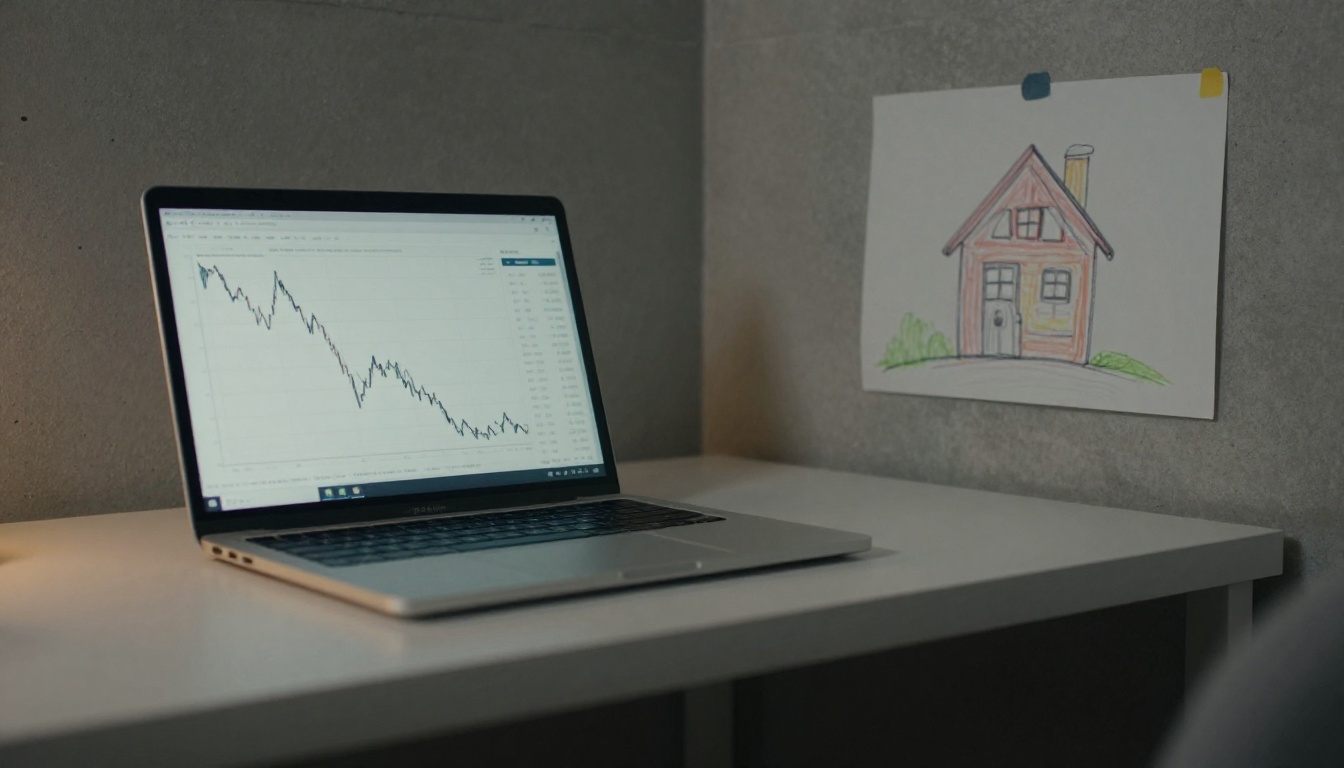
You’re 38, sitting on a €400,000 ETF portfolio built with 40% savings rates and dreams of early retirement at 55. Then your second kid arrives, your 3-room flat starts feeling like a storage unit, and that row house in Munich’s suburbs, for a cool €820,000, suddenly looks less like a reckless splurge and more like psychological survival. This is the exact scenario that recently exploded across German finance forums, where one couple’s decision to liquidate their entire ETF position for a Speckgürtel (suburban belt) property sparked a war between spreadsheet warriors and life-quality advocates.
The numbers tell one story. The stomach tells another. Let’s dissect both without the usual “just keep renting” platitudes.
The Munich Math: Why €820k Isn’t Even That Crazy
First, let’s ground ourselves in reality. Munich’s property market operates in its own economic universe. According to current data, average prices for existing properties hover around €7,700 per square meter, with new builds commanding €11,400/m². In desirable areas like Dachau or Unterschleißheim, prime Speckgürtel territory, prices for row houses range from €1 million to €1.3 million. Suddenly, that €820k price tag looks almost… reasonable? At least by Munich standards.
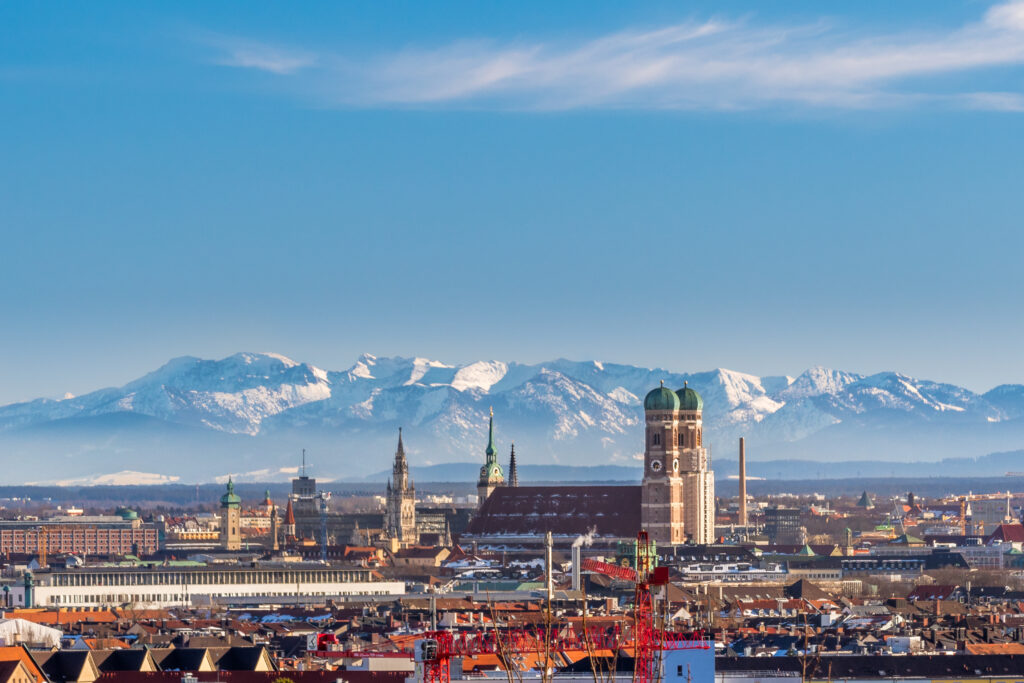
But here’s the kicker: the couple didn’t just use their €400k as down payment. They liquidated everything. This triggers a tax event that most German investors underestimate until the Finanzamt (Tax Office) sends their love letter.
The Tax Bomb Nobody Talks About
When you sell ETFs in Germany, you’re not just losing future compound interest, you’re paying the tax piper immediately. The tax implications of ETF investing in Germany after exhausting the tax-free allowance are brutal: 25% Abgeltungsteuer (capital gains tax) plus 5.5% Solidaritätszuschlag (solidarity surcharge), totaling 26.38% for non-church members. On a €400k portfolio with significant gains, that could easily mean a six-figure tax bill.
Worse, German tax law hits you with the Vorabpauschale (prepayment allowance) annually, a hidden annual tax cost eroding ETF portfolio growth over time. Even if you don’t sell, this stealth tax chips away at returns. When you do sell, you’ve already prepaid some tax, but the final bill still stings.
The couple’s €400k might only be €300k after taxes, barely covering the 20% Eigenkapital (equity) plus closing costs that German banks demand for favorable financing. And that’s before we even discuss potential future tax increases on capital income that could make ETFs less attractive long-term.
The Opportunity Cost: What You’re Really Giving Up
Let’s be coldly rational. €400,000 in a diversified ETF portfolio, earning a conservative 6% annually, becomes €1.28 million in 20 years. That’s the magic of compound interest, the “eighth wonder of the world” that every German finance blogger worships.
Your €820k row house? Maintenance costs of 1-2% annually (€8k-16k), property taxes (Grundsteuer), and the sobering reality that Munich property prices, while high, have shown signs of cooling. The GLASER Immobilienberatung report notes that while prices rose 4% for apartments and 6% for multi-family houses in 2025, the long-term trend shows stagnation in non-modernized buildings. Your row house might appreciate, but it won’t compound like a global equity portfolio.
And yet.
The Emotional Case: Living vs. Surviving
Raise a toddler in a 3-room flat with both parents working from home 3-4 days a week. Try concentrating on Excel while your kid uses the sofa as a trampoline. The walls close in, patience evaporates, and suddenly that “financially optimal” decision feels like prison.
As one commenter bluntly put it: “I know three people who saved diligently for retirement. One died at 64, one year after early retirement. Another didn’t make it to retirement at all. The third passed at 70.” The point isn’t nihilism, it’s that quality of life has value that spreadsheets can’t capture.
The Munich couple’s calculation includes intangibles: a garden for the kids, separate offices, a community. These aren’t frivolous luxuries, they’re mental health infrastructure.
The Hybrid Approach: Having Your Cake and Eating It Too
Here’s the uncomfortable truth: the binary choice is false. You don’t have to liquidate everything. Consider this middle path:
- Keep €100k-150k in ETFs as an emergency/opportunity fund. This maintains market exposure and liquidity.
- Use €250k-300k as down payment to secure better financing terms. German banks reward higher Eigenkapital with lower interest rates.
- Finance the remaining €520k at current rates (around 3.5-4% for 10-year fixed). Monthly payments would be roughly €2,600, manageable for a dual-income Munich household.
- Invest the difference: Instead of a 40% savings rate, allocate 15-20% to continuing ETF investments.
This approach acknowledges that tax efficiency when selling or restructuring large ETF portfolios matters, but so does living space.
Munich Market Realities: Now or Never?
The GLASER report shows Munich prices stabilizing but not crashing. With Baukosten (construction costs) up 65% in a decade and geopolitical risks that could impact globally diversified ETF portfolios, the certainty of owning property in a stable German city has its own value.
However, the Makler (real estate agent) commission alone is 3.57%, nearly €30k on an €820k purchase. Add Grunderwerbsteuer (real estate transfer tax) of 3.5% in Bavaria (€28.7k) and Notarkosten (notary costs) of 1.5% (€12.3k). That’s €70k in closing costs that could have stayed invested.
The Verdict: Context Is Everything
If this couple’s household income is €150k+ and the €400k represented only 30-40% of their net worth, the decision is defensible. If it was 80% of their wealth, it’s reckless.
The key is not liquidating your entire market position. ETFs provide something property can’t: liquidity. In a recession, you can’t sell a spare bedroom to cover job loss, but you can sell ETF shares. This flexibility is worth something.
For German investors facing this dilemma, the optimal path is usually:
– Minimum 20% down payment (€164k) from savings, not investments
– Keep the ETF portfolio for long-term growth
– Accept higher monthly payments as the price of diversification
– Reassess in 5 years when you can make extra principal payments or refinance
Final Thoughts: The German Way Isn’t Always Optimal
German culture worships property ownership, “Wohneigentum” is practically a religion. But this leads many to overweight real estate and underinvest in markets. The truly “German” approach would be boring: keep renting, max out ETFs, and buy property later with cash.
But life happens in the meantime. The Munich couple made a choice that prioritizes present happiness over theoretical future wealth. It’s not financially optimal, but it might be humanly optimal.
Just don’t pretend it’s an investment. It’s a lifestyle purchase. And that’s okay, as long as you know the real price tag includes lost compound interest, tax bombs, and decades of mortgage payments.
The real question isn’t “ETFs or house?” It’s “How much of each can I afford without betting everything on one asset class?” In Munich’s brutal market, that’s the only sane way to play it.