That €9.99 monthly music streaming subscription seems trivial next to your rent or grocery bill. So does the €5 app membership, the €15 for the fitness tracker you forgot about, or the €20 you’re overspending on your Handyvertrag (mobile phone contract).
But stack them together, and you’re not just funding the artists, tech companies, or Telekom. You’re directly eroding the potential future earnings of your German savings account, your ETF-Sparplan (ETF savings plan), or any other investment. This is the quiet, relentless power of Opportunitätskosten (opportunity costs), and it’s making your wallet lighter in ways you don’t see on your monthly bank statement.
The €20 Question That Equals €12,000
Let’s start with a simple, powerful equation from a recent financial discussion among residents. If you pay €20 per month too much for a service (say, your internet or mobile plan), and you simultaneously have €12,000 sitting in a Tagesgeldkonto (savings account) earning 2% interest, then mathematically, that €20 monthly fee cancels out your entire year’s interest.
Overpayment
€20/month × 12 = €240/year
Lost Interest
€12,000 × 2% = €240/year
Financially, these two things are identical. In the coldest economic terms, paying €20 too much each month is the same as having €12,000 less in a savings account earning 2%.
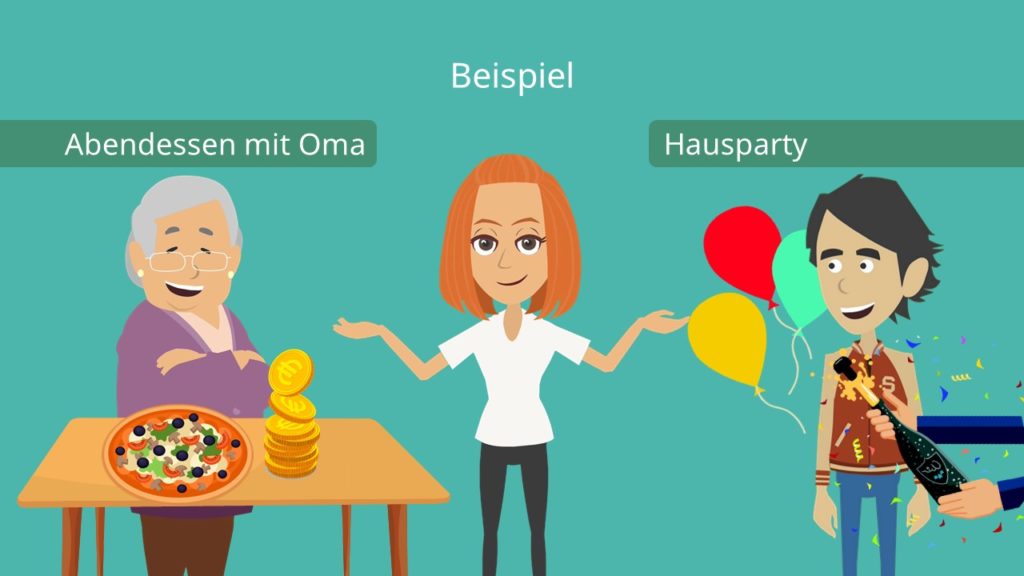
This missed potential growth is the definition of opportunity cost: the benefit you forego by choosing one alternative over another. As detailed on Studyflix, these “Verzichtskosten” (sacrifice costs) are not real euros on a bill, but real value lost from your future self.
Even if you take €30, €40, or €50 too little because “it’s just a few euros”, you are essentially giving away the return on that much larger capital. This concept isn’t just academic; it’s the practical engine behind Germany’s famous frugality and Vertragscheck (contract check) culture.
The German Vertrags-Trap: Where Your Money Leaks Out
Why is this so common in Germany? The market is filled with legacy tariffs and automatic price increases. You start with a great Neukundenangebot (new customer offer), the contract runs for 24 months, and then, almost without fail, the price creeps up. You become an Altkunde (existing customer), a category that often signals “lucrative and forgetful” to providers.
The chatter in financial circles confirms it. People share strategies to stay a “Neukunde” by strategically calling providers. The tactic is straightforward: when the 24-month introductory price ends and your provider sends the notice of a price increase, you call and ask to switch to the current new-customer tariff. If they refuse, you mention you’ll happily cancel and go to a competitor. Service retention departments often have the power to extend those cheaper rates. If they don’t budge? You follow through, switch to a competitor offering a new customer discount, and often your old provider will call you back within hours with a matching, or better, offer.
This game isn’t annoying bureaucracy, it’s a lucrative financial skill. The savings aren’t hypothetical:
- Switching Utilities: From a local Stadtwerke to a cheaper provider can save 10 cents per kWh, quickly amounting to €20–€30 monthly for an average household.
- KFZ-Versicherung: Re-shopping your car insurance yearly can yield annual savings of €330.
- Handyvertrag: Upgrading an old, expensive contract could save €50 a month.
One anecdote sums up the inertia perfectly: someone discovered they were still paying €250 a year for a storage garage they no longer used for a motorhome they no longer owned. It’s the most extreme example, but it highlights the core problem: autopilot financial oversight.
Your To-Do List: The German Subscription Audit
The solution isn’t complex budgeting, it’s systematic verification. Set aside an afternoon and check every recurring payment. Here’s your German-specific checklist:
-
Handy & Internet
This is the low-hanging fruit. Check your Vertragslaufzeit (contract period). Are you in a loyalty trap? Use comparison portals or check competitors’ websites. Remember, the best price is almost always for Neukunden (new customers).
-
Strom & Gas
About 23% of German households are still in the expensive Grundversorgung (basic supply). As Stromvergleich.de points out, providers in many regions offer rates as low as 25 ct/kWh versus the average 40 ct/kWh. You can save up to €850 annually by switching. Many new providers will even handle the Kündigung (cancellation) of your old contract for you.
-
Versicherungen (Insurances)
Check your Kfz-Versicherung annually. Your Schadenfreiheitsklasse (no-claims class) often improves, and stagnant providers won’t automatically give you a better rate. Proactively compare offers.
-
Banking
Does your Girokonto (current account) still have a monthly fee? Many online banks offer fully free accounts. Does your Depot (brokerage account) still have custodial fees for your ETFs? This is a major source of high fees causing missed opportunities.
-
Subscriptions
Gym memberships, streaming services (Spotify, Netflix, etc.), magazine apps, anything that deducts automatically. A common report is paying for digital news archives or cloud storage long after the need has passed.
-
Miscellaneous
Check for any “Vermögenswirksame Leistungen” (VL, asset-forming benefits) contracts you may have forgotten. As Buhl explains, these have a standard 7-year Laufzeit (runtime). If you’ve changed jobs and aren’t getting the employer contribution anymore, you might want to consider terminating it if your new job doesn’t offer VL.
Pro tip: Set calendar reminders for two weeks before any Vertragskündigungsfrist (cancellation deadline) with the Vertragsnummer (contract number) and provider details. Treat it like a regular financial hygiene task.
Beyond the Basics: Thinking in “Capital Equivalent”
The real power of this concept comes when you start thinking about your spending in terms of “capital equivalent.” Instead of “this gym membership costs €30/month”, reframe it: “this gym membership costs the annual return on €18,000 of my savings.”
That mental reframing changes decisions. Suddenly, the question isn’t “can I afford €30?” but “is this service worth sacrificing the growth potential of a significant chunk of my savings?”
This applies broadly. Choosing a more expensive energy tariff is economically similar to taking a part of your investment portfolio and earning less on it. This is exactly the same principle financial advisors exploit when they push products with advisor commissions and fund fees reducing long-term returns. A small, recurring fee can silently devastate long-term compounding.
A Practical, German-Focused Action Plan
Step 1: Analyze Statements
Pull your last 3-6 months of Bank Statements. Go through your Kontoauszüge line by line. Identify every SEPA-Lastschrift (direct debit) and Dauerauftrag (standing order).
Step 2: Categorize
- Immediate Cancel: Services you no longer use.
- Renegotiate/Shop: Telecom, energy, insurance.
- Evaluate Value: Subscriptions you use.
- Pull Your Last 3-6 Months of Bank Statements: Go through your Kontoauszüge (bank statements) line by line.
- Categorize by “Easy Win”:
- Immediate Cancel: Services you no longer use (that storage locker, forgotten app).
- Renegotiate/Shop: Telecom, energy, insurance contracts. Use online check24.de or verivox.de comparison tools as leverage.
- Evaluate Value: Subscriptions you use. Is the value you get worth the “capital equivalent” cost?
- Implement Reminders: As suggested in discussions, use a digital calendar to set recurring annual or bi-annual “Vertragsprüfung” (contract review) alerts.
- Redirect the Savings: This is critical. The money you save shouldn’t just vanish into daily spending. Automatically transfer it into a savings or investment vehicle. Turn that recovered opportunity cost into real, productive capital.
The German banking system operates with the same efficiency as a Deutsche Bahn train, usually impeccable, until there’s construction on the line. But your personal finances shouldn’t be derailed by silent, recurring fees.
Take control, do your Vertragsprüfung, and stop letting small monthly fees silently drain your Tagesgeld potential. Your future self, enjoying the compounded returns of that recaptured capital, will thank you.