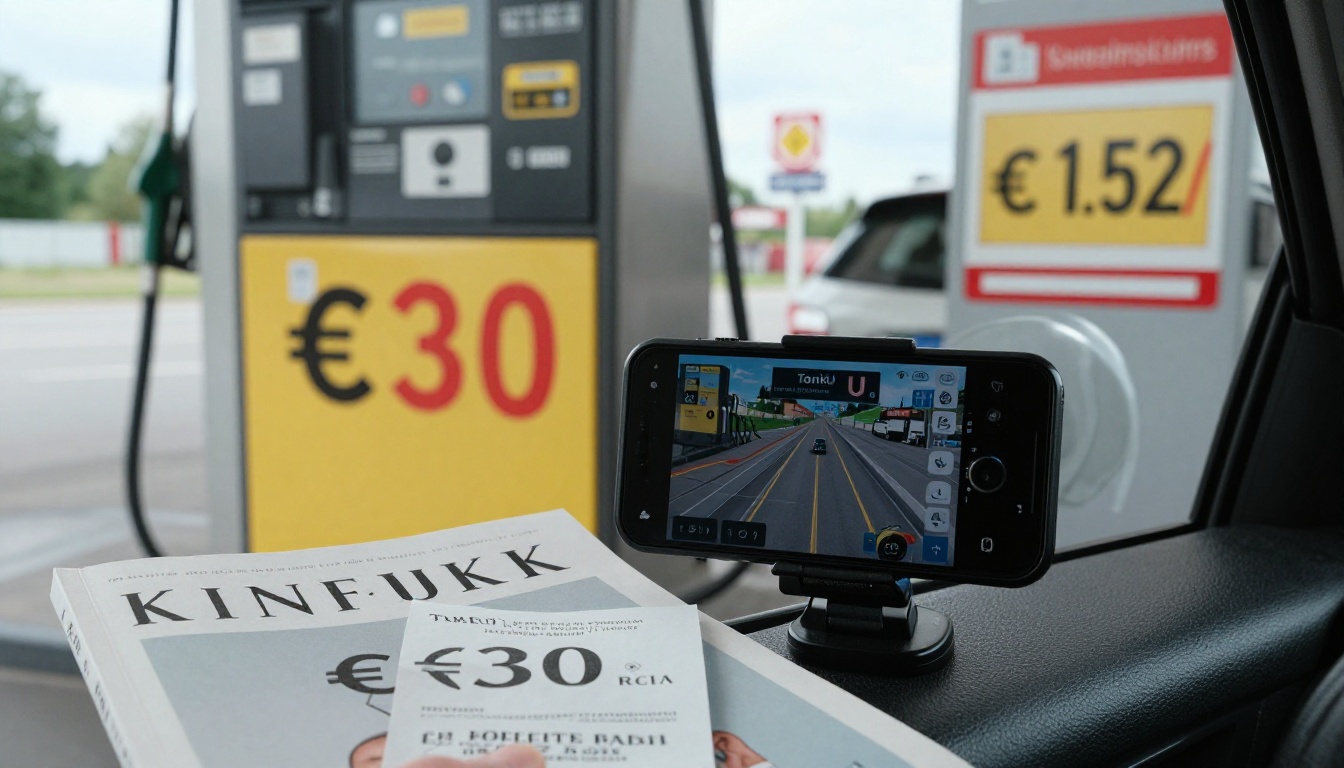
The Dutch have always been practical people. When life gives you high fuel taxes, you drive to Belgium. When Belgian traffic gets messy, you build an app. And when that app tells you that a 45-minute detour still saves money, you start questioning the basic logic of Dutch economic policy.
Picture this: you’re staring at a fuel price display showing €2.19 per liter at your local Dutch station. Twenty kilometers away, just across the border, it’s €1.52. That’s not a minor difference, that’s a 61 cent gap that turns a routine fill-up into a €30 savings on a standard tank. For many Dutch drivers, this isn’t just math, it’s a monthly budget line item that demands attention.
The Price Gap That Broke the Camel’s Back
The numbers are stark. While the feared complete abolition of the accijnskorting (fuel tax discount) was narrowly avoided in The Hague, Dutch fuel prices still jumped in early 2026, gasoline by six cents per liter, diesel by nearly four. Meanwhile, Belgium and Germany continue to benefit from different tax structures, creating a permanent arbitrage opportunity that savvy drivers exploit with military precision.
A typical Dutch driver living near the German border and covering 12,000 km annually with a fuel-efficient car saves nearly €300 per year by refueling across the border. Diesel drivers save around €160. These aren’t hypothetical calculations from some think tank, they’re real figures that directly impact household budgets. The impact of Box 3 tax reform on Dutch consumers and investors has already squeezed disposable income, making every euro saved at the pump feel like a small victory against the Belastingdienst (Tax Authority).
When the App Store Becomes Your Financial Advisor
Enter TankU, a free iPhone app built by a Dutch developer who presumably got tired of doing mental math at red lights. The app calculates whether crossing the border makes financial sense based on your location, vehicle consumption, and current fuel prices. It then navigates you to the nearest Belgian or German station and shows your net savings after accounting for the extra distance.
The developer claims that even with 45 minutes of additional driving, some users still come out ahead, without even factoring in depreciation or maintenance costs. That’s either impressive savings or a depressing comment on Dutch fuel prices, depending on your perspective.
The app addresses a real need. One user near Poppel, Belgium, notes they regularly fill up there at €1.606 per liter, while another mentions Baarle Hertog offers even cheaper options, though the extra time often negates the marginal benefit. The genius of TankU lies in its ruthless calculation: it forces you to confront whether your “savings” are actually just expensive procrastination with extra steps.
The Belgian Backlash: When Savings Become a Social Problem
Here’s where the spiciness kicks in. Belgian border communities have had enough. Residents of Essen, the first Belgian town across from Roosendaal, describe the situation as “a complete disaster.” The local tank station becomes a battlefield of Dutch license plates, with lines spilling onto roads and creating what locals call “unnecessary traffic jams.”
One Belgian resident reports accidents occurring “certainly once every two weeks” due to the chaos. Another has completely reorganized her weekly schedule to avoid the Dutch rush, tanking only early morning or late evening. The complaints go beyond traffic: Dutch drivers allegedly cut lines, block access roads, and, adding insult to injury, blast Dutch-language music while waiting.
The irony? Many of these same Belgians admit they’d do exactly the same if the price difference were reversed. A local shop worker notes she crosses into the Netherlands for cheaper branded products and finds the Dutch “very friendly.” It’s hard to maintain moral high ground when everyone’s playing the same arbitrage game.
The Vignet Threat: Belgium’s Countermove
Belgian politicians, never ones to miss a chance for creative taxation, are debating a special vignet (toll sticker) specifically targeting Dutch fuel tourists. The proposed cost: around €100 annually. Tank station owners, however, remain unimpressed. As one spokesperson for 200 Belgian stations put it: “With 100 liters of Belgian gasoline, you already save €50. So you earn that vignet back immediately.”
The vignet debate reveals the absurdity of the situation. It’s a tax on a tax avoidance strategy, which might just push Dutch drivers further into Germany or Luxembourg. Some have already discovered that driving deeper into Belgium to towns like Kalmthout yields even lower prices, €1.45 per liter, making the initial border stations seem expensive by comparison.
The Real Math: When Does It Actually Pay?
Let’s get technical. The average gasoline car consumes 1 liter per 15 km. At Dutch prices around €2.02 per liter versus Belgium’s €1.566, you’re saving roughly €0.45 per liter. Fill 50 liters, and you’ve theoretically saved €22.50.
But that omweg (detour) costs money too. Each kilometer costs about €0.13 in fuel. A 30 km round trip eats €4. A 60 km round trip takes €8. Suddenly your €22.50 saving shrinks to €14.50 or less. Factor in time, potential traffic, and the mental energy of planning, and the equation becomes personal: what’s your tolerance for hassle?
Plug-in hybrid drivers have an edge. They can drive electrically to the border, making the detour nearly free before switching to gasoline. This extends their viable range to 40-60 km from the border, compared to 20-40 km for conventional cars.
For those living in Beverwijk or similar inland towns, the math doesn’t work yet. The extra distance makes it more expensive than local Dutch stations. But as the price gap widens, and it likely will, the break-even point moves further inland each year.
The Jerry Can Controversy: How Far Is Too Far?
Some drivers take this to the next level, bringing jerrycans to maximize each trip. The logic is sound: if you’re making the journey anyway, why not stock up? But regulations limit how much fuel you can legally transport, and the safety considerations are real.
More importantly, this behavior signals a shift in consumer psychology. When people start treating fuel like a bulk good to be hoarded, it reveals deep distrust in domestic pricing policies. The Dutch wealth tax pressures driving cross-border financial decisions aren’t limited to property, they’re influencing everyday consumption patterns.
The Bigger Picture: Tax Arbitrage as a Lifestyle
What we’re witnessing is consumer arbitrage in its purest form. Dutch drivers are essentially voting with their wheels, creating a market-based protest against what they see as excessive fuel taxation. The Belgian border isn’t just a geographic line, it’s a tax policy boundary that savvy citizens exploit.
This behavior mirrors larger trends. The Dutch investors considering emigration due to wealth taxation are making the same calculation on a grander scale. If the Netherlands becomes too expensive, you move, your money, your business, or just your weekly fuel purchase.
The growing public backlash against Dutch wealth taxation shows that this isn’t about isolated penny-pinching. It’s part of a broader pattern where middle-class Dutch residents feel squeezed by a tax system that seems increasingly creative at finding new ways to fund government spending.
Practical Takeaways: Should You Join the Tank Tourism?
Before you start plotting your route to Poppel, do the math:
-
Calculate your real cost per km: Include fuel consumption, but also factor in tire wear, maintenance intervals, and depreciation. Your car costs more than just gas.
-
Use the tools: Apps like TankU or the calculator at duitsemilieusticker.nl/grenstanken can give you a personalized answer. But be honest about your time value. Is saving €15 worth an hour of your life?
-
Combine trips: The real winners aren’t those who make special fuel runs. They’re the people who integrate border crossings into existing travel, visiting family, shopping for cheaper groceries (another Dutch specialty), or weekend trips.
-
Consider the social cost: If you’re blocking Belgian intersections or cutting lines, you’re not just saving money, you’re reinforcing the “aso-Nederlander” (anti-social Dutch person) stereotype that has locals fuming. A little patience costs nothing.
-
Watch the policy space: If Belgium implements a vignet, the equation changes dramatically. The risks of complex tax avoidance schemes under new Box 3 rules teach us that governments eventually respond to arbitrage, often clumsily.
The Bottom Line
Cross-border fuel savings work best as a supplement, not a lifestyle. If you live within 20 km of the border, it’s a no-brainer. Between 20-40 km, it’s situational. Beyond that, you’re likely spending more in hidden costs than you’re saving in visible ones.
But the trend itself tells a bigger story. Dutch drivers aren’t just looking for cheaper gas, they’re actively working around a tax burden they see as unreasonable. The everyday cost-saving strategies for Dutch consumers now include international travel, which says something about domestic price levels.
The Belgian mayor of Essen, Geert Vandekeybus, captures the absurdity perfectly: “I understand people look at their wallets, but wait a bit longer to get cheap fuel, that’s not a problem.” Yet for Dutch drivers, it is a problem. Every extra cent at the pump represents another drop in the bucket of disposable income that’s already strained by housing costs, insurance premiums, and yes, the unintended economic consequences of Box 3 tax reform.
So how far would you go to save on gas? For an increasing number of Dutch drivers, the answer is: as far as it takes to feel like they’re not being played for fools. The border is just the beginning.