The Box 3 Tax Revolt: Why Dutch Investors Are Ready to Storm the Dam
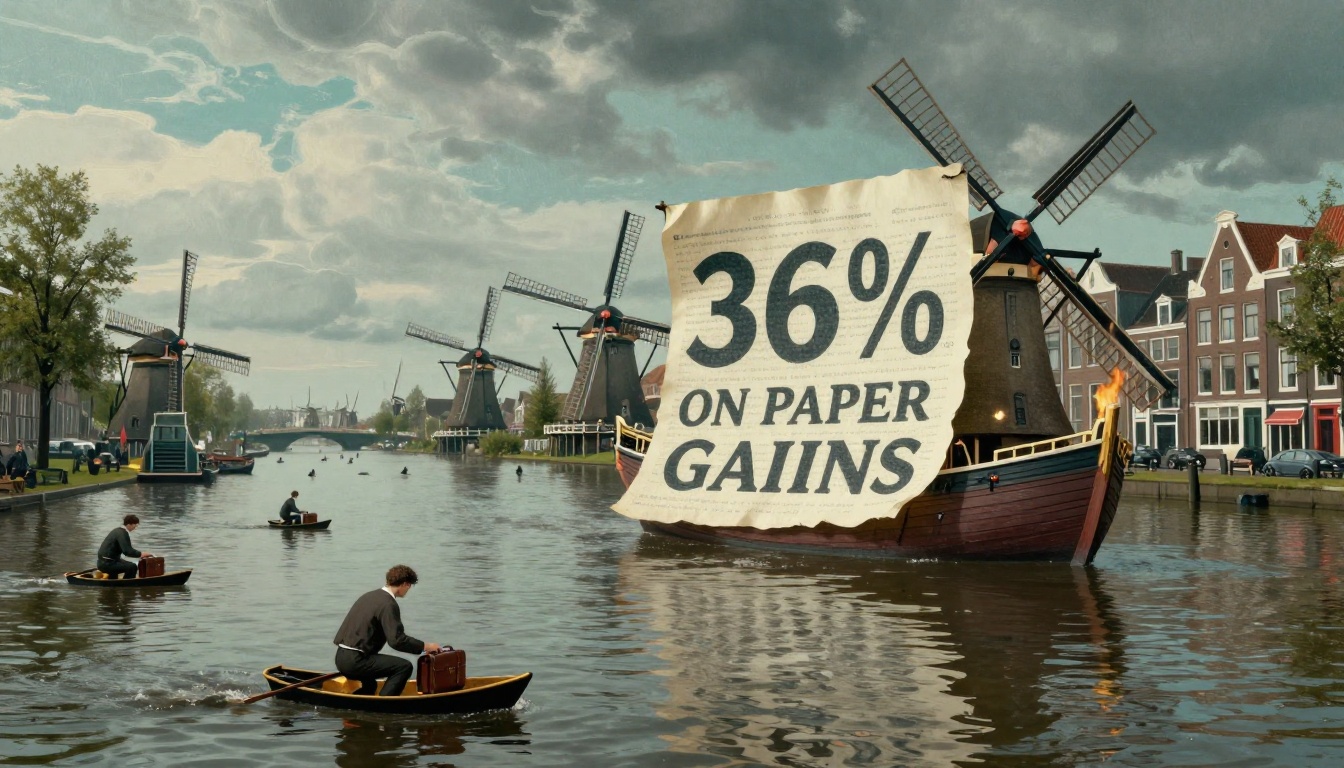
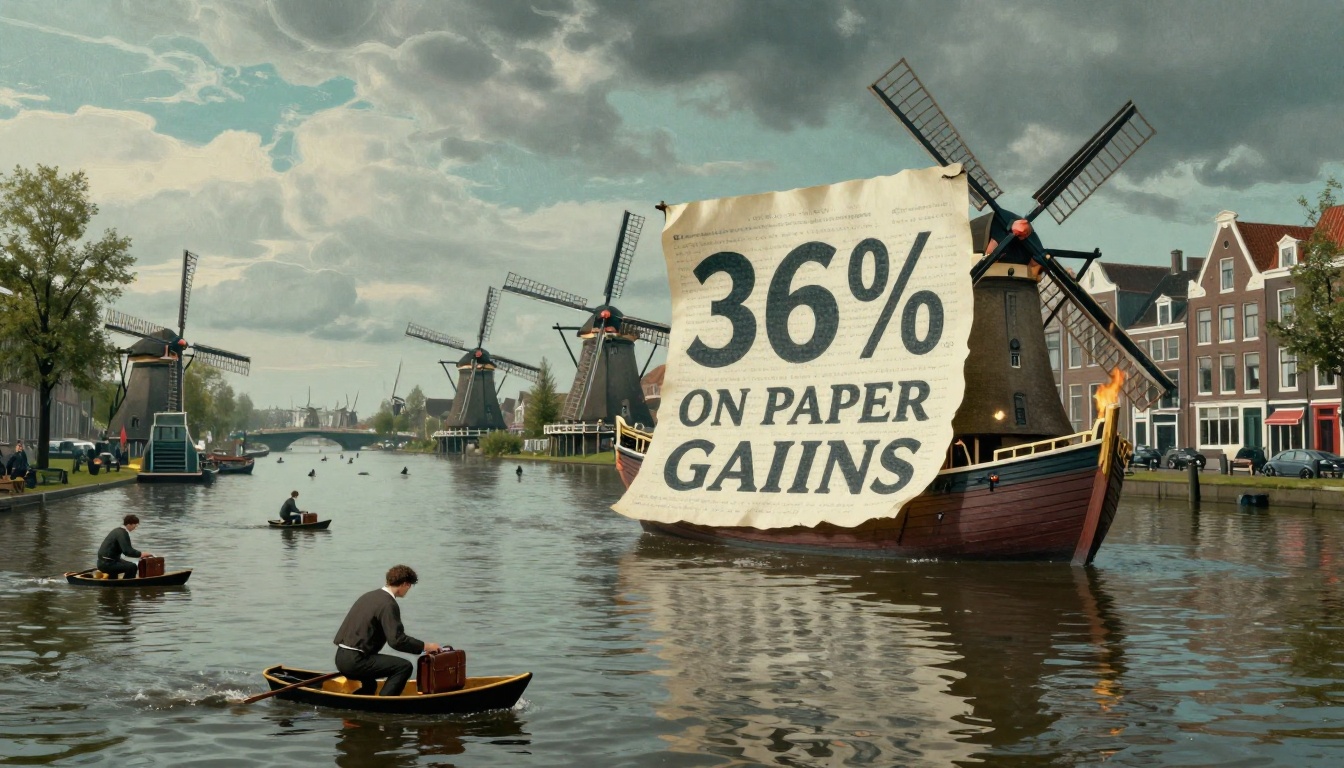
The Dutch government has a gift for making the complicated sound reasonable. Take the Wet werkelijk rendement box 3 (Box 3 Actual Return Act), a name that suggests fairness, precision, and finally taxing what people actually earn. What it actually does is turn long-term investing into a high-wire act where you pay 36% tax on money that exists only on paper, while the truly wealthy watch from their corporate structures, untouched.
By January 1, 2028, the entire wealth tax system in the Netherlands will flip from taxing fictional returns to taxing assumed real ones. The backlash has been immediate and fierce, crossing political lines and income brackets. This isn’t just about tax rates. It’s about a fundamental shift that punishes patience, rewards volatility, and redefines “wealth” to include anyone with a modest investment account.
From Fictional to Fantasy: The Box 3 Time Machine
Currently, Box 3 works on a simple fiction. The Belastingdienst (Tax Authority) assumes you earn 1.37% on savings and 5.88% on investments, regardless of reality. You pay 36% tax on those imaginary returns, but only on wealth above €57,684 (€115,368 for couples). If your actual returns are lower, you can report that and pay less. If they’re higher, you keep the difference.
That system had problems, but it was predictable. You knew your tax bill in advance. You could plan.
The new system throws predictability out the window. Starting in 2028, you’ll pay 36% on your actual returns, including unrealized capital gains. Your €100,000 portfolio jumps to €120,000? That’s a €20,000 paper gain, and you owe €6,552 in tax, even if you never sold a single share. The tax-free threshold becomes a joke: €1,800 in gains per person, which at a 7.5% average return means only about €24,000 of your portfolio is truly sheltered.
detailed explanation of the 2028 Box 3 reform and taxation of unrealized gains
The Compounding Killer
Here’s where the math gets ugly. Many investors point out that the real damage isn’t the tax rate, it’s the forced liquidation. If you’re building wealth by reinvesting dividends and letting growth compound, you now face an annual choice: sell assets to pay tax, or find cash elsewhere.
One analysis shows what happens with a €200,000 portfolio adding €1,500 monthly. Under the new rules, you might need to sell 2-3% of your holdings each year just to cover the tax bill. That might not sound like much, but over 20 years, it slashes your compound growth by 30-40%. The difference between retiring at 55 versus 62. Between financial independence and working another decade.
The government calls this “taxing actual returns.” Investors call it a wealth destruction machine. As one financial planner noted, the system assumes you have spare cash lying around to pay tax on gains you haven’t realized. For most middle-class investors, that cash comes from selling the very assets they’re trying to grow.
impact of Box 3 on financial independence and long-term wealth building
The €50,000 Stealth Tax
The most cynical move in the reform is the threshold manipulation. The current system exempts the first €57,684 of wealth entirely. The new system exempts the first €1,800 of gains. At a realistic 6% return, that’s equivalent to just €30,000 of wealth.
Translation: the effective tax-free amount drops by nearly 50% overnight. The government didn’t need to raise the 36% rate to pull more money from your pocket. They just moved the goalposts while everyone was watching the ball.
This hits the “middenklasse” (middle class) investor hardest. Someone with €75,000-€150,000 in investments, a typical amount for someone saving seriously for 10-15 years, goes from paying modest Box 3 tax to facing a substantial annual bill on their paper gains. The framing from politicians suggests this targets “vermogenden” (wealthy individuals), but the numbers tell a different story.
grassroots protest movement against the unfair Box 3 tax reforms
Real Estate’s Get-Out-of-Jail Card
While stock investors get hammered, real estate owners receive special treatment. Your primary residence stays in Box 1 with mortgage interest deduction. Investment properties get taxed on realized gains only, not annual paper value changes. The government argues this is necessary because property is “illiquid”, but many stocks are just as hard to sell without moving the market.
This creates a massive distortion. A €500,000 rental property that appreciates 5% pays zero tax until sold. A €500,000 stock portfolio with the same gain owes €9,000 annually. The incentive is clear: dump financial assets, buy property. Which, in a country already choking on housing shortages, is exactly the wrong signal to send.
The irony? The policy meant to make taxation “fairer” will likely pour gasoline on the housing market, pushing more capital into bricks and mortar and inflating prices for first-time buyers.
how Box 3 reform may inflate housing prices by favoring real estate over financial investments
The 2028 Transition Trap
Perhaps the most baffling design choice is the transition rule, or lack thereof. If your portfolio drops 20% in 2027, then recovers 20% in 2028, you pay tax on the full recovery gain. But you get no credit for the previous year’s loss.
Example: €100,000 in stocks becomes €80,000 in 2027. No tax due, you have no gains. In 2028, it climbs back to €100,000. That’s a €20,000 “gain” in 2028, triggering a €6,552 tax bill. You’ve paid 36% on money you simply got back.
Tax officials call this “pech” (bad luck). Investors call it confiscation. The system does allow loss carry-forward after 2028, but not backward. For anyone investing through a market cycle, this creates a heads-you-win-tails-I-lose dynamic. A 2008-style crash followed by a slow recovery would have you paying taxes on phantom gains for years, while your actual portfolio barely breaks even.
how portfolio recovery could trigger a ‘tax bomb’ on unrealized gains
Framing the Enemy
The political messaging around this reform has been masterful. Officials and supportive media consistently frame Box 3 taxpayers as “vermogenden” who need to “pay their fair share.” One economist told NOS that investors can simply sell shares to pay tax, calling them “makkelijk verhandelbaar” (easily tradable). The implication: if you own stocks, you’re rich enough to afford this.
This framing ignores reality. A teacher who invested €500 monthly for 15 years isn’t a “vermogende.” A nurse with €80,000 in index funds isn’t swimming in cash. These are people trying to build retirement savings beyond the uncertain pensioen (pension) system. Yet they’re being cast as tax avoiders who’ve enjoyed “cadeautjes” (gifts) under the old regime.
The real wealth protection happens elsewhere. Millionaires and billionaires structure assets through BVs (private limited companies) or hold property, both treated more favorably. The 36% rate on paper gains doesn’t touch them. It hits the upper middle class, the group that saves diligently but lacks expensive tax advisors.
how the new Box 3 system may benefit wealthy individuals using corporate structures
The International Laughing Stock
Critics aren’t just domestic. Tax experts and investors abroad watch the Netherlands with disbelief. No other developed country taxes unrealized gains annually at these rates. Belgium taxes realized gains at 10-15%. Germany has a flat withholding tax. The U.S. only touches unrealized gains in very specific circumstances.
One expat investor calculated that a €10,000 Bitcoin investment in 2014, under the new Dutch rules, would generate over €1 million in tax liability by 2024, more than the entire portfolio value at some points. The forced selling to pay annual taxes would have destroyed the compounding effect that made the investment valuable.
This makes the Netherlands a cautionary tale. The government claims it’s modernizing taxation. Observers see a country shooting itself in the foot, creating such hostile conditions for capital that wealthy individuals are already exploring emigration.
The Revolt Takes Shape
The anger isn’t staying online. Investors are organizing, writing to parliament, and planning legal challenges. The Eerste Kamer (Senate) still needs to approve the law, and while passage is likely, the volume of opposition is unprecedented for a tax technicality.
Strategies to mitigate the damage are spreading. Some advise shifting everything into pensioen beleggen (pension investing), where different rules apply. Others suggest taking on aflossingsvrije hypotheek (interest-only mortgage) debt to reduce taxable wealth, a risky move that uses leverage to game the system. A few are exploring BV structures, though the costs and complexity make this viable only for larger portfolios.
whether forming a BV remains a viable tax strategy under the new Box 3 rules
comparison of pension vs. regular investing under the new Box 3 tax regime
The most common advice? Start now, build wealth for the next two years, and hope the political winds change before 2028. It’s not exactly solid financial planning, but it’s realistic.
What This Means for Your Money
If you have investments in the Netherlands, you need to model your 2028 tax liability now. Use the official calculators, but also run worst-case scenarios. What if your portfolio drops 30% in 2027, then recovers? What if you need to sell 4% annually just to pay tax?
Consider the timing of any large purchases. Selling a house in 2027 and investing the proceeds? That cash infusion could create a massive tax bill in 2028 if markets rise. Better to wait or structure the deal across calendar years.
Most importantly, stop thinking of your investment account as a long-term lockbox. The Dutch government now treats it as an annual income source, whether you withdraw or not. Your planning needs to include liquidity for tax payments, every single year.
using mortgage debt strategically to reduce taxable wealth under Box 3
The Bottom Line
The Box 3 revolt isn’t about refusing to pay taxes. It’s about the principle of taxing money that doesn’t exist yet, and the economic damage that causes. The government could have fixed the old system’s flaws without creating a new one that punishes saving and rewards consumption.
Instead, they’ve built a machine that slowly grinds down middle-class wealth accumulation, while leaving the truly rich untouched. They’ve framed it as fairness while delivering the opposite. And they’ve turned loyal, tax-paying investors into a mobilized opposition.
The dam hasn’t broken yet. But the cracks are showing.