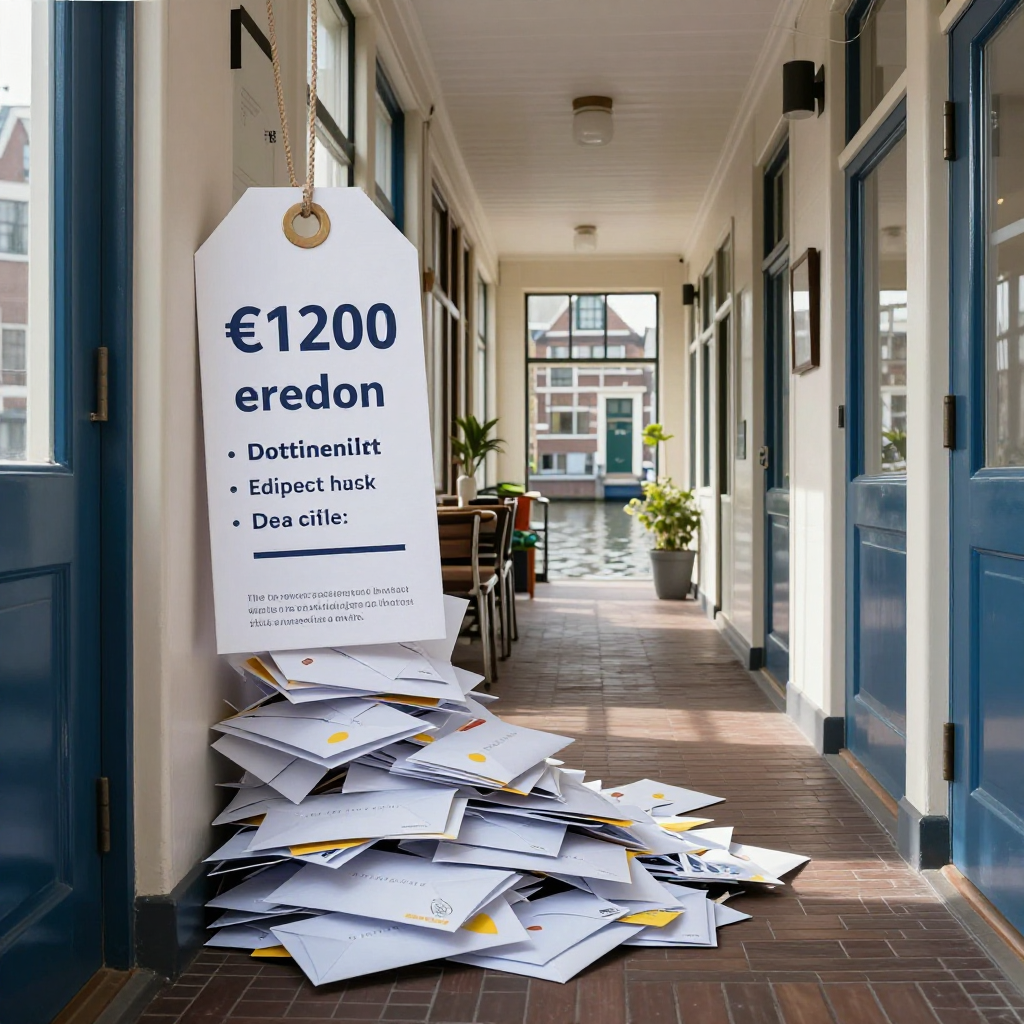
At 25, living with your parents in the Netherlands feels like wearing training wheels on a racing bike. You’re professionally capable, socially stunted, and every Tikkie request from your mom for “boodschappen” (groceries) chips away at your adult dignity. But before you storm out with your IKEA bags and wounded pride, let’s talk about the financial landmines hidden in that “perfect” €1200 apartment in Utrecht or Amsterdam.
The Dutch housing market doesn’t care about your independence dreams. It cares about your bank balance, your BSN (Citizen Service Number), and whether you understand that “huurtoeslag” (rent allowance) probably won’t apply to your salary. A 28-year-old earning €3100 netto (after tax) recently learned this the hard way when a €1200 rental opportunity revealed costs he hadn’t calculated. His €25,000 savings cushion looked solid until the real math started.

The 30% Rule Is a Dutch Fairy Tale
International finance gurus love the “spend 30% of income on housing” rule. In the Netherlands, that’s adorable fiction. With net earnings of €3100, that €1200 rent represents nearly 39% of your income before you’ve paid a single utility bill. Dutch financial advisors increasingly warn that the old benchmarks collapse under modern rental reality, especially in Randstad cities where supply is tighter than a Rotterdam harbor lock during storm season.
The real question isn’t “Can I afford €1200?” It’s “Can I afford €1600-1800 monthly when all the invisible costs materialize?” Let’s break down what that 28-year-old, and you, are actually facing.
The Rent Is Just the Opening Act
That €1200 figure on Funda or Pararius is the teaser rate. The true monthly cost includes:
GWL (Gas, Water, Light): Budget €150-200 monthly for a modest apartment. Energy contracts in the Netherlands follow the person, not the address, meaning you’ll need to lock in rates immediately upon moving. With gas prices hovering around €1.26 per m³ in early 2026, the decision between a 3-year fixed contract or dynamic pricing becomes critical. Many young renters get burned by variable rates that spike during winter months. Our analysis of locking gas prices for 3 years shows this single decision can swing your annual costs by €400-600.
Internet and TV: €60 monthly gets you basic connectivity. Don’t forget the €150-200 installation fee most providers charge.
Inboedelverzekering (Contents Insurance): €10-15 monthly seems trivial until your laptop gets stolen or your upstairs neighbor’s washing machine floods your apartment.
Gemeentelijke Belastingen (Municipal Taxes): That €50 annual figure gets divided into monthly installments, but wait, there’s the “waterschapsbelasting” (water authority tax) and “afvalstoffenheffing” (waste collection tax) that can add another €300-400 yearly. Suddenly you’re looking at €35-40 monthly just for the privilege of living in the gemeente (municipality).
Service Costs: If you’re renting in a “gestoffeerd” (furnished) or “gemeubileerd” (fully furnished) place, service costs can run €50-150 monthly. Even “kaal” (bare) rentals often include VvE (Homeowners Association) fees passed through from the owner.
Your €1200 rent just became €1470, and we haven’t eaten yet.
The Hidden Costs That Devour Savings
The biggest mistakes young renters make aren’t the obvious bills, they’re the costs that don’t appear in any calculator.
Car Ownership Reality Check: That €150 monthly for a 2019 Polo? One commenter correctly pointed out this covers only fuel, motorrijtuigenbelasting (vehicle tax), and insurance. You’re not accounting for afschrijving (depreciation) or maintenance savings. Dutch automotive experts calculate true cost at €0.35 per kilometer when including tires, repairs, and eventual replacement. If you drive 15,000 km annually, that’s €4375 yearly or €365 monthly, more than double your estimate. Your car isn’t costing €150, it’s costing €365 plus parking permits in most cities.
The Olive Oil and Duct Tape Factor: First-time movers consistently underestimate setup costs. You need more than a bed and a pan. Your parents’ house contains €3000-5000 of accumulated essentials: spices, cleaning supplies, tools, a decent knife, that weird screwdriver for IKEA furniture. Replacing them all at once creates a “startup cost tsunami” that hits in month one. Budget €1000-1500 minimum for basics, more if you need appliances.
Boodschappen Shock: €300 monthly for groceries works if you’re cooking like a student. But independent adults buy the €8 olive oil, the €5 biological milk, the “verspakket” (fresh meal kit) when tired. Realistic budget: €350-450 monthly for one person buying Dutch-quality products.
The First Month Financial Massacre
Here’s where €25,000 in savings starts looking less comfortable:
- Borg (Deposit): Typically 1-2 months rent. For €1200, that’s €1200-2400 upfront.
- Makelaar (Agent) Fees: If you used one, add another month’s rent plus 21% VAT.
- First Month Rent: Payable before you get keys.
- Utility Deposits: Energy companies demand €150-300 deposit without payment history.
- Moving Costs: €300-800 depending on distance and whether you bribe friends with pizza.
You’re looking at €3000-5000 cash outflow before you spend your first night. That €25,000 emergency fund just became €20,000, and you haven’t faced your first unexpected €800 repair bill.
The Savings Rate Killer
Financial independence requires aggressive saving. The wealth building blueprint for young professionals shows that Dutch millennials need to save 25-30% of net income to afford a hypotheek (mortgage) within 5-7 years. At €3100 net, that’s €775-930 monthly savings.
If your true housing cost is €1600 and living expenses another €800, you’ve got €700 left, barely enough to save for emergencies, let alone a down payment. Moving out too early can permanently delay homeownership, trapping you in the expensive rental market the Dutch government is desperately trying to reform.
When You’re Actually Ready: The Real Checklist
Don’t trust your gut. Trust these numbers:
Income Stability: You need 12+ months in permanent employment or a “vast contract” (permanent contract). The UWV (Employee Insurance Agency) reports that young workers with temporary contracts face 3x higher eviction risk during economic dips.
Emergency Fund: 6 months of true costs, not rent-only fantasy math. At €1800 monthly all-in, that’s €10,800 minimum. Your €25,000 passes this test, barely.
Vermogen (Assets): Beyond emergency fund, have €5000 for move-in costs and another €5000 for “first year surprises.” Your €25,000 becomes €10,800 emergency + €5000 move-in + €5000 buffer = €20,800 allocated. You’ve got €4200 true “wealth” left.
Debt Status: Zero consumer debt. Student loans are okay if they’re the old “stufi” system, but new loans count against mortgage applications.
Income Ratio: Your all-in housing cost shouldn’t exceed 40% of net. At €3100, that’s €1240. Our €1470 estimate fails this test. You’d need €3500+ net to make €1200 rent truly comfortable.
When Staying Home Is the Power Move
Dutch culture stigmatizes living with parents, but financially, it’s often the smartest move until age 27-28. Consider staying if:
- You’re saving less than €500 monthly after “practice rent” payments to yourself
- Your commute would increase by 30+ minutes (time is money)
- You’re in a “woonboot” (houseboat) or unique situation parents provide cheap
- You’re within 2 years of wanting to buy
The average age for first-time buyers in Netherlands is now 34. Moving out at 25 and renting for 9 years at €1500 monthly means you’ve spent €162,000 on housing that builds zero equity. That’s a hypotheek (mortgage) down payment on a €400,000 apartment, gone.
The Controversial Truth
The Dutch housing crisis has rewritten the rules. What was financially prudent for your parents is now reckless. That €1200 apartment doesn’t just cost €1800, it costs your future down payment, your pension buffers, and your ability to weather the next economic “tegenvaller” (setback).
Yet staying home has hidden costs too: delayed independence, relationship strain, and the psychological weight of feeling stuck. The math is cold, but the emotional calculus is personal.
Your Actual Action Plan
If you’re determined to move, do this:
- Track spending for 3 months while living at home. Every euro. You’ll find you spend €400-600 on “invisible” costs your parents cover.
- Pay “practice rent” into a savings account for 6 months. If you can’t consistently save €1500 monthly while home, you can’t afford €1200 rent.
- Calculate true car costs using the €0.35/km rule. If you can’t afford it, sell before moving.
- Get energy quotes now. Use our locking gas prices for 3 years analysis to choose wisely.
- Build a “move-out” fund of €8000 minimum before signing anything.
- Check your “hypotheek” potential with a mortgage advisor. If renting delays buying past age 35, the lifetime cost is devastating.
- Negotiate your “vast contract” or secure 12+ month income proof before applying for rentals.
The Dutch rental market is a professional sport. At 25, you’re still in the youth leagues. That doesn’t mean you can’t play, it means you need better training, more capital, and the humility to admit that independence costs far more than the rent check suggests.
Your parents’ house isn’t a failure. It’s a financial launchpad. Use it wisely, or watch that €1200 apartment launch you straight into decade-long debt.