The Dutch new construction market presents a paradox: you must commit to a home that doesn’t exist yet, while knowing the rules could change before you get the keys. For international residents navigating this system, the gap between signing a koopovereenkomst (purchase agreement) and actually moving in creates a unique set of financial and legal risks that existing-home buyers never face.
The Early Registration Gamble: Why “First” Doesn’t Mean “Safe”
Picture this scenario: you’ve secured a 33m² studio in Hoorn with a terrace, mortgage approval in hand, and a notary appointment scheduled. Then a 40m² option appears in Weesp, closer to Amsterdam, with storage and parking, at a lower price. The catch? The Weesp project hasn’t even started sales yet, and you have just two months under your ontbindende voorwaarden (dissolving conditions) to make a decision.
This situation illustrates the core tension in Dutch new construction: early registration rewards you with certainty, but punishes you with opportunity cost. The project in Hoorn offers a concrete timeline, while Weesp represents only possibility. According to CBS data, new construction projects face average delays of 12-18 months, meaning that “central location” advantage might not materialize until your career plans have already changed.
The antispeculatiebeding (anti-speculation clause) complicates matters further. Most new construction contracts require you to live in the property for 3-5 years before selling. If you choose Hoorn and later receive that dream job offer in Utrecht, you cannot simply cash out without penalty. Some buyers believe they can circumvent this by selling to family members, but the gemeente (municipality) actively monitors such transactions, and fines can reach 10% of the property value.
Construction Delays: When Permits Become Paper Promises
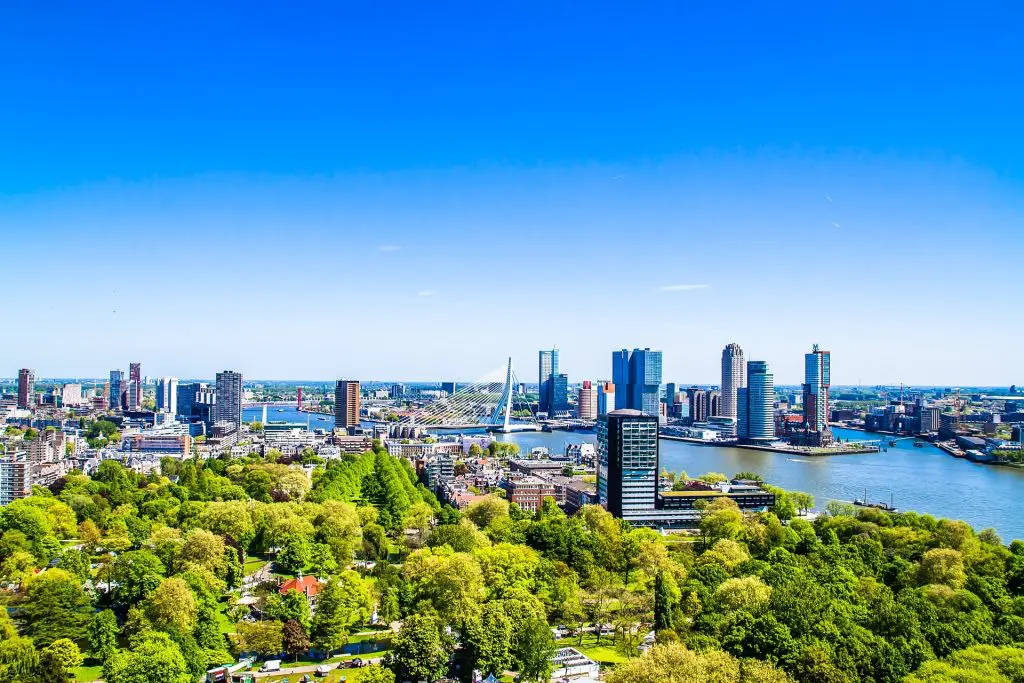
Rotterdam currently demonstrates why a vergunning (building permit) means nothing for your move-in date. Twenty-two projects totaling 15,000 homes sit idle due to bezwaren (objections) from current residents. One Feijenoord resident, George Verhaegen, successfully stalled three projects, ‘De Kaai,’ ‘Mallegattoren,’ and the ‘Bestemmingsplan Feijenoord’, representing 1,325 homes, by arguing the seven-meter distance between existing buildings and planned 70-meter towers would destroy his Maas river view.
The Raad van State (Council of State) reports a sharp increase in appeals against zoning plans, with 415 cases expedited in 2024 alone. While 95% of objections ultimately fail, the process adds an average of 14 months to project timelines. For buyers, this means your “fixed” 2027 delivery date has a significant chance of becoming 2028 or 2029.
WoningBouwersNL notes that 3-5% of permits get withdrawn entirely after approval. In 2024, nearly 5,000 approved units were canceled. If you’ve already invested €2,500 in a bouwkundige keuring (structural survey) and €1,800 in notaris fees, those costs disappear with the project.
Market Mathematics: Why Your “Good Deal” Might Be Underwater by Delivery
The Dutch housing shortage sits at approximately 390,000 units, yet construction consistently underperforms. In 2025, the Netherlands added fewer than 80,000 homes for the third consecutive year, well below the 100,000-unit annual target. This shortfall keeps driving prices upward, but not uniformly across all segments.
New construction pricing operates on a cost-plus model, not market value. Developers calculate: land price + construction costs + 15-20% margin. However, construction costs rose 22% between 2022-2025, while developers absorbed only 60% of that increase, squeezing margins. This creates a dangerous scenario for buyers: you’re paying today’s prices for a home delivered in tomorrow’s market, but the developer’s profit is already locked in.
If housing prices drop 10% between contract signing and delivery, a real possibility given current interest rate volatility, you still pay the contract price. Worse, your hypotheek (mortgage) approval was based on that price. If the bank’s appraisal at delivery falls short, you must cover the difference in cash. For a €350,000 apartment, a 10% market decline plus a 5% lower appraisal means scrambling for €52,500 within weeks of getting your keys.
The Fine Print That Can Break You: Cancellation Clauses and Hidden Costs
Standard Dutch purchase contracts include a 3-day bedenktijd (reflection period) and financing contingencies, but new construction adds layers of risk:
The financing clause trap: Your two-month cancellation window requires active termination. If you simply let it expire, you’re bound to the purchase. Many internationals misunderstand this, thinking silence equals cancellation.
Meerwerk (additional work) price explosions: That €5,000 upgrade for better flooring seems reasonable during your showroom visit. But developers often subcontract extras at 40-60% markups. By delivery, your “custom” kitchen might cost €12,000, and you’ve already forfeited your right to cancel.
VvE (Homeowners Association) uncertainty: For apartment projects, the VvE doesn’t exist yet at purchase time. Developers draft preliminary budgets that often prove unrealistic. Within two years of delivery, monthly VvE fees can double from €75 to €150 as real maintenance costs become clear.
The Dutch Authority for Financial Markets (AFM) reports that 23% of new construction buyers experience “significant financial surprises” between contract signing and the first year of occupancy, double the rate for existing-home purchases.
The Fiscal Hangover: Box 3 and Your “Paper” Wealth
Here’s where new construction creates a bizarre tax situation. Under the current Box 3 system (changing in 2028), you’re taxed on presumed wealth. If you put down a €50,000 deposit in 2025 for a 2027 delivery, that money remains yours legally until delivery. However, the Belastingdienst (Tax Authority) still taxes it as if it’s earning a 6.17% return.
More concerning is the new Box 3 system launching in 2028, which will tax actual returns including unrealized gains. If your new construction property appreciates €75,000 between contract and delivery, you’ll owe taxes on that “gain” before you can even sell the property to realize it. This creates a liquidity crunch: you need cash to pay tax on wealth you cannot access.
For those considering new construction as an investment rather than a home, this fiscal shift fundamentally alters the math. The fiscale gevolgen van vermogensbeslissingen en langetermijnfinanciering become critical when evaluating whether that €25,000 price premium for new construction will ever pay off.
Makelaar Games: When Your Agent Isn’t Really Yours
The Dutch system often uses a single makelaar (real estate agent) for both sides in new construction deals. This creates obvious conflicts. The agent’s commission comes from the developer, not you, even if you pay a “advisory fee.
More problematic are situations where the makelaar’s own employees get priority access to units before public sales. While technically legal if disclosed, most buyers never read the fine print. This practice, discussed in depth regarding ethische risico’s bij makelaars en transparantie in vastgoedtransacties, means your “fair” registration might be competing with insiders who saw the plans months earlier.
In popular projects like the Weesp development mentioned earlier, public registration numbers often exceed available units by 10:1. If 20% of units were pre-sold to insiders, your actual odds drop from 10% to 6.25% without ever knowing the game was rigged.
Actionable Strategies: How to Protect Yourself
1. Treat the cancellation period as active, not passive: Set calendar alerts for 7 days before your ontbindende voorwaarden expire. Require yourself to make a conscious go/no-go decision.
2. Cap your meerwerk budget: Decide the absolute maximum you’ll spend on upgrades before visiting the showroom. Bring a hard copy and stick to it. Developers use sophisticated sales psychology in these spaces, treating them like IKEA showrooms where everything seems affordable.
3. Demand VvE financial transparency: Before signing, ask for the developer’s VvE budget assumptions. Compare their estimated costs with similar existing VvE’s in the area. If they’re projecting €0.75/m² for maintenance while comparable buildings pay €1.50/m², your fees will double.
4. Model multiple interest rate scenarios: Calculate your monthly payments at current rates, plus 2% and 4% higher. If you cannot afford the 4% higher payment, reconsider the purchase. The European Central Bank’s rate decisions remain unpredictable, and many 2025 buyers are already struggling as their rate-locked period expires.
5. Accept the “good enough” principle: In markets with 390,000-unit shortages, waiting for the perfect unit means renting indefinitely. The Hoorn studio with limited parking beats another year of €1,600/month rent for a comparable rental.
The Bottom Line: A Calculated Risk, Not a Blind Gamble
New construction in the Netherlands isn’t inherently bad, it’s just structured to transfer risk from developers and governments to individual buyers. You absorb construction delays, market fluctuations, fiscal changes, and VvE uncertainty while paying a 15-20% premium over existing comparable properties.
Yet for many, it remains the only viable path to ownership. In Amsterdam, new construction units sell with 70% fewer overbidding incidents than existing homes. That €350,000 list price might actually be €350,000, while an existing €350,000 apartment requires a €385,000 offer.
The key is entering with eyes open. Read every page of the koopovereenkomst. Visit the gemeente planning office to check for pending bezwaren. Talk to current residents in the developer’s completed projects. And most importantly: never let the fear of missing out override your financial reality. The Dutch housing market has made millionaires of patient renters and bankruptcies of rushed buyers. Your odds improve dramatically when you treat new construction as a business transaction, not an emotional milestone.