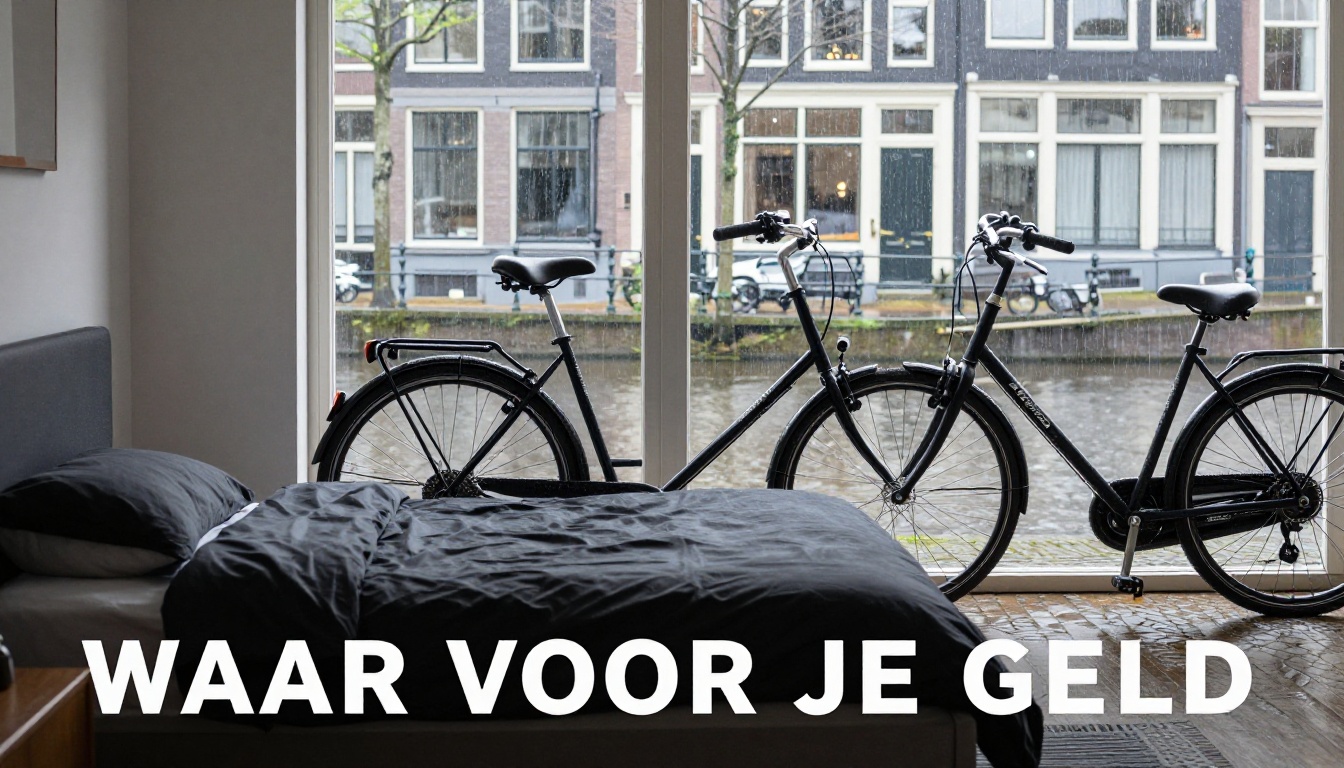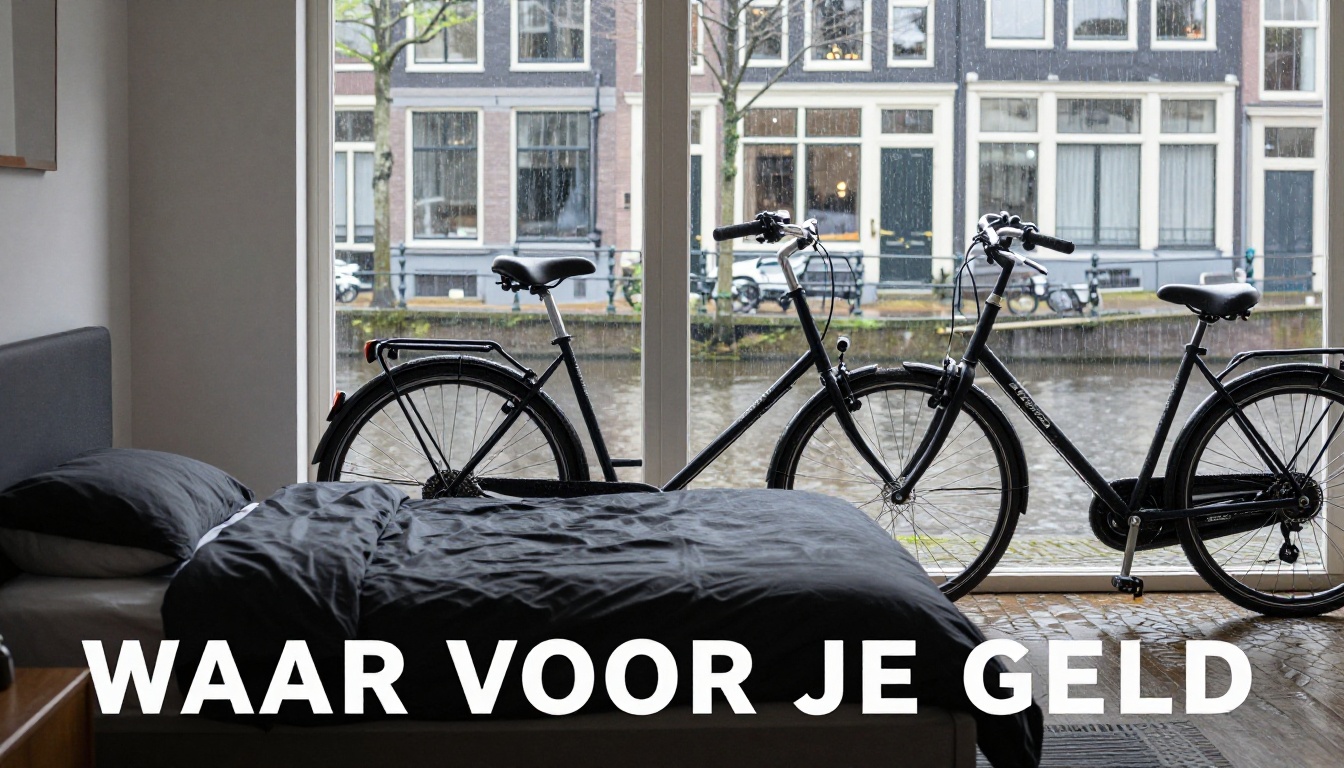
The Dutch have a peculiar relationship with money. We’ll cycle 45 minutes through horizontal rain to save €2.50 on parking, then drop €3,000 on a mattress without blinking. That contradiction isn’t random, it’s the waar voor je geld (value for money) principle in action. When a recent thread on r/geldzaken asked about the best purchases people ever made, the answers weren’t flashy investments or tech gadgets. They were boring, practical items that fundamentally rewired daily existence. And honestly, that’s where the real financial magic happens.
The €2,000 Bed That Saves Your Back and Your Sanity
If there’s one purchase that dominated the conversation, it’s the goed bed (good bed). Not just any bed, specifically, the kind that makes you wonder why you spent a decade sleeping on what was essentially a wooden plank with delusions of grandeur.
One Amsterdam resident described their Auping purchase from ten years ago as still delivering perfect sleep, contrasting it with their previous setup: the cheapest Ikea frame paired with a mattress that had clearly expired years prior. The math is brutal but simple. You spend roughly one-third of your life horizontal. Skimping on that is like buying discount brake pads for your car, technically functional until it catastrophically isn’t.
The Dutch mattress market has its own peculiarities. Brands like Auping and the eye-wateringly expensive Hästens dominate conversations about quality. A commenter mentioned walking past a Hästens stand at a housing fair two decades ago, learning the price was €25,000, and pretending that was reasonable. That’s not a bed, that’s a small hypotheek (mortgage) payment. Yet the sentiment persists: buy the best bed you can possibly afford.
What makes this specifically Dutch? The mattress advice came with a crucial caveat: find a salesperson who doesn’t want to sell you a bed. One Amsterdammer praised Slaapcomfort (Oost) where the salesperson literally forbade same-day purchasing. The instruction was clear: come back next week, lie in your three shortlisted options for at least an hour each, then decide. This isn’t American-style upselling, it’s Dutch directness applied to consumerism. The goal isn’t maximum commission, it’s preventing rugklachten (back complaints) and the subsequent zorgverzekering (health insurance) claims.
The Electric Bike: Amsterdam’s True Status Symbol
The second most celebrated purchase was the elektrische fiets (electric bike). For a country where cycling is essentially a constitutional right, this represents a fascinating shift. One commenter confessed a teenage trauma of cycling 30 km to school daily, which had turned them into a committed driver. The e-bike transformed that equation completely.
In Dutch cities, where parking costs can exceed €7 per hour and traffic congestion turns a 5 km drive into a 40-minute nightmare, an e-bike isn’t just transport, it’s a financial instrument. The comment about the car becoming “werkeloos” (useless) isn’t hyperbole. When you can cover 15 km to work without arriving sweaty, while saving hundreds monthly on fuel, parking, and autobelasting (car tax), the ROI becomes obvious within months.
The Dutch government has been nudging this transition through various subsidies, though these come and go faster than a NS (Dutch Railways) train schedule. But the real subsidy is structural: world-class cycling infrastructure, flat terrain, and a cultural acceptance that bikes belong everywhere. An e-bike purchase in the Netherlands leverages existing public investment in ways that simply don’t work in most countries.
What’s particularly Dutch about this purchase is the pragmatism. People aren’t buying e-bikes for environmental virtue-signaling, they’re buying them because the car has become economically irrational for urban living. It’s waar voor je geld in its purest form.
The Dishwasher: Domestic Peace Dividend
The vaatwasser (dishwasher) sparked surprising controversy. For most, it’s non-negotiable, the machine that prevents relationship breakdown during dinner cleanup. One couple’s €50 second-hand Bosch from eight years ago still runs perfectly, making it arguably their best-ever euro-per-use purchase.
But a contrarian voice emerged: the dishwasher is more work than hand-washing. The argument: pre-rinsing, loading, unloading, plus water, electricity, and tablet costs. This is peak Dutch debate, pragmatic to the point of accounting for every cent and minute.
The rebuttal was swift and technical: pre-rinsing is unnecessary (modern machines handle it), and hand-washing uses more water, not less. The real value isn’t just time-saving but consistent availability. As one commenter noted, you can ask friends to do laundry at your place, but you can’t show up with three days of dirty dishes. When their dishwasher died and delivery took three days, they ate off plastic plates rather than hand-wash, a principled stand that’s both ridiculous and relatable.
In Amsterdam’s tiny kitchens, a table-top dishwasher isn’t a luxury, it’s spatial efficiency. For expats adapting to Dutch housing where square footage costs more than Box 3 (wealth tax) on a modest portfolio, compact appliances that preserve sanity are worth their weight in gold.
The Steam Cleaner: The Unexpected Game-Changer
Less expected but passionately defended was the stoomreiniger (steam cleaner). One owner uses it for everything: bathroom tiles, stairs, doors, floors, even the gas stove and oven. The Kärcher model (not even the fancy version) transformed cleaning from a back-breaking chore into a relatively painless process.
The value proposition here is subtle but powerful. In the Netherlands, professional cleaning services cost €25-40 per hour. A €150 steam cleaner that saves even five hours of scrubbing annually pays for itself quickly. More importantly, it changes your relationship with maintaining your space. When cleaning becomes less physically demanding, you do it more often, which preserves your huurwoning (rental property) deposit and keeps your landlord happy.
For Amsterdam renters facing the notorious borg (deposit) deductions for “unacceptable wear”, a tool that helps maintain pristine conditions is financial insurance. The steam cleaner isn’t just cleaning, it’s borg protection.
The Dutch Financial Context: Why These Purchases Matter More Here
What makes these value-for-money conversations uniquely Dutch isn’t just the products, it’s the economic environment they operate in. When you’re paying €1,500/month for 45m² in Amsterdam, every purchase must justify its physical footprint. When the Belastingdienst (Tax Authority) takes a significant chunk through income tax and is preparing to tax unrealized gains via the new Box 3 system, discretionary spending faces higher scrutiny.
This is where the internal links become relevant. The thread’s emphasis on durable, high-impact purchases connects directly to broader financial strategy. If you’re starting to invest with €100/month in the Netherlands, you’re already thinking long-term. A €2,000 bed that lasts 15 years is a better investment than a €500 bed you replace every five years, both for your back and your wallet.
Similarly, when unexpected home renovation costs can trap you in €18,000 of debt, appliances that preserve your property’s condition aren’t luxuries, they’re financial defense. The steam cleaner that prevents mold in bathroom grout could save thousands in renovation costs when selling.
The conversation around value also ties into the Box 3 debate. With the upcoming changes making wealth taxation more aggressive, Dutch savers are rethinking what constitutes an “asset.” A €3,000 e-bike that saves €200 monthly in transport costs delivers a better effective return than many investments after tax. This isn’t theoretical, the Box 3 firestorm is forcing Dutch savers to reconsider every financial decision, including whether to fund a pensioen (pension) or buy tools that reduce living costs.
The Hidden Value Champions
Beyond the big four, the thread revealed smaller but significant wins. A proper cheese slicer (kaasschaaf), the Boska brand specifically, was mentioned with the reverence usually reserved for religious artifacts. In a country where cheese consumption is a national sport, a €15 tool that works perfectly for decades is the epitome of waar voor je geld.
Quality pillows received surprising attention. One person eliminated lower back pain entirely by switching pillows, calling it “every euro worth.” In a country where physiotherapy requires GP referrals and eigen risico (own risk) payments, a €60 pillow that prevents problems beats a €500 treatment course.
The Steamdeck gaming console made an appearance too, not as a toy, but as a parental survival tool. For someone with young children, the ability to game in short bursts without disappearing to a PC meant the difference between occasional relaxation and none at all. Mental health has value, and in the Netherlands where childcare costs can exceed €10 hourly, preserving parental sanity is economically rational.
The Caravan Curveball: Extreme Dutch Problem-Solving
Most intriguing was the 17-year-old who bought an 8-meter touring caravan to escape home without dealing with student housing or years-long waiting lists. This is peak Dutch housing crisis adaptation. When social housing wait times stretch beyond five years and market rents consume 40-50% of net income, a €5,000 caravan isn’t quirky, it’s a financial necessity.
This purchase highlights a darker undercurrent in the waar voor je geld discussion. Many value-driven purchases are responses to systemic failures: housing shortages, inadequate public transport outside Randstad, or healthcare accessibility issues. The best purchase isn’t always what improves life, it’s what makes life possible.
The Tax Efficiency of Smart Spending
Here’s where Dutch financial planning gets interesting. Unlike the US where mortgage interest is deductible, the Netherlands offers limited deductions for personal expenses. But there’s a hidden tax benefit to these purchases: they reduce your cost base.
If you’re weighing pension investing vs. regular investing, consider this: a €2,000 bed that improves sleep and productivity might yield more than a €2,000 investment after Box 3 taxes. The investment might return 6% annually (€120), but the bed could prevent €500 yearly in physiotherapy, painkillers, and sick days. The math is crude but directionally correct, sometimes the best belastingefficiënte (tax-efficient) strategy isn’t financial at all.
This challenges the traditional Dutch approach of maximizing pensioenopbouw (pension building) while living on stale bread. The new Box 3 rules, which will tax unrealized gains at 36%, make the calculus even more complex. Why build wealth that faces aggressive taxation when you can invest in quality-of-life tools that reduce your need for cash in the first place?
Practical Framework: How to Evaluate Value-for-Money in the Netherlands
Based on the thread’s wisdom, here’s a Dutch-specific framework for purchases that truly improve life:
1. Calculate cost-per-use, but add a Dutch multiplier
A €2,000 bed used 8 hours nightly for 10 years costs €0.07 per hour. But factor in Amsterdam rent costs for space, if it prevents you needing a larger apartment for comfort, the multiplier effect is massive.
2. Consider the ** eigen risico ** impact
Will this purchase prevent medical issues? Dutch healthcare requires you to pay your ** eigen risico ** (own risk, currently €385) before insurance kicks in. A €300 ergonomic office chair that prevents back problems pays for itself if it avoids one doctor visit.
3. Assess the ** borg ** protection value
For renters, anything that prevents landlord deductions is worth prioritizing. Steam cleaners, proper ventilation systems, and quality cleaning tools aren’t expenses, they’re borg insurance.
4. Factor in the ** toeslagen ** (benefits) cliff
If you receive housing or healthcare benefits, extra income can reduce them. A purchase that reduces expenses might be more valuable than earning equivalent income that gets taxed and clawed back.
5. Think in terms of ** hypotheek ** impact
For prospective buyers, every euro saved can increase borrowing power. Dutch banks lend approximately 4.5x gross income. Saving €200 monthly on transport via e-bike means €2,400 yearly, potentially enabling €10,800+ extra mortgage capacity.
The Bottom Line: Value is System-Specific
The Reddit thread’s genius lies in its grounding. These aren’t aspirational luxury purchases, they’re tactical decisions shaped by Dutch reality. The €50 second-hand dishwasher that still runs after eight years delivers more value than a €2,000 model with IoT connectivity that breaks in three. The Auping bed isn’t about status, it’s about surviving Dutch work culture without chronic pain.
For international residents navigating Dutch finances, this perspective is crucial. Your home country’s value equation doesn’t apply here. That €3 coffee machine that saved you money in London? Irrelevant when you’re paying €1.50 for a decent koffie (coffee) at the office. The car that was essential in your hometown? A money pit in Amsterdam’s parkeren (parking) nightmare.
The best purchases in the Netherlands share common traits: they work with the system (cycling infrastructure, compact housing), defend against its weaknesses (high costs, bureaucracy), and deliver measurable daily benefits. They’re not exciting. They’re just smart.
And in a country where the Belastingdienst can tax your wealth before you’ve realized it, where housing costs can consume half your income, and where the weather is actively trying to kill you six months a year, smart beats exciting every single time.