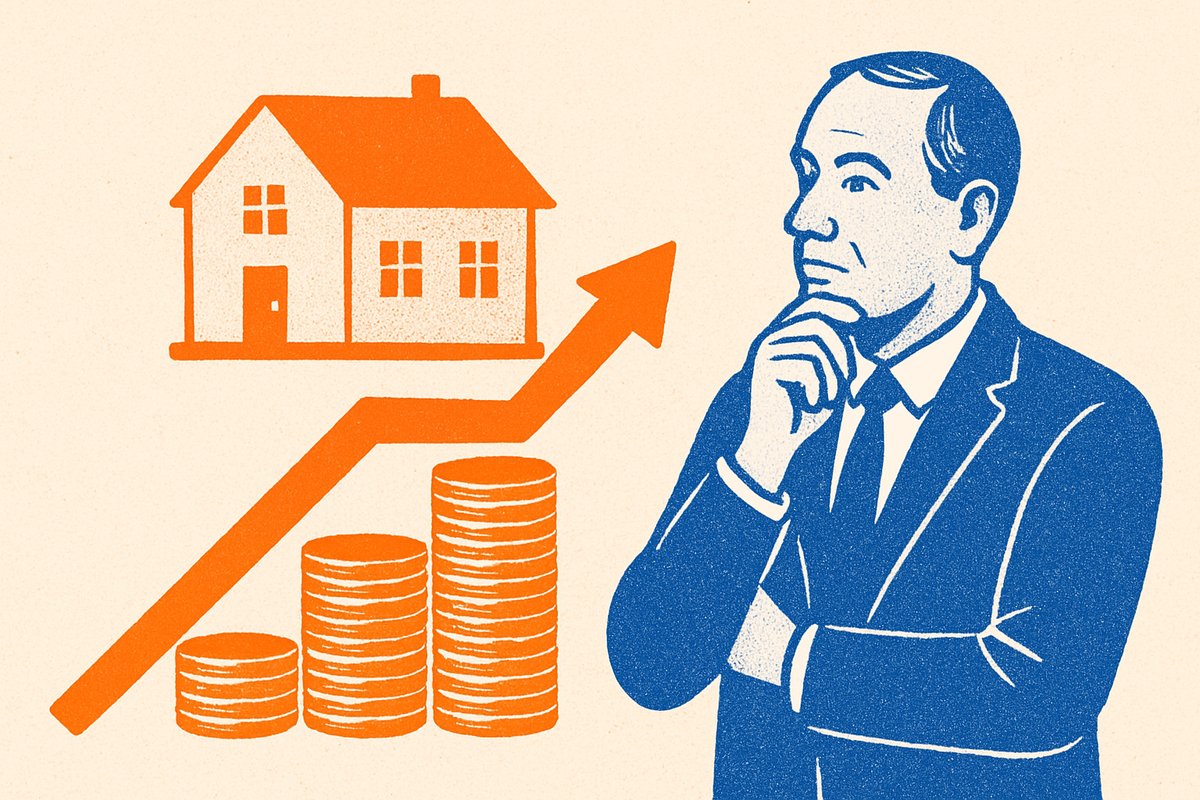
Your WOZ value (municipal property valuation) has ballooned to €1.5 million, but your mortgage sits at just €200,000. On paper, you’re a millionaire. In reality, you’re watching your OZB (property tax) and forfaitaire waarde (imputed rental income for tax purposes) climb steadily while your bank account stays stubbornly modest. This is the Dutch housing market’s cruelest irony: extreme vermogen (wealth) you can’t spend, in a house you can’t leave.
Many Amsterdam homeowners who bought in the early 2010s find themselves in this exact position. The city’s property values have exploded, turning modest family homes into seven-figure assets. But the social fabric, schools, family, community, makes selling and moving to Almere or Haarlem a non-starter. The question isn’t whether you should cash in, it’s how to make your stenen (bricks) work for you without uprooting your life.
The Hidden Tax Burden No One Talks About
Your extreme overwaarde (home equity) doesn’t just look impressive on paper, it actively costs you money. The OZB is calculated as a percentage of your WOZ value, and municipalities have been raising these rates. A €1.5 million WOZ can easily mean €2,000-3,000 in annual OZB payments, up from a few hundred euros when you bought.
Then there’s the forfaitaire waarde, the percentage of your WOZ that the Belastingdienst (Tax Authority) treats as fictional rental income. For homes valued over €1.2 million, this can add thousands to your taxable income, even though you never see a cent. The eigenwoningforfait (homeownership imputed income) for 2026 is 2.35% of your WOZ value, though it’s capped at a certain level. Still, for a €1.5M home, you’re looking at over €30,000 in fictional income.
The frustrating part? This paper wealth generates real tax bills while remaining completely illiquid. Your net worth might have increased by a million euros, but your ability to pay these taxes hasn’t kept pace.
Unlocking Overwaarde: Four Realistic Options
When international residents ask about accessing their home equity, Dutch financial advisors consistently present four main pathways. Each comes with distinct trade-offs between tax efficiency, monthly cash flow, and long-term wealth impact.
1. Hypotheekverhoging (Mortgage Increase)
The most straightforward approach: increase your existing mortgage. Most Dutch lenders allow you to borrow up to 100% of your home’s value, and for energy-saving improvements, you can go up to 106%. For a €1.5M home with €200k remaining mortgage, that means potentially accessing up to €1.3M in equity.
But here’s the catch, the bijleenregeling (re-borrowing rule). If you take out equity and don’t reinvest it in your home, the interest on that portion becomes non-deductible and falls under Box 3 taxation. So that €1.3M you withdraw to invest in stocks or crypto? You’ll pay wealth tax on it, and you can’t deduct the interest.
For a €50,000 withdrawal at 3.5% interest, your monthly costs jump by approximately €225. The interest portion might be deductible if used for home improvements, but not if you’re funding your lifestyle or investments.
2. Opeethypotheek (Reverse Mortgage)
Primarily for homeowners 55+, the opeethypotheek lets you receive monthly payments or a lump sum without immediate repayment. The interest accrues and is added to your debt, which is settled when you sell or pass away.
ABN AMRO and Rabobank both offer these products. The Consumentenbond (Consumer Association) has praised them as safe ways for seniors to supplement pension income. However, they come with strict conditions: maximum 50% of your home’s value can be interest-only, and you must pass income and BKR (credit registration) checks.
The advantage? No monthly payments, preserving your cash flow. The downside? Your debt grows, reducing your eventual inheritance and potentially creating problems if property values fall.
3. Verduurzaming (Sustainability Improvements)
This is the most tax-efficient route. The Dutch government actively encourages energy improvements through multiple mechanisms:
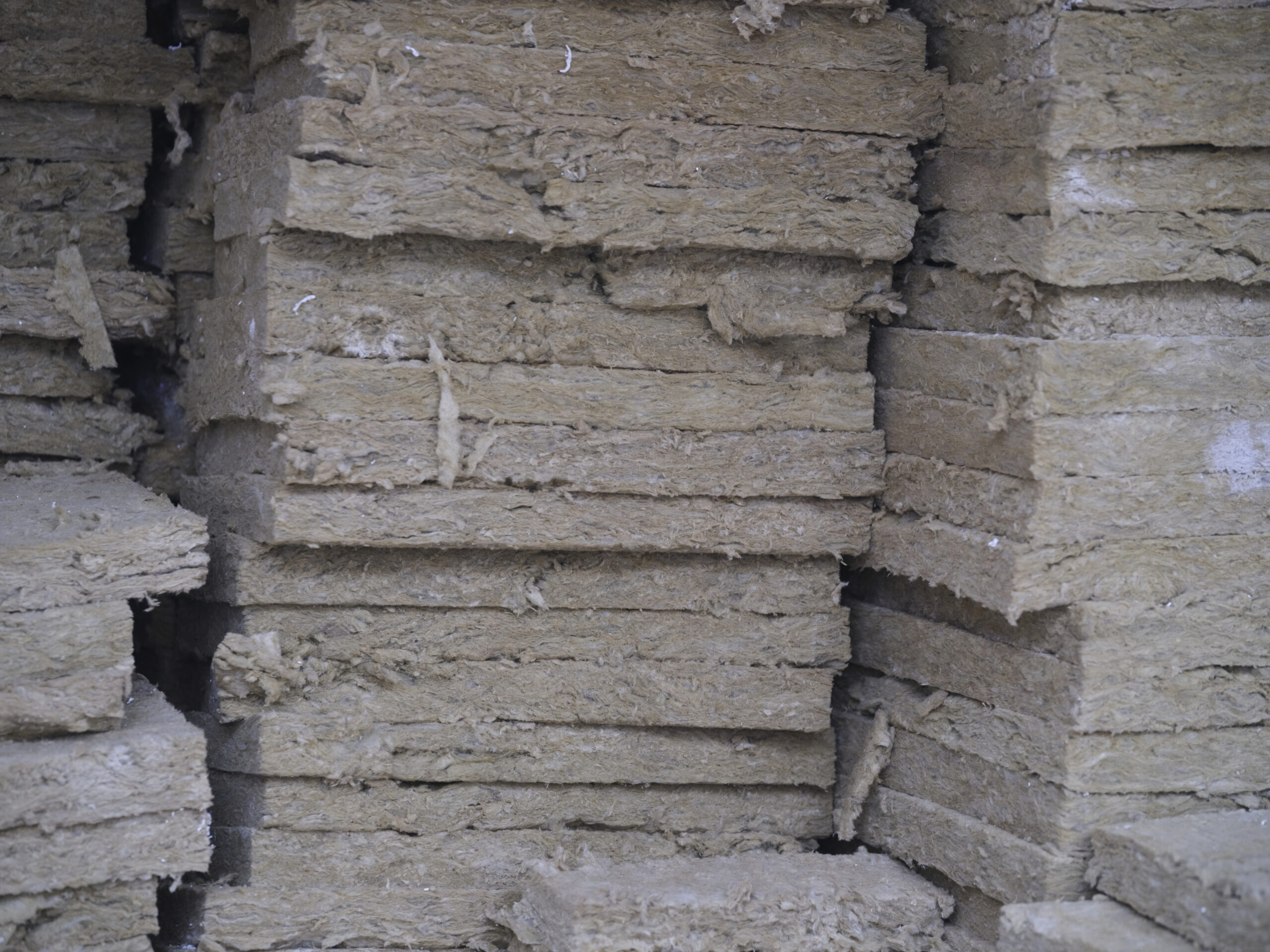
- ISDE subsidy: Up to 30% back on insulation, heat pumps, and solar panels
- 106% borrowing limit: Lenders let you exceed the 100% loan-to-value ratio for green improvements
- Interest deductibility: Loan interest remains deductible when used for energy upgrades
- Higher property value: A jump from label D to A can increase value by 3-5%
A €15,000 investment in insulation and solar panels might increase your mortgage payment by €95/month but save €150-190 in energy costs. You’re cash-flow positive from day one while increasing your home’s value and reducing your carbon footprint.
4. Box 3 Optimization
If you do withdraw equity for non-housing purposes, understand the Box 3 implications. The Dutch wealth tax system taxes your assets above the heffingvrij vermogen (tax-free allowance) at a deemed return rate. For 2026, this means paying roughly 32% tax on a deemed 6.17% return on wealth above about €57,000 per person.
Some financial advisors suggest using equity to pay down other debts first, since consumer loan interest rates often exceed mortgage rates. But the moment you withdraw equity and don’t reinvest it in your home, you lose the hypotheekrenteaftrek (mortgage interest deduction) on that portion.
The Verhuizen Myth
Commenters on financial forums often blithely suggest “just sell and move.” They calculate the potential windfall: sell for €1.7M, buy elsewhere for €800k, pocket €900k. Simple, right?
Except it’s not. That €800k home in Utrecht or Amstelveen still requires a €100k overbieding (bid above asking price). You’ll pay 2% overdrachtsbelasting (transfer tax) on the purchase, plus makelaar (realtor) fees on the sale. The emotional cost is harder to quantify: children changing schools, leaving your community, the psychological anchor of your home.
One Amsterdam homeowner noted that despite the paper wealth, the housing crisis hasn’t actually helped anyone in their neighborhood. Young families still can’t buy, and long-term residents feel trapped by their own good fortune. The social hechting (bonding) of your family to the area makes relocation a last resort, not a financial strategy.
Practical Steps to Access Your Equity
Before you do anything, get a professional taxatie (appraisal). WOZ values lag behind market reality, and lenders require official valuations. A desktop taxatie costs €50-120, while a full appraisal runs €400-750.
Next, define your goal. Are you:
– Supplementing retirement income?
– Funding a child’s study costs?
– Improving energy efficiency?
– Creating a financial buffer?
Your answer determines the best product. For retirement, an opeethypotheek makes sense. For energy improvements, a hypotheekverhoging is optimal. For general wealth building, the math gets murkier due to Box 3.
Then speak with an onafhankelijk hypotheekadviseur (independent mortgage advisor). Banks like ABN AMRO and Rabobank offer direct products, but an advisor compares across 40+ lenders and understands the fine print around renteaftrek (interest deduction) and bijleenregelingen.
Finally, run the numbers on monthly impact. A €100,000 equity release at 4% interest adds €333/month in gross costs. If you’re using it to consolidate 12% credit card debt, you come out ahead. If it’s for a speculative investment, you’re adding risk to your primary residence.
The Bottom Line
Your €1.5M Amsterdam home is both a blessing and a financial engineering challenge. The Dutch system penalizes idle equity through OZB and forfaitaire charges while making it complex to access that wealth tax-efficiently.
The most defensible strategies are those the government explicitly encourages: verduurzaming and retirement supplementation. Using equity to fund consumption or speculative investments triggers the full weight of Box 3 taxation and risks your hypotheekrenteaftrek.
Many homeowners ultimately choose to do nothing, accepting the rising taxes as the price of staying put. But with careful planning, you can transform your stenen into a financial tool that works for you rather than against you, without ever listing your home on Funda.
The key is understanding that in the Netherlands, not all equity uses are created equal. The system rewards long-term thinking and penalizes short-term cash grabs. Plan accordingly.