Vienna’s rental market has become a mathematical paradox. While headlines scream about collapsing housing supply and surging rents, a growing number of property investors are discovering their “cash cows” have turned into cash drains. The numbers reveal a brutal truth: the traditional buy-to-let model in Austria’s capital may have reached its breaking point.
The Supply Collapse That Can’t Save You
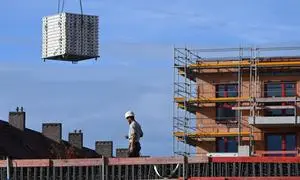
The statistics are stark. Vienna will complete just 11,000 new housing units in 2025, a third fewer than 2023. For 2026, experts predict the figure could drop below 10,000. The pipeline of new projects has dried up, with developers halting or postponing plans en masse. This supply shock has pushed net rents in new builds to €15-16 per square meter, with the psychological €20 barrier now regularly breached in prime locations.
On paper, this should be a landlord’s dream. Limited supply, rising rents, and a city that continues to outperform the rest of Austria economically, Vienna’s gross regional product grew 0.9% in 2024 while most federal states shrank. Employment is rising, and the population keeps growing.
Yet the cash flow spreadsheets tell a different story.
The Negative Cash Flow Reality
Many investors report running negative real cash flow for years, even with tenants paying market rates. The problem isn’t rent collection, it’s the complete imbalance between purchase prices, financing costs, and achievable rents.
A typical scenario: an investor buys a €500,000 two-bedroom apartment in Vienna’s 10th district. With a 20% down payment and current interest rates around 4%, monthly financing costs alone approach €1,900. Add €200 in operating costs, €100 in maintenance reserves, and mandatory insurance. Even renting at €15/net per square meter for a 70m² unit generates just €1,050 in monthly income, leaving a negative cash flow of over €1,000 per month before taxes.
The tax benefits don’t pay that monthly shortfall. While depreciation (AfA), interest deductions, and maintenance costs can create paper losses that reduce your income tax burden, the Finanzamt won’t send you a check to cover your mortgage payment. You’re still bleeding cash every month, hoping that appreciation and inflation will eventually bail you out.
The Leverage Illusion
Real estate’s traditional advantage, Fremdfinanzierung (leverage), has become a double-edged sword. Yes, you can control a €500,000 asset with €100,000 down. Yes, long-term fixed-rate loans provide an inflation hedge as the real value of your debt erodes over 20-30 years.
But this only works if you can survive the holding period. With negative cash flow of €12,000+ annually, that €100,000 equity buffer evaporates in eight years even without major repairs or vacancies. And if interest rates rise further when you need to refinance, the math gets catastrophic.
Compare this to a simple ETF strategy. That same €100,000 invested in a diversified portfolio of dividend stocks and real estate investment trusts (REITs) generates immediate positive cash flow. Austrian dividend stocks like OMV or Verbund yield 3-5%, while global REIT ETFs pay 4-6% annually, with zero tenant headaches, no Kaution disputes, and no calls about broken boilers at midnight.
The Regulatory Vice Grip
The government has tightened the screws on landlords from multiple angles. The Mietpreisbremse (rent brake) frozen rents in the regulated sector for 2025, affecting most Altbau, Genossenschaftswohnung, and Gemeindewohnung properties. While this doesn’t directly impact new builds, it sets a political tone that favors tenants over landlords.
More devastating is the CO2-Steuer. As energy policy expert Timo Leukefeld explains, landlords can pass only about 10% of these costs to tenants. The remaining 90% comes straight out of your net rental yield. With CO2 taxes rising steadily, this creates a “turbo effect for stranded assets”, properties that become economically unviable but can’t be sold without massive losses.
The KIM-Verordnung (credit regulation) requiring 20% equity and limiting debt service to 40% of income has already squeezed many small investors out of the market. Even though the regulation technically expired, banks continue applying similar standards, making refinancing difficult for those already underwater.
The Concentration Risk No One Talks About
Financial advisors increasingly warn about the “Klumpenrisiko” of single-property investments. With just one apartment, you’re exposed to:
– Single-tenant risk: One default or vacancy wipes out months of “profit”
– Location risk: A new development or zoning change can depress values
– Regulatory risk: The government can change the rules overnight
– Maintenance risk: One major repair (roof, heating system, facade) can cost €20,000-50,000
Contrast this with an ETF portfolio spread across hundreds of properties and thousands of tenants globally. When one tenant in a REIT defaults, you don’t notice. When Vienna changes its rental laws, your global REITs keep paying.
The Moral and Economic Tension
There’s an uncomfortable ethical dimension that many investors confront. Maximizing cash flow requires pushing rents to the absolute limit, minimizing maintenance, and replacing tenants frequently to capture market-rate increases. This “Mietnomaden” strategy, treating housing as a pure commodity, contributes to the city’s affordability crisis.
Yet more humane approaches, like keeping good tenants at slightly below-market rents, mean even deeper negative cash flow. Many investors find themselves asking: am I building wealth or just exploiting a basic need? The cognitive dissonance is real, especially when comparing the passive nature of ETF investing to the active, often adversarial role of being a Vermieter.
Who Should Still Consider Vienna Real Estate?
Despite the bleak picture, two scenarios might still justify investment:
1. The long-term inheritor: If you’re buying property you plan to pass to children who will live there, the calculus changes. You’re purchasing future housing security, not cash flow. The tax benefits and inflation hedge become secondary to ensuring your family has a place to call home.
2. The value-add specialist: Investors with construction expertise and capital can buy distressed Altbau properties, renovate them completely (addressing the CO2 tax issue), and either sell or rent at premium prices. This is essentially a part-time job, not passive income.
For everyone else, especially those with less than €200,000 to invest, the numbers simply don’t justify the risk.
The Verdict
Vienna’s rental property market has shifted from an investment to a speculation. You’re not buying cash flow, you’re betting on continued price appreciation and favorable inflation dynamics while subsidizing your tenant’s housing costs.
The uncomfortable truth is that for most “small” investors, the heilige Grahl of real estate has become a mirage. That €100,000 down payment that buys you negative cash flow and tenant headaches would generate €4,000-6,000 in annual passive income from dividend strategies, with liquidity, diversification, and zero midnight plumbing calls.
The Austrian financial system, with its beloved Bausparen tradition and tax-advantaged property ownership, has created a cultural bias toward bricks-and-mortar. But culture doesn’t pay bills. Math does. And right now, the math says Vienna’s rental properties are a trap, not an opportunity.
The question isn’t whether you’re overlooking something. It’s whether you can afford to keep overlooking the bleeding obvious.