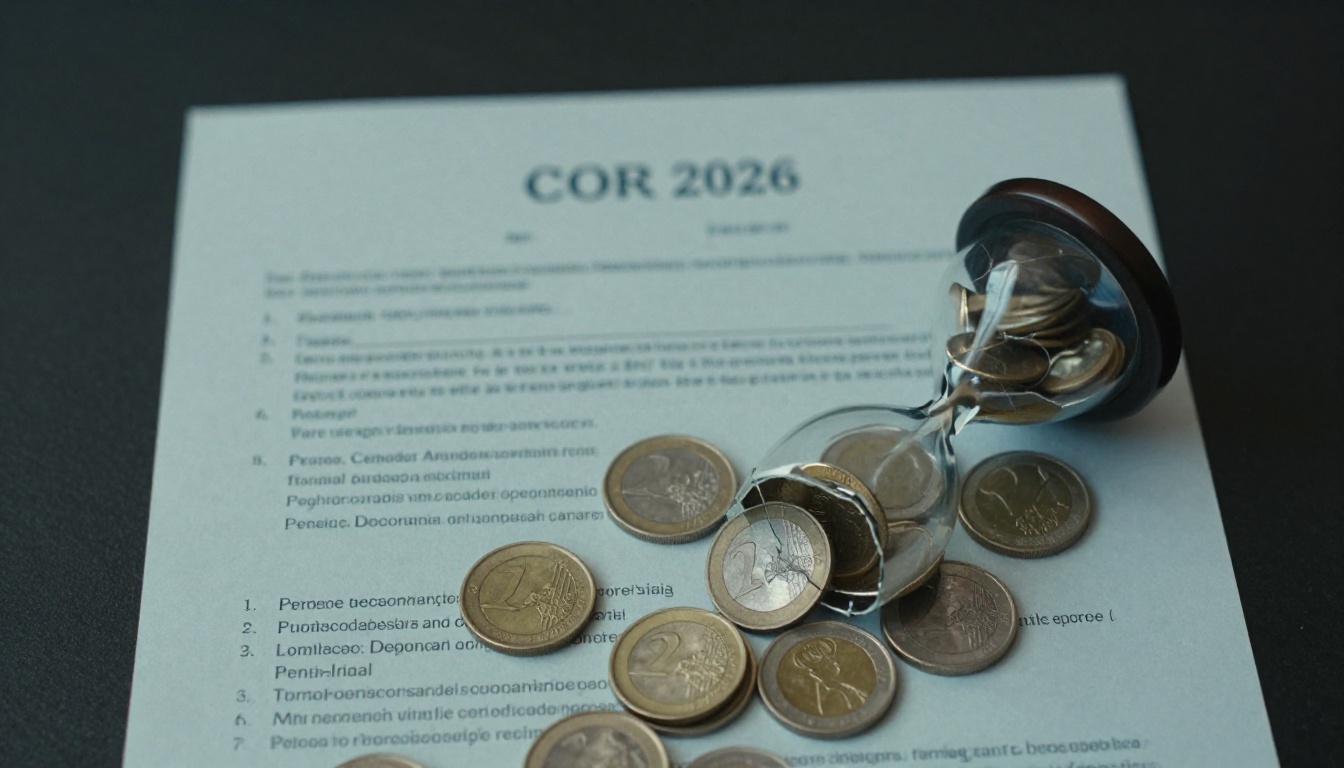
France’s pension system is heading for a financial reckoning. The Conseil d’orientation des retraites (COR – Council of Pension Orientation) warned this week that its June financial diagnosis will be “significantly revised” upward, confirming what younger workers have suspected: the retirement system they pay into will be far less sustainable than promised. The combination of collapsing birth rates and suspended reforms creates a perfect storm that will reshape retirement planning for decades.
The Demographic Collapse No One Planned For
The COR’s current projections already paint a grim picture. Based on 2021 INSEE data, they assumed a fertility rate of 1.8 children per woman. Reality has shattered that estimate. France’s fertility rate plunged to 1.56 in 2025, the lowest since 1918. For the first time since World War II, deaths exceeded births.
This isn’t a temporary dip. It’s a structural shift that undermines the entire pay-as-you-go system. Fewer births today mean fewer workers tomorrow. The COR admits that if fertility stays near 1.6, the worker-to-retiree ratio will deteriorate faster than anticipated, increasing pension spending as a share of GDP by 0.7 points by 2070. That translates to roughly €20 billion in additional annual deficits at today’s values.
The migration assumptions look equally shaky. The COR’s baseline scenario assumes net migration of 70,000 people annually, but France has averaged 186,000 new arrivals per year between 2018-2022. While this provides short-term relief through new contributors, it also creates long-term pension obligations. The COR acknowledges this “effect on the balance would be reduced in the longer term by the increase in expenditure.”

A Reform Suspended, A Crisis Accelerated
The final blow comes from politics. The 2023 pension reform that would have gradually raised the retirement age from 62 to 64 has been suspended until 2028. The loi de financement de la sécurité sociale (Social Security Financing Law) for 2026 officially freezes the legal retirement age at 62 years and 9 months for the 1964 generation, scrapping the planned trajectory toward 64.
This suspension isn’t just symbolic, it has immediate financial consequences. The reform’s incremental changes to contribution periods and retirement ages would have reduced the 2030 deficit by 0.2% of GDP. Without them, the system bleeds faster. The COR’s letter explicitly states the financial diagnosis “could be significantly revised in comparison with the June 2025 report.”
Many international residents express frustration at this political paralysis. The sentiment among working-age professionals is clear: they see a system where retirees claim they “contributed their whole life” while current workers face higher contributions for reduced benefits. This perception gap fuels intergenerational tension that no politician wants to address head-on.
The Math That Doesn’t Add Up
Let’s cut through the bureaucratic language. France’s pension system currently costs 13.9% of GDP. Under the old assumptions, it would rise to 14.2% by 2070 while contributions would fall to 12.8%, creating a 1.4% GDP deficit. With the new demographic reality, that gap widens substantially.
For individual workers, this means heavier burdens. The social security contributions that fund pensions already consume about one-third of gross salaries. Many younger professionals point out that they pay thousands monthly into a system that mathematically cannot deliver equivalent benefits when they retire. The argument that previous generations “paid their share” ignores that they contributed when the worker-to-retiree ratio was 4:1, not today’s 2:1 and certainly not the 1.5:1 projected for 2050.
The COR’s own data shows that parametric reforms, tweaking ages, contribution periods, or benefit levels, cannot fix a structural demographic fracture. The system needs either a fundamental overhaul or acceptance that future pensions will be significantly lower in real terms.
What This Means for Your Retirement Planning
If you’re working in France under 50, you need to confront three hard truths:
1. Your state pension will be less generous than your parents’
The indexation rules already favor price inflation over wage growth, slowly eroding replacement rates. With deficits ballooning, future governments will have to cut benefits, increase contributions, or both. The complémentaire retraite (supplementary pension) through Agirc-Arrco helps, but it’s tied to the same demographic constraints.
2. You’ll likely work longer than the legal minimum
Even if the retirement age stays at 64, the contribution requirements for a full pension will increase. The 2023 reform accelerated the timeline for longer contribution periods. Its suspension is temporary, when it returns in 2028, expect even stricter requirements to make up for lost time.
3. Private savings aren’t optional anymore
The French tradition of relying almost exclusively on répartition (pay-as-you-go) is obsolete. Products like assurance-vie (life insurance) and PER (Plan d’Épargne Retraite – retirement savings plan) become essential, not supplementary. The tax advantages they offer provide crucial relief, but they require decades of consistent contributions to build meaningful capital.
The Political Vacuum
President Macron, now in his final term without electoral constraints, had an opportunity to implement lasting reform. Instead, the suspension reflects a broader political reality: no party wants to alienate the powerful retiree voting bloc. The result is managed decline.
Opposition politicians who blocked the 2023 reform now share responsibility for the accelerated crisis. The COR’s revised projections will likely show that delay made the problem worse. Yet the 2027 presidential campaign will probably feature candidates promising to “protect our retirement system” without explaining how they’ll fund it.
This disconnect between political rhetoric and mathematical reality defines modern French pension policy. As one economist noted, governing means planning ahead, but French politicians have perfected the art of postponing hard choices until they become emergencies.
Practical Steps to Protect Yourself
For those in their 30s and 40s:
– Maximize your PER contributions now. The tax deduction (déduction d’impôt) is valuable, but the real benefit is building a capital cushion independent of state promises.
– Don’t count on early retirement. Plan your career assuming you’ll work until 67 or beyond.
– Diversify beyond French real estate. While property has been a traditional retirement asset, its returns are compressing and it’s illiquid.
For those approaching retirement:
– Use the official info-retraite simulator immediately. The suspension changes affect those retiring from September 2026 onward, but the exact calculations depend on your birth year and career history.
– Understand the new cumul emploi-retraite (work-pension combination) rules. From 2027, working while receiving a pension before age 64 will be heavily penalized.
– Verify your trimestres validés (validated quarters) now. Gaps are harder to fill as contribution requirements increase.
For international residents:
– Check bilateral social security agreements. Some expats can combine contribution periods from multiple countries, but French pension calculations are complex.
– Consider whether you’ll stay in France permanently. The system’s unsustainability makes long-term planning crucial if you’re not committed to retiring here.
The Bottom Line
The COR’s June report will likely show deficits 50% worse than previously projected for 2070. That isn’t a distant problem, it’s a signal that contribution rates must rise or benefits must fall within the next decade. The suspension of the 2023 reform bought political peace at the cost of financial stability.
France’s pension crisis mirrors its broader economic challenges: high spending commitments, demographic headwinds, and political inability to reform. The difference is that pensions affect every worker directly and irreversibly. While the system won’t collapse overnight, the gradual erosion of benefits and increase in contributions will make retirement progressively harder for each generation.
The time for denial is over. The numbers are clear, and the COR is finally admitting it. Your financial future in France depends on recognizing that reality and planning accordingly, because the state pension system that served your parents will not serve you the same way.
Related reading:
– France’s pension system as a generational time bomb
– declining living standards across generations despite higher incomes
– France’s declining wealth affecting pension sustainability
– young French facing housing instability and financial stagnation