
Why Young French Investors Are Building Real Estate Empires Instead of Counting on Pensions
A growing wave of under-30s in France is acquiring multiple properties, driven by deep skepticism about the future of the state pension system and a pragmatic bet on tangible assets.
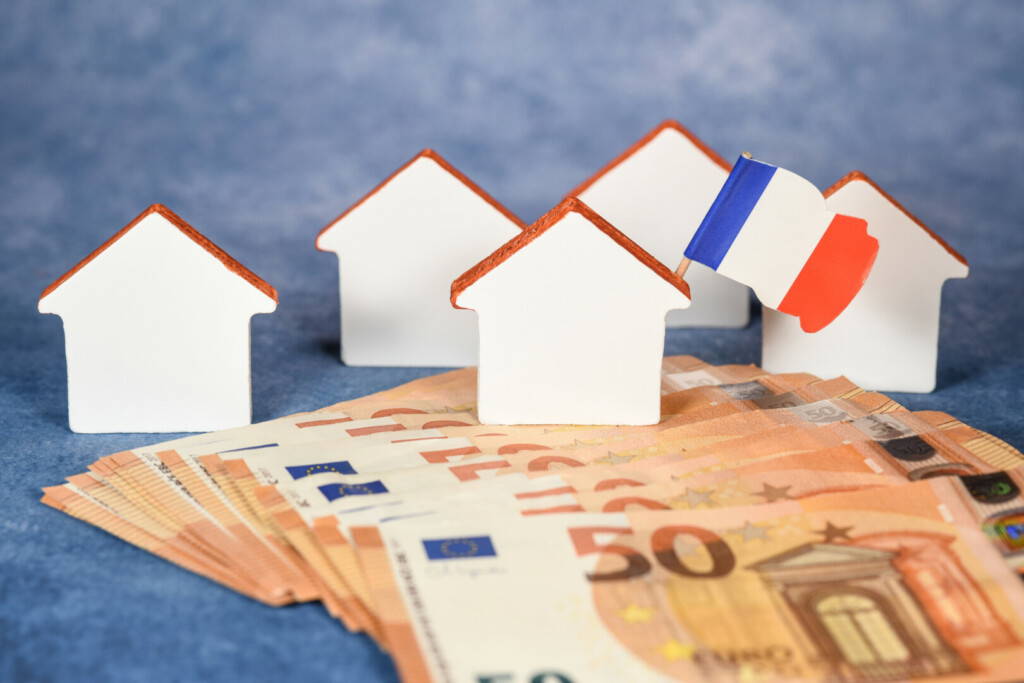
The math is brutal and the message is clear: a 30-year-old in France today will pay into the système par répartition (pay-as-you-go pension system) for decades but might never see a meaningful return. This isn’t speculation, it’s the driving force behind a generational shift in how young French workers approach financial independence. Instead of relying on a state pension that feels increasingly uncertain, they’re building property portfolios from scratch.
Tifanie, 29, already owns a house in Châtellerault, an apartment in Rochefort, and is closing on a five-unit building. She grew up without inheritance or a Livret A (regulated savings account) cushion. Her rationale is simple: “We don’t know if we’ll ever have a pension.” This sentiment echoes across France, where young professionals view real estate not as a luxury but as a mandatory insurance policy against an aging pension system.
The 35% Debt Wall That Shapes Strategy
French banks operate under strict rules. The taux d’endettement (debt-to-income ratio) cannot exceed 35% of net income, and only about 70% of rental revenue counts toward that calculation. For young investors, this creates a hard ceiling. You cannot simply buy ten apartments anymore, the system cuts you off quickly.
The workaround? Purchase inexpensive properties. Tifanie’s first acquisition cost €76,000 near Poitiers, generating €1,500 monthly through Airbnb while her mortgage payment was only €480. That spread made the numbers work. But this approach has limits. As one investor explained, the debt cap is reached rapidly when buying cheap units.
Many young buyers report frustration with banks. Even couples with solid incomes and comfortable reste à vivre (discretionary income after expenses) find their applications rejected when existing mortgages push them past the 35% threshold. The solution requires rethinking how you present yourself to lenders.
Presenting Yourself as a Business, Not a Borrower
The key to bypassing individual debt limits is to stop thinking like a consumer and start thinking like an entreprise (business). Banks will evaluate a property investor differently if they see a structured business plan showing projected returns rather than just a salary slip.
This means demonstrating: “If I buy this property, it will generate X amount monthly.” The focus shifts from your personal salary to the asset’s cash flow. However, this only works with inexpensive properties that can show strong yield. Luxury apartments in Paris or Lyon won’t cut it, the math doesn’t support the debt load.
The SCI Debate: Does It Really Bypass Limits?
Some investors advocate creating an SCI familiale (family real estate company) to eliminate the 35% debt restriction. The theory is that a legal entity faces different rules than an individual. In practice, it’s more complicated.
Banks evaluate SCIs by looking at both the company’s revenue and the personal finances of its associates. As one legal expert notes: “Before obtaining a loan through your SCI, know that even though it’s a legal entity distinct from its associates, the borrowing capacity accounts for the society’s resources, rental income, and especially the associates’ resources, since they are the bank’s guarantees.”
In other words, the capacité d’emprunt de la SCI (SCI borrowing capacity) remains tied to personal debt ratios. While an SCI offers tax and inheritance benefits, it’s not a magic wand for unlimited leverage. Many investors learn this only after setting up the structure and facing rejection.
Where to Buy: The Yield Map for 2026
Location determines success. Data from Lokimo analyzing five years of market trends reveals stark differences in rendement locatif (rental yield):
- Grenoble: 5.72% gross yield, €2,595/m² average price
- Marseille: 5.38% yield, €3,234/m²
- Montpellier: 5.23% yield, €3,234/m²
- Nice: 4.91% yield, €4,651/m² (expensive but stable)
- Toulouse: 4.69% yield, €3,378/m²
- Lille: 4.55% yield, €3,593/m²
The Paris Paradox: Despite intense rental demand, Paris delivers only 3.91% yield due to crushing purchase prices (€10,241/m²). The city exemplifies why expensive markets fail the retirement hedge test, you tie up too much capital for too little return.
This data explains why young investors target secondary cities. The combination of lower entry prices and stronger yields allows faster portfolio scaling within the 35% debt constraint.
The Down Payment Reality Check
While yields attract, the apport personnel (personal down payment) remains the biggest barrier. In 2025, the average buyer put down €52,000, 17% of the purchase price. But averages hide extreme variations:
- Paris: €132,000 average down payment
- Lyon: €100,900
- Aix, Bordeaux, Marseille, Nice, Rennes, Toulouse: ~€70,000 each
For a median-income single buyer, that’s 15 months of salary. In Lyon or Paris, it exceeds two years of income. Families with children fare slightly better due to higher household incomes, but even they face impossible numbers in hot markets: €230,000 down in Aix-en-Provence, €238,000 in Nice, and €685,000 in Paris for a typical family apartment.
This reality fuels the pension anxiety. If you cannot buy property now, how will you afford retirement later? The crise du logement (housing crisis) isn’t just about shelter, it’s about long-term financial survival.
Why Traditional Savings Aren’t Enough
The shift to real estate reflects dissatisfaction with conventional options. The Livret A rate dropped to 1.5% in February 2026, barely above inflation. In 2025, French savers withdrew a net €2.12 billion from Livret A accounts, the first annual outflow since 2015. Money is fleeing safe but sterile savings toward tangible assets.
This mirrors broader skepticism about financial markets. When young investors discuss ETFs or stocks, many prefer advice from peers over traditional conseillers financiers (financial advisors). The sentiment: institutional advice has failed to protect purchasing power, so why trust it with retirement?
The SCPI Trap: When Real Estate Isn’t Tangible Enough
Some investors consider SCPIs (Sociétés Civiles de Placement Immobilier, real estate investment trusts) as a hands-off alternative. But 2023-2024 revealed the liquidity risk. Office-focused SCPIs saw valuations collapse and redemptions frozen. You owned a share of a building but couldn’t sell when you needed cash.
Direct property ownership, despite its headaches, offers control. You set rents, choose tenants, and decide when to sell. For a generation that distrusts both state promises and financial intermediaries, control matters more than convenience.
The FIRE Connection: Retiring Before 40
This real estate rush ties directly to the FIRE (Financial Independence, Retire Early) movement gaining traction in France. The math is simple: accumulate enough rental income to cover living expenses, then exit the workforce decades before the official retirement age.
Stories of individuals retiring before 40 through property portfolios circulate widely. One investor bought his first parking space at 22, then scaled to multiple units. The key is starting early and reinvesting every euro of profit. Tifanie follows this path, parking all rental gains in her Livret A (despite low rates) for future acquisitions.
Intergenerational Wealth Tensions
The property boom creates friction. Parents who saved through traditional pensions and assurance-vie (life insurance policies) watch their children take on massive debt. The older generation sees risk, the younger sees necessity.
This reflects the €9 trillion question facing French families: should parents spend their savings or preserve them for inheritance? With property prices so high, young adults need family help to buy. But that help often comes at the cost of delayed inheritance, kids might receive wealth only in their 60s, when it’s too late to finance retirement.
The Pension System’s Uncertain Math
Official projections show the French pension system facing a deficit of around 10% in pessimistic scenarios. This translates to either higher contributions, lower benefits, or longer work years. While not catastrophic, the repeated reforms and political battles have eroded confidence.
Young workers performing their own calculations conclude that waiting for the state is foolish. They see cotisations sociales (social contributions) deducted monthly but doubt the system’s solvency when they’ll need it in 2060. Real estate feels tangible and certain by comparison.
The Risks They’re Taking
This strategy isn’t without danger. Concentrating wealth in French property exposes investors to:
- Tax policy changes: The government could alter prélèvements (withholding taxes) on rental income or increase taxes foncières (property taxes)
- Vacancy risk: Economic downturns could reduce rental demand
- Interest rate shocks: While rates are at 3.15% now, they could rise again
- Tenant protection laws: France’s strong tenant rights can make evictions lengthy and expensive
Yet for many, these risks feel more manageable than trusting a pension system they didn’t design and can’t control.
What This Means for France’s Financial Future
The rise of young multipropriétaires (multi-property owners) signals a fundamental shift. The post-war social contract, work, pay contributions, retire comfortably, is breaking down for a generation that demands autonomy. They’re not waiting for policy fixes, they’re building personal safety nets property by property.
Banks are adapting slowly. Some now accept business plans from individual investors, recognizing that traditional salary-based lending misses a new class of asset-focused borrowers. But the 35% rule remains, forcing creative structures and geographic arbitrage.
For policymakers, this trend should alarm. When educated young professionals lose faith in the pension system, it threatens the entire modèle social français (French social model). The property rush is both a rational individual response and a symptom of systemic distrust.
Bottom Line: Build or Betray Your Future
If you’re under 30 in France with stable income, the choice is stark: start building a property portfolio now or risk financial insecurity later. The math favors action. With mortgage rates around 3.15% and yields above 5% in several cities, the spread creates wealth-building opportunities.
But success requires discipline. You must:
– Target cities with yields above 5%
– Structure purchases as business investments
– Prepare substantial down payments (€50k+)
– Treat property management as a side job
– Reinvest every euro of profit
The pension system won’t save you. The Livret A won’t grow your wealth. But a two-bedroom apartment in Grenoble might. That’s the cold, calculated logic driving France’s youngest real estate moguls.
Further Reading
- growing distrust in the French pension system fueling alternative retirement planning
- housing affordability challenges for young French adults
- falling returns on risk-free savings accounts are driving reallocation to real estate
- risks of real estate investment through SCPIs despite perceived stability
- decline of traditional savings vehicles like Livret A pushing investors toward alternatives
- intergenerational wealth and inheritance delays affecting financial independence
- shift in investment behavior among young French investors toward alternative assets