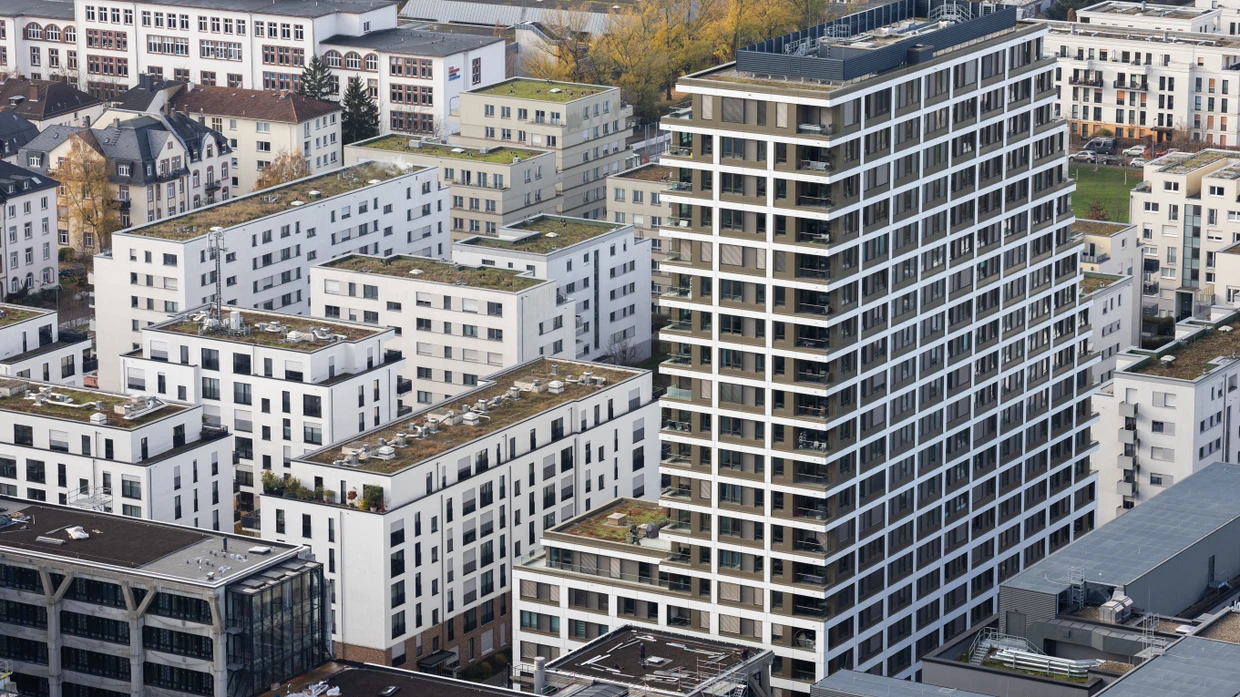
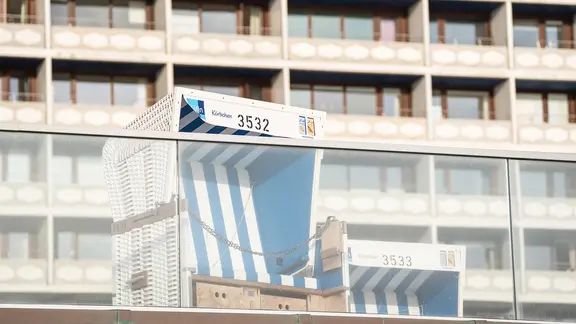
The luxury island of Sylt has long served as Germany’s real estate fever dream, a place where penthouses sold for €14,000 per square meter and sellers threw in a free SUV to sweeten the deal. Now, those same properties are struggling to move even at €10,000 per square meter, and developers have sold barely one-third of their newly built “Kliffhäuser” after six months on the market. To anyone watching from Berlin or Munich, where vacancy rates hover near zero, this might look like the canary in the coal mine. But here’s the uncomfortable truth: Sylt isn’t a warning sign for the broader market, it’s the exception that proves the rule.
The Holding Cost Advantage
German property owners operate with a structural advantage that makes waiting out downturns almost costless. Unlike in the US or UK, where property taxes can bleed owners dry, Germany’s combination of low Grundsteuer (property tax) and minimal maintenance costs means an empty apartment costs surprisingly little to hold. When prices dip, owners don’t panic-sell, they simply wait. This dynamic creates a market where supply evaporates during downturns, preventing the kind of cascading price crashes seen elsewhere.
The numbers tell the story. In Germany’s major cities, vacancy rates have collapsed to just 0.1% in Munich, Frankfurt, and Freiburg. Even in Münster and Darmstadt, the rate is only 0.2%. This isn’t a healthy market, it’s a suffocated one. The Federal Statistical Office reports that Germany built only 251,900 new apartments in 2024, far below the 300,000-400,000 needed annually. Yet prices don’t respond to this shortage the way textbook economics predicts they should.
The Concentration Problem
Wealth concentration in German real estate creates a market where traditional price signals break down. When the majority of properties in desirable urban areas are owned by a small slice of the population, those who can afford to buy in Berlin’s Kreuzberg or Frankfurt’s Europaviertel, these owners don’t behave like typical market participants. They don’t need to sell during downturns. They can afford to let properties sit empty, as many do, because the carrying costs are negligible compared to their overall wealth.
This creates what analysts call a “demand-price feedback loop” that has little to do with fundamentals. Prices rise because buyers can afford them, not because the underlying value has increased. When municipal housing associations charge €15 per square meter for cold rent, even when they’ve received subsidized land from local governments, it signals that the problem isn’t just greed. It’s a system where even non-profit actors are forced to price according to what the wealthiest segment can pay, because that’s the only segment that matters in a market with such constrained supply.
The Supply-Side Prison
Germany has engineered its own housing shortage through decades of restrictive policy. Building land is artificially scarce, with local governments preferring to zone for agriculture or industry rather than housing. When land is available, the Baugesetzbuch (Building Code) and environmental regulations create delays measured in years, not months. Construction costs have risen faster than rents, making new projects economically unviable at any price point that would be affordable to average earners.
The result is what researchers call “the quadrature of the circle”: everyone wants affordable housing in desirable locations, but the system is designed to prevent exactly that. Even China’s approach of building 30 regional hubs to relieve pressure on Beijing seems radical compared to Germany’s approach of hoping the problem solves itself.
The Luxury Market Distortion
Sylt’s price correction from €14,000 to €10,000 per square meter isn’t a bubble bursting, it’s a luxury market recalibrating. The island’s real estate was never tied to local wages or economic fundamentals. It was a trophy market, driven by pandemic-era escape fantasies and ultra-low interest rates. When rates rose and the Ukraine crisis shifted priorities, demand evaporated. But this has no bearing on Stuttgart or Hamburg, where housing demand is driven by actual population growth and economic necessity.
The free SUVs and waived property transfer taxes aren’t signs of desperation, they’re marketing gimmicks in a segment that was always detached from reality. Meanwhile, in Frankfurt’s Europaviertel, office rents are climbing to €50-60 per square meter, and residential supply is so tight that the coalition government is desperately trying to streamline building regulations with a “Bauturbo” (construction turbo) and new “Gebäudetyp E” (building type E) classifications.
What Would Actually Break the Market?
For German housing prices to fall meaningfully, several structural pillars would need to crack simultaneously:
- Rising holding costs: A significant increase in property taxes or maintenance requirements would force owners to sell rather than wait.
- Wealth concentration reversal: The top 10% would need to lose their ability to outbid everyone else, either through taxation or economic shock.
- Supply flood: Massive construction in both urban centers and rural areas, requiring political will that has been absent for decades.
- Demographic reversal: Population decline in major cities, which seems unlikely given urbanization trends.
None of these appear imminent. The new coalition’s plans to simplify planning procedures and reduce technical building requirements might help at the margins, but they don’t address the fundamental artificial scarcity of building land or the concentration of ownership.
The Verdict
The German housing market isn’t a bubble in the traditional sense. Bubbles burst when over-leveraged owners are forced to sell. German owners, particularly in desirable urban areas, aren’t over-leveraged. They’re patient, wealthy, and facing negligible carrying costs. The market can “correct” at the fringes, like Sylt, where speculation ran ahead of any fundamental value. But in the cities where actual people need actual places to live, prices aren’t responding to supply and demand in any normal way.
The uncomfortable conclusion is that German housing prices won’t fall meaningfully until the structural advantages of property ownership are dismantled, or until the political will emerges to flood the market with supply. Neither seems likely in the near term. For now, the bubble isn’t bursting. It’s just becoming increasingly exclusive.