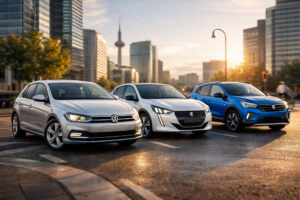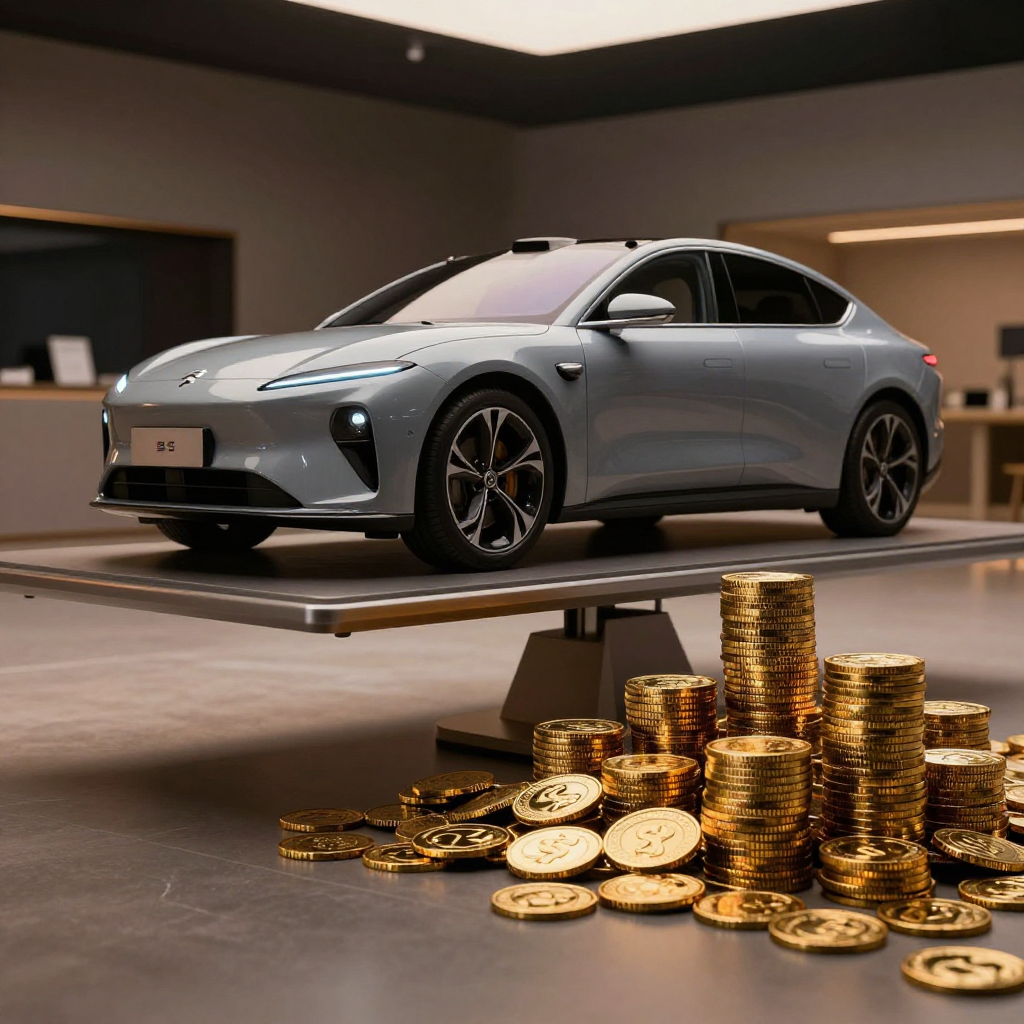
You’ve found the perfect used e-auto (electric vehicle). The dealer nods approvingly at your €40,000 cash offer. Then the script flips. Suddenly, leasing isn’t just an option, it’s the only sensible choice. The battery technology evolves too rapidly, they warn. You’ll be stuck with obsolete tech. Why own a depreciating asset when you can stay perpetually current?
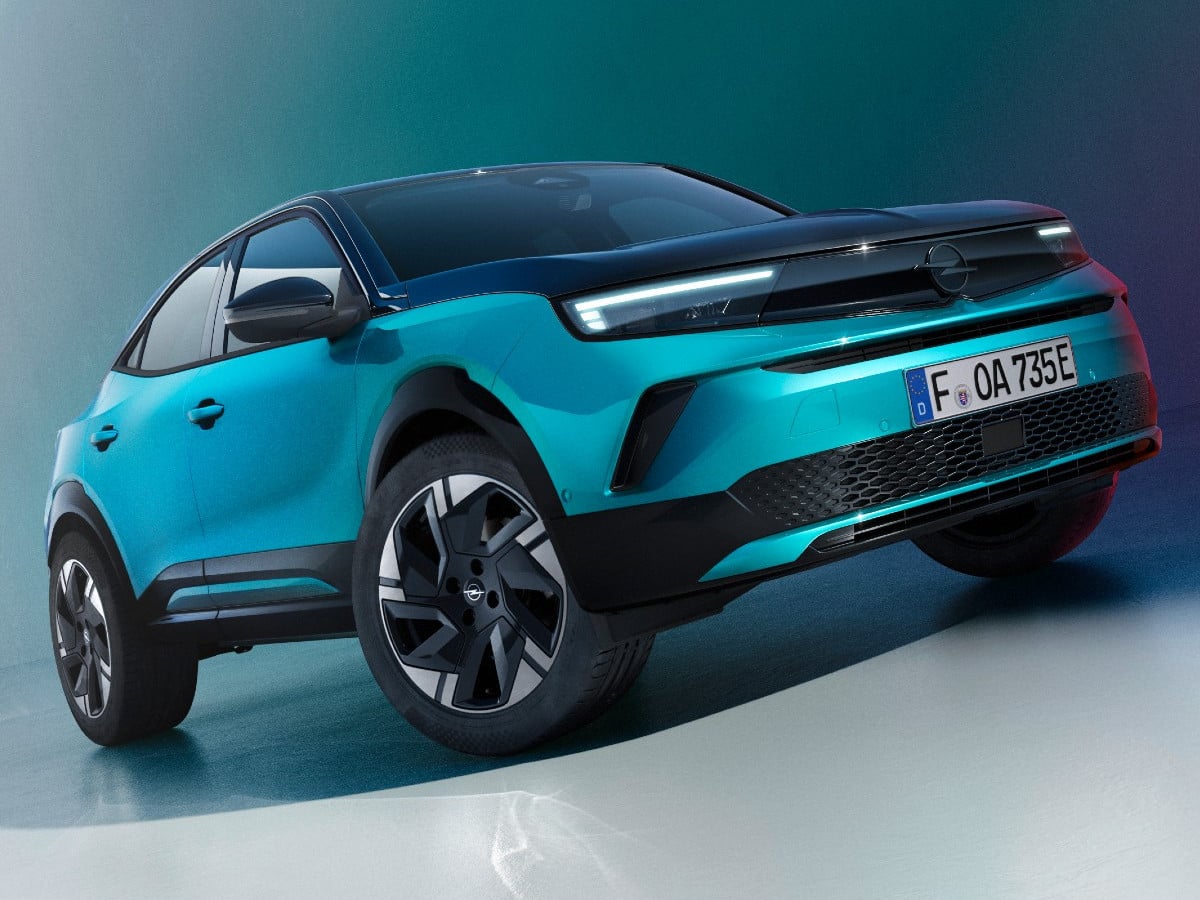
This hard sell isn’t random. German car dealers earn substantially more from leasing contracts than cash purchases, and the e-auto transition has given them a powerful new scare tactic: technological obsolescence. But is there any truth to it, or are buyers getting played?
The Dealer’s Playbook: Why Leasing Prints Money for Them
When a dealer pushes leasing harder than a currywurst vendor at a Berlin football match, follow the money. Leasing agreements generate revenue streams through financing fees, insurance kickbacks, maintenance packages, and end-of-lease charges. The profit margin on a leased vehicle often exceeds that of a cash sale by 30-40%.
A Reddit discussion about this exact scenario reveals the underlying math. One commenter distilled the dealer’s logic: “Your car will be worthless in three years, so you should give it back to me because I’m generously willing to absorb that loss for you.”
The absurdity becomes obvious when you reverse-engineer the argument. If the vehicle will truly depreciate dramatically, why would the dealer want it back? They’re not charities. They want it back precisely because they know the residual value calculations work in their favor, not yours.
The Battery Technology Fear Tactic: A Reality Check
Dealers love warning that today’s e-auto batteries will be museum pieces within five years. It’s a compelling story. Too bad the data tells a different one.
Battery technology does improve, but incrementally, not exponentially. A Tesla Model 3 from nine years ago shipped with 75 kWh capacity and over 200 kW charging speed. Those remain respectable numbers today. The real-world difference between a 2024 battery and a 2029 battery won’t render current vehicles undrivable, it’ll mean charging five minutes faster or gaining 50 kilometers of range.
Most German manufacturers provide battery warranties covering at least eight years or 160,000 kilometers. For the typical driver logging 30,000 km annually, that warranty stretches nearly to the vehicle’s expected lifespan. Battery failure after warranty is rare and often partial, not catastrophic. Replacement costs, while significant (€5,000-€10,000), rarely exceed the cumulative cost of leasing across multiple cycles.
The “obsolete technology” argument collapses further when you examine actual driving patterns. If you buy a €35,000 e-auto today and drive it for eight years, you’ll spend roughly €4,375 per year of ownership. Lease a comparable vehicle at €200 monthly (plus down payment) across the same period, and you’ll pay €19,200 in base payments alone, before factoring in repeated acquisition fees, insurance markups, and potential mileage penalties.
The High-Mileage Driver’s Nightmare
Here’s where the leasing trap slams shut. The standard private lease in Germany includes 10,000-15,000 kilometers annually. The driver in our research scenario logs 30,000 km per year. That difference triggers penalty fees typically ranging from €0.07 to €0.15 per extra kilometer.
- Cost impact: 15,000 excess kilometers × €0.10 = €1,500 annually in penalties.
- Total risk: Over a three-year lease, that’s €4,500 in surprise costs.
- Reality check: Your “predictable” monthly rate just became a fiction.
Even the more generous kilometerleasing (kilometer leasing) contracts cap at 30,000 km/year before rates spike dramatically. For true Vielfahrer (high-mileage drivers), leasing transforms from convenience to wealth extraction mechanism.
The FINN platform acknowledges this reality, noting that leasing “often makes sense for up to 30,000 km/year, high-mileage drivers should calculate carefully.” That’s corporate speak for “you’re probably getting screwed.”
Decoding the Leasingfaktor: Your Secret Weapon
German leasing contracts live and die by the Leasingfaktor (leasing factor). Calculate it by dividing the monthly rate by the vehicle’s list price. A factor under 1.0 suggests a decent deal. Under 0.7? That’s genuinely good.
Standard Factor Calculation
Monthly Rate / List Price
Good: < 1.0
Genuine Deal: < 0.7
Gesamtkostenfaktor
Total Cost Factor includes all payments, fees, and contract duration. Even a low monthly factor can become dangerous with high total exposure.
The Business Insider research shows current e-auto deals with factors as low as 0.33. The Renault Scénic E-Tech leases at €134.86 monthly against a €40,500 list price, an impressive 0.33 factor. But that number hides the €5,000 down payment and stingy 5,000 km annual allowance.
The Gesamtkostenfaktor (total cost factor) provides clearer truth. It incorporates all payments, fees, and contract duration. The same Renault shows a 0.68 total factor, still good, but less dazzling. For a high-mileage driver who’ll pay excess kilometer fees, that factor could easily exceed 1.0, turning the “deal” into a financial drain.
The Subsidy Complication: When €6,000 Clouds Judgment
Germany’s new e-auto Förderung (subsidy) program, offering up to €6,000 for leased electric vehicles, complicates the math. The subsidy is income-based (max €80,000 household income, plus €5,000 per child) and requires a minimum 36-month lease term.
Dealers weaponize this incentive. “You’re leaving money on the table by buying cash,” they argue. And technically, they’re right, the subsidy exists. But it’s designed to boost leasing adoption precisely because manufacturers and dealers profit more from it.
Consider the subsidy’s real value: €6,000 spread over 36 months equals €167 monthly. If your lease costs €200 monthly, the subsidy reduces your effective payment to €33. But you’ve still paid €5,000 down, locked yourself into mileage restrictions, and surrendered ownership. The €6,000 looks generous until you calculate the total cost of three years without an asset.
When Leasing Actually Makes Sense (Spoiler: Rarely for Private Buyers)
Leasing isn’t inherently evil. It serves specific profiles well:
- Corporate users: Who can deduct payments and want predictable costs
- Low-mileage drivers: (under 15,000 km/year) who value convenience over ownership
- Status-conscious buyers: Who must have the latest model every three years
- Cash-flow constrained buyers: Who absolutely cannot finance a purchase
For everyone else, especially high-mileage private users, leasing extracts wealth through hidden fees and opportunity cost. The FINN platform’s own data shows 32% of German private buyers lease, but that number reflects successful marketing, not financial wisdom.
The real kicker? At lease end, you face the Andienungsrecht (right of first refusal). The dealer offers to sell you the car at a predetermined residual value. If you accept, you’ve paid lease payments and a purchase price, often totaling more than if you’d bought initially. If you decline, you walk away with nothing after years of payments.
The Auto Abo Wildcard
German mobility companies now push Auto Abo (car subscription) as the “flexible alternative.” FINN and competitors bundle insurance, maintenance, taxes, and registration into one monthly fee. For €300-400 monthly, you get a true all-inclusive experience with 6-24 month terms.
This model eliminates mileage penalties and ownership headaches but costs even more than traditional leasing. It’s convenience maximization and wealth minimization, a rational choice only for expats, temporary workers, or those with genuinely unpredictable needs.
The Verdict: Run the Numbers or Run Away
Buy Cash If You:
- Drive more than 20,000 km annually
- Keep vehicles longer than five years
- Value ownership and asset building
- Can afford the upfront capital
Consider Leasing Only If:
- Drive under 15,000 km annually
- Want a new car every 3-4 years
- Qualify for the full €6,000 Förderung (subsidy)
- Accept higher total cost for convenience
Never Lease If:
- Can’t accurately predict your annual mileage
- Plan to modify or customize the vehicle
- Want to build long-term wealth through asset ownership
The battery technology argument is a red herring. The real question is whether you want to own a depreciating asset or rent one indefinitely. For most private buyers, the math is clear: leasing is the trap, not the smart move.
Before signing anything, calculate your real total cost over five years, including subsidies, penalties, and opportunity cost. Then watch the dealer’s enthusiasm for leasing evaporate faster than a Berlin summer.