Germany’s €0.25 bottle deposit exists in a peculiar time warp. Introduced in 2003, it has stubbornly resisted change while everything around it, rent, groceries, your morning coffee, has surged upward. The numbers are stark: cumulative inflation since 2003 hovers around 50%, meaning your 25-cent deposit has lost one-third of its purchasing power. In real terms, that 2003 quarter equals roughly 38 cents today. Yet the machine still spits out the same silver coin it did when Angela Merkel was in her first term and the iPhone didn’t exist.
This isn’t just academic pedantry about currency debasement. The frozen deposit rate has created a slow-motion economic distortion that ripples from your local Späti to industrial-scale breweries. The system still functions, over 98% of deposit packaging gets returned and recycled, an environmental success story by any measure. But the question isn’t whether it works, it’s whether it’s working fairly and efficiently in 2025’s economic reality.

The Small Brewery Apocalypse
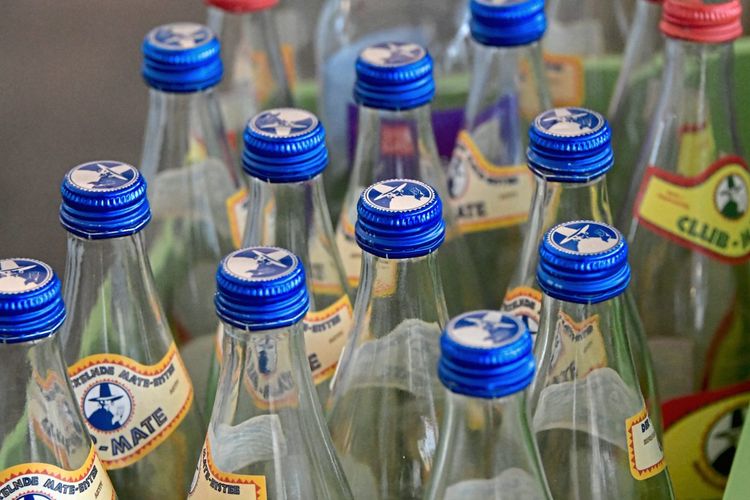
Talk to anyone advising small German breweries and you’ll hear a quiet desperation. The math has turned brutal. A standard Euroflasche carries an 8-cent deposit but costs 60-70 cents to replace new. That’s not a rounding error, it’s a structural collapse. Many small players now lose money on every single bottle they don’t get back. Some breweries have resorted to driving hundreds of kilometers across Germany to retrieve their own empties, turning bottle collection into a reverse logistics nightmare that would make Amazon weep.
Large corporations with dedicated reverse supply chains and automated sorting facilities absorb these costs differently. For them, the deposit system is a manageable line item. For a family brewery in Franconia, it’s an existential threat. The 25-cent deposit on single-use bottles, the Einwegpfand, was supposed to be the great equalizer, but inflation has defanged it. In 2003, that quarter represented a meaningful incentive. Today, it’s barely enough to justify the walk to the supermarket.
Behavioral Economics at the Bottom of the Bin
The deposit system’s effectiveness hinges on a delicate psychological contract: the reward must outweigh the hassle. That contract is fraying. Many consumers now view 8 cents per bottle as beneath their effort threshold. You’ll find them tossed in glass recycling bins, a move that technically violates the system but feels rational at the individual level. The social cost is minimal, who cares if a supermarket employee throws a disapproving glance when you’re anonymous in a big city?
This creates a perverse outcome. The people most likely to collect and return bottles are precisely those who need the money most, pensioners, students, low-income families. The deposit system has become a regressive wealth transfer mechanism, but not in the way you’d expect. The environmental benefit remains, but the economic burden shifts downward. Meanwhile, middle-class households absorb the 25-cent loss as a convenience tax, effectively paying for the system’s continued existence through foregone deposits.
The Technical Excuse Is Wearing Thin
Any suggestion to raise the deposit triggers immediate pushback about implementation nightmares. The argument goes: you’d need new symbols, new scanners, software updates for millions of reverse vending machines, and a transition period that would confuse everyone.
This is half truth, half lobbying fiction. Modern Pfand machines already recognize dozens of bottle types and deposit levels. The Tomra systems dominating German supermarkets identify containers by barcode, not just the Einweglogo. Adding a new 35-cent or 40-cent tier would require a software update, hardly impossible in an age when your coffee maker receives over-the-air updates.
The real resistance isn’t technical, it’s political. Retailers and beverage lobbyists have zero interest in increasing their float costs or administrative burden. Every cent added to the deposit means millions more euros tied up in the system, money that sits in corporate accounts earning interest until bottles are returned. That financial friction is a feature, not a bug, for the industry.
The Environmental Paradox
Here’s the uncomfortable truth: despite its economic distortions, the system works. Germany’s 98%+ collection rate shames most other countries. The streets aren’t littered with plastic bottles. The recycling loops are closed. From a pure environmental outcome perspective, raising the deposit might be unnecessary.
But environmental policy doesn’t exist in a vacuum. The current system achieves its goals through an increasingly unfair distribution of costs. Small businesses bleed money while large ones profit from scale. Poorer consumers do the collection labor that wealthier ones outsource to the municipal waste system. And the entire apparatus runs on a pricing mechanism that lost touch with reality two decades ago.
The debate mirrors larger German economic discussions: when does stability become stagnation? The country’s love affair with price stability, witness the real estate market, rental contracts, now bottle deposits, creates predictability but also ossification. Other countries adjust deposit rates regularly. Denmark’s deposit system updates every few years. Norway’s has multiple tiers based on material and size. Germany’s rigidity is increasingly an outlier.
What Would Sensible Reform Look Like?
A rational update would index the deposit to inflation, automatically adjusting it every two or three years. This removes political gridlock and gives businesses predictability. The initial bump to 35-40 cents would sting briefly, but the automatic mechanism would prevent future shocks.
Alternatively, Germany could adopt a tiered system: 25 cents for small containers, 50 cents for larger ones, and maybe €1 for oversized bottles. This acknowledges that not all packaging imposes equal environmental costs.
The most radical option would be to abolish the single-use deposit entirely and force everything into the Mehrweg system. But that would require a retail revolution and consumer behavior change that makes the current debate look trivial.
The Political Reality
Don’t hold your breath for reform. The coalition government has bigger headaches, and “bottle deposit inflation” doesn’t win elections. The beverage industry will fight changes that increase their working capital requirements. Retailers will lobby against anything that complicates their operations. And consumers, while annoyed, aren’t exactly marching in the streets demanding higher deposits.
The likeliest path is continued gradual decay of the system’s economic logic until some crisis forces action. Maybe a major brewery bankruptcy triggered by bottle losses. Maybe a court ruling that the current rate violates some EU fairness directive. Or maybe just the slow drip of inflation until returning bottles feels like a joke and collection rates start dropping.
Until then, your 25 cents remains a museum piece, a reminder of what German policy can achieve when it locks something in place and throws away the key. The system works, but it works on 2003 terms. And in 2025, that’s starting to look less like stability and more like negligence.
Bottom line: The €0.25 deposit is economically outdated but environmentally effective. Any change requires balancing small business survival, consumer fairness, and environmental outcomes. The math says it should be 38 cents. The politics say it stays 25. The reality says the gap between those numbers is where small breweries quietly go bankrupt and the system’s regressivity deepens. Keep returning your bottles, but maybe spare a thought for the policy time capsule you’re feeding them into.