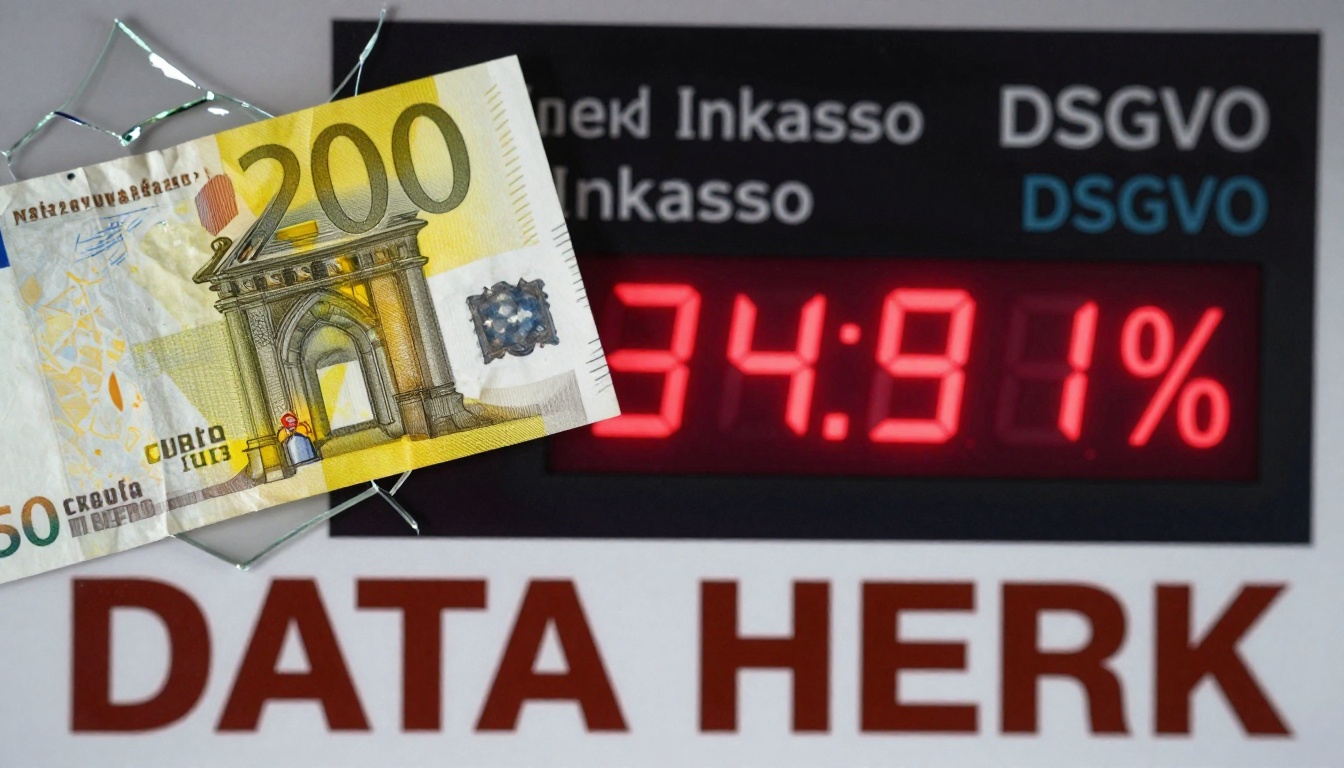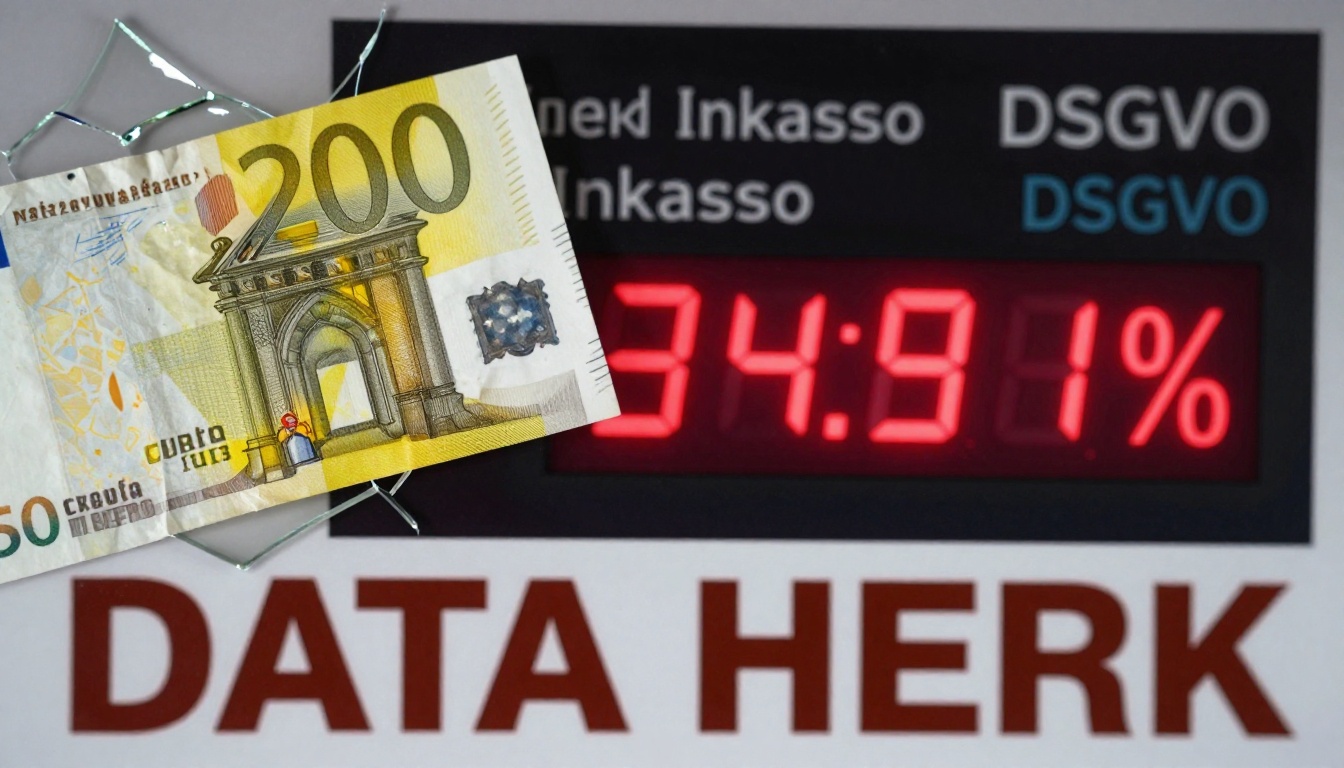
A financially responsible professional with a six-figure savings account and solid income watched helplessly as their Schufa score (credit score) collapsed to 34.91%, a number typically reserved for people on the brink of personal insolvency. The culprit? Not reckless spending, but a €300 bank error that spiraled into a data disaster.
This isn’t a rare edge case. It’s a glimpse into how Germany’s most powerful financial gatekeeper can turn a minor administrative hiccup into a full-blown financial lockout, and why why financially responsible individuals with high incomes still suffer from low Schufa scores remains one of the most maddening aspects of German life.
The Error Cascade: How €300 Became €948 and Four Negative Entries
The story begins predictably enough: a Deutsche Bank account went slightly overdrawn by roughly €300, despite having an approved overdraft (Dispo). The account holder transferred money to cover the balance on the final day before the deadline, using the IBAN provided in the bank’s letter. Deutsche Bank then closed the account without warning and returned the payment.
Two days later, an Inkassobrief (debt collection letter) arrived. The debtor immediately paid, but the collection agency had already reported a Zahlungsausfall (payment default) to Schufa. This single error triggered a chain reaction of data corruption:
- Wrong amount: Schufa showed €948 instead of €300
- Duplicate entries: The same debt appeared twice
- Double “completed” markers: Each duplicate got an “erledigt” (completed) flag, creating four negative entries total
- Score destruction: Dropped from 94% → 42% → 34%
When the victim tried to switch from prepaid to a Telekom contract for a business phone line, the system rejected them cold. Another Schufa inquiry pushed the score even lower. The kicker? They have “several tens of thousands” in savings, minimal expenses, and solid income, but Schufa now treats them like they’re homeless.
Your Schufa Score Isn’t About Your Wealth, It’s About Data Integrity
Here’s the uncomfortable truth: how Schufa’s new 0-999 scoring system might unexpectedly lower scores despite responsible behavior matters less than the system’s fundamental vulnerability to bad data. The new 100-999 point scale launching March 2026 promises transparency, but transparency of flawed data is just a clearer view of a broken mirror.
The Schufa algorithm doesn’t see your savings account. It doesn’t verify your income. It sees entries, timestamps, and flags. When a collection agency reports a default, Schufa doesn’t ask “was this legally justified?” It simply registers the negative marker. When Deutsche Bank returns your payment and closes your account, Schufa doesn’t track the bank’s error, it tracks your “failure” to pay.
What Actually Gets Stored (And Why It’s a Problem)
Schufa Holding AG maintains files on 68 million Germans, including:
– Bank account data (but not balances)
– Credit limits and usage
– Mobile phone contracts
– Leasing agreements
– Payment defaults, Mahnbescheide (court orders), and titulierte Forderungen (enforced claims)
– Every credit inquiry from companies
The scoring model weighs factors like account age, contract diversity, and even your postal code, some neighborhoods allegedly drag down scores regardless of personal solvency. But the real killer is the Zahlungsausfall marker. Even if paid immediately, it signals “unreliable” to automated systems reviewing your file.
The Legal Arsenal: Your Rights Under DSGVO and BDSG
German law gives you powerful tools, but they’re useless if you don’t know them. Here’s your battle plan:
1. Get Your Free Complete Report (Not the Paid Version)
Under § 34 Bundesdatenschutzgesetz (BDSG) and Art. 15 DSGVO, you’re entitled to one free vollständige Selbstauskunft (complete self-disclosure) per year. This is NOT the paid Bonitätsauskunft landlords request. The free version shows everything, including all inquiries and the raw data behind your score.
Request it directly from Schufa. Expect to wait 1-2 weeks for the physical copy.
2. Identify Every Single Error
In the case above, the errors were obvious:
– Duplicate entries (same debt listed twice)
– Incorrect amount (€948 vs €300)
– Unjustified default report (payment wasn’t actually late, bank rejected it)
– Missing context (bank’s error, not debtor’s)
The Verbraucherzentrale (consumer center) found that 30% of reviewed Schufa files contain errors. Typical issues: paid debts not deleted, outdated information, and duplicate entries.
3. Demand Correction Under § 35 BDSG
You have a legal right to Berichtigung (correction) or Löschung (deletion) of false data. The process:
- Contact the reporting company first (the Inkasso agency or Deutsche Bank in this case) with proof of error. Set a reasonable deadline (2-3 weeks).
- If they don’t respond, escalate to Schufa directly with your evidence.
- Use written form (Einschreiben, registered mail) for proof.
For the case above, the argument is clear: Since Deutsche Bank caused the payment failure by returning the transfer and closing the account, the debtor was never legally in default. The entire Schufa entry is therefore unjustified and must be fully deleted, not just marked as “completed.”
4. Document Everything
Keep:
– All letters from banks and collection agencies
– Transfer confirmations with timestamps
– Screenshots of online banking
– Copies of all correspondence with Schufa
If you need to claim damages later, this paper trail is essential.
The 2026 Transparency Mirage: Will the New System Help?
Starting March 2026, Schufa must provide permanent online access to your data through a personal account, plus explanations for score changes. While the upcoming transparency of Schufa’s algorithm and its potential flaws affecting fair scoring sounds promising, it’s a double-edged sword.
Yes, you’ll see your score in real-time and get notifications of new entries. But the core problem remains: the algorithm’s logic is still a trade secret. The European Court of Justice ruled (C-634/21) that while consumers deserve transparency, companies don’t have to reveal their proprietary scoring formulas. You’ll know what changed, but not necessarily why.
More critically, the new system doesn’t fix the garbage in, garbage out problem. If Deutsche Bank reports bad data, better visualization just means you can watch your score crash in high definition.
Real-World Fallout: When 34% Shuts Down Your Life
A 34% Schufa score doesn’t just mean higher loan rates. It means:
– Mobile phone contracts: Denied (as experienced with Telekom)
– Apartment rentals: Automatic rejection by most property management software
– Car leasing: Impossible without co-signers
– Credit cards: American Express Business? Forget it
– Utilities: Deposits required, or outright refusal
– Employment: Some employers check Schufa for financial roles
The user was forced to load €500 onto their prepaid phone and abandon plans for a business credit card. For expats and freelancers, this can mean losing clients who require a proper German business line.
The Recovery Timeline: Patience Is Expensive
Even if you successfully delete the false entries, your score won’t recover overnight. Schufa’s algorithm penalizes recent inquiries and “corrected” entries for months. The standard advice: stop all new applications and wait 6-12 months.
This is particularly galling when the error wasn’t yours. The system punishes you for having been wrongly punished.
Step-by-Step Action Plan If This Happens to You
Immediate Actions (This Week)
- Request your complete free Schufa report (Datenübersicht nach § 34 BDSG)
- Screenshot your online banking showing the returned transfer
- Find all letters from Deutsche Bank and the Inkasso agency
- Do NOT apply for anything requiring a Schufa check
Short-Term Actions (Next 2-3 Weeks)
- Write to the Inkasso agency demanding immediate deletion of the entry, citing the bank’s error. Include transfer proof.
- Write to Deutsche Bank holding them responsible for the incorrect reporting and demanding they instruct the agency to delete.
- Set a 2-week deadline in both letters (Einschreiben).
Medium-Term Actions (1-3 Months)
- If no response, file a formal correction request with Schufa using their online form or by mail, attaching all evidence.
- Document rejections: If you’re denied a contract because of the false score, get written proof. This strengthens a potential damages claim.
- Consider legal insurance: If you have Rechtsschutzversicherung (legal protection insurance), contact them. Schufa disputes are often covered.
Long-Term Strategy
- Check your Schufa quarterly using free DSGVO rights. how to regularly check your Schufa data for errors under DSGVO rights is a habit that saves thousands.
- Limit credit inquiries: Each one dings your score for 12 months. Plan applications carefully.
- Keep old accounts open: Account age positively affects your score.
The Bigger Picture: Why This Keeps Happening
Schufa operates as a data clearinghouse, not a verification service. When Deutsche Bank or an Inkasso agency reports information, Schufa assumes it’s accurate. The burden of proof falls entirely on you, the consumer.
This creates a perverse incentive: collection agencies can report aggressively, knowing most people won’t fight back. Banks can make administrative errors with minimal consequences. The system is designed for efficiency, not fairness.
Recent court rulings are pushing back. The Oberlandesgericht Hamburg awarded €2,500 to a woman after an incorrect Schufa entry led to her Girokonto being closed (Az.: 13 U 11/24). This sets a precedent: data errors causing financial damage can trigger compensation claims.
Prevention: How to Become “Schufa-Resilient”
You can’t prevent bank errors, but you can build a buffer:
– Maintain multiple bank relationships: Don’t rely on one Girokonto. If one bank fails, you have alternatives.
– Use separate accounts for critical payments: Keep your main account for rent and utilities, another for discretionary spending.
– Enable push notifications: Know immediately if a payment fails.
– Never trust the last day: Pay debts 5-7 days before deadlines to bank processing delays.
– Document every payment: Screenshot confirmations with date/time stamps.
Final Word: Don’t Accept the System’s Failures
The user’s frustration is palpable: “Die SCHUFA ist so ein Witz ohne scheiß..” (Schufa is such a joke, no shit). But anger without action is just venting.
Your Schufa score is not a reflection of your character or even your financial health, it’s a reflection of data accuracy. When that data is wrong, you have legal rights, not just complaints. The system is weighted against you, but it’s not impenetrable.
The €300 error that tanked a score to 34% is extreme, but the pattern is common. Banks make mistakes. Collection agencies over-report. Schufa accepts it uncritically. Your job is to be the squeaky wheel that demands correction.
Start with your free report. Document everything. Use your DSGVO rights. And remember: a low Schufa score says more about the system’s failure than your financial responsibility.
Disclaimer: This article provides general information, not legal advice. For specific cases, consult a lawyer specializing in Schufarecht (Schufa law) or contact your Rechtsschutzversicherung (legal protection insurance) provider.