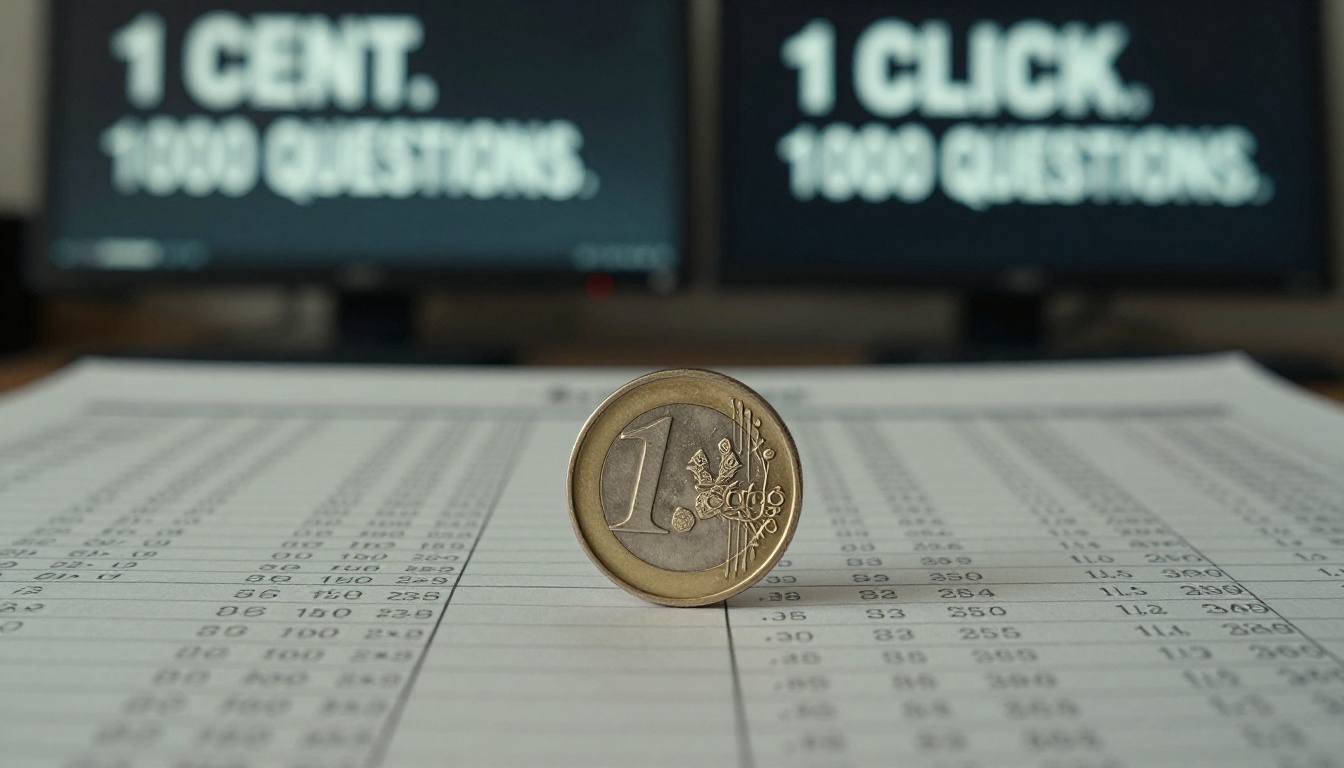
The German love for precision meets the fintech age, and the result is a fee so small it seems almost polite: one cent per chart view. Yet this microscopic charge on Flatex has unleashed a torrent of frustration that goes far beyond the pocket change involved. It taps into a deeper anxiety about hidden costs in German financial products, a concern that has plagued everything from fondsgebundene Lebensversicherungen to ETF savings plans.
The controversy started when investors discovered that clicking the “RT” (Realtime) button to view live price charts on certain German exchanges triggers a 1-cent fee. While that sounds trivial, it represents something bigger: the moment transparent pricing becomes a game of hide-and-seek.
How the Real-Time Fee Actually Works (And Why It Bothers People)
Here’s the technical reality behind the outrage. Flatex offers free real-time data from certain exchanges like Tradegate, Quotrix, and Gettex. But if you want live prices from major German exchanges like Frankfurt’s XETRA, you’re looking at a 15-minute delay, unless you press that tempting “RT” button.
Many investors report receiving a free quota of real-time queries, after which each additional RT request costs €0.01. The fee only applies when you actively request real-time data for exchanges that don’t provide it standard. As one experienced user pointed out, for 99% of investors who aren’t day trading, a five-minute delay makes absolutely no difference.
So why the fuss? Because it represents a pattern. German investors, already wary from decades of opaque product structures, see this as another example of costs that aren’t clearly communicated upfront. The fee disclosure requires digging through help pages rather than being presented transparently at account opening.
The Hidden Fee Ecosystem Beyond the Penny Charge
The real-time data fee is just the tip of the iceberg. Flatex’s fee structure contains several other charges that catch investors off guard:
Xetra-Gold custody fees: While Flatex proudly advertises zero depot fees (since 2023), they exclude specific products. Holding Xetra-Gold, ADRs, or GDRs incurs additional custody charges that aren’t part of the standard free offering.
Fremdkostenpauschale (third-party cost flat fee): Every trade carries a €2 flat fee for certain exchanges like Tradegate, Quotrix, and Lang & Schwarz. This sits on top of the €5.90 base commission per order.
Crypto limitations: Flatex offers 20 cryptocurrencies with transaction fees between 0.6-0.7%, but investors can’t transfer their coins to external wallets. The assets remain with custodian Tangany, meaning you never truly own the private keys, a restriction that carries its own hidden costs in terms of flexibility and security.
These fees pale in comparison to the devastating impact of hidden fund fees over time that have plagued German investors for decades. But they represent the same fundamental problem: costs that erode returns through complexity rather than transparent pricing.
The Competitive Landscape: Who’s Actually Transparent?
Flatex isn’t alone in playing the fee-hiding game, but competitors have seized on transparency as a selling point:
Trade Republic charges a simple €1 per trade Fremdkostenpauschale with zero base commission. No real-time data fees, no custody charges for standard products.
Scalable Capital offers a Free model at €0.99 per trade, with Prime+ subscribers trading for free on Gettex. Their 2,700+ free ETF savings plans outnumber Flatex’s offerings.
justTRADE goes even further: €1 third-party fee, zero base commission, and no depot fees.
The difference? These neo-brokers built their models around simplicity, while traditional players like Flatex have layered digital interfaces onto legacy fee structures. As regulatory changes like the PFOF ban reshape brokerage economics, this transparency gap becomes more pronounced.
Why German Investors Are Especially Sensitive to Hidden Fees
This isn’t just about Flatex. German financial culture has been burned repeatedly by products that hide costs in complexity. The scandal of a 17-year life insurance policy returning €4.84 profit exemplifies how complex financial products hide fees and erode value.
When you’ve watched €10,500 in payments turn into essentially nothing due to opaquely structured costs, a 1-cent chart fee feels less like a nuisance and more like an insult. It’s the principle: if they’ll charge you a penny for something as basic as viewing a chart, what else are they hiding?
This sensitivity explains why the Flatex controversy resonated beyond day traders. It touched a nerve among regular Germans who’ve been conditioned to distrust financial institutions’ fee disclosures. The misaligned incentives in financial advice mean many investors have learned the hard way that “free” usually isn’t.
The Regulatory Context: Transparency vs. Viability
The Flatex situation highlights a broader tension in German fintech. On one hand, regulators push for transparency and consumer protection. On the other, brokers need viable business models, especially with the looming PFOF ban that will eliminate a major revenue stream for neo-brokers.
Analysts note that the probability of competitors like Trade Republic and Scalable Capital introducing traditional trading fees has actually decreased, not increased. Trade Republic obtained a market maker license, Scalable Capital built its own trading venue. They’re adapting without nickel-and-diming users for basic features.
Flatex’s approach, maintaining legacy fee structures while adding micro-charges for digital conveniences, feels increasingly outdated. It risks alienating the growing retail investment trend and fee sensitivity among new investors who expect digital services to be included in the base offering.
Practical Advice: How to Avoid Getting Nickled and Dimed
If you’re using Flatex or considering it, here’s how to protect yourself:
-
Stick to free exchanges: Tradegate, Quotrix, and Gettex offer real-time data without the RT button penalty. For most investors, these provide sufficient liquidity and price discovery.
-
Embrace the delay: Unless you’re executing split-second trades, 15-minute delayed XETRA data won’t impact your returns. Use free external sources like Yahoo Finance for broader market context (though these also show delayed data).
-
Calculate total costs: That €5.90 commission is never just €5.90. Add the €2 Fremdkostenpauschale and any product-specific custody fees. Compare the all-in cost to competitors’ €1 flat fees.
-
Watch for quotas: If you must use real-time data, track your free queries. Don’t let curiosity about a chart eat into your returns.
-
Consider your product mix: If you hold Xetra-Gold or international ADRs, factor in those custody fees. They might make alternatives more attractive.
The Bottom Line
The 1-cent Flatex fee controversy matters not because of the amount, but because of what it represents. In a market where investors are finally overcoming Germany’s traditional stock market taboo, transparency isn’t a luxury, it’s a requirement.
German brokers face a clear choice: build trust through simple, inclusive pricing, or erode it through micro-charges and complex fee tiers. The Flatex real-time data fee may be small, but the backlash proves that German investors are done accepting hidden costs, no matter how politely they’re presented.
As competition intensifies and regulations tighten, the brokers who win will be those who treat real-time data not as a premium add-on, but as table stakes for modern investing. Everything else is just digital horse-trading from the era of the Sparbuch (savings account).