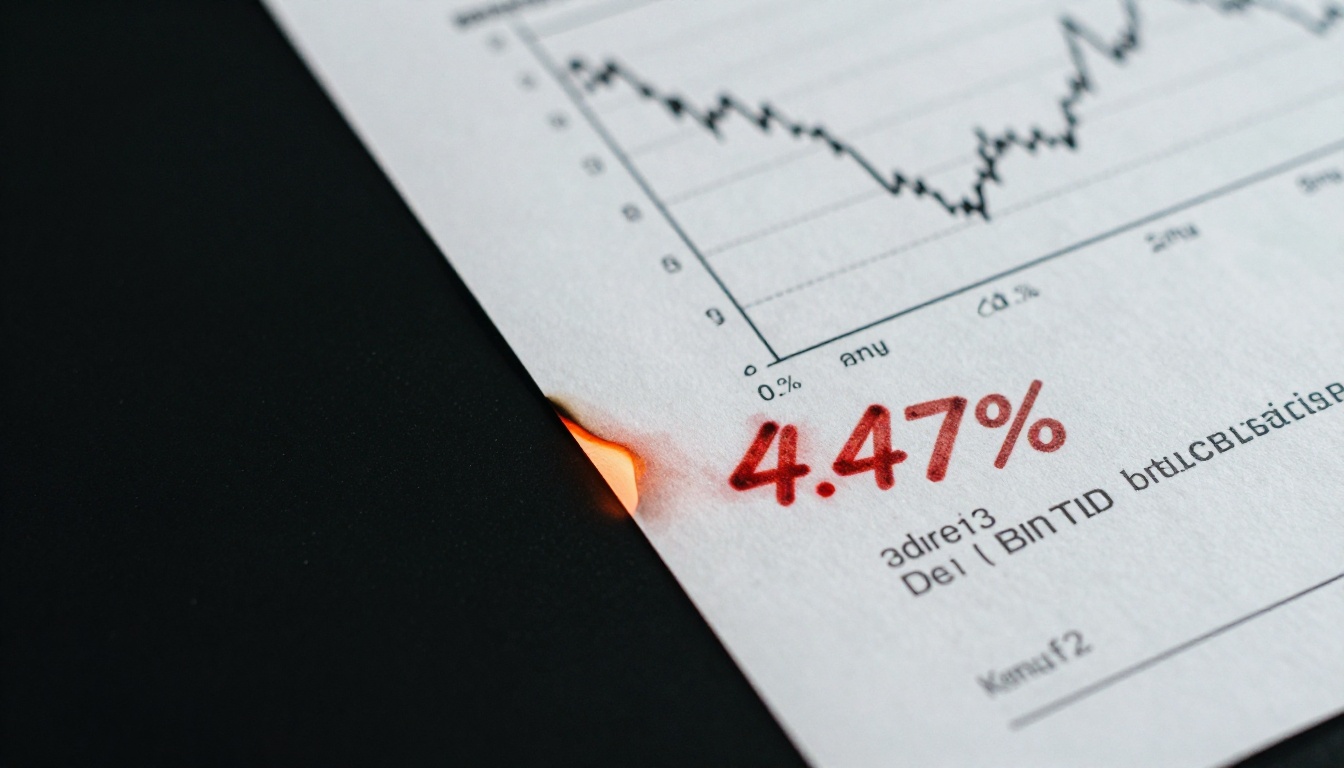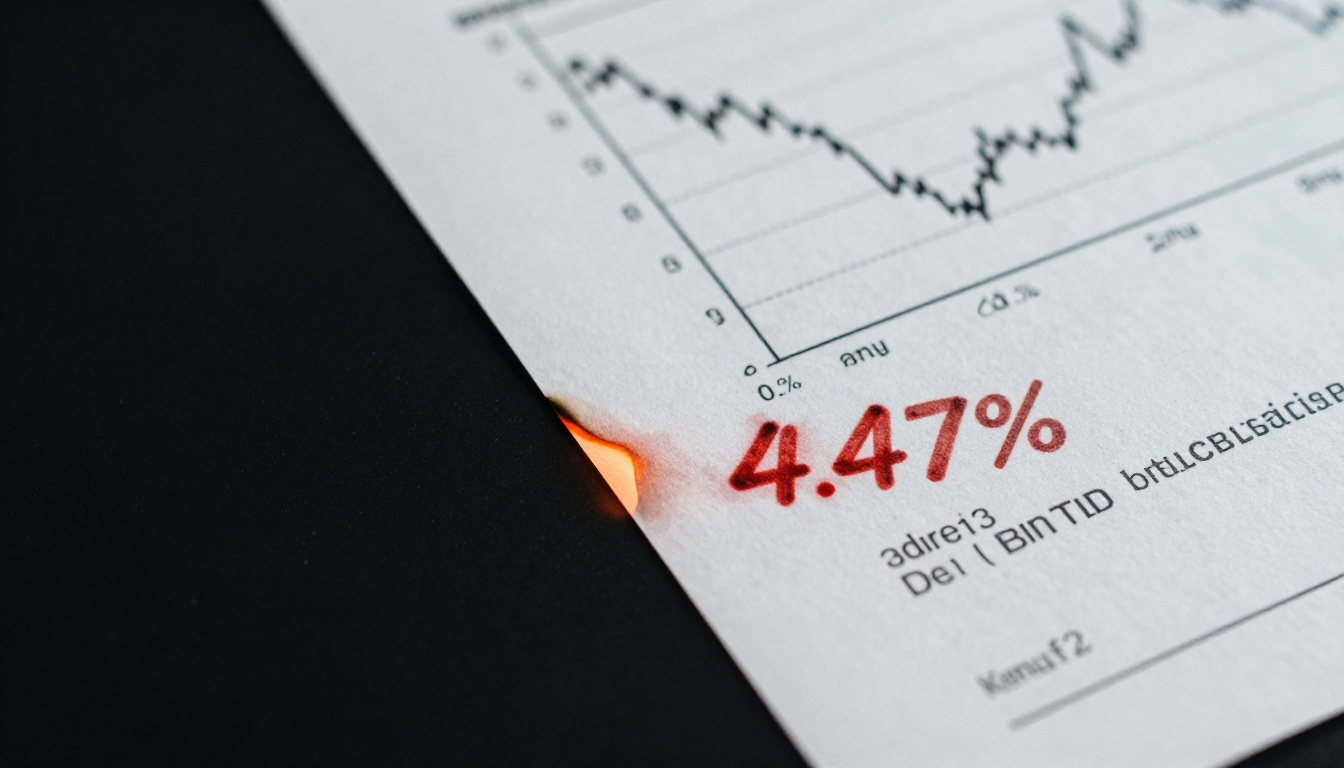
You’re dutifully executing your Sparplan (savings plan) each month, channeling €200 into what you hope is a promising stock. The broker confirms the order executes between 15:30 and 17:30. Everything feels efficient, German, precise. Then you notice the spread: 4.47%. That’s not a typo. Nearly 4.5% of your investment evaporates before the share even lands in your depot (brokerage account). For buy-and-hold investors, this isn’t a minor fee, it’s a financial death by a thousand cuts.
A recent discussion among German retail investors highlighted Ferrexpo, an iron ore producer, as a textbook example of this silent wealth destruction. The company trades in London, suffers from low liquidity, and carries a spread that would make even a used car salesman blush. One investor wondered: “If I hold for years until the Ukraine conflict ends, does the spread matter less?” The answer is brutally simple: you’re burning nearly 5% of your capital on every single purchase. The Finanzamt (tax office) will still demand its cut later, but the spread damage is already done.
How Spreads Turn Monthly Discipline Into a Leaky Bucket
The bid-ask spread represents the gap between what buyers will pay (bid) and sellers demand (ask). For liquid German blue chips like SAP or Siemens, this might be 0.01%, barely noticeable. But for illiquid stocks, especially foreign ones executed through German brokers, spreads balloon. That 4.47% isn’t a one-time entry fee, it’s a recurring penalty on every monthly Sparplan execution.
Let’s run the math. Invest €200 monthly for 10 years at a 7% annual return:
- With 0.01% spread: €33,829 portfolio value
- With 4.47% spread: €29,417 portfolio value
You’ve lost over €4,400, more than 13% of your potential wealth, to a hidden cost you probably never noticed on your brokerage statement. This dwarfs the impact of a 0.25% TER difference between ETFs and makes the €1.50 Sparplan execution fee look like a rounding error. The spread is the real killer.
The German Brokerage System’s Blind Spot
German brokers love promoting Sparpläne (savings plans) as the path to financial virtue. They advertise low execution fees, tax optimization, and the magic of cost averaging. But they rarely highlight spread costs because most investors don’t know to ask. The BaFin (Federal Financial Supervisory Authority) requires fee transparency, but spreads fall into a regulatory gray zone, they’re considered market-driven, not a broker charge.
This creates a perverse incentive. Your broker might offer “free” Sparplan execution on certain stocks while pocketing hidden revenue through payment-for-order-flow or simply not negotiating tight spreads on foreign exchanges. You think you’re getting a deal. In reality, you’re paying more than if you’d used a transparent €9.90 flat-fee broker for manual orders during liquid trading hours.
The problem compounds when German investors target “cheap” foreign stocks. A €20 share price looks attractive, but if the spread is €0.90, you’re already underwater by 4.5%. This is particularly common with UK-listed stocks like Ferrexpo, where German brokers route orders through London market makers who take their pound of flesh.
Why Buy-and-Hold Doesn’t Save You
Many investors believe spreads only hurt traders. Wrong. Every purchase in a long-term strategy pays the spread. While the impact diminishes as a percentage of total holding time, the absolute loss is locked in permanently. You can’t “grow out of” a 4.47% initial handicap.
Worse, spreads often widen precisely when you least want them to: during market stress, geopolitical events (like Ukraine conflicts), or when liquidity dries up. Your plan to hold “until the war ends” means you’re buying throughout the crisis, precisely when spreads are widest. You’re not just paying the spread once, you’re paying the worst possible spread repeatedly.
This is where hidden costs in financial products affecting long-term returns become a pattern. Just as ING penalizes loyalty with 2% lower interest rates, illiquid stocks penalize consistency with crushing spreads. The German financial system excels at making regular saving feel safe while draining value through invisible mechanisms.
The Market Maker’s Guaranteed Profit at Your Expense
Market makers aren’t evil, they provide liquidity. But their business model is simple: buy at the bid, sell at the ask, pocket the difference. In liquid markets, competition drives spreads to razor-thin margins. In illiquid markets, they become the only game in town.
When you execute a Sparplan order, your broker often sells it to a market maker who guarantees execution. That market maker sets the spread. On a stock like Ferrexpo, they might show a €1.20 bid and €1.25 ask, a 4% spread. Your €200 buys at €1.25. If you sold instantly, you’d receive €1.20. That €0.05 per share is the market maker’s profit for taking the risk of holding inventory in a volatile, low-volume stock.
The controversial part? This profit comes directly from your retirement fund. While you’re hoping for a 4x return if Ukraine stabilizes, you’re starting from a 4.5% deficit. The market maker profits regardless of whether the war ends tomorrow or in 2035.
Real-World Damage: From Ferrexpo to Your Portfolio
The Ferrexpo example isn’t isolated. German investors frequently encounter brutal spreads on:
– Small-cap MDAX and SDAX stocks during after-hours execution
– US penny stocks accessed through Trade Republic or Scalable Capital
– Emerging market ETFs with low AUM
– Corporate bonds in direct brokerage accounts
One investor noted holding 15,000 Ferrexpo shares, biased by sunk cost fallacy. Another joked about the stock going “10x if the moon is in Aquarius.” The humor masks a painful truth: they’re trapped in an illiquid position where exiting will cost another 4% spread. The total round-trip cost approaches 9%, more than a year’s worth of expected equity returns.
This is why selling investment portfolios under financial pressure becomes so destructive. When life forces you to liquidate, buying a Munich house, covering a Kaution (security deposit), or paying an unexpected GEZ (broadcasting fee) bill, those spreads become realized losses.
How to Protect Your Sparplan From Spread Destruction
1. Screen for Liquidity Before Buying
Check average daily volume and spread history. If it’s not available in your broker’s interface, check London Stock Exchange or Bloomberg data. Anything over 0.5% spread for a monthly savings plan is suspect.
2. Avoid Foreign Illiquid Stocks in Sparpläne
German brokers often execute these as batch orders at unfavorable times. If you must own Ferrexpo, consider making manual limit orders during peak liquidity (15:30-16:30 CET) rather than automated Sparplan purchases.
3. Use ETFs for Niche Exposure
Want iron ore exposure? A commodity ETF like XME (US) or SXRV (EU) offers spreads under 0.05% and instant diversification. The TER is higher, but total cost of ownership is lower.
4. Calculate True Cost, Not Just Fees
Your broker shows a €1.50 execution fee. But if you’re buying €200 of an illiquid stock with a 4% spread, your real cost is €9.50 (4% × €200 + €1.50). That’s a 4.75% load fee, worse than many 1990s mutual funds.
5. Consolidate Trades
Instead of monthly €200 purchases across five illiquid stocks, save €1,000 and buy quarterly. Fewer transactions mean fewer spread payments. This requires discipline but saves thousands over decades.
The Bigger Picture: Why This Matters for German Financial Independence
Spreads are one of many high-cost, low-transparency financial products that erode returns. While Sparkasse advisors push expensive insurance-wrapped investments, spreads quietly do the same damage to self-directed investors. The common thread: complexity hides cost.
For long-term wealth building in Germany, where taxes already take 25% of capital gains plus Solidaritätszuschlag (solidarity surcharge), every basis point counts. A 4.47% spread isn’t just a cost, it’s a declaration that the market structure is working against you. It’s the difference between retiring at 55 versus 62.
When evaluating ETF investment strategies and tax-efficient portfolio management, spreads rarely enter the discussion. They should. A distributing ETF with 0.2% TER and 0.01% spread is vastly superior to a 0.1% TER ETF on an illiquid index with 0.3% spread.
The Verdict: Spreads Absolutely Destroy Long-Term Returns
The Ferrexpo investor asking if spreads become “less important over time” has it backward. Time magnifies the damage. Each monthly purchase locks in a 4.47% loss. Compounding works on the remaining 95.53%, but you’re building a portfolio on a foundation of Swiss cheese.
If you invest €200 monthly for 30 years at 7% gross returns, that 4.47% spread costs you €47,000 compared to a 0.01% spread. That’s a year of retirement expenses gone to market makers. For context, that’s more than the long-term investment trade-offs between real estate and financial assets difference in many scenarios.
The spicy truth? German brokers and market makers profit most from disciplined savers who never question execution quality. Your virtue becomes their annuity. The spread isn’t a bug, it’s a feature of how retail order flow gets monetized.
Actionable Takeaways for German Investors
-
Audit your current Sparpläne: Check the spread on each holding. If you can’t find it, call your broker and demand execution quality reports.
-
Switch liquid stocks to limit orders: Cancel automated purchases on anything with >0.5% spread. Manually place limit orders at the mid-price during liquid hours.
-
Replace individual stocks with ETFs: For sector exposure, ETFs almost always offer better liquidity and tighter spreads.
-
Calculate your true all-in cost: Spread + TER + execution fee + tax drag. If it exceeds 1% annually, you’re being played.
-
Vote with your feet: Brokers like Interactive Brokers or Smartbroker Pro offer direct market access and spread transparency. The €4.90 commission saves money if it cuts your spread by even 0.1% on larger orders.
The German financial system rewards those who look under the hood. Spreads are the hidden engine leak that turns your retirement Porsche into a Trabant. Fix it before you run out of road.