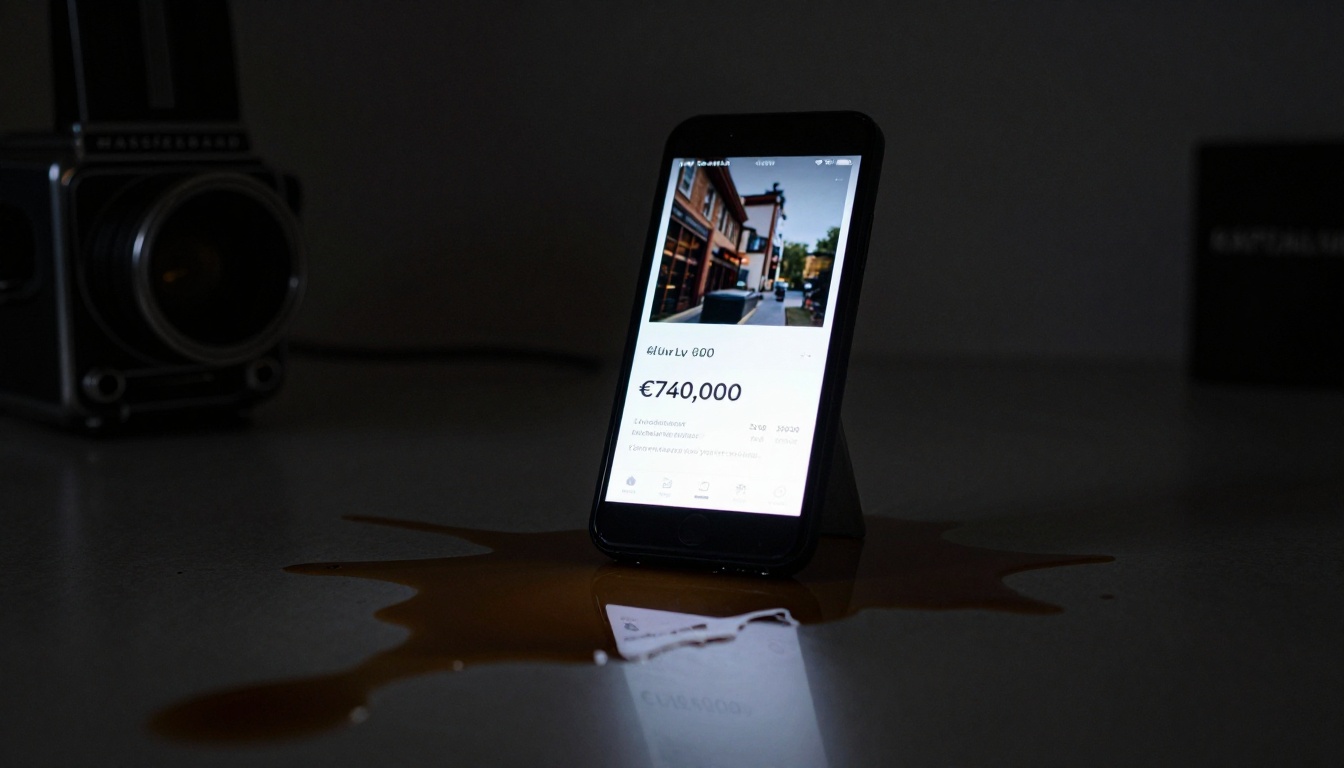
You check your brokerage account on a quiet Sunday evening, expecting the usual post-Trump-market-chaos numbness. Instead, your screen shows a number that makes you spill your coffee: €740,000 more than yesterday. Your first thought isn’t “brilliant investment strategy”, it’s “which law did I accidentally break?” This exact scenario played out recently for a DKB (Deutsche Kreditbank) customer, and the explanation exposes a technical quirk in the German financial system that could happen to anyone holding ETFs.
The Phantom Fortune: What Actually Happened
The investor, checking their DKB Depot (brokerage account) after routine market turbulence, discovered their portfolio value had ballooned by three-quarters of a million euros overnight. The transaction looked identical to their regular Sparplan (savings plan) execution, but the amount was absurdly inflated. Cue the immediate panic: system bug? Money laundering scheme? Early retirement?
The mundane truth: an ETF underwent a 1:25 split, and DKB’s system hadn’t caught up yet. The specific security was the A1JJTD, an SPDR ETF that executed a capital measure splitting each share into 25 pieces. While the total value remained identical, the German broker’s display logic temporarily showed the old price multiplied by the new share quantity, creating a paper fortune that existed only in the digital ether.
Why German Brokers Turn Your Portfolio Into a Slot Machine
This isn’t a DKB-specific failure. It’s a structural feature of how German brokers handle Kapitalmaßnahmen (capital measures) within the European T+2 settlement system. When an ETF splits, the process works like this:
- Execution Day: The split occurs, but shares remain gesperrt (locked) for trading
- Technical Processing: The broker’s backend systems receive new share quantities but may lag on price adjustments
- Display Lag: Your portfolio screen shows 25x shares at the old, unsplit price
- Verification Period: Two bank working days pass while the Finanzamt (Tax Office) and custodian banks reconcile positions
As one commenter familiar with the system noted: “The Wertpapier ist gesperrt wegen Kapitalmaßnahme. Bis die Kapitalmaßnahme voll verbucht ist dauert es im europäischen T+2 Handel halt mal 2 Bankarbeitstage.” In plain English: your investment is frozen during the corporate action, and European settlement rules mean this drags on for two business days.
The DKB incident merely highlighted this delay more dramatically than usual because the 1:25 ratio created such an eye-popping discrepancy.
The Trust Problem: When Your Bank’s Screen Lies to You
For international residents navigating the German financial system, this technical hiccup triggers deeper anxiety. Many newcomers already harbor skepticism about financial system trust and advisor reliability after encountering sales-driven advice at traditional Hausbanken (house banks). Seeing your life savings apparently quadruple overnight doesn’t inspire confidence, it activates fight-or-flight responses honed by years of scam warnings.
This anxiety isn’t unfounded. DKB itself faced legal consequences in a recent fraud case where a customer received calls from someone posing as bank staff, leading to unauthorized account access. While completely unrelated to ETF splits, such incidents chip away at the assumption that German banking systems operate with flawless precision. The reality is more nuanced: German banks excel at regulatory compliance but can lag in digital user experience.
What You Should Actually Do When Numbers Stop Making Sense
If your Depot suddenly shows impossible wealth, follow this practical checklist before celebrating or panicking:
1. Check for Corporate Actions
Visit the ETF provider’s website (like SPDR) and search for “capital measures” or “splits.” The A1JJTD split was publicly announced weeks in advance. Most investors simply don’t read the fine print buried in their email.
2. Verify Across Platforms
Log into other brokers if you have them. During the same incident, the ING platform displayed the split correctly immediately, showing both old and new share quantities with adjusted prices. Discrepancies between platforms usually indicate display issues, not actual portfolio changes.
3. Wait Two Bank Days
The European T+2 settlement system means nothing finalizes until two business days pass. Your broker legally has this window to correct technical errors. Attempting to “sell” the phantom shares will fail, they’re gesperrt (locked) precisely to prevent exploitation of display glitches.
4. Document Everything
Screenshot the error. While you can’t capitalize on it, documenting system failures protects you if downstream issues arise, like incorrect tax reporting to the Finanzamt. Speaking of which, unexpected financial notices from German authorities are stressful enough without your broker feeding them wrong data.
5. Don’t Contact Support Immediately
German broker support lines are notoriously overloaded. Wait until the T+2 period passes. If the issue persists beyond Wednesday for a Monday corporate action, then escalate.
The Bigger Picture: German Financial Infrastructure’s Growing Pains
This incident reveals a cultural clash. Germany’s financial system prioritizes security and regulatory perfection over user experience. The same meticulousness that ensures your Vorabpauschale (advance lump-sum tax) is calculated to the cent also means your portfolio display can be technically “wrong” for days while back-office processes catch up.
For expats accustomed to real-time updates from American brokers like Fidelity or Robinhood, this feels archaic. But it’s intentional. The German approach values settlement certainty over display aesthetics. Your screen might lie, but the underlying Sicherheiten (securities) held by the KAG (capital management company) are never in question.
This philosophy extends to other areas too. Banking system anomalies and financial institution behavior often puzzle international residents, like bankers pushing car loans despite customers having cash, because the system prioritizes relationship banking over transactional efficiency.
When Phantom Money Reveals Real Financial Psychology
The most fascinating aspect isn’t the technical glitch, it’s human reaction. The original poster’s first instinct was to consider “reinhebeln” (releveraging) the phantom gains, a telling glimpse into risk appetite. Others immediately suspected money laundering or system compromise.
This reveals how digital wealth has warped our financial intuition. Numbers on screens feel real until they don’t. The German system’s built-in delays, while frustrating, actually provide a cooling-off period against impulsive decisions, a feature, not a bug, in a world where unexpected financial decisions and portfolio changes can derail long-term plans.
The Takeaway: Trust the System, But Verify the Screen
The DKB €700k phantom wasn’t fraud, money laundering, or a bug. It was German financial infrastructure working exactly as designed, slowly, securely, and with zero regard for your Sunday evening peace of mind.
For anyone building wealth in Germany, the lesson is clear: your broker’s display is a convenience, not a source of truth. Real value lives in the settlement systems, custodian banks, and regulatory frameworks that work on T+2 time. The Finanzamt will never tax phantom gains, and your KAG will never issue shares that don’t exist.
Check the ETF provider’s announcements. Wait two bank days. Then, and only then, decide whether to configure that Lambo.