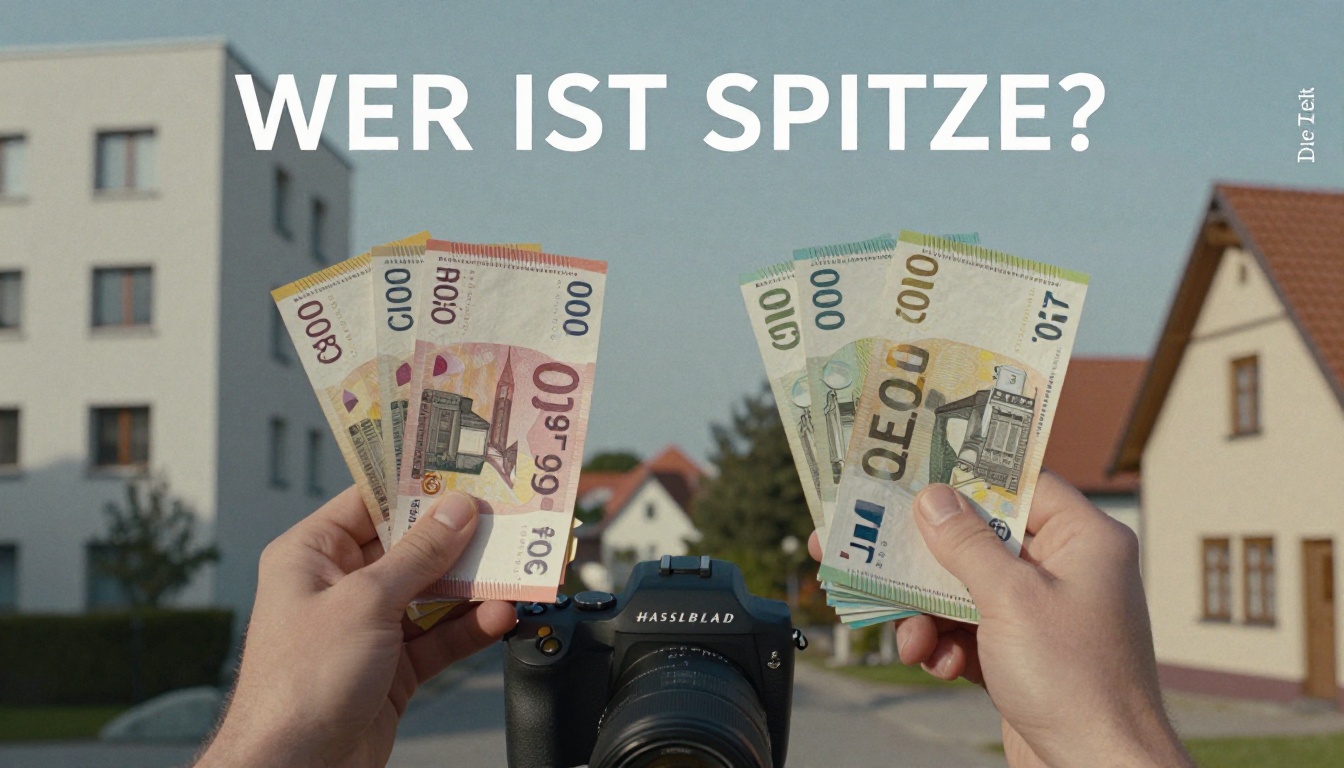
Carsten Linnemann wants to move the goalposts on Germany’s highest income tax rate, and the middle class can’t decide whether to cheer or cringe. The CDU (Christian Democratic Union) secretary-general’s proposal to raise the Spitzensteuersatz (top tax rate) threshold from €68,000 to €80,000 sounds like a straightforward win for workers, but scratch the surface and you’ll find a policy that exposes deep cracks in how Germany defines “top earners” in 2026.
The €12,000 Question: What Linnemann Actually Proposes
Linnemann’s plan, unveiled in an interview with Bild am Sonntag, targets the income level at which Germany’s 42% top tax rate kicks in. Currently, anyone earning more than €68,000 in Jahresbrutto (annual gross income) pays the Spitzensteuersatz on every additional euro. Linnemann wants to push that threshold to €80,000, arguing this would “flatten the Mittelstandsbauch” and provide genuine relief.
The term Mittelstandsbauch (middle-class bulge) refers to Germany’s notoriously steep tax curve, where middle-income earners face marginal rates that kick in too quickly and too aggressively. It’s a structural problem that has turned skilled professionals like engineers, IT specialists, and senior nurses into “top earners” on paper, even when their actual purchasing power feels anything but elite.

When “Top Earner” Means “Upper Middle Class”
Here’s where the math gets uncomfortable. In 1958, Germany’s top tax rate only applied to incomes exceeding 20 times the average wage. Today, it hits at roughly 1.3 to 1.5 times the average income. That shift means the Spitzensteuersatz now catches not just yacht owners but also dual-income couples in Munich trying to afford a modest apartment.
According to recent data, someone earning €80,000 gross already lands in Germany’s top 10% of earners. But as many commenters point out, this statistic ignores regional reality. In Berlin, €80,000 might cover rent, childcare, and a few holidays. In rural Saxony, it might finance a house. The proposal forces a question: should tax policy reflect statistical percentiles or actual living standards?
The debate reveals a persistent frustration among German workers: inflation-adjusted thresholds remain politically unpopular because they rob parties of future campaign victories. As one critical voice noted, “Every five years you can sell inflation adjustments as ‘tax cuts’, cheap PR that disappears when the cold progression (cold progression) inevitably returns.”

The Automatic Indexation Problem Nobody Wants to Solve
Linnemann’s critics, including many fiscal policy watchers, point to a simpler solution: anchor tax thresholds to median income or inflation automatically. Germany already does this with some parameters like the Grundfreibetrag (basic personal allowance), which rises annually to counter cold progression. But the Spitzensteuersatz threshold remains a political football.
The argument against fixed numbers goes: “Make it dynamic, tie it to twice the median income or similar. Otherwise, you start the same discussion again in five years when inflation kicks in.” Yet politicians resist this logic. A permanently solved problem offers no opportunity for future “tax relief” announcements. The current system turns routine inflation adjustments into campaign victories, even when real purchasing power hasn’t changed.
This dynamic explains why Linnemann’s €80,000 figure feels arbitrary to many. It’s not indexed to anything concrete, just a round number that sounds substantial enough for a CDU party conference speech.
Political Chess in the Schwarz-Rote Koalition
The proposal lands at a delicate moment. With the CDU polling below 30% and a party conference approaching, Linnemann needs to rally the base. But his coalition partner SPD sees things differently. SPD vice-fraktion leader Wiebke Esdar responded pointedly: “If the solution involves making top earners and wealth contribute more, Linnemann will find open doors with us.”
The SPD’s position reflects a growing sentiment that true tax fairness requires looking beyond income to wealth. While Linnemann focuses on relieving salary workers, the SPD pushes for higher taxes on capital gains and inherited wealth, areas where Germany’s truly wealthy generate income taxed at just 25% or 0% for inheritances.
The political subtext is clear: Linnemann’s proposal helps the CDU’s traditional professional voter base (doctors, lawyers, engineers) without touching the structural advantages of capital owners. It’s a tax cut for the upper-middle class, not a reform of the system’s regressiveness.
What This Means for Your 2026 Tax Return
If implemented mid-legislative period as Linnemann suggests, the change would affect incomes starting in 2027. For someone earning €75,000 gross, the difference is zero, you’re already below the current threshold. For someone at €85,000, you’d save approximately €1,680 annually on the income between €68,000 and €80,000.
But the broader implications matter more. Lohnnebenkosten (payroll taxes) already consume over 40% of gross income for most workers, trending toward 45%. Linnemann promises to stabilize these contributions, but without specifics, many view this as electioneering.
The proposal also ignores how tax brackets interact with other income-linked costs: Kita-Gebühren (daycare fees), Elternunterhalt (parental maintenance obligations), and Bürgergeld-Zuverdienstregeln (citizen’s income supplementary earnings rules) all phase out or increase around similar income levels. A €12,000 threshold shift doesn’t address this cumulative burden.
The Uncomfortable Truth About “Spitze”
Perhaps the most revealing aspect of this debate is the semantic argument: what does “Spitze” (top) even mean? As one analyst put it, “Spitze should mean the top 2% at most. €80,000 is a good salary, but far from the actual top.”
Germany already has a Reichensteuer (wealth tax) of 45% for incomes above approximately €280,000. The 42% rate is technically the “upper-middle-class tax”, but calling it Spitzensteuersatz lets politicians frame routine adjustments as relief for “achievers.”
The CDU’s own Mathias Middelberg admitted as much: “Every skilled worker today already reaches the top tax rate.” This isn’t a bug in the system, it’s a feature that funds Germany’s social market economy. The real question is whether those skilled workers should pay the same marginal rate as true high earners.
Conclusion: A Political Placeholder, Not a Solution
Linnemann’s €80,000 proposal succeeds as political messaging but fails as structural reform. It gives the CDU a concrete number to campaign on while avoiding harder questions: Why not automatic indexation? Why not separate rates for capital vs. labor income? Why not address the total Abgabenlast (tax burden) that already pushes 51% for middle-income families?
For international residents navigating Germany’s tax system, the key takeaway is this: your tax bracket is as much a political construct as a fiscal one. Pay attention not just to threshold changes, but to how and when they get adjusted. The difference between a genuine tax cut and an inflation correction is often just timing and spin.
Until Germany implements automatic indexation for all tax parameters, expect these threshold battles to resurface every election cycle, each time packaged as bold reform, each time addressing a problem politicians have chosen not to solve permanently.
Internal Links for SEO:
– Learn more about current tax burden and marginal rates in Germany
– Understand the CDU’s broader tax policy proposals and trade-offs