
Imagine opening your parents’ investment statement and finding a third of their life savings tied up in something called “ZinsFix-Zertifikate” from their trusted local Volksbank. You ask them what it is. They shrug. The bank advisor who sold it to them three decades ago certainly explained it, something about safe returns and Siemens stock, but the details have vanished into the fog of financial small talk. This isn’t a hypothetical. It’s a scenario playing out across Germany as adult children discover their elderly parents hold complex structured products they neither understand nor need.
The product in question, specifically the DQ2JDZ ZinsFix ST 05 24/25 on Siemens, represents a category of financial instruments that has quietly become a cash cow for German cooperative banks while transferring almost all risk to the customers who trust them most.
The Anatomy of a Financial Headache
ZinsFix-Zertifikate belong to the “Aktienanleihe” family, structured products that wrap stock market bets in the language of bonds. At first glance, they look reassuring: your parents receive fixed interest payments during the product’s lifetime, and at maturity, they get their principal back. Except when they don’t.
Here’s the mechanics, stripped of marketing gloss: The product pays a coupon, say €70 on a €1,000 investment over 18 months. If Siemens stock stays above 65% of its initial price (the “Barriere”), the investor receives the full €1,000 back. If Siemens dips below that threshold, the investor doesn’t get cash. They get Siemens shares instead, specifically, the number of shares their €1,000 would have bought at the start date. When the stock is down, this means receiving shares worth substantially less than the original investment, plus that modest €70 coupon.
The kicker? The product description cheerfully notes investors receive “no other earnings (e.g., dividends)” and have “no further claims (e.g., voting rights)” from the underlying stock. Your parents essentially insure the bank against Siemens’ decline while the bank keeps all the upside and pays them a pittance for the privilege.
Why Volksbank Customers Are Prime Targets
The German cooperative banking system, Volksbanken and Raiffeisenbanken, thrives on trust built over generations. For many elderly customers, their local branch represents financial safety itself. This trust becomes a vulnerability when advisors present complex products as “secure income solutions” rather than what they actually are: options strategies repackaged for retail investors who’ve never heard of a cash-secured put.
The DZ Bank, as the central institution for these cooperative banks, has become Germany’s largest issuer of certificates. Their product portal lists over 68,000 certificates, with ZinsFix products prominently featured. The system works beautifully for the banks: they collect issuance fees, hedge their risk completely in professional markets, and face minimal regulatory scrutiny because each product is “tailored” and sold through trusted local advisors.
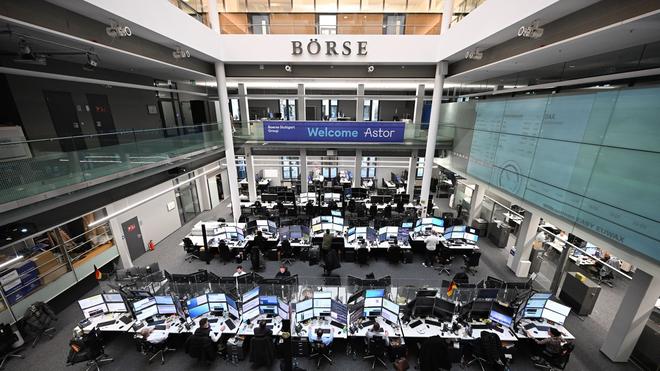
The Stuttgart Stock Exchange reported a 22% jump in structured product trading volume to €50.3 billion in 2025, confirming that this isn’t a niche problem, it’s a booming business model. While bond trading declined due to low interest rates, certificates flourished as banks sought new revenue streams from yield-hungry retirees.
The Math That Doesn’t Add Up
Critics within the financial community point out that the risk-reward profile borders on predatory. One analysis noted that selling cash-secured puts directly would generate higher returns for the same risk exposure. But EU regulations protect retail investors from “dangerous” options while allowing banks to sell them repackaged versions with opaque terms and higher fees.
The Siemens product offered roughly 3.8% annual interest, modest by any standard. Yet it carried the full downside risk of Siemens stock falling 35% or more. During the product’s lifetime, Siemens traded between €162 and €253. Had it closed below €176.26 on the valuation date, your parents would have received shares worth potentially 30-40% less than their original investment, minus the opportunity cost of missing genuine dividends.
The Discovery Dilemma
The real crisis begins when adult children discover these products. By then, several factors complicate intervention:
The relationship damage: Parents who’ve trusted their advisor for decades often react defensively. Many report hearing variations of “We’ve been with him 30 years, he wouldn’t sell us junk” or “If it’s bad, it’s your fault for not managing our finances.” The emotional investment in the advisor relationship outweighs the financial investment at risk.
The knowledge gap: Even financially literate children find these products impenetrable. The final terms document runs 0.4 MB of dense legal German, referencing formulas for “Ausgleichsbeträge” and settlement conditions that require advanced derivatives knowledge to decode.
The timing problem: Many discover these holdings when the products have nearly matured or when the redemption period has passed. The Siemens ZinsFix mentioned in recent discussions already matured in December 2025, meaning the damage, if any, is done and irreversible.
What Actually Happens at Maturity?
For the Siemens product, the outcome was benign, Siemens remained above the barrier, and investors received their principal plus coupon. This seemingly happy ending actually perpetuates the cycle. Parents tell friends, “See? It worked fine”, and advisors use these anecdotes to sell the next iteration.
But the risk remains mathematically unchanged. Each new product is a coin flip where heads means modest gains and tails means significant losses. The problem isn’t that every investor loses, it’s that the potential loss far outweighs the guaranteed gain, and the customer bears 100% of the downside while the bank captures the spread.
Practical Steps When You Discover These Products
If you find ZinsFix-Zertifikate in your parents’ portfolio, immediate action beats perfect understanding:
1. Check the maturity date: Most have fixed terms under two years. If maturity is near, let it expire and redirect funds. Early redemption often means selling at a discount on secondary markets.
2. Document everything: Request the original consultation notes and risk assessment from the bank. German law requires advisors to document suitability. If your parents were classified as “conservative” yet sold speculative products, you have grounds for complaint.
3. File a formal objection: Write to the bank’s compliance department (not the advisor) requesting review for potential mis-selling (“Anlageberatung prüfen”). Cite the complexity mismatch with your parents’ risk profile. This creates a paper trail for potential reversal or compensation.
4. Escalate to the ombudsman: The Ombudsmann der Deutschen Volksbanken und Raiffeisenbanken handles disputes. They can force mediation and occasionally product reversal if mis-selling is evident.
5. Accept some losses: If the product has years left and the underlying stock looks shaky, calculate whether selling now at a loss beats potential larger losses later. This requires professional advice, don’t wing it.
The Bigger Picture: Trust as a Liability
The Volksbanken crisis isn’t just about one product. Recent reporting shows cooperative banks facing trust erosion from scandals ranging from dubious real estate deals to questionable investment products. The very trust that made them successful now makes their customers vulnerable.
For international residents watching this unfold, the lesson is clear: in Germany, institutional trustworthiness doesn’t guarantee product suitability. Your local Sparkasse or Volksbank advisor operates under sales targets like any banker worldwide. The difference is the cultural reluctance to question authority, especially among older Germans who grew up viewing these institutions as quasi-public utilities.
Moving Forward: Hard Conversations
Addressing this with parents requires tact. Frame it not as “you were scammed” but as “the product served its purpose, and now we should explore simpler options.” Suggest a portfolio review with an independent fee-only advisor (Honorarberater) who has no products to sell.
The Stuttgart exchange’s booming certificate business proves these products won’t disappear. Banks will keep inventing new German-sounding names for old derivatives strategies. Your best defense is recognizing that complexity itself is a red flag. When a product requires six PDFs and a flowchart to understand, it’s not designed for retail investors, it’s designed to be sold to them.
The generational wealth transfer now underway in Germany will reveal thousands more cases like this. Some families will discover losses too late. Others will intervene early enough to preserve capital. The difference often comes down to one uncomfortable conversation about a product whose name you can’t pronounce but whose risks are simple enough: your parents take the hit, the bank takes the profit, and everyone hopes the stock market cooperates.