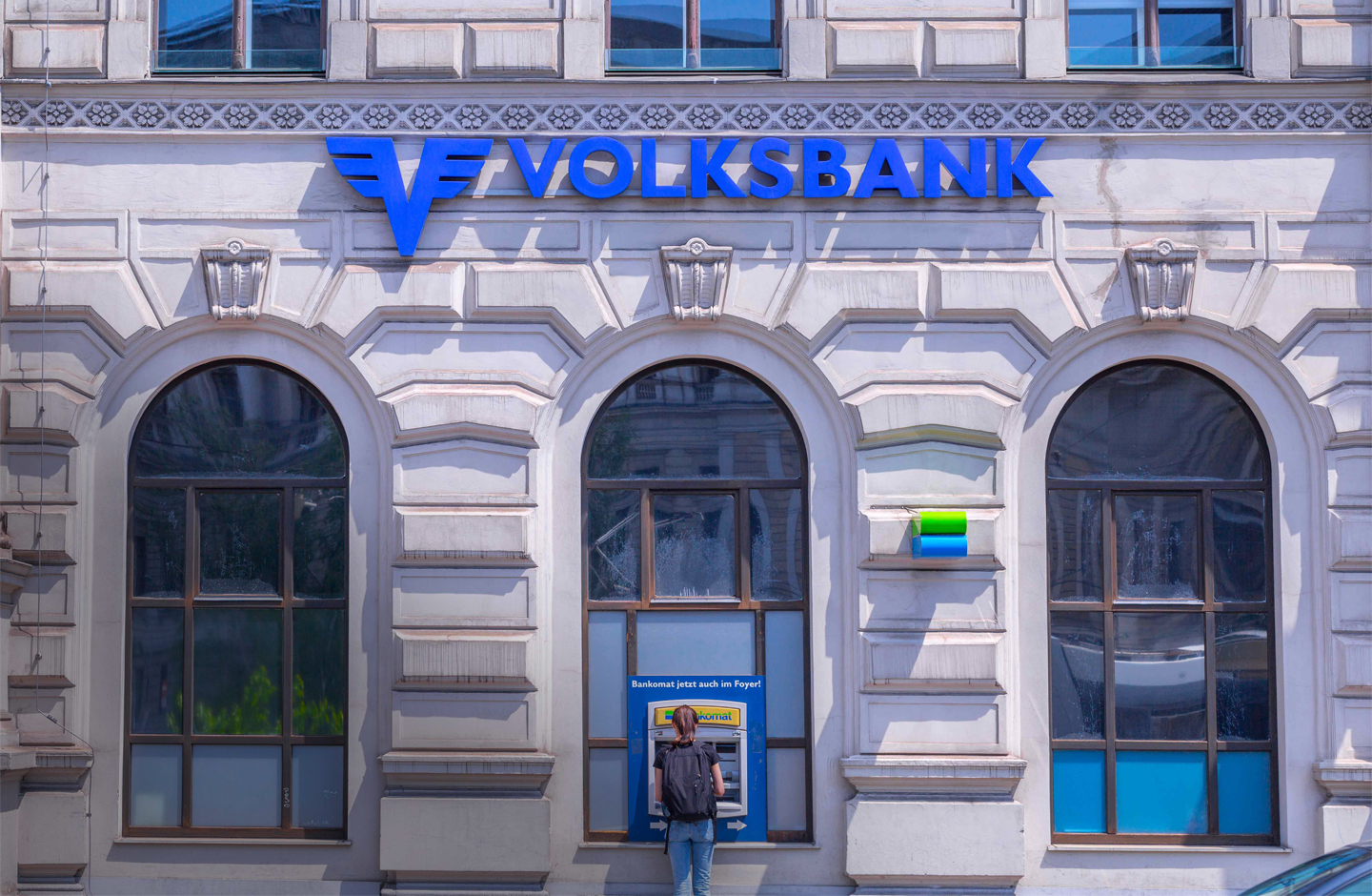
Volksbank vs. Erste Bank vs. Sparkasse: The Hidden 1.25% Interest Rate Wars for Austrian GmbHs
The advertised interest rate on most Austrian business accounts is exactly zero percent. Yet buried in online discussions, a persistent rumor refuses to die: someone, somewhere, is earning 1.25% on their GmbH’s idle cash at Volksbank while you’re getting nothing. The truth is more frustrating than fiction, Austria’s banking giants operate a two-tier system where the best rates are never advertised, only negotiated.
The 0% Illusion: What Banks Actually Advertise
Walk into any Erste Bank or Sparkasse branch and ask about interest on your GmbH-Girokonto. The answer will be uniform: 0% is standard. One business owner reported their Erste Bank advisor stating exactly this, “0% ist so”, with no room for discussion. This isn’t false advertising, it’s the published rate for standardized business accounts.
Sparkasse operates similarly across its regional networks. The Sparkasse Business Giro account offers extensive branch access, integrated payment solutions, and personal advisory services, but conspicuously omits any interest payment on credit balances. The trade-off, they argue, is service and accessibility.
Erste Bank follows the same playbook. Their business accounts come with sophisticated online banking, multi-user access controls, and dedicated relationship managers. But interest? That’s for retail customers, not businesses, or so they claim.
The Volksbank Anomaly: Where 1.25% Exists
The exception that proves the rule emerged from business owner circles: Volksbank reportedly paying approximately 1.25% on GmbH accounts. This isn’t a product you can find on their website. It’s not listed in their Preis- und Leistungsverzeichnis. It appears to be a relationship-based rate offered to established clients with significant volumes.
Multiple sources confirm a pattern: Raiffeisen banks (which include Volksbanken) will pay more than 0% “if you need the money”, as one insider phrased it. The key phrase is “geschäftsbeziehungsabhängig”, dependent on your business relationship. This means:
- Volume matters: The more money you keep and the more transactions you process, the more leverage you have
- Time is currency: A five-year relationship trumps a five-month one
- Holistic banking: Using their financing, payment processing, and investment products strengthens your position
- Individual negotiation: There’s no standard application form for better rates
The Hidden Fee Architecture
While banks compete on advertised rates (or lack thereof), they extract value through less visible channels. Understanding this fee structure is crucial for true cost comparison.
Transaction-Based Pricing
Sparkasse charges €0.22 per beleglose Buchung (paperless transaction) after exceeding your monthly allowance. For a GmbH processing 200 transactions monthly, this adds €44, equivalent to a €3,700 balance earning zero interest versus a competitor paying 1.25%.
Erste Bank’s structure is similar, with fees for SEPA transfers, cash deposits (€4 per transaction), and business card replacements. These micro-charges accumulate rapidly, often exceeding any potential interest income.
Minimum Balance Tiers
Here’s where it gets interesting. Banks implicitly tier their clients through minimum balance requirements for preferential treatment:
- Under €50,000: Standard 0% rate, maximum fees
- €50,000-€250,000: Negotiable territory, this is where the 1.25% becomes possible
- Over €250,000: You become a “KMU Premium” client with bespoke rates
The catch? These tiers aren’t published. Your bank advisor won’t mention them unless you ask directly, and know what to ask.
The Dispozins Trap
While credit interest is negotiable, debit interest (Dispozins) is punishing across all three institutions. Sparkasse charges 9.95% annually for overdrafts, Erste Bank ranges from 7.75% to 10.25% depending on creditworthiness, and Volksbank sits at 9.95%. This asymmetry, high borrowing costs, low or zero credit interest, is where traditional banks maintain profitability regardless of rate negotiations.
Why Negotiation Beats Comparison
The research reveals a critical insight: there is no best bank, only best relationships. As one banking insider explained, “You won’t find fixed conditions that are the best… they exist in individual negotiations with the bank.”
This explains why comparison websites struggle to provide accurate data. Qonto’s business account comparison shows rates and fees, but includes a disclaimer that prices are “on request” for traditional banks. The actual terms depend on:
- Your business model: A stable B2B service firm gets better rates than a seasonal tourism business
- Collateral: Property owners can leverage assets for better terms
- Cross-selling potential: Banks reward clients who consolidate insurance, investments, and financing
- Geographic concentration: Vienna-based businesses have more options than rural Tyrol operations
The Fintech Disruption (and Why It Doesn’t Matter Yet)
Neobanks like Qonto, Finom, and N26 offer transparent pricing, instant account opening, and integrated accounting tools. Their rates? Also zero percent. But they compensate with:
- No hidden transaction fees
- Free foreign currency transactions
- Real-time payment notifications
- Seamless integration with Austrian accounting software like BMD or Datev
However, they lack the relationship-based flexibility of traditional banks. You can’t negotiate a 1.25% rate with an algorithm.
Actionable Strategy: Maximizing Your Business Account Returns
For New GmbHs (Under 2 Years)
- Start with transparency: Choose a fintech for visibility into cash flow
- Build history: Process all transactions through one institution to establish volume
- Maintain minimum balances: Even €25,000 consistently held improves your negotiating position
For Established Businesses (3+ Years)
- Schedule a “Konditionsgespräch”: Don’t ask for “better interest”, request a comprehensive review of your banking relationship
- Bring competitive offers: Mention you’re considering switching to Volksbank or a fintech
- Bundled services: Offer to move your company pension plan (Pensionskasse) or insurance to their subsidiary
- Demand tiered rates: Ask explicitly for their “Staffelzinsen” for balances above €50,000
The Nuclear Option
If your current bank refuses to budge, open a secondary account at Volksbank with a nominal balance. After six months of demonstrating stable operations, request a full relationship transfer. The threat of losing a multi-year client often unlocks previously “impossible” rates.
The Verdict: Who Actually Wins?
Volksbank wins on maximum potential interest, but only for established, high-volume clients willing to negotiate aggressively.
Sparkasse wins on accessibility and integrated services for businesses needing regular cash handling and local branch support.
Erste Bank wins on digital infrastructure and international connectivity for businesses with cross-border operations.
The real winner? The bank that treats your GmbH as a partner, not a account number. And that relationship can’t be found in any comparison table, it must be built over time, with intention, and occasionally, by threatening to leave.
The 1.25% interest rate isn’t a product. It’s a signal that you’ve finally become the kind of client banks actually compete for.