You’re staring at a 2.5-million-CHF two-bedroom in Zürich’s Höngg district. The mortgage broker says you can swing it if you liquidate your ETF portfolio and raid your Pensionskasse (pension fund). Your landlord just announced another rent increase, and that 10,000 CHF you could “save” annually by owning suddenly feels like a no-brainer. But here’s what the mortgage calculator won’t tell you: that “saving” might cost you your financial flexibility for the next two decades.
This is the question that splits Swiss Personal Finance forums into warring camps. One side preaches the gospel of “VT and chill”, dump everything into a Vanguard Total World Stock ETF and forget about it. The other waves the flag of Eigenheim (home ownership) stability, pointing to low Hypothekarzinsen (mortgage interest rates) and the psychological security of owning your four walls. Both camps have solid math. Both miss crucial context.
The Zürich Price Reality Check
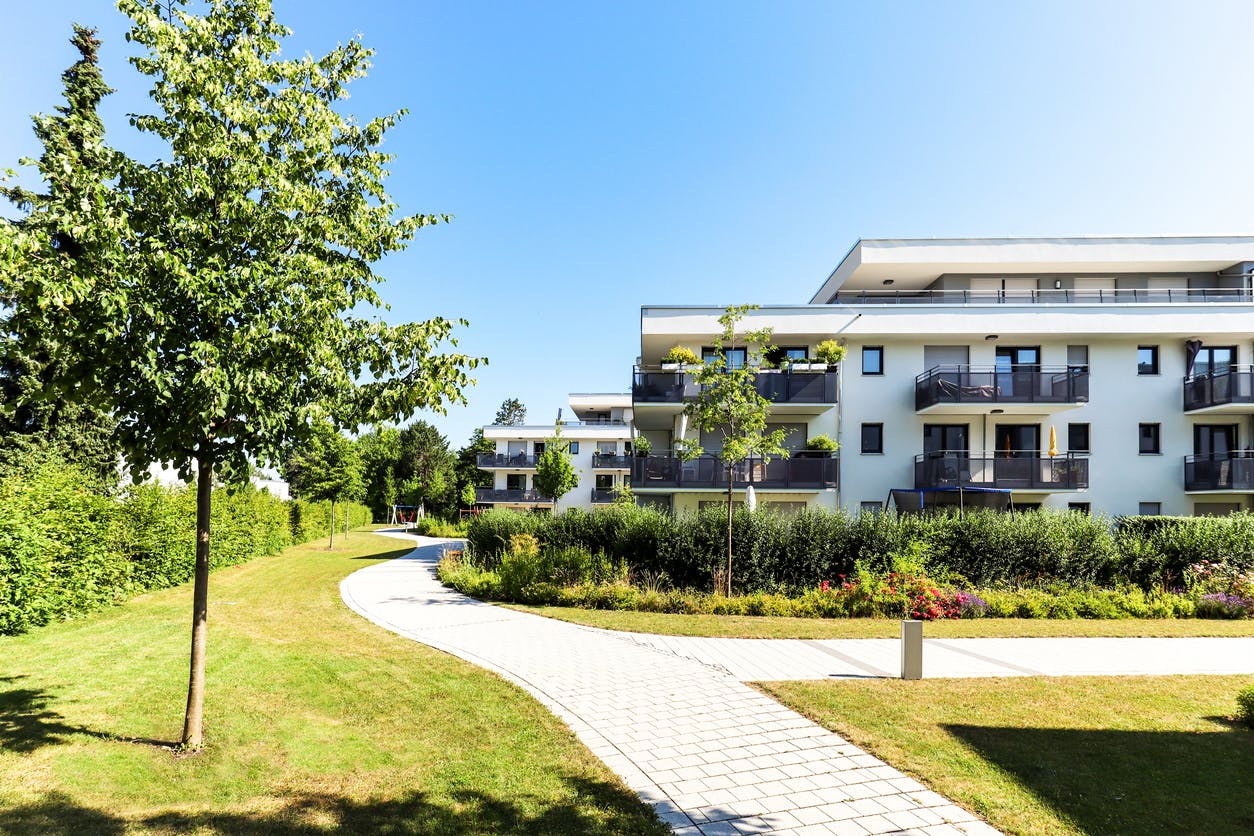
Let’s ground this in actual numbers. According to Wüest Partner’s latest data, the average transaction price for an Eigentumswohnung (condominium) in Zürich hit 22,350 CHF per square meter in Q3 2025. That’s not a typo. A modest 80 m² apartment runs you 1.8 million CHF, and that’s before you factor in Nebenkosten (ancillary costs) of 5-10% for notary, transfer tax, and bank fees.
The Reddit user eyeing Zumikon or Höngg faces a classic Zürich trade-off: Höngg keeps them close to their social circle but offers minimal tax advantage. Zumikon delivers better Steueramt (Tax Office) treatment but means recalibrating their entire life. This is the first unspoken cost of buying, you’re not just purchasing property, you’re locking in your Gemeinde (municipality) for years.
The Leverage Mirage
Real estate’s superpower is leverage. With 20% down, you’re controlling a 1.8-million-CHF asset with 360,000 CHF of your own money. If property values rise 2% annually, your equity grows by 36,000 CHF, a 10% return on your invested capital. Meanwhile, your 360,000 CHF in stocks at 7% returns yields 25,200 CHF. The math seems clear.
But leverage cuts both ways. If Zürich property prices stagnate, or worse, dip when the Eigenmietwert (imputed rental value) reforms hit in 2028, you’re still on the hook for mortgage interest, maintenance, and those unpredictable building renovations. As one commenter noted, apartment owners often face forced renovations driven by other owners, shelling out tens of thousands for staircases or facades they never asked for. You have far less control than with a single-family house.
The stock market offers a different kind of leverage: time. Your 360,000 CHF remains liquid, accessible, and compoundable. You can sell a portion for a medical emergency or job opportunity without triggering a 30,000-CHF notary bill.
The Tax Maze Nobody Talks About
The Reddit user mentions saving “some taxes” depending on whether they change Gemeinde (municipality). This is where Swiss property ownership gets interesting, and risky.
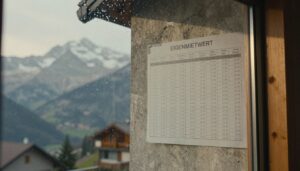
Current rules allow you to deduct mortgage interest and maintenance costs from your income, offsetting the Eigenmietwert (imputed rental value) you must declare for living in your own property. But from 2028, this system disappears. The UBS study highlighted that this change will hit older buildings particularly hard, potentially reducing their value by up to 10% relative to new builds.
If you’re buying that refurbished 1952 Höngg building, you’re purchasing a tax-advantaged asset whose advantages are scheduled for demolition. The new Zumikon project might be priced higher, but it’s future-proofed against this specific legislative risk.
The Liquidity Prison
Here’s what the “10,000 CHF saved annually” calculation omits: opportunity cost. That 360,000 CHF down payment could be:
- Growing in global equities at historical 7-8% returns
- Funding a business opportunity
- Covering living expenses if you lose your job
- Enabling a strategic move to a lower-tax canton
Once it’s in property, it’s locked. Selling takes 3-6 months and 5-7% in transaction costs. During the 2008 financial crisis, many Swiss homeowners discovered this the hard way, they had six-figure net worth on paper but couldn’t access it to cover basic expenses.
The stock market, by contrast, offers daily liquidity. As the Reddit user notes, you can “sell anytime with a fraction of the costs.” This isn’t just convenience, it’s a form of financial insurance.
The Psychology of Ownership
One commenter nailed it: “The psychology behind owning a property is very interesting. I have the feeling this changed my mind about investing drastically.” Ownership creates a bias. You stop seeing your home as an investment and start treating it as a sacred cow, even when the numbers no longer make sense.
Renters, paradoxically, often make better investors. They’re not emotionally anchored to one asset. They can dollar-cost average into markets without the stress of wondering if they should sell their roof to rebalance.
This emotional anchor has real costs. Many Swiss homeowners end up cash-poor in retirement, sitting on a multi-million-CHF property they can’t afford to maintain while living frugally on AHV/AVS (Old Age and Survivors’ Insurance) and pension payouts.
When Buying Actually Makes Sense
Despite the drawbacks, the pro-buyers on Reddit have a point. If you meet these conditions, ownership can work:
- You plan to stay 15+ years: This amortizes transaction costs and rides out market cycles
- The property is <30% of your net worth: This keeps you diversified
- You have 6 months of expenses in liquid assets AFTER the purchase: Not your 3a, not your stocks, cash
- Your mortgage payment is <33% of gross income: The bank’s Tragbarkeitsrechnung (affordability calculation) is a floor, not a target
- You’re buying for stability, not returns: The primary benefit is locking in your housing cost, not getting rich
The Reddit user considering Zumikon for tax reasons is thinking strategically. The one leaning toward Höngg for social life is prioritizing lifestyle, also valid, but a luxury purchase, not an investment.
The Stock Market Alternative
Meanwhile, Swiss equities are hitting all-time highs. Sandoz has tripled since its 2023 IPO. Real estate companies like Plazza and Investis also show strong performance, proving you can get property exposure without the lock-in.
The key is that stock market returns are only half the story. The real advantage is flexibility. You can rebalance, tax-loss harvest, and adjust your risk profile as life changes. You can’t do that with a mortgage.
The Verdict: Hybrid Approach
The smartest move might be neither all-in nor all-out. Consider this:
- Buy a smaller property than you can afford, keeping your mortgage payment at 25% of income
- Invest the difference between your old rent and new mortgage payment into a diversified portfolio
- Keep your 3a in equities, not mortgage-linked, mortgage-linked Pillar 3a and home equity trade-offs often underperform
- Maintain 3-6 months of expenses liquid before you buy
This approach gives you stability without sacrificing growth. You’re hedged against both rent increases and market volatility.
The Real Question
Stop asking “Should I buy or invest?” The better question is: “What am I optimizing for?” If it’s maximum wealth at retirement, the data favors stocks. If it’s stability and forced savings, property wins. But if you’re like most Zürich professionals, you want both, security today and options tomorrow.
That requires admitting a hard truth: the 10,000 CHF you “save” by buying is really a transfer payment from your future self to your present self. You’re prepaying decades of housing costs, hoping the appreciation outweighs the lost compound growth.
Before you sign that mortgage, run the numbers honestly. Factor in transaction costs, maintenance (1% of property value annually), lost investment returns, and the flexibility you’re sacrificing. Then ask yourself: is this home worth the price of financial handcuffs?
If the answer is yes, buy with confidence. If not, keep renting and investing. The real wealth move isn’t picking the right asset, it’s picking the right asset for your actual life, not the life your banker says you should want.
Internal SEO Links Included:
– rental property vs. stock market investment comparison
– mortgage-linked Pillar 3a and home equity trade-offs
– long-term wealth and retirement funding needs in Switzerland
– FIRE strategy conflicts with home ownership and pension constraints
– mortgage affordability and housing financial stability
– personal financial planning with savings and investment allocation