That moment your pension statement arrives should feel like progress. Instead, many Swiss residents stare at the numbers and wonder: is this it? The statement shows a projected pot of 1.2 million francs and offers a choice, take a guaranteed 4.7% annual payout starting at 64, or withdraw the capital and manage it yourself. The math seems simple. The emotional weight is anything but.
This isn’t just a spreadsheet exercise. It’s a decision that determines whether you’ll have financial flexibility in your 70s, whether your children inherit anything, and whether you’re locking yourself into a system that rewards average earners while penalizing the successful. The controversy isn’t theoretical. It’s sitting in your mailbox.
The 4.7% Mirage
The guaranteed conversion rate (Umwandlungssatz) of 4.7% at age 64 sounds like a solid deal. On a 1.2 million franc pot, that’s 56,400 francs annually for life. But here’s what the pension statement doesn’t explain: that rate only applies to the mandatory portion of your BVG (Occupational Pension Act) contributions. If you earn more than 88,320 francs annually, the BVG minimum threshold, you’ve been making extra-mandatory contributions that can legally be converted at much lower rates.
Many high earners discover this too late. Your pension fund might apply 6.8% to the mandatory portion but drop to 4.2% or lower on everything above that threshold. On a 200,000 franc salary, more than half your contributions fall into this penalized category. The blended rate you actually receive could be closer to 5.5%, still decent, but suddenly less attractive than a conservative dividend portfolio.
The historical context makes it worse. Long-term Swiss residents remember when conversion rates hovered around 7%. Those days are gone, killed by low interest rates and increasing life expectancy. Pension funds aren’t charities, they’re risk managers who’ve decided you’re living too long for their math to work.

The Inheritance Problem Nobody Talks About
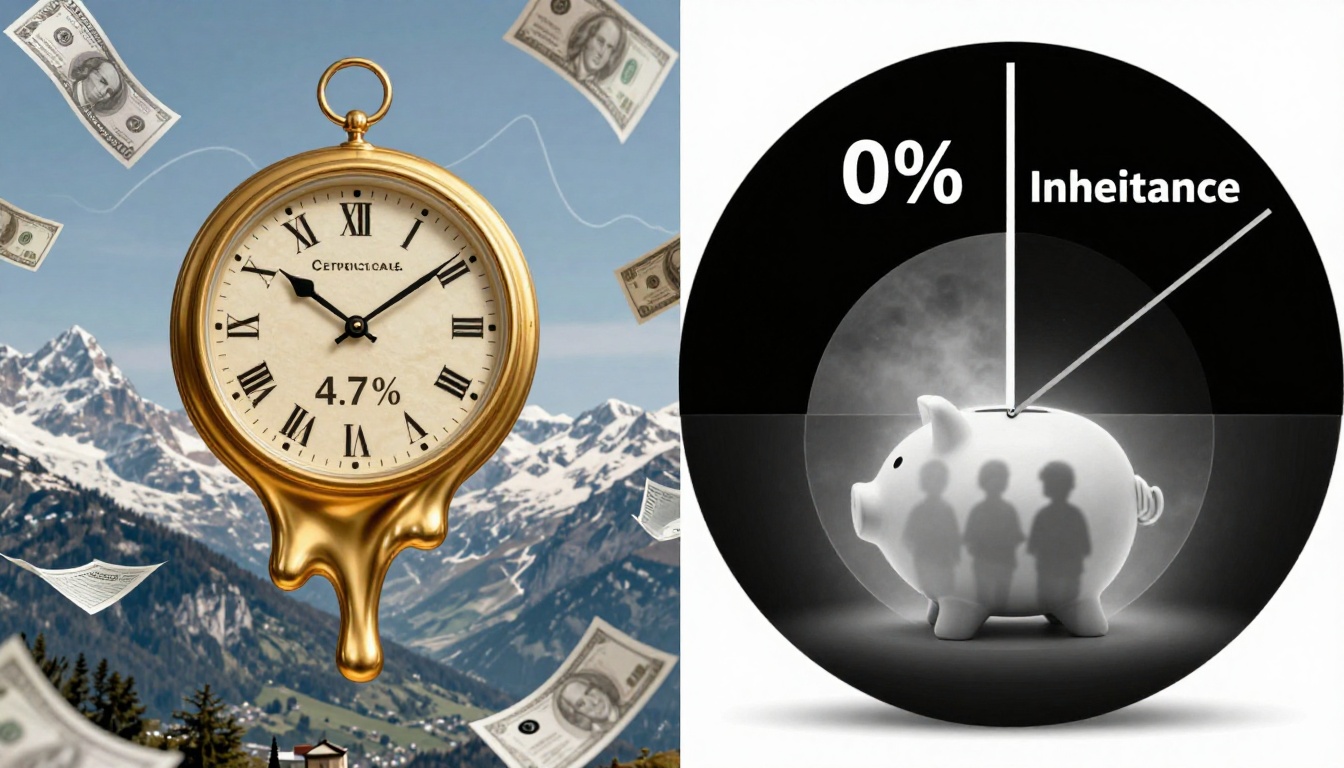
Choose the pension, and the pot vanishes. Die at 65 after taking one annual payment, and your heirs get nothing. The capital stays with the pension fund. This isn’t a bug, it’s the fundamental design of the second pillar. The system pools risk across all retirees, using the capital of those who die early to subsidize those who live past 90.
Many international residents find this culturally jarring. The expectation of passing wealth to children runs deep, especially for those from countries where family wealth accumulation spans generations. One pension holder summarized the frustration: “I can put the money in my account, which remains intact for my sons when I pass away.” The pension option offers zero legacy value.
This creates a perverse incentive. The healthier your family history and lifestyle, the longer your expected lifespan, the more attractive the pension becomes mathematically. But if you’ve built substantial assets elsewhere and want to ensure your children inherit, the pension forces you to trade guaranteed income for generational wealth transfer.
Longevity Risk: The Boogeyman That Isn’t
Pension providers hammer one message: you might live to 95. The math checks out. At 4.7% withdrawal, your capital lasts 21 years. Start at 64, and you’re broke at 85. But this argument collapses under scrutiny for anyone with diversified assets.
The Reddit discussion exposed this flaw. One commenter laid out their full financial picture: two healthy pillar 2 pensions, maxed-out Säule 3a (Third Pillar) accounts, AHV/AVS (Old Age and Survivors’ Insurance) benefits, a UK state pension, a house at 70% loan-to-value, and separate investment funds for their children. For this household, pillar 2 represents just one slice of a complex financial pie.
The famous 4% withdrawal rule from FIRE (Financial Independence, Retire Early) communities suggests a diversified portfolio can sustain withdrawals for 30+ years while preserving capital. Even ultra-conservative Swiss government bonds yielding 0.45% extend the timeline to 93.5 years old. Add Swiss dividend aristocrats like Roche, which has increased its dividend 38 consecutive years, and you have income streams that adjust for inflation.
The longevity argument only holds if pillar 2 is your primary asset. For high earners with diversified portfolios, it’s a strawman.
The High Earner Penalty
Here’s where Swiss pension math gets truly controversial. The BVG system was designed for median earners, not professionals pulling 200,000+ francs. Mandatory contributions max out, and everything beyond that enters a gray zone where pension funds can set their own, often much lower, conversion rates.
One commenter noted: “It’s still 6.8% for the mandatory part of the pension. But high earners (over roughly 100k/year) often have extra-mandatory contributions for which the conversion rate can legally be lowered. This can fuck you over a lot and make the monthly payments much less attractive for higher earners.”
Your pension statement rarely shows this breakdown clearly. You see the blended rate, not the penalized math on your extra-mandatory contributions. This opacity serves the pension funds’ interests, not yours.
If you’ve never earned above the BVG threshold and never made voluntary extra contributions, the pension option looks reasonable. But for the target audience, international professionals in Zurich, Geneva, Basel, the math tilts dramatically toward capital withdrawal.
The Tax Trap Cantons Don’t Advertise
Withdraw your pillar 2 capital as a lump sum, and you’ll face a one-time tax. Take the pension, and you’ll pay income tax on each payment. The difference between cantons is massive, some charge 2-3x more for lump sum withdrawals.
Zurich taxes lump sums aggressively. Schwyz doesn’t. This creates a planning opportunity: move your residence before retirement. But few people realize this until it’s too late. The Steueramt (Tax Office) in your Gemeinde (Municipality) won’t send you a brochure explaining how to optimize your pension withdrawal.
The pension option spreads tax liability over decades, potentially keeping you in lower brackets. The lump sum hits you once, possibly pushing you into Switzerland’s top marginal rates. However, if you’re retiring abroad to a low-tax jurisdiction, the lump sum becomes vastly more attractive. The pension locks you into Swiss tax residency for life.
Managing Your Own Money at 85
The most legitimate argument for taking the pension is cognitive decline. At 85, will you still want to rebalance your portfolio? Can you resist scammers? The pension outsources this risk to professionals.
One commenter framed it bluntly: “Imagine this: Take the lump, try to get more than 4.7% per annum, lose your lump due to inherent investment risk. You are now ~70 years old, too tired and old to work, have no money for groceries, housing or your health, and no one else than yourself to blame.”
Fair point. But this ignores modern solutions. You can structure a bond ladder that pays automatically. You can hire a fiduciary advisor paid by the hour, not by commission. You can move to a lower-cost country with robust healthcare. The “you’ll be senile and broke” argument assumes zero planning.
For couples, the risk halves. If one partner remains mentally sharp, they can manage for both. And with today’s health trends, a 70-year-old in Switzerland has the vitality of a 60-year-old from two decades ago.
What The Numbers Actually Say
Let’s run real Swiss market data. The Swiss Performance Index (SPI) delivers a dividend yield roughly 2.5 percentage points above 10-year Swiss government bonds. With bonds yielding near zero, that’s a 2.5% baseline. Add capital appreciation, and historical total returns hover around 6-7%.
Swiss dividend aristocrats tell a stronger story. Swiss Life has grown its dividend by 18.3% annually over the past decade. Partners Group by 17.3%. Even conservative Roche has increased its dividend 38 times consecutively. A portfolio of these names yields 3-4% in dividends alone, with growth on top.
The 4.7% pension payout is nominal. It doesn’t adjust for inflation. Over 30 years, even Switzerland’s modest 1% inflation erodes purchasing power by 26%. Your 56,400 francs in 2055 buys what 41,700 francs buys today. The stock portfolio, meanwhile, adjusts organically through dividend growth and capital appreciation.
The FIRE Community’s Counterargument
FIRE practitioners in Switzerland have hacked this decision. Their approach: withdraw pillar 2 capital early for home purchases or maximize 1e savings plans that offer more control. They treat pillar 2 as a tax-advantaged wealth-building tool, not a pension.
The 4% rule works specifically because it’s applied to diversified, growth-oriented portfolios. Swiss pension funds, by contrast, must invest conservatively. You aren’t.
One FIRE advocate noted: “If reducing risk is that expensive I will live with the risk. I’d rather keep it in stocks and live purely off the dividends plus state pension.” This mindset, accepting volatility for higher returns, directly contradicts the pension fund’s risk-averse model.
When The Pension Actually Makes Sense
Let’s be balanced. The pension option wins in specific scenarios:
– You’re a single earner with pillar 2 as your primary asset
– You have health issues suggesting shorter lifespan
– You lack investment knowledge and won’t hire help
– You’re retiring in a high-tax canton with no mobility
– You value sleep-over-optimization
For the median Swiss household earning 80,000 francs with modest savings, the guaranteed income provides essential security. The system’s design makes sense for its target demographic.
But that’s not who asks these questions. The person scrutinizing their pension statement, running spreadsheets, and comparing conversion rates is already financially sophisticated. They’ve likely maxed their Säule 3a, own property, and have brokerage accounts. For them, the pension is an anchor, not a lifeboat.
The Decision Framework
Run this analysis:
- Calculate your real conversion rate: Ask your pension fund to separate mandatory vs. extra-mandatory portions
- Project your total assets: Include all pillars, property, and investments
- Model tax scenarios: Compare lump sum tax in your target retirement location vs. pension income tax
- Stress test longevity: Can your total portfolio survive to 95 with 4% withdrawals?
- Assess inheritance goals: Do you need capital preservation?
- Evaluate cognitive risk: Who manages money if you can’t?
If pillar 2 represents less than 40% of your retirement assets and you answered “yes” to questions 4-6, take the lump sum. Diversify into Swiss dividend aristocrats, global index funds, and real estate. Set up automatic withdrawals and hire a fiduciary advisor at 75 if needed.
If pillar 2 is your primary asset or you have health concerns, take the pension. Sleep matters more than optimization.
The Systemic Problem
This decision shouldn’t be so binary. Switzerland’s three-pillar system works for the middle but malfunctions at the edges. High earners subsidize the system while receiving penalized returns. The financially savvy must choose between suboptimal guarantees or self-management without institutional support.
Young professionals are noticing. Swiss savings behavior is shifting, with many prioritizing liquid investments over pension contributions. Financial independence feels increasingly distant for those who followed the traditional path.
The controversy isn’t going away. As conversion rates continue dropping, more high earners will question whether the guarantee is worth the cost. Pension funds will face a crisis of confidence among their most valuable contributors.
Your pension statement isn’t just a financial document. It’s a referendum on whether Switzerland’s retirement system still serves its most productive residents. The math says it doesn’t. What will you do about it?
Action Steps:
– Request a detailed breakdown of your mandatory vs. extra-mandatory conversion rates
– Model your retirement tax scenario in your target canton and country
– Calculate what percentage pillar 2 represents of your total retirement assets
– Stress test a 4% withdrawal rate on your complete portfolio
– Decide based on your total financial picture, not the pension fund’s marketing
The guarantee is real. The cost is just higher than most realize.