
The numbers are brutal: only 21% of 18-29 year olds in Switzerland believe they’ll achieve financial self-determination. A finance student in Zurich watches half his class remain unemployed while rents climb and starting salaries stagnate. The conclusion seems obvious, traditional employment is a dead end, and entrepreneurship is the only escape hatch.
But the data tells a more complicated story. One where pessimism might be as miscalculated as blind optimism.
The Confidence Crisis Among Young Swiss
Swiss Life’s latest Selbstbestimmungsbarometer reveals a stark generational divide. While 28% of all Swiss adults trust their state, occupational, and private pensions to secure a financially independent retirement, that number plummets to 21% among 18-29 year olds. Even more concerning: a third of young adults already feel they’ve started saving too late, despite being at the very beginning of their careers.

This pessimism isn’t unfounded. Inflation and rising living costs remain the top barriers to financial self-determination, with housing and energy expenses following close behind. The sentiment on the ground reflects this, many young professionals report that even with a finance degree, breaking into the Swiss job market feels like “trying to open a bank vault with a paperclip.”
Yet here’s the contradiction: 43% of young Swiss are willing to save more for retirement, and 45% actively want more financial education. The problem isn’t apathy, it’s a system that feels designed to confuse.
The Salary Reality Check: What Actually Pays
Before abandoning the traditional career path, let’s examine the numbers. According to kununu’s 2026 salary data, Switzerland still offers substantial earning potential:
- Doctors: CHF 142,600 average (up to CHF 235,600 with experience)
- Software Architects: CHF 135,800
- Product Owners: CHF 117,100
- IT Project Managers: CHF 114,600
- SAP Consultants: CHF 113,200
Even the threshold for “happiness”, identified by Nobel laureates Kahneman and Deaton at around CHF 72,600, is achievable in numerous professions. The problem? These aren’t the jobs most finance graduates are targeting, and they’re certainly not the positions where half a class finds themselves unemployed.
The Swiss labor market has a structural mismatch. While junior financial analysts face AI-driven consolidation, IT security experts enjoy 78% salary satisfaction. The message is clear: in Switzerland, technical skills currently trump traditional finance credentials.
The Entrepreneurship Mirage
The urge to pivot toward entrepreneurship is understandable. When employment feels unstable, betting on yourself seems rational. But the statistics are sobering: the vast majority of new businesses fail, and Switzerland’s high cost structure makes bootstrapping particularly perilous.
The smarter sequence, as many experienced professionals advise, is: get your degree, secure employment, start saving, then launch your venture. This isn’t conservative thinking, it’s risk management in one of the world’s most expensive countries. A CHF 100,000 salary at a stable Swiss company provides a launchpad that CHF 0 revenue and CHF 5,000 monthly burn rate never will.
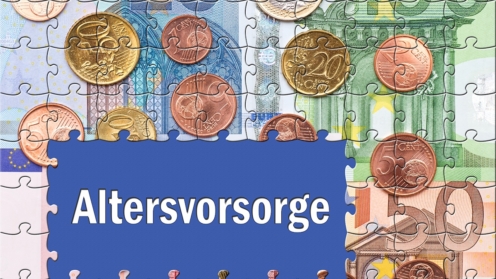
Why the Swiss Pension System Works Against You (And How to Hack It)
The real obstacle to financial independence isn’t income, it’s the complexity of the Swiss three-pillar system. Most young Swiss feel overwhelmed by the interplay between AHV/AVS (state pension), BVG/LPP (occupational pension), and Säule 3a (private pension).
Here’s the non-obvious insight: the system is actually more flexible than it appears, but this flexibility requires active management. The young generation has recognized this, with 43% willing to take responsibility. The issue is execution.
The Säule 3a Advantage: In 2025, you can contribute up to CHF 7,258 (or CHF 14,516 for self-employed) to your Säule 3a account. These contributions are tax-deductible, grow tax-free, and can be withdrawn for home ownership or retirement. For a young person in Zurich earning CHF 80,000, maximizing Säule 3a reduces taxable income to CHF 72,742, saving approximately CHF 1,500 in taxes annually while building wealth.
The BVG Gap: Your occupational pension (BVG) only covers income between CHF 25,725 and CHF 88,200. Earn above that? You’re underinsured. Earn below? You’re not covered at all. This creates a coverage gap that private insurance or investments must fill.
The FIRE Path: Financial Independence Without Waiting for Retirement
The FIRE movement (Financial Independence, Retire Early) offers an alternative framework that resonates with skeptical young Swiss. Instead of trusting the AHV to deliver decades in the future, FIRE advocates aggressive saving, often 50-70% of income, and strategic investing to achieve independence within 10-15 years.
The Swiss twist? High salaries make aggressive saving possible, but high costs make it necessary. A software architect earning CHF 135,800 who saves 50% invests CHF 67,900 annually. At a 7% return, they’d reach CHF 1 million in under 12 years, potentially achieving financial independence before 40.
The catch: this requires living on CHF 67,900 in a country where a one-bedroom in Zurich costs CHF 2,500 monthly. The math works, but the lifestyle sacrifices are real.
The Quellensteuer Trap for Expats and Young Professionals
For the 30% of young Swiss in major cities who are foreign nationals, Quellensteuer (withholding tax) adds another layer of complexity. While designed to simplify tax collection, it often results in overpayment and restricts awareness of deductible expenses like Säule 3a contributions.
Many young expats discover they’ve been paying hundreds in extra taxes annually simply because they didn’t know to declare their pension contributions. The Steueramt isn’t going to chase you down with this information, you have to know to ask.
A Practical Roadmap: From Pessimism to Independence
Achieving financial independence in Switzerland requires abandoning the traditional linear path and embracing strategic multi-threading:
Phase 1 (Ages 22-25): Skill Acquisition
– Target high-demand fields: cybersecurity, AI implementation, specialized IT consulting
– Complete your degree, but supplement with practical certifications
– Accept that your first job might be outside your “passion”, passion doesn’t pay CHF 120,000
Phase 2 (Ages 25-30): Aggressive Capital Building
– Maximize Säule 3a contributions immediately, compound interest favors the young
– Live in WG (shared apartments) even when you can afford solo housing, invest the difference
– Build an emergency fund of 6 months expenses (CHF 15,000-20,000) before any discretionary spending
Phase 3 (Ages 30-35): Leverage and Optionality
– Use your BVG pension as collateral for real estate, property remains Switzerland’s most reliable wealth builder
– Develop side income streams that could become businesses, but don’t quit your day job yet
– Negotiate remote work to escape Zurich/Basel/Geneva cost premiums while earning Swiss salaries
Phase 4 (Ages 35+): Independence or Entrepreneurship
– With CHF 500,000+ in invested assets, you can afford to take calculated risks
– Launch your venture with 12-18 months runway saved
– If it fails, your skills and savings allow re-entry to employment without catastrophic loss
The Verdict: Pipe Dream or Achievable Goal?
The 79% of young Swiss who doubt financial independence aren’t entirely wrong, they’re just measuring against the wrong timeline and using the wrong strategy. Traditional employment alone won’t deliver independence by 65, let alone 40. But dismissing employment entirely for entrepreneurship is equally misguided.
The Swiss system, for all its complexity, offers unique advantages: high salaries, stable currency, strong rule of law, and tax-advantaged retirement accounts. The path to independence isn’t about choosing between employment and entrepreneurship, it’s about using employment to fund your independence fund, then leveraging that fund to create options.
Financial independence in Switzerland isn’t a pipe dream. It’s a 15-year project requiring discipline, strategic skill acquisition, and active management of the three-pillar system. The question isn’t whether it’s achievable. It’s whether you’re willing to do what the other 79% won’t.