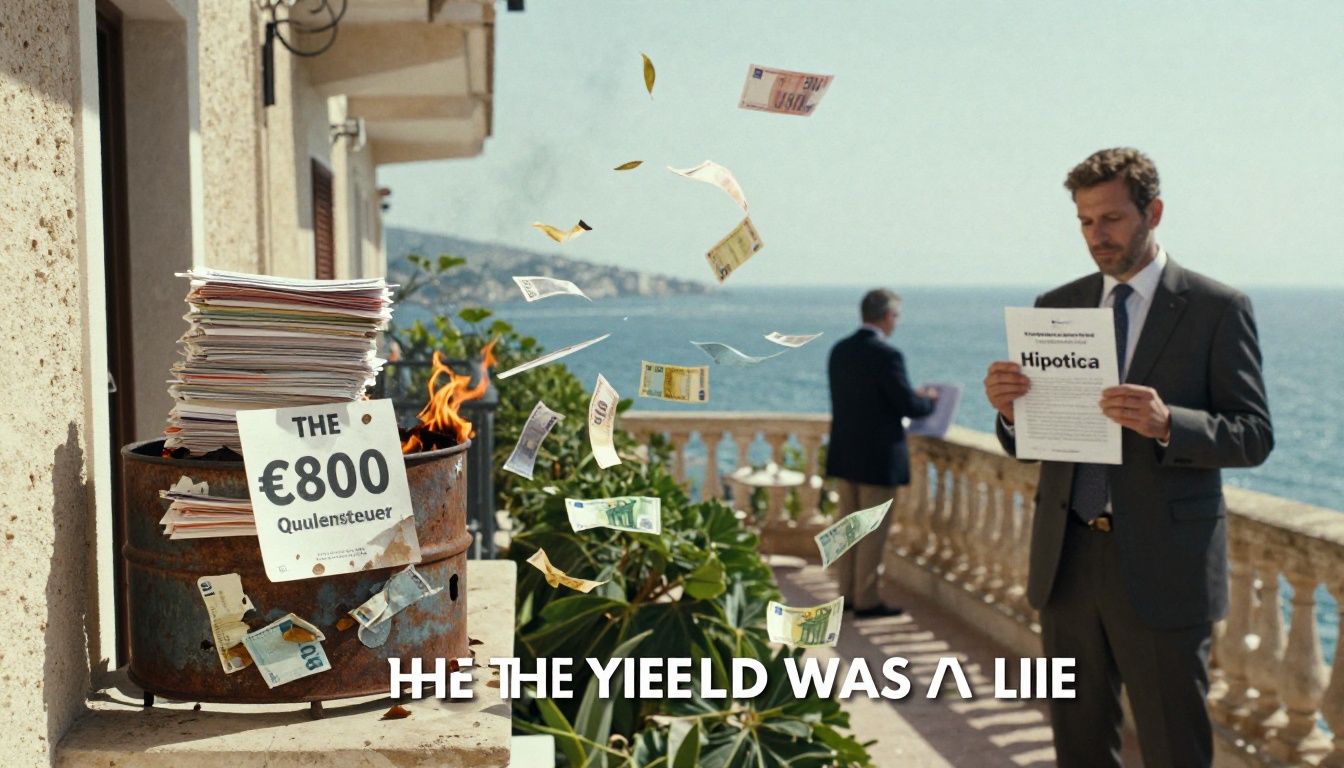
The spreadsheet says you’re a genius. A 40-square-meter apartment in Marbella for €185,000, renting at €800 monthly, that’s a gross yield of 5.2%, nearly double what you’d squeeze from a comparable property in Zurich’s outer districts. The Swiss franc sits strong against the euro, your income in Bern feels like monopoly money in Spain, and that humidity problem? A minor renovation, surely. This is how wealth is built, you tell yourself, staring at your calculator.
Then reality arrives, wearing Spanish bureaucracy like a weapon.
A Swiss resident recently posted their exact scenario on a finance forum, and the responses read less like investment advice and more like a survival guide. The numbers work, until they don’t. The hidden costs don’t just nibble at your returns, they devour them. That €800 monthly rent? It needs to cover not just your mortgage, but a legal system that treats foreign landlords as piñatas, renovation costs that multiply like rabbits, and Swiss tax authorities who will suddenly want to know everything about your Spanish adventure.
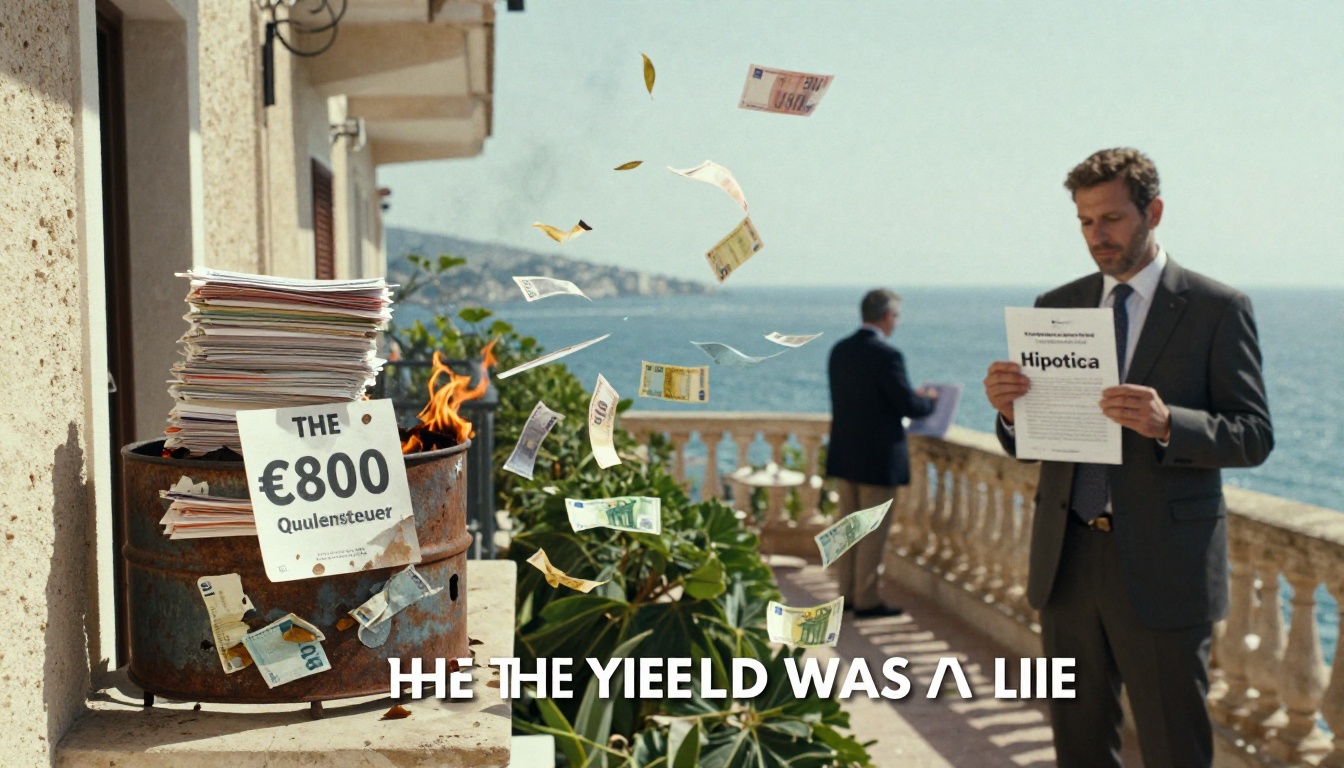
The Mortgage Currency Trap: CHF Strength Is Your Enemy
You earn in Swiss francs. The property generates euros. This feels like arbitrage heaven, until you model the actual risk. One commenter pointed out what your bank won’t: EUR financing is far more tax-efficient for a Swiss resident. Why? Because your interest payments offset rental income in the same currency, simplifying both Spanish and Swiss tax declarations.
The original poster received five mortgage offers, including a CHF-denominated loan at SARON +2.10%. The spread looks tempting, but you’re introducing massive foreign exchange risk. If the EUR weakens against CHF, your asset value in CHF terms drops while your debt remains stable. You’re effectively short the euro on a leveraged position. Swiss banks love this, they collect fees while you absorb currency volatility.
Many Swiss investors discover this lesson painfully: that “cheap” Spanish property becomes expensive when your CHF mortgage payment stays constant but your EUR rental income converts to fewer francs. The 60% LTV option requiring €100k upfront might feel conservative, but it locks more capital in a currency mismatch.
The 10-15% Purchase Cost Black Hole
Your €185,000 budget is a fantasy. Spanish property purchases devour an additional 10-13% in Nebenkosten (additional costs) that Swiss buyers rarely anticipate.
- Grunderwerbsteuer (property transfer tax): 7% in Andalusia on resale properties
- Notar and registry fees: 1-2%
- Legal fees: Your Abogado (lawyer) charges 1% for due diligence, non-negotiable if you value your sanity
- Makler (real estate agent): Often baked into price, but sometimes an extra 3% surprise
Suddenly you’re financing €203,500, not €185,000. That 5.2% yield? Now it’s 4.7% before renovation. And we haven’t even discussed the humidity issue.
The Renovation Rabbit Hole: Spanish Humidity Isn’t Swiss Feuchtigkeit
That “needs some renovation” clause in the listing is Spanish for “prepare for structural surprises.” The property has humidity problems, problemas de humedad, which in Marbella’s coastal climate usually means one of three expensive scenarios:
- Rising damp from inadequate foundation sealing: €15,000-25,000
- Plumbing leaks behind Mediterranean-style tile work: €8,000-12,000
- Ventilation failure in a 40m² box designed before modern standards: €5,000-8,000
Spanish construction from the 1980s-2000s often used materials that baffle Swiss engineers. Hollow bricks, minimal insulation, and electrical systems that would make a Zürich inspector weep. The humidity is likely symptomatic of deeper issues, perhaps illegal extensions (infracción urbanística) that the seller “forgot” to mention.
One Spanish legal guide emphasizes: “Unterschreiben Sie niemals einen Arras-Vertrag und zahlen Sie keinen Cent an, bevor Ihr Anwalt nicht ‘Grünes Licht’ gegeben hat.” (Never sign an Arras contract or pay a cent before your lawyer gives the green light.) The Arras is a binding preliminary contract where you typically forfeit your 10% deposit if you back out, even if you discover the apartment is structurally unsound.

The Okupa Nightmare: When Your Tenant Becomes Your Landlord
Here’s where Spanish law transforms from quirky to terrifying. Okupas, squatters, can seize your property and gain legal protection. The Spanish eviction process moves at the speed of a sloth on sedatives, often taking 18-24 months to remove non-paying tenants. During this period, you pay the mortgage, the Gemeinde (municipality) taxes, and legal fees while generating zero income.
Spanish landlords have adapted by demanding extreme security deposits: 6-12 months’ rent upfront from foreigners without local credit history. This is completely legal and standard practice. Your €800/month tenant must cough up €4,800-9,600 just to move in. Good luck finding such a tenant remotely from Bern.
Seasonal contracts (Alquiler de temporada) offer an escape hatch, 11-month leases that avoid Spain’s draconian tenant protection laws. But these require constant tenant turnover, meaning more vacancy periods and management headaches. Managing this from Zurich means either flying down quarterly or paying a local agent 8-12% of gross rent.
The Swiss Tax Trap: Permit B to Permit C Transition
Here’s the detail that should freeze your blood: Your rental income is taxable in Switzerland, even if Spain taxes it first. As a Permit B holder under Quellensteuer (source tax), you’ve never filed a Steuererklärung (tax declaration). That changes the moment you own foreign property generating income.
The Spanish tax office will take 19% of your rental profit (after deductible expenses). The Swiss tax authorities will then add this income to your global earnings to determine your tax rate, though you’ll receive a credit for the Spanish tax paid. The process is complex enough that most investors need a Steuerberater (tax advisor) familiar with Doppelbesteuerungsabkommen (double taxation agreements).
The real kicker? When you eventually upgrade to Permit C, you’ll need to file retroactive tax declarations. That €800/month you’ve been collecting? The Steueramt (Tax Office) will want to know about every cent, potentially with interest and penalties if you haven’t declared it properly from day one.
Infrastructure Gamble: Marbella’s €5 Million Warning
The Marbella municipality just completed a €5 million infrastructure renovation in Costabella, replacing septic tanks and fibrocement pipes that served 350 homes. This is excellent news, unless your property was one of the ones paying for it through special assessments.
Spanish property ownership includes community fees that can spike unpredictably when the Gemeinde (municipality) or Comunidad de Propietarios (homeowners’ association) votes for major works. A €2,000-5,000 special assessment can arrive with no warning, immediately wiping out a year’s rental profit.
On the flip side, the recently approved Four Seasons hotel project signals institutional confidence in Marbella’s luxury market. Major hospitality brands don’t invest nine million euros without data supporting future appreciation. This could boost your property value, if you’re still solvent when the gains materialize.
The Remote Management Fantasy vs. Reality
The original poster plans to manage the property while living in Switzerland, potentially moving to Spain in 5-10 years. This is the most dangerous assumption in the entire plan.
Spanish property management requires:
– Physical key handovers (smart locks are rare)
– Utility contracts in Spanish names with local bank accounts
– Tax filings (Modelo 210) quarterly for non-residents
– Community meetings that happen in person, in Spanish, on Tuesday afternoons
One experienced investor summarized it bluntly: “Managing a condo is work. Managing it remote is a lot of work. Why not just invest and buy in 10 years when you’re actually there?”
The opportunity cost is staggering. That €100k down payment, invested in a simple Swiss index fund at 6% annual return, grows to €179,000 in ten years. Your Spanish property needs to appreciate 79% just to match passive investing, and that’s before subtracting renovation disasters, tenant evictions, and transcontinental flights.
The Verdict: When Does This Actually Work?
Spanish property investment succeeds under specific conditions:
1. You live there and can manage problems personally
2. You’re buying luxury (€500k+) where yields are lower but appreciation potential justifies the hassle
3. You have trusted local partners, not just a Makler, but a lawyer, tax advisor, and property manager
4. You’re prepared to lose money for 3-5 years while the market digests your renovation
For our Swiss resident with the €185k Marbella apartment, the math is brutal. After purchase costs (€18,500), renovation (€15,000), and a 6-month deposit (€4,800), the initial investment balloons to €223,300. At €800/month with 20% vacancy and 10% management fees, net yield drops to 3.4%, barely above Swiss government bonds without the currency risk.
The property might work as a lifestyle purchase for future retirement, but as a pure investment? You’re betting that Spanish coastal appreciation outpaces Swiss market returns while absorbing risks that don’t exist in your home market. That’s not investing, that’s speculation with extra steps.
Before you wire that deposit, ask yourself: Is this property the best use of your capital, or just the most exciting story at your next dinner party in Bern? The Swiss banking system operates with the same reliability as an SBB train, usually impeccable, until construction slows the line. Spanish property investment is all construction, all the time.
Next Steps If You’re Still Determined:
- Engage a Spanish tax advisor before signing anything, not after
- Budget 15% purchase costs, not 10%
- Get three renovation quotes from local contractors (not the Makler’s brother-in-law)
- Open a Spanish bank account and secure a local lawyer before the Arras
- Model your returns assuming 30% vacancy in year one, anything better is a bonus
Or, you know, just buy more Säule 3a (Third Pillar) and enjoy your weekends without translating Spanish legal notices. Sometimes the best investment is the one that lets you sleep at night.