The Swiss people have spoken, and the verdict is clear: the Individualbesteuerung (Individual Taxation) will become law. But don’t rush to overhaul your household spreadsheet just yet. The new rule, set to fundamentally reshape family finances, won’t take force until 2032 at the latest. This six-year runway offers a crucial window for planning, or, for some, a period of barely constrained frustration at Swiss bureaucracy.
The referendum result promises to decouple tax burdens from marital status. The so-called Heiratsstrafe (marriage penalty), where two-earner married couples often paid more tax than an unmarried couple with the same income, will be consigned to history. However, a startling delay until 2032 and a looming political counter-proposal have left many families wondering what this actually means for their bottom line today, tomorrow, and in seven years.
The Core Change: From “We” to “Me” by 2032
At its heart, the reform is brutally simple yet administratively complex. Currently, married couples and those in registered partnerships submit a single, joint Steuererklärung (tax return). Their incomes are combined and taxed under a special “married couple” tariff, which, due to progressive tax rates, can push them into a higher bracket than they would occupy separately.
From 2032 onwards, this ends. Every adult will file their own tax return, regardless of marital status. Your income, your deductions, your tax bill. This principle applies to federal taxes and will be forced upon all 26 cantons. Bundesrätin (Federal Councillor) Karin Keller-Sutter confirmed the 2032 deadline, stating the cantons need a transition period to adapt their laws, tax tariffs, and IT systems. Critics point out this is a generous timeframe for a change voters have just demanded.
For anyone understanding the marriage tax penalty impact, this is the final chapter. The system that perversely incentivized some high-earning couples to stay unmarried (or even divorce on paper) for tax efficiency is being dismantled.
Winners, Losers, and the Real-World Math
The narrative from proponents was one of equality and fairness. The reality is more nuanced: this is a significant redistribution of the tax burden between different household models.

The “Winners”: Dual-Earner Couples with Similar Incomes
Think of two professionals each earning between CHF 80,000 and CHF 120,000. Under the current system, their combined income is taxed at a higher marginal rate. After 2032, each income is taxed separately at a lower progressive rate. The federal government estimates these households will see their direct federal tax burden drop by an average of over 4%. For a high-earning dual-professional household, the annual savings could run into several thousand francs.
The “Losers”: Single-Earner Households & High-Income Singles
The flip side of the coin is less cheerful. The elimination of the special married-couple tariff means single-earner families, where one partner works and the other provides care, will likely face a higher tax bill. The same applies to high-income singles who will face adjusted, slightly higher tax rates designed to compensate for the overall revenue shortfall. As one opposition politician starkly put it, this creates a “neue Familienstrafe [new family penalty].”
The math, as illustrated by advisory services like the Thurgauer Kantonalbank, is clear: a couple with a 60/40 income split saves money, a classic “male breadwinner” model with a 100/0 split pays more.
The 2032 Delay: Swiss Bureaucracy or Strategic Breathing Room?
Why 2032? The official line from the Bundesrat (Federal Council) is the immense administrative lift required. Cantons must rewrite cantonal tax laws, recalibrate thousands of municipal tax tariffs, and overhaul IT systems that currently assume joint filing. Markus Dieth, President of the Conference of Cantonal Governments, called the implementation “challenging”, estimating it would create 1.7 million additional tax dossiers nationwide.
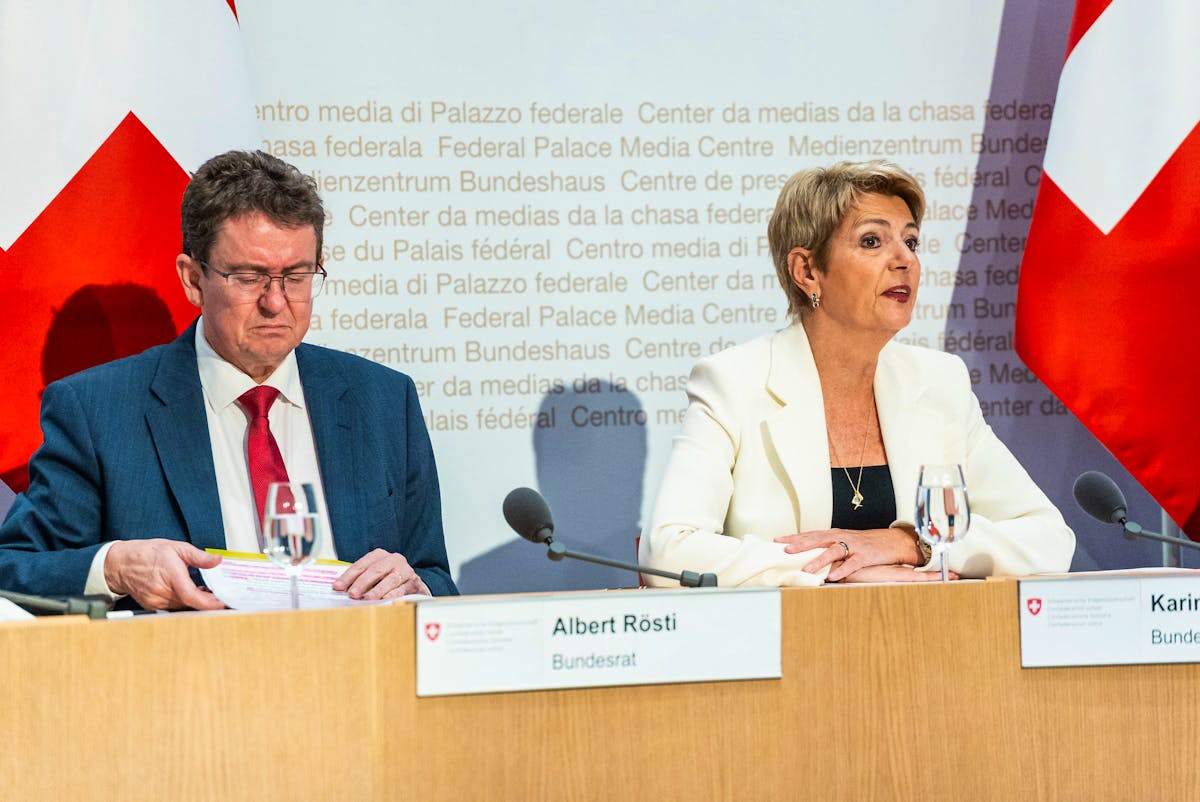
But the delay also creates a political buffer. The centre-right Mitte party, which fiercely opposed the individual taxation model, is pushing ahead with its own “Fairness Initiative.” This alternative proposal would keep joint taxation but technically eliminate the penalty through other means. Finance Minister Keller-Sutter called this simultaneous pursuit “problematic”, as the two proposals are diametrically opposed. The next few years will see a tug-of-war over the final shape of the law.
Practical Implications Beyond the Tax Return
The shift from “our money” to “my money and your money” on paper triggers a cascade of financial adjustments.
- Wealth Division: Joint bank accounts and investments will be split 50/50 for tax purposes. Property ownership, as recorded in the Grundbuch (land register), will dictate who declares what. Clear records are now an urgent priority.
- Deduction Strategy: Certain deductions, like large medical expenses or professional costs, can be optimised by allocating them to the higher-earning spouse’s return. Child deductions will double to CHF 12,000 federally but must be split equally between parents’ declarations.
- Pillar 3a Reassessment: This is a sleeper hit. Contributions to your Säule 3a (Third Pillar) pension are tax-deductible. Currently, a non-working or low-earning spouse can still benefit from the deduction through the joint return. After 2032, if your income is too low to owe federal tax, making a 3a contribution becomes financially pointless—you get no tax break now but pay full tax on withdrawal later. This forces a fundamental rethink of household retirement planning and tax-efficiency strategies for pension contributions.
What You Should Do Between Now and 2032
You have six years. Use them wisely.
- Run the Numbers: Don’t guess. Use official calculators or consult a Steuerberater (tax advisor) to model your 2032 position based on projected incomes.
- Restructure Assets: Consider titling assets to balance wealth between spouses. This optimises capital and wealth tax liabilities at the cantonal level.
- Review Employment: For some couples, it may make financial sense for the lower-earning partner to increase their work percentage post-2032, as their additional income will be taxed at their lower, personal rate.
- Plan Vorsorge (Pension): Re-evaluate your 3a strategy. A low-earning partner might be better served by non-deductible, taxable investments.
- Stay Informed: Watch how your Kanton (canton) implements the law. Cantonal and municipal taxes make up the bulk of your bill, and their adjustments could amplify or dampen the federal impact.
The Swiss vote has set a direction, but the destination is still being mapped out. The long runway to 2032 isn’t just administrative—it’s your opportunity to ensure your family finances are ready for a new era where the tax system finally sees you as individuals, not just as half of a couple.