The question lands in Swiss finance forums with the quiet panic of someone staring at a positive pregnancy test while checking their e-banking app. 300,000 francs per child, that’s the number UBS throws around when calculating the cost of raising a kid in Switzerland. But that figure feels about as precise as a weather forecast in the Alps: technically correct, yet missing the localized storm about to hit your personal budget.
Before we dive into spreadsheets and Steuererklärungen (tax declarations), let’s address the elephant in the room. Many international residents in Switzerland discover that their carefully constructed financial plans dissolve the moment they need a Krippe (nursery) spot in Zurich or Geneva. The system operates with the same reliability as an SBB train, usually impeccable, until construction work forces a complete route change.
The 300,000 Franc Question: What UBS Actually Measured
The oft-cited UBS study calculates child-rearing costs from birth through vocational training or university, landing at roughly 300,000 CHF per child. But here’s what the headline doesn’t tell you: that number assumes average Swiss family spending patterns and excludes the single largest expense for working parents, full-time childcare.
One Zurich parent reported spending 60,000 CHF in Kita (daycare) fees before their child turned four. That’s 20% of the total UBS estimate consumed in just the first four years. If you’re budgeting based on that 300k figure, you’re already operating with a dangerous blind spot.
The study covers food, clothing, education, and basic healthcare (through your Krankenkasse, or health insurance), but childcare costs vary so wildly by canton and municipality that they’re nearly impossible to standardize. In Geneva, you might pay 130 CHF per day for a private Krippe. In more affordable cantons, Gemeinde (municipality)-subsidized spots can drop to 60 CHF daily. The difference isn’t pocket change, it’s over 18,000 CHF annually per child.
The Kita Trap: Where Swiss Family Budgets Go to Die
Swiss childcare operates on a principle best described as “pay until it hurts, then pay some more.” Most Kitas charge on a sliding scale based on household income, which sounds equitable until you realize your combined 150,000 CHF salary puts you in the “wealthy enough to suffer” category.
A typical two-income couple in Basel might face this reality:
- Kita costs: 1,800-2,400 CHF monthly per child
- Reduced working hours: One parent drops to 80% to manage pickup times
- Opportunity cost: 20% salary reduction plus slowed career progression
The math becomes brutal. That “reduced working hours” decision costs far more than the direct Kita fees when you factor in lifetime earnings, BVG/LPP (Occupational Pension Plan) contributions, and AHV/AVS (Old Age and Survivors’ Insurance) gaps. Many parents calculate their effective hourly rate after childcare costs and discover they’re working for less than minimum wage.
This is where the comprehensive breakdown of multi-child household costs versus major expenses becomes essential reading. The article reveals how three children can easily cost more than your mortgage, yes, even in Switzerland’s inflated housing market.
The Seven-Person Family That Defied the Odds
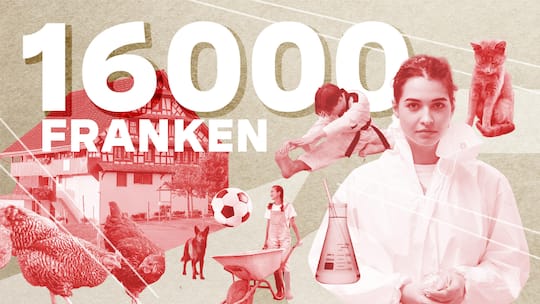
The Beobachter recently profiled a seven-person family with five children who managed to save 500,000 CHF despite the odds. Their secret wasn’t a lottery win or crypto gains, it was systematic frugality that would make a Steueramt (Tax Office) auditor weep with joy.
Marie Ott, a chemist, and her husband, a former pâtissier turned buyer, live in a large house with seven rooms. Their disciplined approach reveals the other side of Swiss family finance: control what you can, because the system will take the rest.
Their strategy included:
- Avoiding branded baby gear (babies don’t care about labels)
- Packed lunches instead of cafeteria meals
- Shared bedrooms and second-hand furniture
- One parent maintaining full-time employment with strategic career moves
The key insight? They treated children as a financial variable they could optimize, not an uncontrollable budget disaster. This aligns with the affordability analysis for single-income couples wanting children in Switzerland, which shows that success depends more on systematic budgeting than on raw income.
Tax Traps and the Marriage Penalty
Here’s where Swiss bureaucracy adds insult to financial injury. The tax implications for Swiss couples considering long-term family finances can be devastating. A progressive tax system designed for single earners punishes dual-income families precisely when they need relief most.
Consider a couple earning 80,000 CHF each in Zurich:
- Married filing jointly: Higher tax bracket, fewer deductions
- Unmarried with children: Lower brackets, more individual allowances
- Lifetime difference: Potentially 1 million CHF over a career
The Quellensteuer (source tax) system for foreigners adds another layer of complexity. Your tax at source might not account for child deductions properly, requiring a subsequent Steuererklärung (tax declaration) to claim refunds, if you remember to file. Many expats leave thousands on the table simply because they don’t understand the system.
The Hidden Costs Nobody Budgets For
Beyond Kita and taxes lie the expenses that derail even meticulous planners:
Healthcare Surprises: Krankenkasse covers basics, but not everything. Orthodontics run 5,000-8,000 CHF. Specialized therapies for developmental issues can cost hundreds monthly. One parent of a child with special needs noted they couldn’t use Hort (after-school care) or Krippe because no facility would accept their child, forcing them into a stay-at-home role they hadn’t planned for.
Geographic Arbitrage: Living in a cheaper canton might save on rent but cost more in commuting. That 200 CHF monthly savings on housing evaporates with two 100 CHF GA (Swiss public transport pass) tickets for teenagers.
Educational Enrichment: Swiss public schools are excellent but bare-bones. Private tutoring, music lessons, or sports clubs add 200-500 CHF monthly per child. The “free” education system becomes expensive if you want your child competitive for Gymnasium (academic high school) or university.
Housing Upgrades: That 3.5-room apartment works until your second child arrives. Moving to a 4.5-room in Zurich means an extra 800-1,200 CHF monthly, permanently.
The Opportunity Cost Calculus
Every franc spent on children is a franc not invested in your Säule 3a (Third Pillar) pension, not compounding in ETFs, not paying down your Hypothek (mortgage). The real cost isn’t just 300,000 CHF, it’s 300,000 CHF plus lost investment returns over 20 years.
At a conservative 5% annual return, that 300,000 CHF could become 800,000 CHF by retirement. Having two children doesn’t cost 600,000 CHF, it costs over 1.6 million in foregone wealth.
This is the calculation that makes young professionals hesitate. It’s also why the parental financial education and long-term investment in children conversation matters. Teaching children financial literacy becomes less about pocket money and more about justifying a million-fr opportunity cost.
Survival Strategies: Making the Math Work
Despite the grim numbers, Swiss families do thrive. The key is treating family finance like a business:
1. Budget Aggressively
Use tools like BudgetHub to track every franc. The app helps separate Fixkosten (fixed costs) from variable family spending, making the pain visible but manageable.
2. Optimize Childcare Timing
Some parents stagger parental leave to delay Kita costs. Others negotiate remote work to reduce Kita hours from 100% to 60%, cutting fees by 40%.
3. Exploit Cantonal Differences
Move before kindergarten. The difference between Zurich and Aargau Kita costs can fund your Säule 3a contributions.
4. Leverage Grandparents
If you’re among the lucky few with retired parents nearby, unpaid family childcare saves 20,000+ CHF annually. Just remember to factor in the social costs of imposing on family.
5. Tax Optimization
File that Steuererklärung. Claim every child deduction, including commuter costs, lunch expenses, and special needs allowances. The difference can be 3,000-5,000 CHF annually.
The Verdict: Financial Suicide or Strategic Investment?
Calling children “financial suicide” is clickbait, but the underlying anxiety is real. The Swiss system doesn’t support families, it tolerates them. You’re expected to fund your own Kita costs, navigate punitive tax brackets, and somehow still save for retirement while paying the highest prices in Europe for basic necessities.
Yet families persist because the calculation isn’t purely financial. The Beobachter family’s 500,000 CHF in savings didn’t happen despite having five children, it happened because they built a system that accounted for child costs from day one. They understood that in Switzerland, parenting is an extreme sport requiring financial discipline most people reserve for mortgage applications.
The uncomfortable truth? If you’re asking whether you can afford children, you’re asking the wrong question. The right question is: Can you afford to live in Switzerland without a financial system robust enough to handle children? Because once that system is in place, the incremental cost of a child becomes manageable. Without it, even a single kid feels like financial Armageddon.
For those still on the fence, the affordability analysis for single-income couples wanting children in Switzerland offers concrete scenarios. The takeaway isn’t pessimistic, it’s realistic. Swiss family life demands more planning than a corporate merger and more flexibility than a yoga instructor.
Your move. Just don’t say nobody warned you about the Kita bill.
Actionable Takeaways:
- Budget 400,000 CHF per child, not 300,000, to account for childcare and opportunity costs
- Research Kita fees in your specific Gemeinde before making any life decisions
- File a Steuererklärung even if you’re on Quellensteuer to claim child deductions
- Use budgeting apps designed for Swiss families to track the mental load, not just the money
- Consider the lifetime earnings impact of reduced working hours, not just immediate childcare costs