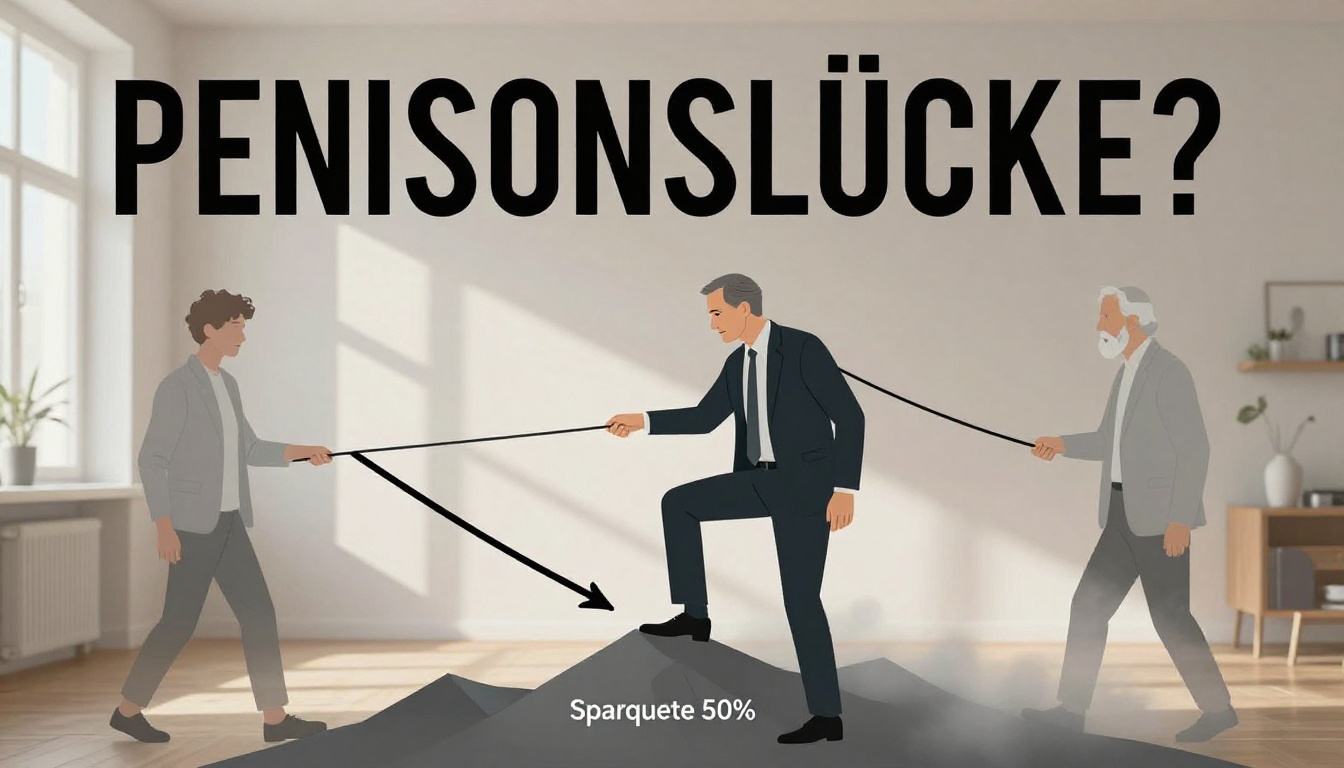
Austria’s most disciplined savers are asking an uncomfortable question: If you can comfortably live on half your income today, why sacrifice your present life to fund a future you might not want? The logic seems bulletproof. Austrian pension replacement rates hover around 80% of pre-retirement earnings for average workers, but high earners face a brutal reality, sometimes less than 50%. If you’re already adapted to that level of spending, the conventional wisdom about “closing the pension gap” feels like financial gaslighting.
But this line of reasoning contains a dangerous assumption: that your future self will be satisfied with your current lifestyle. And in Austria’s rapidly evolving economic landscape, that assumption could cost you more than just money.
The Math That Fools Smart Investors
The Reddit thread that sparked this debate featured an investor with a 50% savings rate who argued: “If I can live on half my income now, why worry if my pension halves later?” This sounds rational until you factor in Austria’s hidden wealth taxes on retirees. A paid-off Wohnung (apartment) at 50 means you’re sitting on an asset that’s appreciating, but your fixed income faces rising Betriebskosten (operating costs), higher health insurance contributions after retirement, and the stealth tax of inflation that hits seniors disproportionately.
Nationalbank-Governor Martin Kocher recently noted that Austrian savings rates are “much, much higher than normal” due to inflation anxiety. But this defensive posture creates its own risk: the opportunity cost of cash savings versus investing has rarely been steeper. While you’re stuffing money into a Tagesgeld (savings account) earning 3% interest, you’re losing ground to the 4-5% real inflation that hits healthcare, housing, and services that dominate retiree budgets.
Lifestyle Inflation Works in Reverse
Here’s what the 50% saver gets wrong: Hedonic adaptation cuts both ways. You might be content with rice and beans at 35, but at 65, after decades of building wealth, stepping back down feels like poverty, not prudence. Austrian retirees report that the psychological impact of income reduction hits harder than expected, even when the numbers work on paper.
The Teilpension (partial pension) system introduced in 2026 illustrates this perfectly. A worker reducing hours by 50% might maintain 88% of their previous net income through clever combination of salary and pension benefits. But the mental shift from full earning power to fixed income creates anxiety that transcends spreadsheets. Many find they can’t actually enjoy the reduced income despite the math checking out.
The Austrian-Specific Traps
Austria’s social insurance system punishes high savers in ways that make the 50% strategy particularly risky. The silent pay cut from rising SV-Beiträge (social insurance contributions) means your effective savings rate might already be 5-7% lower than you think. And if you plan to retire before the official pension age, you’ll face massive penalties, up to 4.2% reduction per early year.
The new Betriebsrentenstärkungsgesetz (company pension strengthening law) offers up to €360 annually for low-income workers, but does little for high earners who’ve already maxed out their benefits. This creates a perverse incentive: those who save aggressively get minimal state support, while those who save nothing receive targeted subsidies.

When Over-Saving Becomes Dangerous
The 50% savings advocate is making a bet that their life won’t change. But Austrian data shows retiree expenses often spike due to:
- Healthcare costs not covered by ÖGK (Austrian Health Insurance)
- Home modifications for aging in place
- Family support for adult children facing Vienna’s impossible housing market
- Long-term care that can exceed €4,000 monthly
By over-saving, you’re not just deferring gratification, you’re eliminating optionality. That money locked in ETFs can’t help you upgrade your Wohnung when the Altbau (old building) stairs become unmanageable at 70. It can’t fund the spontaneous trip to see grandchildren in another Bundesland (federal state).
The Middle Path for Austrian Savers
Instead of blindly targeting 50%, calculate your actual Pensionslücke using the Finanzamt’s (Tax Office) official pension projection, then add 30% for the Austrian “reality tax.” This accounts for the disconnect between official inflation and lived cost-of-living experience that every Viennese shopper knows intimately.
Consider the new Teilpension model strategically. Reducing work hours by 25% at 60 while drawing 25% pension lets you test-drive your retirement budget with a safety net. Many discover they need 20% more income than projected, not less.
For housing, the math is even starker. The trade-offs between renting and owning change dramatically in retirement. A paid-off apartment saves €1,200 monthly in rent but costs €400 in Betriebskosten and maintenance, a net benefit, but not the windfall many expect.
The Verdict: Save Smart, Not Hard
A 50% savings rate makes sense only if you’re using the excess to buy freedom, not just a bigger number. The FIRE movement’s Austrian adherents often miss that “financial independence” requires different calculations here. With robust social insurance and state healthcare, you need less than US counterparts, but you need it more flexibly.
Target 25-30% savings, but keep 40% of that liquid or in low-volatility assets. Use the rest to enjoy the hiking, culture, and Gemütlichkeit (coziness) that make Austria worth living in. The new pension reforms will gradually close the gap, but only for those who understand that the biggest risk isn’t running out of money, it’s running out of time with money in the bank.
Your future self won’t thank you for being the richest corpse in the Zentralfriedhof (Central Cemetery). They’ll thank you for the memories you bought by spending wisely today.