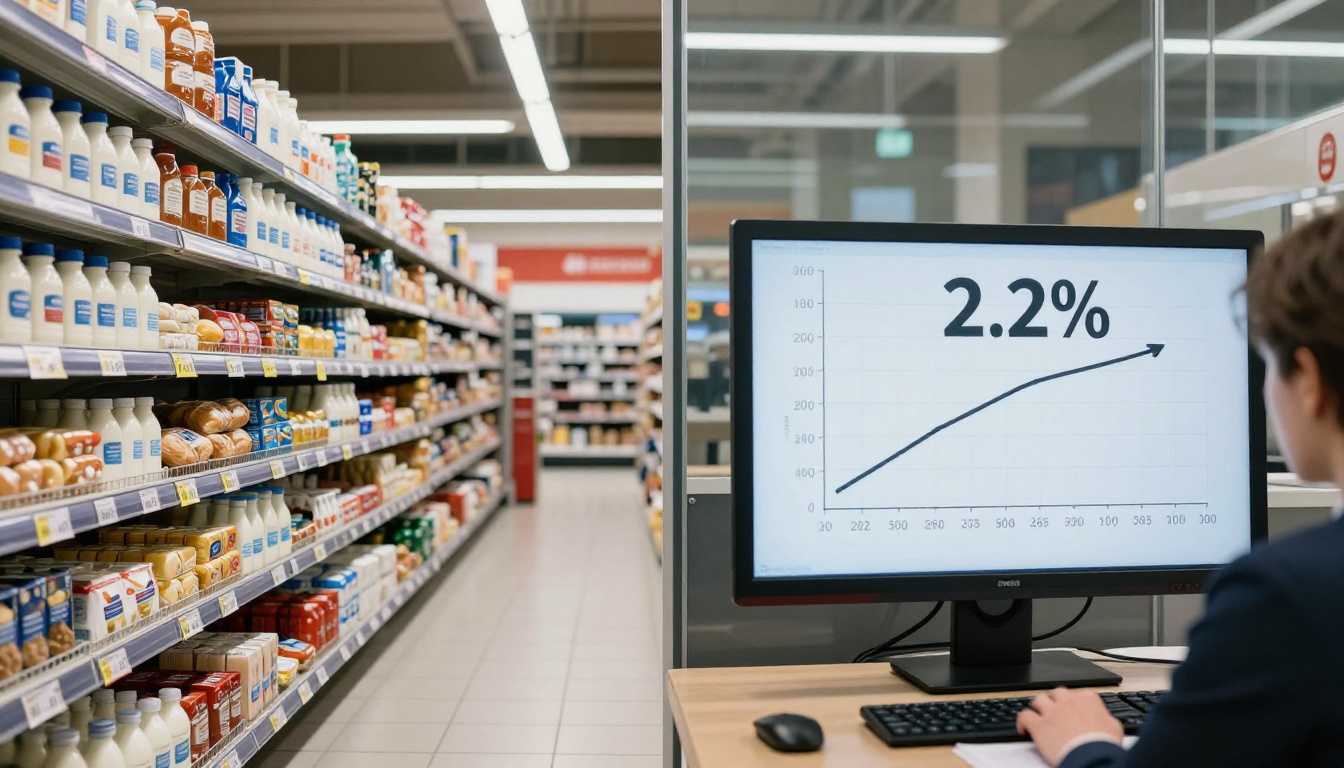
Walk into any Billa or Hofer in Vienna, Graz, or Salzburg, and you’ll hear the same conversation: "Wie teuer!" (How expensive!). Yet Statistik Austria insists inflation is cooling to 2.2% in 2026. This isn’t just statistical noise, it’s a fundamental disconnect between how bureaucrats measure economic reality and how Austrian households actually experience it.
The Austrian Data Disconnect
The Institut für Höhere Studien (Institute for Higher Studies) recently revised its inflation forecast downward from 2.5% to 2.2% for 2026, celebrating this as proof that government measures are working. Bundeskanzler Christian Stocker’s "2-1-0" formula, 2% inflation, 1% growth, 0% deficit, suddenly seems achievable.
But this official optimism crashes against a wall of consumer skepticism. When IHS economist Sebastian Koch explains that 0.8 percentage points of this improvement come purely from statistical base effects (the disappearance of 2025’s energy subsidy spike from annual comparisons), the numbers start feeling less like economic science and more like accounting tricks.
The reality? Austrians aren’t buying it, literally. Food prices for essentials like butter, milk, and bread remain stubbornly elevated, with chocolate prices up 22% year-over-year according to recent data. The disconnect stems from how the Verbraucherpreisindex (Consumer Price Index) is constructed: a fictional "average" basket that assumes you buy everything from caviar to camping equipment, weighted by outdated consumption patterns.
What’s Really in Your Shopping Cart
Here’s where official statistics diverge from your lived experience. Statistik Austria’s basket includes items you might purchase once a decade (a new car, furniture) alongside daily necessities. Your personal inflation rate depends entirely on your actual consumption:
- Food and hygiene products: Up 10-15% for most households
- Household cleaning supplies: Often 20%+ higher than 2022
- Energy: Volatile but currently easing due to government intervention
- Rent: Rising 3-4% annually, though constrained by Mietpreisbremse (rent control)
The problem? These "vital areas" (lebensnotwendige Bereiche) constitute nearly 60% of spending for average Austrian families but receive disproportionately low weight in official calculations. Meanwhile, categories like "recreation and culture" (which includes everything from cinema tickets to sporting equipment) drag down the overall index despite being easy to cut when budgets tighten.

The Government’s 2% Promise: Real Relief or Statistical Mirage?
Wirtschaftsminister Wolfgang Hattmannsdorfer claims average households will save €900 annually through government measures. Let’s examine this "Entlastung" (relief) package:
- Mehrwertsteuersenkung (VAT reduction) on basic foods: €100/year
- Österreich-Tarif for electricity: €200/year
- Elektrizitätsabgabe reduction: €60/year
- Tax-free holiday work: €332/year
These measures undeniably help, but they work by temporarily suppressing symptoms rather than curing the disease. The temporary VAT cut expires, and the electricity tariff relief depends on energy providers playing along, hardly guaranteed in Austria’s concentrated market.
More concerning is the "Wechselmuffel" (reluctance to switch) phenomenon Hattmannsdorfer mentioned: only 4% of Austrian households change electricity providers annually, compared to 20%+ in Germany and Spain. This market inertia means many families won’t benefit from competitive pricing, forcing the government to intervene with subsidies that ultimately distort true inflation readings.
Why Your Personal Inflation Is Structurally Higher
The Reddit discussion from r/FinanzenAT revealed a crucial insight: personal inflation isn’t just about prices, it’s about life circumstances. A user tracking expenses from 2022-2025 found their costs rising 15-20% annually, far above official 4-9% figures. Others pointed out legitimate reasons why official numbers understate reality:
-
Basket Composition: If you’re renting, have children, or prioritize healthy food, your personal inflation exceeds the index. The "hedonic quality adjustment" means when products shrink (Mogelpackungen), statisticians often treat this as quality improvement, not price inflation.
-
Frequency Bias: You notice weekly grocery prices more than the biennial insurance premium or decade-long appliance replacement. Our brains overweight frequent, small purchases.
-
Lifestyle Inflexibility: The index assumes you’ll substitute expensive beef with cheaper pork. But dietary restrictions, allergies, or simple preferences limit your ability to pivot.
-
Regional Variations: Vienna’s housing market operates under different pressures than rural Burgenland. A national average smooths over local crises.
This explains why gold as an inflation hedge during purchasing power erosion has become so popular among Austrian investors. When official numbers feel disconnected from reality, tangible assets provide psychological security.
The Political Dimension: Trust Erosion
The inflation illusion carries dangerous political consequences. When citizens perceive official statistics as manipulated, whether true or not, trust in institutions erodes. This mirrors the growing skepticism toward the state pension system, where three-quarters of Austrians now doubt they’ll receive adequate retirement benefits.
Opposition parties exploit this gap. FPÖ and SPÖ both claim the government’s measures are insufficient, pointing to supermarket receipts as "Beweis" (proof) of failed policy. Meanwhile, NEOS argues the measures, while welcome, distract from structural reforms needed for long-term competitiveness.
The risk? Austria enters a cycle where every inflation report triggers public scorn, making it harder for the Österreichische Nationalbank (OeNB) and Statistik Austria to communicate legitimate economic trends. When real crises emerge, skepticism may prevent appropriate policy responses.

What You Can Actually Do
Rather than hyperventilating over statistics, Austrian households should focus on actionable steps:
1. Calculate Your Personal Inflation Rate
Statistik Austria offers a Persönlicher Inflationsrechner (Personal Inflation Calculator). Track your actual spending for two weeks and compare. The results often reveal you can control more than you think.
2. Optimize Your Energy Contract
That 4% switching rate is your opportunity. Use e-control.at’s comparison tool. The new Österreich-Tarif launches March 2026, mark your calendar.
3. Rethink Your Savings Strategy
With inflation still outpacing most Tagesgeld accounts, the illusion of safety in cash savings amid inflationary pressure becomes dangerous. Consider mixing in inflation-protected assets, but watch out for tax traps in gold investments.
4. Housing Decisions
If you’re renting, understand your rights under the Mietpreisbremse. If buying, recognize that traditional financial models for Vienna’s rental market are breaking down. Renting vs. buying calculations need updating in this inflationary environment.
5. Consumption Pattern Audit
The "Wechselmuffel" mentality extends beyond energy. Review all subscriptions, insurance, and service contracts annually. Companies count on your inertia to raise prices quietly.
The Bigger Picture: Beyond the Numbers
The inflation debate reveals something deeper about modern Austrian society. We’re caught between a bureaucratic state that communicates in statistical abstractions and a population experiencing concrete financial strain. The government’s "Entlastungspakete" (relief packages) treat symptoms while the underlying disease, supply chain fragility, energy dependence, housing shortages, remains untreated.
This disconnect also fuels consumption patterns where Austrians pay premium prices for temporary ownership, whether in cars, electronics, or even housing. When permanence feels unaffordable, renting everything becomes rational, even if it’s mathematically suboptimal.
Meanwhile, long-term investments like Austria’s century bonds promise stability but carry hidden risks. The 3.7% yield on the 2117 Österreich-Anleihe looks attractive only if you believe official inflation numbers will remain near 2%. If your personal inflation runs at 5-7%, that "safe" investment is actually destroying purchasing power.
Conclusion: Trust Your Receipt, Not Just the Press Release
The inflation illusion isn’t a conspiracy, it’s a methodological gap between statistical averages and individual realities. Austrian policymakers aren’t lying, they’re measuring something different than what you experience at the Hofer checkout.
But this technical explanation doesn’t pay your bills. Until Statistik Austria modernizes its basket to reflect actual consumption patterns, perhaps by incorporating real-time payment data rather than retrospective surveys, the gap between official and perceived inflation will persist.
For now, trust your own budget spreadsheet over press releases. Track your vital expenses separately: food, energy, housing, transport. If those rise more than 3% annually, your personal inflation is higher than official figures, regardless of what the IHS forecasts.
The government’s measures provide genuine relief, but they’re temporary patches. Real solutions require structural reforms: increasing housing supply, diversifying energy sources, and fostering competition in concentrated markets. Until then, Austrian families will continue feeling poorer while official statistics proclaim stability, a disconnect that ultimately undermines faith in both economic policy and democratic institutions.
Your grocery receipt doesn’t lie. Neither should your inflation statistics.