A relative walks into their local Sparkasse (savings bank) with €425,000 to invest. They want wealth preservation and modest growth above inflation. What they get is a 30-page document and a portfolio proposal that looks sophisticated but smells expensive. The banker calls it “diversified.” Anyone who runs the numbers calls it something else entirely.
This isn’t a hypothetical. It’s a real case that surfaced recently, and it perfectly illustrates why Germany’s traditional banking system operates with the same efficiency as a Deutsche Bahn train, usually impeccable, until there’s construction on the line. The construction, in reality, is the fee structure.
The Portfolio That Looks Diversified But Isn’t
The Sparkasse advisor proposed splitting €425,000 across seven different Deka funds:
- Deka-DividendenStrategie CF (A), €25,000
- Deka MSCI World UCITS ETF, €50,000
- Deka-ESG Renten CF (A), €100,000
- Deka-GlobalChampions CF, €65,000
- Deka-ImmobilienGlobal, €30,000
- Deka-Industrie 4.0 CF, €50,000
- WestInvest InterSelect, €80,000
The banker emphasized diversification across stocks, bonds, and real estate. What they didn’t mention, anywhere in those 30 pages, were the TERs (Total Expense Ratios) or entry fees. This omission isn’t accidental, it’s the foundation of the entire sales model.
The Fee Burden Your Banker Won’t Calculate
Let’s run the numbers they didn’t want to show. Deka funds typically carry TERs between 1.5% and 2.0% annually, plus entry fees of up to 5%. Even the Deka MSCI World ETF, which carries a relatively reasonable 0.30% TER in its cleanest form, gets bundled into a structure where the overall cost becomes punitive.
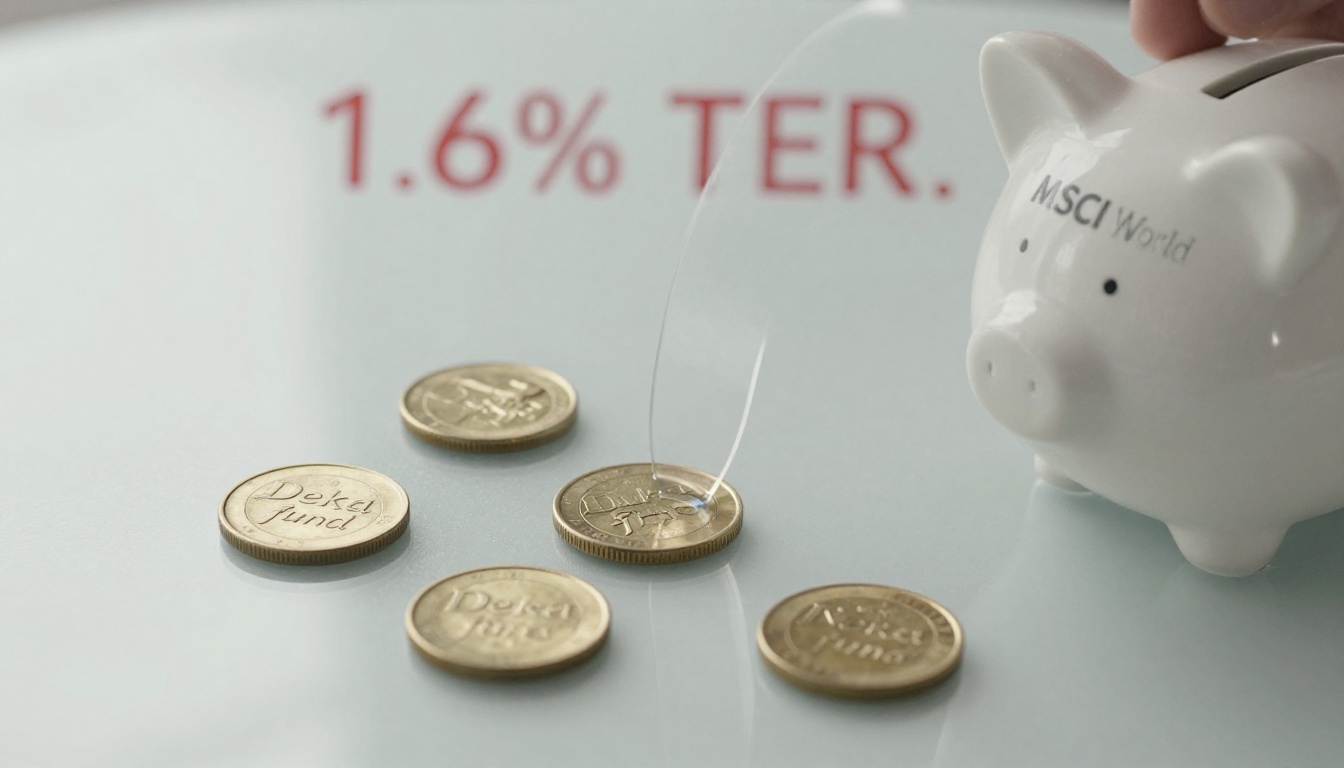
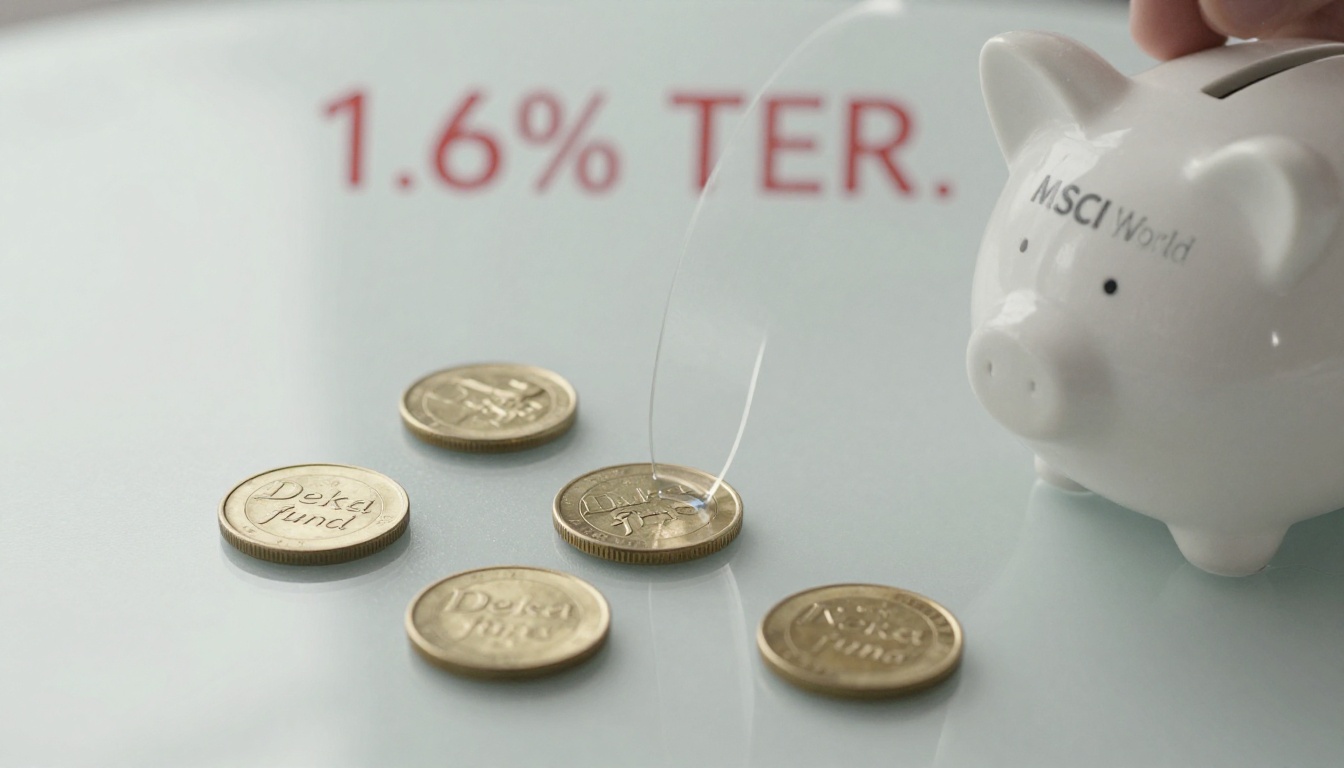
If we conservatively estimate an average TER of 1.6% across this portfolio, you’re paying €6,800 annually in management fees alone. Over ten years, assuming zero returns (just to isolate the fee impact), that’s €68,000 evaporated. Over twenty years: €136,000. And that’s before we account for the entry fees, which could easily add another €15,000-20,000 in upfront costs.
For perspective, a simple two-ETF portfolio, say, 70% MSCI World and 30% bond ETF, would cost around 0.15% annually. That’s €638 per year instead of €6,800. The difference over twenty years? Over €120,000 in fees alone, not even counting the compound effect of those costs.
Overlap Overload: Paying Seven Times for the Same Stocks
Here’s where the “diversification” argument collapses. The Deka MSCI World ETF already contains approximately 1,500 large and mid-cap stocks from 23 developed countries. The Deka-GlobalChampions CF? It’s essentially a subset of those same global large-caps. The Deka-Industrie 4.0 CF? Another subset, heavily overlapping with the tech holdings already in the MSCI World.
You’re not getting seven distinct sources of return. You’re getting the same global equity exposure, sliced and repackaged seven different ways, each slice charging its own management fee. It’s like buying the same car seven times in different colors and paying full price each time.
The WestInvest InterSelect adds another layer of redundancy. These mixed funds often hold the same blue-chip names you’ll find in the MSCI World, just with a different wrapper and a higher fee. The only genuinely diversifying element here is the bond fund and perhaps the real estate component, which at €30,000 represents just 7% of the portfolio.
The Salesperson vs. Advisor Problem
This brings us to the fundamental conflict of interest baked into the Sparkasse model. Your “Berater” (advisor) is, in reality, a Verkäufer (salesperson) with quarterly quotas and commission targets. The Deka funds exist primarily to generate revenue for the Sparkasse network, not to optimize your returns.
Many international residents report waiting weeks for banking appointments in major German cities, despite Germany’s reputation for efficiency. But when you do get that appointment, the advice often follows a predictable script: complex portfolios, in-house products, and strategic vagueness about costs. This isn’t unique to Sparkasse, it plagues most traditional German banks, but the Sparkasse system’s local monopoly power makes it particularly pronounced.
The Gelsenkirchen Sparkasse controversy, where customers lost valuables in a safe deposit box break-in, revealed another layer of institutional opacity. When pressed about insurance limits and advisory failures, the Sparkasse-Chef (bank chief) admitted: “Eine Beratung hat nicht stattgefunden” (advice did not take place). This pattern, selling products without genuine advisory context, echoes throughout the system.
What Should Have Been Proposed Instead
For €425,000 with a goal of wealth preservation and inflation-beating growth, the solution is almost embarrassingly simple:
- Core Equity (70%): €297,500 in a global equity ETF like the Vanguard FTSE All-World or the Deka MSCI World UCITS ETF (the clean version, not the expensive wrapper)
- Bonds (25%): €106,250 in a broad bond ETF covering government and investment-grade corporate bonds
- Alternatives (5%): €21,250 in a real estate ETF or left as cash for flexibility
This three-fund approach provides genuine diversification, total transparency, and costs under 0.20% annually. It’s also rebalanced with minimal effort and doesn’t require quarterly meetings with a salesperson.
The kosteneffiziente ETF-Alternative zu teuren Sparkassenfonds isn’t just cheaper, it’s fundamentally more aligned with your interests. When your portfolio only needs to support your retirement, not a bank branch network, everything gets simpler.
The Transparency Gap: Where to Find the Real Numbers
The most damning aspect of the original proposal? The TERs weren’t omitted by mistake. German regulations require disclosure, but they don’t require the advisor to emphasize or explain the impact. A 30-page document can legally bury the cost details on page 27 in fine print.
Here’s what you should demand in any advisory meeting:
- Complete TER breakdown for each fund
- Entry fees (Ausgabeaufschlag) in euros, not percentages
- Performance after fees, not before
- Direct comparison to ETF alternatives
If your advisor can’t or won’t provide these, you’re not getting advice. You’re getting a sales pitch. The Bankberater als Verkäufer statt unabhängige Finanzexperten dynamic is real, and it costs German investors billions annually.
The Systemic Problem: Why Sparkassen Aren’t Changing
Sparkassen operate under a unique public mandate in Germany. They’re supposed to serve local communities, support small businesses, and provide financial stability. But they’re also competing with low-cost brokers and robo-advisors that are stealing their most profitable customers.
The response? Double down on complexity. Train staff in “Nachhaltigkeitsseminar” (sustainability seminars) to sell ESG-themed funds with higher fees. Emphasize the supposed security of established brands. And never, ever, make it easy to compare costs.
The Förde Sparkasse blog proudly notes that 70 colleagues voluntarily attended sustainability training for investment advice. Yet nowhere do they celebrate training on cost optimization or ETF portfolio construction. The priorities are clear: sell what generates revenue, wrap it in what sounds responsible.
Protecting Yourself: The Three-Question Test
Before signing anything at any German bank, ask:
- “What is the total cost in euros for the first year, including all fees?” If they can’t give a precise number, walk away.
- “Which ETFs could achieve the same diversification, and how much cheaper are they?” A competent advisor should be able to answer this immediately.
- “How much commission do you earn from this recommendation?” The reaction to this question tells you everything.
If the answer to #3 is evasive or defensive, you’re dealing with a salesperson, not a fiduciary. The hohe Spreads als versteckte Kostenfalle bei Anlageprodukten article shows how these hidden costs compound over time, turning modest portfolios into fee-generating machines for banks.
The Real Cost of “Playing It Safe”
Many Sparkasse customers accept these fees because they trust the institution and fear making mistakes. But Inflation und zu konservative Anlagestrategien als Vermögensfalle demonstrates that excessive caution, combined with high fees, guarantees wealth erosion.
A portfolio that’s 40% bonds and 60% expensive equity funds isn’t “safe”, it’s mathematically designed to underperform inflation after costs. You’re not preserving capital, you’re guaranteeing its slow decline.
The Inflationsverluste durch risikoarme, aber unzureichende Geldanlage effect is brutal: what looks like stability is actually a controlled demolition of purchasing power.
The Bottom Line: Convenience Is Expensive
The Sparkasse proposal isn’t about building wealth. It’s about preserving a business model that relies on customer inertia and information asymmetry. For the relative with €425,000, accepting this portfolio would likely cost them between €100,000 and €200,000 over their investment lifetime compared to a simple ETF strategy.
The saddest part? They’ll never see the loss. It won’t appear as a line item on any statement. It will simply be the retirement they could have had, the vacations they couldn’t take, the security that never materialized, all because a trusted institution prioritized its margins over their future.
If you’re sitting on significant capital and your Sparkasse advisor hands you a multi-page proposal with more funds than reasons, do yourself a favor: thank them politely, take the document, and find an independent fee-only advisor or educate yourself on ETF basics. The steuerliche Optimierung bei ETF-Investments nach Ausschöpfung des Freibetrags might seem complex, but it’s far simpler than decoding seven layers of Deka fund fees.
Your wealth deserves better than to become someone else’s commission.