The German healthcare financing system operates with the same efficiency as a Deutsche Bahn train, usually predictable, until construction work appears on your line. For decades, that line ran straight: employees paid health insurance contributions based on their salary, and that was largely the end of the story. But now the SPD (Social Democratic Party) wants to tear up the tracks entirely, proposing to extend Sozialabgaben (social contributions) to capital income, rental earnings, and virtually every other income stream imaginable.
The political bombshell dropped over the weekend when SPD leadership, led by party chair Bärbel Bas and co-chair Lars Klingbeil, presented their plan to overhaul health and long-term care financing. The proposal is simple in theory but explosive in practice: instead of taxing only labor income, Germany should levy contributions on all income types, including dividends, capital gains, and rental profits. The party claims this would generate nearly €40 billion annually while reducing the burden on ordinary workers.
The Math That Hurts: €1,534 Extra on Your Investment Income
Let’s cut through the political rhetoric and look at what this actually means for your portfolio. According to calculations referenced in the debate, an investor with significant capital income could face an additional €1,534 per year in health contributions under the SPD plan. That’s not a marginal tax adjustment, that’s a direct hit to your net returns.
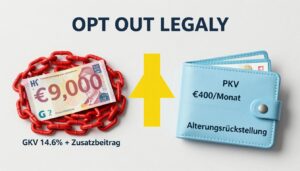
The mechanism works like this: currently, the gesetzliche Krankenversicherung (statutory health insurance, GKV) only considers capital income for voluntarily insured members, and even then only up to the Beitragsbemessungsgrenze (contribution assessment ceiling) of €62,100 annually (2026). The SPD wants to remove this ceiling entirely and apply the full contribution rate, currently 14.6% plus the individual Krankenkasse’s supplementary rate, to all capital and rental income above a yet-to-be-defined exemption.
For a middle-class investor earning €30,000 in capital gains and dividends, that translates to roughly €4,380 in new annual contributions. Even with a reduced base rate for employees, the net effect remains sharply negative for anyone building private wealth.
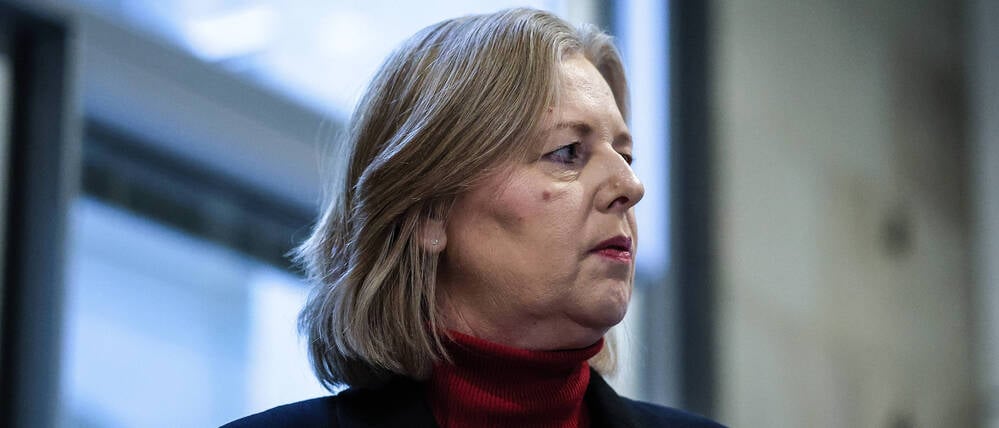
SPD leaders Bärbel Bas and Lars Klingbeil argue the current system unfairly burdens workers while letting capital income off the hook.
Why This Targets Your Private Pension, Not the Super-Rich
Here’s where the proposal becomes politically charged. The SPD frames this as making the wealthy “pay their fair share”, but the numbers tell a different story. As critics quickly pointed out, the truly wealthy won’t be significantly affected. Their assets are typically held in Stiftungen (foundations), family offices, or complex corporate structures that would likely be exempt or find loopholes.
What the proposal actually hits is the emerging class of private investors, the people who took the government’s advice seriously. For decades, Germans received Rentenbescheide (pension statements) with warnings: “Your state pension won’t be sufficient, please save privately.” Millions dutifully opened ETF-Sparpläne (ETF savings plans), built property portfolios, and invested in stocks. Now, the same political class that demanded private responsibility wants to tax those very efforts to fund a system they failed to reform.
As one financial analyst summarized the sentiment: “The SPD claims ETFs aren’t real retirement planning, just ‘unverzinstes Geld auf dem Girokonto’ (non-interest-bearing money in a checking account). They know this is nonsense, but it lets them frame the tax as targeting ‘speculators’ rather than responsible savers.”
The CDU’s Counter-Punch: “Don’t Punish Provident Behavior”
The Union’s rejection was swift and characteristically framed around Planungssicherheit (planning certainty). CDU General Secretary Carsten Linnemann warned: “Small and medium savers need planning certainty. We tell them: save for retirement, invest in property. Then we say: sorry, we’re taxing your provision. That can’t work.”
Instead, the CDU proposes financing beitragsfremde Leistungen (non-contributory benefits), like health coverage for Bürgergeld (citizen’s income) recipients, directly from the federal budget. Health Minister Nina Warken called it “unfair” that insured workers pay billions for others’ coverage.
This sets up a classic German political standoff: the SPD wants to expand the solidarity system, while the CDU wants to limit its scope. Both claim to protect the middle class. Neither is entirely wrong, but neither is completely right either.
The Real Problem: A System Running on Fumes
The backdrop to this fight is a healthcare system facing deficits of over €17 billion in 2025, with contribution rates already at record highs. Some projections suggest Sozialabgaben (social contributions) could reach 53% of gross income by 2035 without reform. The status quo is unsustainable.
Germany’s health system is among the world’s most expensive yet delivers only average outcomes. OECD data shows no country except the US spends more of its economic output on healthcare while achieving middling life expectancy. Costs have surged 82% in a decade, driven by an aging population, expensive new treatments, and bureaucratic inefficiency.
The SPD argues that with more business models generating capital rather than labor income, think tech companies, automated industries, the tax base must modernize. “Many business models are no longer based on high employment but generate profits with few employees”, explained SPD General Secretary Tim Klüssendorf.
What the Research Actually Shows: You’re Already Paying More Than You Think
Here’s the uncomfortable truth buried in the debate: middle-class Germans already carry a disproportionate burden. When you combine direct and indirect taxes, the effective rate on labor income far exceeds that on capital. The SPD’s proposal simply makes this explicit.
But there’s a catch. Critics note that without systemic cost control, any new revenue will be swallowed by the same unchecked spending growth. As the GKV-Spitzenverband (National Association of Statutory Health Insurance Funds) warned: “We need to control expenditure dynamics, not just increase income and burden the insured further.”
This mirrors concerns raised in our analysis of the retirement health cost bomb, where we showed how rising health contributions will consume an increasing share of retirement income, leaving even well-prepared retirees financially strained.
International Context: Germany’s Capital Tax Is Already High
Compared to international standards, Germany’s 25% capital gains tax plus Solidaritätszuschlag (solidarity surcharge) is substantial. Adding a 14.6%+ health contribution would push the total burden on capital income above 40% in many cases, higher than in most OECD countries.
This could trigger the very behavior the SPD claims to prevent: capital flight. The Netherlands’ recent move to tax unrealized gains at 38% serves as a cautionary tale. As we explored in our piece on Dutch unrealized gains tax as a warning for Germany, such policies often backfire, pushing investors toward more aggressive tax avoidance or outright relocation.
The Political Chess Game: Why This Probably Won’t Happen (Yet)
Despite the SPD’s bold push, the proposal faces near-certain defeat. The CDU/CSU holds the chancellorship and can block legislation. More importantly, the SPD’s own coalition discipline is shaky, many moderate Social Democrats fear being branded as the “party that taxes your savings.”
The real purpose may be positioning. With state elections looming, the SPD wants to force the CDU into a “defender of the rich” narrative. It’s classic opposition politics from a party that, paradoxically, holds key ministries in the government.
Meanwhile, the Krankenkassen (health insurance funds) themselves are skeptical. They know that structural reforms, like digitizing administration, reducing unnecessary treatments, and negotiating harder on drug prices, would save more money than any new tax. But reforms are hard, new taxes are easier to campaign on.
What This Means for Your Financial Planning
Until the political dust settles, no immediate action is required. The proposal remains a draft, and even if passed, would likely include exemptions for smaller investors and phase-in periods.
However, this should serve as a wake-up call about over-reliance on German tax-advantaged accounts. If you hold significant assets in taxable brokerage accounts, consider:
– Maximizing contributions to existing tax-sheltered vehicles while rules remain favorable
– Diversifying geographically to jurisdictions with more stable tax treatment
– Reviewing your portfolio’s tax efficiency, as future governments may target different asset classes
The broader lesson is that private retirement planning in Germany exists at the mercy of political whim. The same coalition that destroyed the Riester-Rente (Riester pension) and capped Bausparverträge (building savings contracts) now eyes your ETF portfolio. As we detailed in our analysis of the €120k retirement trap, playing it “too safe” with German-only investments and excessive cash holdings is already a losing strategy. Adding political risk makes diversification even more critical.
The Bottom Line: A Debate We Needed, But Not Like This
The SPD is right about one thing: Germany’s social insurance system needs a broader, more sustainable funding base. But taxing private pensions to prop up a failing system without fundamental reform is like pouring water into a leaky bucket.
What Germany truly needs is a comprehensive overhaul, combining cost controls, efficiency gains, and yes, broader income taxation. Piecemeal attacks on capital income while ignoring structural problems will only accelerate the brain drain of mobile professionals and capital.
For now, investors should monitor the debate closely but avoid panic selling. The real risk isn’t next year’s tax bill, it’s the decades-long erosion of trust in Germany’s social contract. Once citizens believe private provision will be penalized, the entire foundation of the country’s retirement system crumbles.
And that, more than any single tax proposal, is what should keep policymakers awake at night.

Internal Links Used:
– SPD’s broader health financing reforms and their impact on all income types
– international precedents for taxing passive investment income affecting German investors
– growing financial pressure of health and long-term care costs on personal finances in retirement
– SPD’s previous wealth-focused taxation proposals targeting high-net-worth individuals
– risks of passive investing under changing tax environments and the erosion of savings