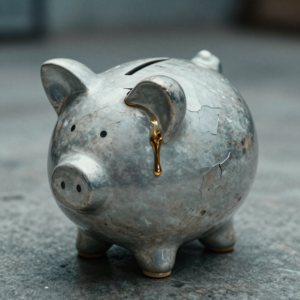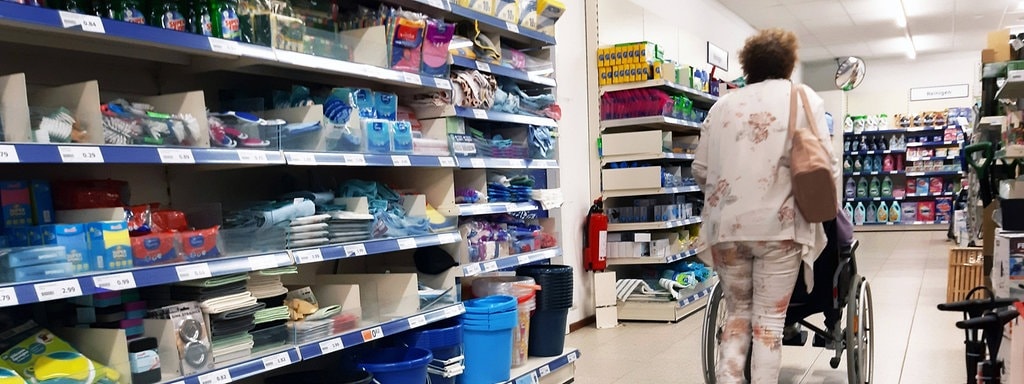
The math is brutal: since 2020, German food prices have climbed over 35%, and the Verbraucherzentrale Bundesverband confirms that 45% of consumers now skip certain products entirely. Yet while politicians debate Mehrwertsteuer reductions that mostly benefit fast-food chains, a quieter revolution is happening in German kitchens. The strategy costs as little as €80, doesn’t require a PhD in nutrition, and delivers savings that make switching banks look like small change.
The Price Shock That Changed Everything
Remember when a Döner still cost €3.50? Those days are gone. The MDR reports that Lebensmittelpreise have outpaced wage growth so dramatically that even middle-income households feel the squeeze. But here’s what the headlines miss: the same inflation that makes restaurant meals painful has turned home cooking into a genuine wealth-building tool.
The numbers tell a stark story. A typical German household spending €400 monthly on groceries can slash that by 30-40% by switching from convenience products to basic ingredients. That’s not theoretical, it’s the lived experience of thousands who’ve made the switch. The key insight? Cooking from scratch with quality components, even Bio-Lebensmittel, remains absurdly cheap compared to any form of prepared food.
From Sparkasse Fees to Kitchen Investments
Many Germans discovered this strategy while hunting for smaller savings. The same impulse that drives someone to switch from Sparkasse to DKB to save €13 monthly on account fees eventually leads to the kitchen. The logic is identical: eliminate unnecessary markup.
The connection isn’t random. Financial forums buzz with people reporting monthly savings of €600-700 after cutting restaurants and delivery apps. One user noted that after years of permanent overdraft, they now save substantially by cooking daily with what they called “a hated automatic kitchen device.” The device, likely a pressure cooker or multi-cooker, cost under €100 but eliminated the convenience tax on every meal.
This reveals a critical mental shift. Germans traditionally view kitchen gadgets as luxury purchases. The new perspective treats them like financial instruments: a €79.99 Bosch MUMS2AW01 kitchen machine isn’t an expense, it’s a 20% return on investment if it replaces just two restaurant visits per month.
Why Basic Ingredients Crush Convenience
The Reddit-favorite argument that “Bio is expensive” collapses under scrutiny. A kilogram of Bio-Hähnchenbrust costs around €12 at discount retailers. That same amount buys one mediocre delivery pizza. The chicken feeds a family for three meals, the pizza satisfies one person for one evening.
The trick lies in what Germans call Grundprodukte: flour, eggs, seasonal vegetables, legumes, and bulk grains. These items saw the smallest price increases during inflation spikes. While processed foods climbed 40-50%, basic ingredients rose modestly. The gap created an arbitrage opportunity that home cooks exploit mercilessly.
Meal planning amplifies these savings. The Verbraucherzentrale notes that consumers who plan weekly menus waste 80% less food. At German grocery prices, that translates to €40-60 monthly savings per household, enough to fund a Junior-Girokonto for actual financial education, not just Sparkasse fee conditioning.
The Kitchen Gadget Math
Here’s where conventional wisdom fails. Critics argue that buying a €80 kitchen machine to save money is contradictory. The numbers prove otherwise.
Consider the Bosch MUMS2AW01: 700 watts, 3.8-liter capacity, available for €79.99 during promotions. Used three times weekly to make bread, dough, or shredded vegetables, it replaces:
– €3-4 weekly bread purchases (€156-208 annually)
– €2-3 weekly pre-cut vegetables (€104-156 annually)
– €5-8 monthly pizza deliveries (€60-96 annually)
Conservative total: €320 annual savings. ROI: 300% in year one. Even accounting for electricity costs (negligible at German rates), the machine pays for itself in three months. The same calculation applies to pressure cookers that slash cooking time and energy costs, or stick blenders that transform cheap vegetables into gourmet soups.
The trick is usage frequency. A gadget that sits unused is wasted capital. But one that becomes part of your daily Küchenroutine functions like a negative-interest loan that pays you back with every use.
Waste Reduction: The Hidden Dividend
German households throw away €235 worth of food per person annually, according to government statistics. Home cooking slashes this through better inventory management. When you cook from scratch, you buy what you need. When you meal-prep, you use what you buy.
The psychological shift is subtle but powerful. Someone who cooks daily checks their fridge before shopping. They know that yesterday’s roasted vegetables become today’s soup. They understand that stale bread transforms into breadcrumbs or French toast. This isn’t frugality, it’s efficiency.
The financial impact matches the environmental benefit. A household of four cutting food waste in half saves nearly €500 yearly. Combined with ingredient savings, the total annual benefit exceeds €2,000. That’s a Sonderzahlung most Germans would fight hard to achieve through salary negotiations.
German Consumer Response: Beyond Angebote
The MDR documented how Germans adapt: buying products near their MHD (Mindesthaltbarkeitsdatum), purchasing smaller quantities, and freezing portions. These behaviors reflect a deeper change. Consumers increasingly reject the convenience premium that made supermarkets rich.
Discount chains like Lidl and Aldi benefit, but so do specialist shops. Turkish markets in Kreuzberg or Bavarian farms selling direct now see mainstream customers who previously shopped only at Rewe or Edeka. The Einkaufsverhalten fragmentation mirrors what happened to banking, people no longer default to one provider.
Smart shoppers layer strategies: seasonal produce from local markets, bulk dry goods from discount retailers, and occasional treats from Bio-supermarkets. The result isn’t deprivation. It’s optimization that would make any German engineer proud.
The Sparkasse Lesson Applied to Food
The Reddit thread’s most upvoted comment celebrated switching from Sparkasse, saving €13 monthly. That same user now saves €150+ by cooking at home. The parallel is instructive: both moves challenge accepted norms.
Germans tolerated Sparkasse fees for decades because “that’s how banking works.” They tolerated food waste and restaurant markups because “that’s how modern life works.” Both assumptions crumbled under inflation pressure.
The key difference? Bank switching saves fixed costs. Cooking saves variable costs that scale with lifestyle. A €600 monthly grocery budget can become €350 through strategic home cooking. That’s €3,000 annually, enough to fund a Bausparvertrag or ETF-Sparplan.
Practical Implementation Without Overwhelm
Starting doesn’t require instant perfection. The successful approach follows German engineering principles: systematic, incremental improvement.
Week 1-2: Track every food expense. Most Germans underestimate by 30-40%.
Week 3-4: Replace two restaurant meals with simple home-cooked equivalents. Pasta with homemade sauce. Stir-fry with fresh vegetables.
Month 2: Invest in one versatile gadget. A pressure cooker or quality chef’s knife delivers immediate ROI.
Month 3: Plan one week of meals in advance. Notice how waste drops and satisfaction rises.
The goal isn’t becoming a Michelin-starred chef. It’s reaching Küchenautomatisation, where cooking becomes as routine as checking your Kontostand. Where the savings happen automatically because your systems are designed for efficiency.
The Verbraucherzentrale’s Warning
Ramona Pop, head of the Verbraucherzentrale Bundesverband, warns that “gesunde Ernährung immer mehr zu einer Frage des Geldbeutels werde.” This frames home cooking as a social justice issue. The wealthy can afford delivery, the middle class must cook.
But this misses the empowerment angle. Home cooking isn’t a compromise forced by poverty, it’s a skill that builds wealth. Germans who master it gain independence from price shocks, delivery fees, and the psychological manipulation of convenience marketing.
The 2026 Mehrwertsteuer reduction from 19% to 7% for restaurant meals won’t change this dynamic. Industry insiders admit prices won’t drop, margins will expand. The tax cut subsidizes businesses, not consumers. Home cooking remains the only guaranteed discount.
Conclusion: The New German Financial Wisdom
The Reddit user who started this conversation discovered something profound. Saving money doesn’t always mean cutting, it means redirecting effort toward activities where you capture the value instead of paying someone else to do it.
In Germany, where financial caution is cultural, this represents a paradigm shift. The same people who meticulously compare Stromtarife now apply that rigor to meal planning. The same energy that went into finding the best Girokonto now flows into finding the best kitchen workflow.
The result isn’t just financial. It’s better health, less waste, and a reconnection to food that industrialized eating destroyed. The €80 kitchen machine becomes a symbol of resistance against an economic system that monetizes every convenience.
Your Sparkasse might not approve. But your wallet, and your taste buds, will.
The inflation-era shopping cart: strategic, full of Grundprodukte, and costing 35% more than three years ago. Home cooking is the only discount that actually works.
Next Steps: Calculate your current food waste. If it’s above €20 monthly, a €80 kitchen gadget pays for itself in four months through waste reduction alone. The Bosch MUMS2AW01 deal is just one example, watch for similar promotions at Lidl, Aldi, and online outlets. Your Finanzplan will thank you.
The New German Financial Wisdom
The Reddit user who started this conversation discovered something profound. Saving money doesn’t always mean cutting, it means redirecting effort toward activities where you capture the value instead of paying someone else to do it.
In Germany, where financial caution is cultural, this represents a paradigm shift. The same people who meticulously compare Stromtarife now apply that rigor to meal planning. The same energy that went into finding the best Girokonto now flows into finding the best kitchen workflow.
The result isn’t just financial. It’s better health, less waste, and a reconnection to food that industrialized eating destroyed. The €80 kitchen machine becomes a symbol of resistance against an economic system that monetizes every convenience.
Your Sparkasse might not approve. But your wallet, and your taste buds, will.
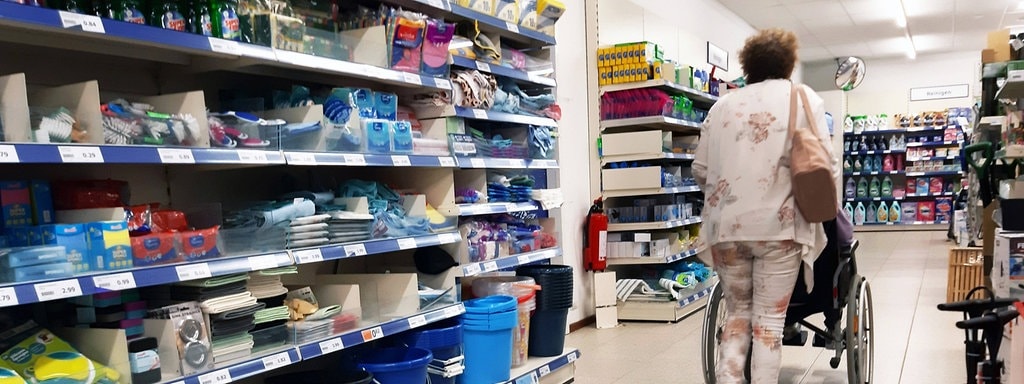
The inflation-era shopping cart: strategic, full of Grundprodukte, and costing 35% more than three years ago. Home cooking is the only discount that actually works.