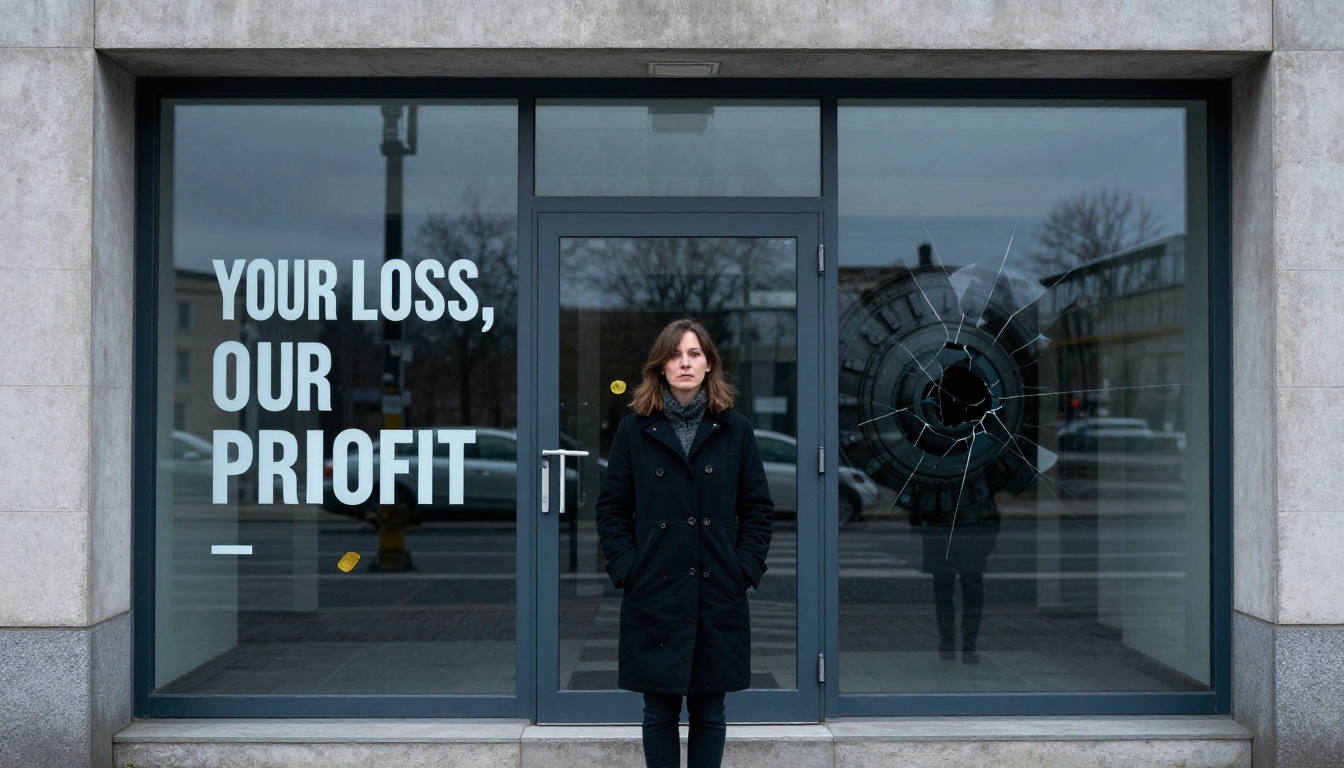
Astrid Kaiser stood in front of her Sparkasse (savings bank) branch in Gelsenkirchen, staring at the building where she’d stored her gold. The thieves had drilled through concrete, emptied over 3,000 Schließfächer (safe deposit boxes), and vanished with potentially hundreds of millions in valuables. Now, the same institution that failed to protect her assets wanted 7% interest on a loan she needed because they’d failed.
This isn’t a story about sophisticated criminals. It’s about a bank treating a crime victim as a revenue opportunity.
The Million-Euro Heist and the €10,300 Problem
In late December 2025, criminals executed what German media called the “Sparkassen-Coup of Gelsenkirchen.” They bored a massive hole through the vault wall, accessed the Tresorraum (vault room), and cleaned out thousands of boxes. The haul included gold bars, cash, and valuables that might reach nine figures.

Astrid Kaiser, 57, was among the victims. She’d saved gold specifically to finance a family cruise. After discovering her loss, she approached her Sparkasse for a Überbrückungskredit (bridging loan) to cover the trip costs while waiting for insurance processing.
The bank’s response? They offered the loan at “more than seven percent” interest.
When “Open Ear” Means “Open Wallet”
The Sparkasse’s written statement reads like a masterclass in corporate deflection. Their advisors have “stets ein offenes Ohr” (always an open ear) for customer problems, they claim. Yet they also insist they know of no cases where theft victims face acute financial difficulties.
This contradiction defines modern German retail banking: institutions that market themselves as Sparkasse pressuring vulnerable customers with aggressive financial sales while operating with the same profit motive as any multinational corporation.
The bank hides behind Bankgeheimnis (banking secrecy) to avoid discussing individual cases. It’s a convenient shield. While the principle protects customer data from third parties, here it serves to deflect public accountability. The Sparkasse won’t confirm the interest rate, won’t discuss their security failures, but will happily continue charging the victim.
The Insurance Gap Nobody Talks About
Here’s what makes this particularly brutal: Schließfächer (safe deposit boxes) carry maximum insurance of just €10,300. Many victims lost far more. One retiree reportedly stored nearly €400,000 in cash from a property sale. A business owner lost €120,000 in cash, jewelry, and a Rolex.

This insurance limit isn’t a secret, but it’s buried in fine print most customers never read. The Sparkasse charges annual fees for these boxes, reportedly around €300, while explicitly limiting their liability. It’s a risk transfer: customers pay for the illusion of security while the bank profits and minimizes exposure.
When the worst happens, victims discover they’re essentially uninsured for the actual value of their assets.
The Security Theater Behind the Concrete
The thieves drilled through a “dicke Betonwand” (thick concrete wall). Security experts now question whether the Sparkasse’s measures met industry standards. Multiple lawsuits allege “mangelnde Sicherheitsvorkehrungen” (inadequate security measures).

This raises uncomfortable questions. If you pay a bank for secure storage, what exactly are you paying for? A concrete wall that can’t stop a determined drill? An insurance policy that covers less than 3% of a typical high-value box’s contents?
The Sparkasse’s security measures appear designed to deter casual thieves, not professional crews. Yet they charge professional-grade fees.
Turning Victims Into Revenue Streams
Astrid Kaiser’s situation reveals the bank’s calculation. She needed money for a pre-booked cruise, arguably a discretionary expense, but one she’d saved for responsibly. Without her gold, she faced either canceling a family trip or borrowing.
The Sparkasse saw an opportunity. Instead of offering a zinsfreies Darlehen (interest-free loan) as a gesture of goodwill, knowing they’d likely be liable for security failures, they applied standard rates. This transforms a crime victim into a profitable customer.
“Ich sehe mich jetzt noch mehr als Opfer der Sparkasse”, Kaiser told reporters. She’s right. The first theft was criminal. The second is institutional.
The Comment Section Reality Check
Public reaction has been predictably divided. Many focus on the suspicious nature of storing large cash amounts, suggesting tax evasion or money laundering. One comment noted that a €400,000 cash property sale would raise Finanzamt (tax office) eyebrows.
These suspicions miss the point. Whether Kaiser and other victims were sketchy or simply paranoid about banks doesn’t matter. The core issue remains: a paid security service failed, and the service provider is profiting from the failure.
Others defend the bank: “Auf Kredite gibt’s Zinsen. Da gibt es keinen Sad-Story-Rabatt.” (Loans have interest. There’s no sad story discount.) This view treats banks as purely transactional, ignoring how Sparkassen market themselves as community partners and charge premium fees for that perception.
The Neo-Broker Comparison
This case highlights why younger Germans increasingly abandon traditional banks for fintech alternatives. While Sparkasse bank advisors prioritizing sales over customer welfare push expensive products with questionable value, neo-brokers compete on transparent pricing and user experience.
Sparkasse’s outdated digital and pricing practices can’t hide behind “local banking” charm anymore. When they treat a crime victim as just another loan customer, they expose that their business model hasn’t evolved, it’s just wrapped in better marketing.
What This Means for Your Money
If you have a Schließfach (safe deposit box), understand three things:
- Your insurance is capped at €10,300. Anything beyond that is your uncovered risk.
- The bank’s liability is limited. Those terms you signed without reading? They protect the bank, not you.
- In a crisis, you’re a customer, not a partner. Don’t expect empathy when the bank can charge interest instead.
Consider alternatives. Private vaulting services often provide higher insurance limits. Home safes, while risky, keep assets accessible. Diversification matters for physical assets too.
The Legal Endgame
Multiple victims have joined lawsuits against the Sparkasse. Their argument: inadequate security constitutes a breach of duty. If successful, the bank could face substantial liability, not just for stolen contents, but for consequential damages like the interest victims pay.
Astrid Kaiser joined these lawsuits with a simple rationale: “Wir haben nichts mehr zu verlieren, wir haben schon alles verloren.” (We have nothing left to lose, we’ve already lost everything.)
The irony: she had to take out an expensive loan from the same institution she’s suing. The bank profits from her today while she fights them in court tomorrow.
The Takeaway
German banking operates on trust. You trust your Sparkasse to secure your valuables. You trust they’ll treat you fairly when things go wrong. That trust is the product they’re actually selling, because the numbers often don’t justify the cost.
This case proves that when that trust is broken, the institution’s default setting isn’t solidarity. It’s standard procedure. The same bureaucracy that processes your €3 ATM fee processes a crime victim’s loan application.
The Sparkasse didn’t steal Kaiser’s gold. But by charging 7% interest while hiding behind Bankgeheimnis (banking secrecy) and limited insurance, they’re picking the pockets of everyone who trusted them with more than €10,300.
Your money deserves better protection than a concrete wall and a marketing slogan.