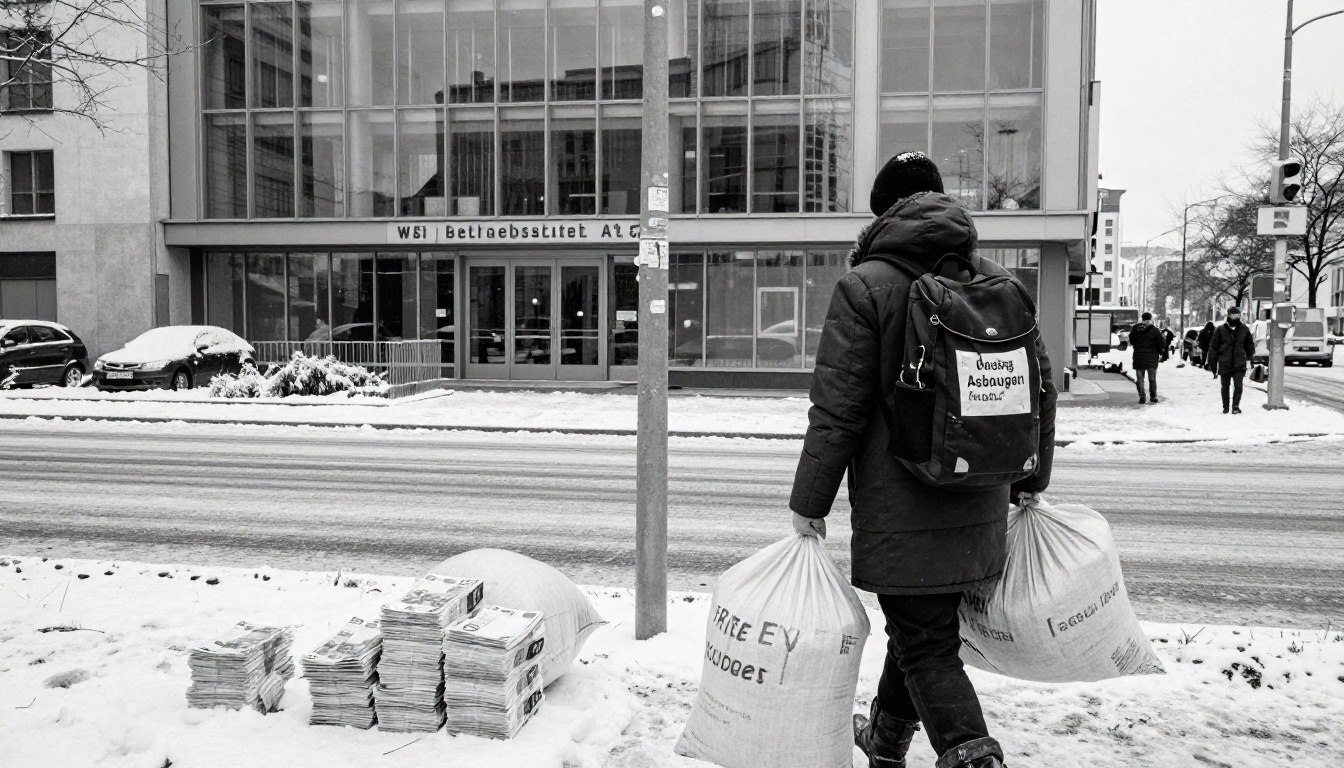
Picture this: you’re hauling 28.78 kilograms of coins through snow-covered streets in what Germans call the Rotlichtviertel (red light district), looking like a pack mule with two bags and a backpack. That’s exactly what one German resident did recently, lugging years of accumulated change in classic 3-liter Asbach Uralt bottles to the Bundesbank (Germany’s central bank). The result? A crisp stack of bills and zero fees. This isn’t a fringe benefit, it’s a legal right most Germans don’t even know they have.
The Bundesbank’s Legal Obligation: Your Coins Are Real Money
Unlike commercial banks that treat coin deposits as a nuisance service, the Bundesbank operates under the Bundesbankgesetz (Federal Bank Act), which legally obligates it to exchange coins for banknotes free of charge. This isn’t a courtesy, it’s a public service mandate. You can walk into any Bundesbank branch with a sack of coins and demand paper money. No account required, no questions asked, no fees deducted.
The process is remarkably efficient. After booking an appointment, recommended for large quantities, the staff counts your coins by machine. Most visitors report the entire transaction takes under five minutes. Compare that to your local Sparkasse, where tellers might sigh audibly at the sight of your pickle jar full of one-cent pieces.
This service exists because the Bundesbank serves as the backbone of Germany’s cash infrastructure. While commercial banks can pick and choose which services to offer, the central bank cannot. It’s the ultimate backstop for Bargeld (cash) circulation, and that includes making sure your couch-cushion savings don’t lose value to processing fees.

The Hidden Tax on Convenience: Why Coin Machines Are a Ripoff
Supermarkets and shopping centers offer what seems like a convenient alternative: coin counting machines. Drop in your change, receive a voucher. Simple, right? Until you read the fine print.
These machines typically charge between 10 and 12 percent commission. That means your €50 in loose change becomes €44 to €45 in purchasing power. You’re paying up to €6 for the privilege of not counting coins yourself. Worse, you’re locked into spending that voucher at the specific store where you processed it.
The economics are brutal. If you saved €500 in coins over two years and used a machine, you’d lose €50 to €60, enough for a decent dinner out in Berlin. For pensioners or low-income households, this represents a significant wealth erosion on what should be perfectly liquid savings.
Some Sparkassen and Volksbanken offer better rates for account holders, often charging 2-5% or providing a limited number of free deposits annually. But these policies vary wildly by region and branch. Your local bank in Munich might be generous while the one in Hamburg treats every coin like a personal insult.
The Supermarket Workaround: Creative, Risky, and Sometimes Illegal
Desperate savers have developed a workaround: the SB-Kasse (self-checkout) trick. Buy a cheap item at Kaufland or Lidl, pay with a mountain of coins, and receive banknotes as change. Some shoppers report doing this for years without issue.
But this hack is increasingly problematic. Retail employees report that the practice jams machines and creates maintenance nightmares. One Rewe customer received a Hausverbot (house ban) after attempting the trick. Others find stores have implemented hard limits, some as low as 10 coins per transaction.
The European Verbraucherzentrum (Consumer Center) clarifies that Euro-zone countries have no legal obligation to accept more than 50 coins in a single payment. Stores can and do set stricter limits. That “free” exchange could cost you access to your regular grocery store.
More importantly, this approach misunderstands the fundamental issue. You’re not supposed to treat commercial retailers as banks. It’s like using a restaurant bathroom without buying a proper meal, technically possible, but it violates the social contract that makes these services viable.
Why This Matters More in Germany
Germany’s relationship with cash runs deeper than most outsiders realize. While Germany’s cultural relationship with cash remains strong despite digital pressure, this creates a unique problem: Germans accumulate more physical change than nearly any other European population.
The average German still carries significantly more cash than a Swede or Brit. Every cash transaction generates coins. Those coins end up in Schüsseln (bowls), Gläser (jars), or those classic Asbach Uralt bottles. Over months and years, this becomes real money, often hundreds of euros sitting idle.
This matters because idle coins represent dead capital. They earn no interest. They lose value to inflation. And if you eventually surrender them to a coin machine, you pay a regressive fee that hits small savers hardest.
The Bundesbank service transforms this dead capital into productive money without friction. For a family that saves €200 in coins annually, that’s €200 that can go into an ETF-Sparplan (ETF savings plan) or Bausparvertrag (building savings contract) instead of feeding a coin machine operator’s profit margin.
The Practical Reality: When to Use the Bundesbank
The Bundesbank maintains only nine branch offices across Germany: in Berlin, Düsseldorf, Frankfurt am Main, Hamburg, Hanover, Leipzig, Mainz, Munich, and Stuttgart. For most residents, this means a special trip.
The calculation is simple: if you’re exchanging more than €500 in coins, the Bundesbank trip pays for itself. Below that threshold, consider these alternatives:
- Your primary bank: Ask about free coin deposit allowances. Many Sparkassen allow one free deposit quarterly for account holders.
- Strategic spending: Use coins for daily purchases at self-checkouts, but limit yourself to 10-20 coins per visit to avoid angering staff.
- Bundesbank batching: Save coins until you have a substantial amount, then make the trip worthwhile.
For the truly organized, sort coins by denomination at home before visiting any institution. This saves time and demonstrates respect for the staff processing your request. The Bundesbank doesn’t require sorting, but your local bank branch certainly appreciates it.
What This Reveals About Hidden Financial Friction
This coin exchange issue exemplifies a broader German financial reality: small frictions create large inefficiencies. The hidden fees in financial services that plague German banking, whether it’s Flatex’s chart-view charges or coin machine commissions, target passive consumers who don’t question costs.
The Bundesbank service remains hidden because central banks don’t advertise consumer services. They communicate with financial institutions, not individuals. This information asymmetry means most Germans pay for something they’re entitled to receive free.
It also reveals something about physical savings. While risks of storing physical savings in banks exist, hoarding coins at home isn’t safer. You’re exposed to theft, fire, and the guaranteed loss of inflation. The Bundesbank provides a risk-free exit ramp.
Actionable Steps: Turn Your Coin Jar Into Investment Capital
- Assess your stash: Weigh your coin container. If it’s over 5kg, you likely have €200+ worth.
- Check Bundesbank proximity: If you’re within an hour of a branch, schedule an appointment online.
- Calculate the true cost: For every €100 in coins, a 10% machine fee costs you €10. That’s 0.5 shares of a basic ETF.
- Stop the leakage: Going forward, actively spend coins or deposit them regularly at your bank to prevent accumulation.
- Spread the word: Tell your neighbors. Many pensioners and low-income families lose significant wealth to coin machine fees.
The German financial system operates with the same efficiency as a Deutsche Bahn train, usually impeccable, until there’s construction on the line. In this case, the construction is ignorance of a basic public service. The Bundesbank won’t remind you they exist for this purpose. You have to know and assert your right.
Your coins are already worth less than when you received them thanks to inflation. Don’t let them lose another 10% to convenience fees. That Asbach Uralt bottle full of copper and nickel might be your easiest win in personal finance this year.