You’re 34, earning a solid salary in Munich’s tech sector, and you’ve just spent three weeks trying to get a dermatologist appointment for what might be a suspicious mole. The public system offers you a slot in four months. Your HNO (ENT) specialist hasn’t accepted new patients since 2022. And you’re paying over €800 a month for this privilege. This is the reality that’s pushing a growing wave of thirty-something professionals to consider what was once unthinkable: switching from Germany’s statutory health insurance (GKV) to private health insurance (PKV).
The frustration is palpable among higher-income earners who find themselves trapped in a system where they pay maximum contributions but receive the same access constraints as everyone else. As one professional approaching 40 described it, the breaking point comes when you’re “increasingly angry because you’re not actually getting any services” despite paying top-tier contributions.
The 2026 Tipping Point
The math is shifting dramatically. The Versicherungspflichtgrenze for 2026 has risen to €77,400 annually (€6,450 monthly), up from €73,800 in 2025. This threshold determines who can opt out of GKV, and the €3,600 annual increase reflects both wage growth and political recognition that the system needs more high-earner contributions.
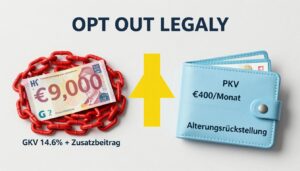
But here’s where it gets interesting: while this threshold rises, GKV costs are skyrocketing. Industry analysis suggests the average GKV contribution rate could hit 18% in 2026, with some predictions pushing toward 20% by 2030. For someone earning exactly €77,400, that’s nearly €1,160 monthly, split between employer and employee, but still a massive outlay.
Meanwhile, PKV premiums for a healthy 35-year-old can start as low as €400-500 monthly. The immediate savings are real and substantial. As one switcher noted, even after a 16% PKV premium increase after six years, he still pays nearly €200 less than his GKV contribution would be. The kicker? He gets four months of premiums refunded annually because he rarely files claims.
The Hidden Cost Equation
The PKV industry’s marketing emphasizes these immediate savings, but the long-term picture is where the real dilemma lies. Private insurers are preparing for significant cost increases in 2026, with average premium adjustments around 13% across major providers like Allianz, Gothaer, and Barmenia. While GKV costs rise steadily, PKV increases can be sudden and steep when they hit.
The critical factor most advisors gloss over: Altersrückstellungen (age reserves). In PKV, you must build these reserves yourself. The smart move, repeatedly emphasized by those who’ve made the switch, is to invest the difference between your old GKV and new PKV premiums in an ETF or similar vehicle. One disciplined saver noted his reserve fund has grown so large that “I’m not afraid of extreme premium increases.”
But this requires discipline most people lack. If you spend the monthly savings, you’ll face brutal premium increases in your 50s and 60s when health issues emerge and your income may decline. The PKV system is designed as a one-way street: once you switch, returning to GKV is nearly impossible after age 55, and even before that requires dropping below the income threshold and passing health checks.
The Health Screening Minefield
The Reddit threads reveal a critical detail that trips up many applicants: PKV providers scrutinize your medical history with forensic intensity. Mental health diagnoses, back problems, or even incorrectly recorded conditions can trigger premium surcharges or rejection.
The process works like this: insurers request Schweigepflichtentbindungen (medical record release forms) and will dig through years of your history. If you’ve had psychological treatment, chronic pain issues, or even minor surgeries, expect detailed questions. One advisor recommended proactively obtaining your complete medical records and resolving any inaccurate diagnoses before applying. This means visiting specialists to get clean bills of health for any questionable entries in your files.
The first three years are particularly sensitive. During this “probationary” period, insurers can request additional releases if you submit claims for conditions like mental health or back problems. The consensus among experienced switchers: never sign these release forms. Instead, obtain the records yourself to review them first. Once the insurer has unrestricted access, it’s nearly impossible to correct errors that could haunt your premiums for decades.
The Family Factor
Here’s where the PKV advantage can evaporate quickly. While your individual premium might seem attractive, adding a spouse and children changes the equation dramatically. Unlike GKV’s family coverage (Familienversicherung), where non-working spouses and children are included at no extra cost, PKV requires separate policies for each family member.
The break-even point typically comes at three children. Until then, a healthy family might still save money, but each child adds €100-200 monthly. As one father with two kids calculated: “Even with children, I still pay less in PKV than GKV would cost. Net it’s about €80 savings, though that doesn’t account for the 2026 GKV increase.” For families planning more children, the math becomes increasingly unfavorable.
Strategic Considerations for the 30-Something Decision
If you’re approaching this decision, you need to think in decades, not months:
1. Income Trajectory Matters: PKV makes most sense if your income is stable or rising. If you’re in a volatile industry or planning career changes that might drop you below the €77,400 threshold, stay in GKV. The risk of being locked out of the public system during a low-income period is severe.
2. Health is Wealth: The younger and healthier you are, the better the PKV deal. But be brutally honest about your health history. That sports injury from five years ago? The anxiety treatment during university? These will surface. Anonymous preliminary inquiries with multiple insurers, preferably through an independent broker, are essential.
3. The Savings Discipline: Calculate the exact monthly difference between GKV and PKV premiums. Set up an automatic investment for this amount. If you can’t commit to this, don’t switch. The long-term PKV without reserves is a financial trap.
4. The Exit Strategy: Understand that you’re building a parallel retirement healthcare fund. By age 60, you should have €50,000-100,000 in reserves to buffer premium increases. Without this, you’ll face the impossible choice of cutting coverage or swallowing unaffordable premiums on a fixed retirement income.
The Systemic Pressure Cooker
The frustration driving this trend isn’t just individual, it’s systemic. Germany’s GKV faces a perfect storm: aging population, rising medical costs, hospital funding crises, and political gridlock. The GKV-Spitzenverband has even sued the government for €10 billion annually in underfunding for basic welfare recipients’ healthcare.
This structural pressure means GKV contributions will keep rising, and service constraints will likely worsen. The 2026 premium increases are “not an outlier, but the symptom of a system groaning under cost burdens”, as one analysis put it. For high earners, this creates a rational incentive to exit a system they’re heavily subsidizing but can’t fully utilize.
Making the Call
The decision ultimately hinges on three questions:
-
Can you pass the health screening clean? If not, stop here, PKV will be expensive or unavailable.
-
Will you invest the monthly savings religiously? If not, the long-term PKV cost will devastate your retirement budget.
-
Is your family situation stable? If you’re planning multiple children or have a non-working spouse, run the numbers carefully.
For those who answer yes to all three, PKV can offer better service and potential savings. But it’s a high-stakes bet on your future health, income stability, and financial discipline. The German system’s peculiar design means you’re choosing between two flawed options: a public system with guaranteed coverage but access constraints, or a private system with better service but existential long-term risks.
The growing exodus of thirty-somethings to PKV isn’t just about impatience, it’s a rational response to a system that asks them to pay more while delivering less. But the private alternative demands a level of long-term planning and risk management that most people underestimate until it’s too late.
Before you sign anything, get independent advice from a fee-based advisor, not a commission-driven broker. And remember: in German healthcare, the easy choice today often becomes the expensive mistake tomorrow.
Next Steps: If you’re seriously considering the switch, start by requesting your complete medical records from all doctors you’ve seen in the past five years. Then run anonymous inquiries with at least three PKV providers. Only when you have concrete offers and have calculated the true 20-year cost should you make this irreversible decision.